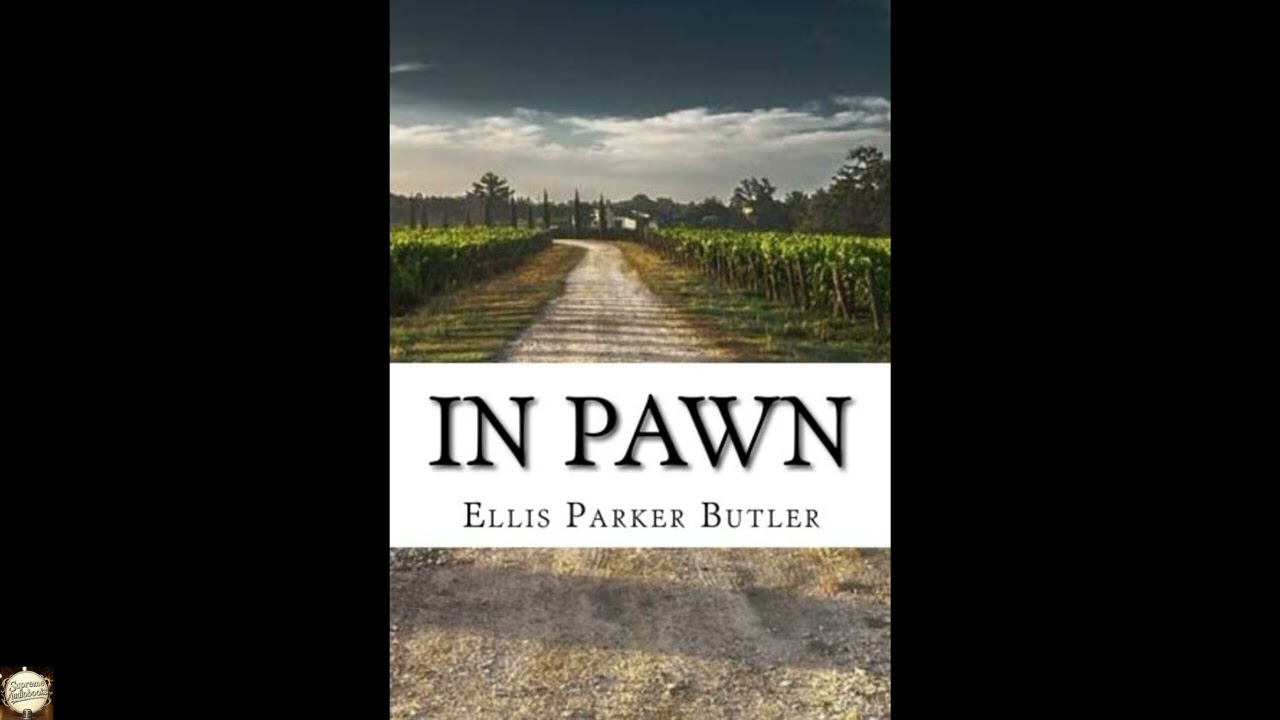
IN PAWN By Ellis Parker Butler
Step into a world where financial desperation meets an outlandish proposition in Ellis Parker Butler's novel, "In Pawn," a story that, despite its early twentieth-century origins, resonates with surprising clarity in our contemporary landscape of debt, precarious employment, and the constant pressure to maintain appearances. Butler, renowned for his satirical wit and keen observations of human foibles, turns his humorous lens toward a situation both absurd and poignant: a young man's desperate gamble to save his family's honor and fortune by literally "pawning" himself. This is not merely a tale of an unusual bargain; it’s a penetrating look at the invisible chains that bind individuals to their economic circumstances and the lengths they will go to break free, or at least, to avoid public ruin. The questions it raises about personal value, social contracts, and the true cost of security are as pressing today as they were over a century ago. The story introduces us to Arthur Craven, a well-meaning but financially inept young man from a respectable family whose fortunes have dwindled to a dangerous low. Facing imminent bankruptcy and the devastating loss of their ancestral home and good name, Arthur finds himself at an impasse. It is in this moment of crisis that he encounters the eccentric and mysterious Mr. Silas K. Snood, a man who, rather than offering a conventional loan, proposes an extraordinary alternative: Arthur can "pawn" himself for a substantial sum of money. The terms are peculiar and demanding, requiring Arthur to live under Snood's roof and abide by a strange set of rules, essentially forfeiting his personal freedom and autonomy for a specified period. This Faustian bargain forms the central conflict, thrusting Arthur into a series of often comical, sometimes humiliating, but always revealing predicaments. As Arthur navigates his new life as a human collateral, he grapples not only with the strictures imposed by Snood but also with the internal struggle of maintaining his dignity and sense of self. His interactions with Snood's peculiar household, the well-meaning but oblivious members of his own family, and the wider society unaware of his unique predicament, highlight the absurdities inherent in his situation. The narrative cleverly follows Arthur through various attempts to fulfill his unusual contract, each new challenge peeling back layers of his character and forcing him to confront uncomfortable truths about himself and the values he once held dear. The novel does not simply present a whimsical premise; it carefully constructs a world where the lines between literal and metaphorical debt blur, leading Arthur on an unexpected path toward a deeper understanding of what truly holds value. Ellis Parker Butler, born in Muscatine, Iowa, in 1869, was one of America's most prolific and beloved humorists of the early 20th century. Though he passed away in 1937, his literary output was immense, comprising over 30 books and more than 2,000 short stories and essays, many of which appeared in popular magazines like The Saturday Evening Post and Puck. Before dedicating himself to writing full-time around the turn of the century, Butler worked as a clerk in a bank and later for a spice importing firm, experiences that no doubt informed his astute observations of business, bureaucracy, and the everyday absurdities of urban life. He is most famously remembered for his short story, "Pigs Is Pigs" (1906), a delightful satire about bureaucratic regulations and the logic of exponential growth, which has since become a classic of American humor. Butler was not a literary titan in the mold of a Hemingway or a Faulkner, but he occupied a significant and well-regarded place in the popular literary landscape. He was a master of the concise, witty narrative, often using exaggerated situations to expose common human follies. His work often falls within the tradition of American humorists like Mark Twain, focusing on domestic life, small-town idiosyncrasies, and the sometimes-ridiculous challenges of modern existence. He co-founded The Authors' League of America, advocating for writers' rights, demonstrating his commitment not just to his craft but to the literary community as a whole. "In Pawn," while perhaps less overtly comical than "Pigs Is Pigs," showcases his talent for crafting engaging plots rooted in real-world anxieties, elevated by his distinctive blend of satire and underlying humanism. "In Pawn" skillfully enacts several compelling themes that remain relevant. One significant theme is the nature of debt and financial desperation. Arthur Craven's extreme choice to "pawn" himself is a stark illustration of how economic hardship can compel individuals to make desperate choices, challenging conventional notions of freedom and personal value. For instance, the detailed contractual obligations Snood imposes, which dictate Arthur's daily life and actions, vividly portray the loss of autonomy that debt can entail, a feeling many can still recognize in modern financial struggles. Another prominent theme is the value of honor and social standing. Arthur’s initial motivation stems from a profound fear of public shame and a desire to preserve his family's reputation. The sacrifices he makes highlight the immense pressure to uphold appearances and conform to societal expectations, even at a steep personal cost, forcing the listener to consider what "honor" truly means when stripped of material wealth. Furthermore, the novel touches upon the absurdity of bureaucracy and human contracts. Butler, with his characteristic wit, imbues the "pawn" agreement with a series of peculiar clauses and conditions that often lead to farcical situations. The very idea of a human being as collateral, meticulously documented and regulated, satirizes the rigid and often illogical rules that govern financial and legal systems. Through Arthur's experiences, the story also subtly questions the definition of personal freedom and self-worth. Is freedom merely the absence of chains, or something more profound? As Arthur lives under Snood's peculiar thumb, he is forced to re-evaluate his own identity and what truly constitutes a life lived with integrity, offering a poignant look at how external circumstances can reshape one's internal sense of self. The novel "In Pawn" emerged in 1917, a year marked by significant global upheaval, as the United States formally entered World War I. Domestically, America was still navigating the tail end of the Progressive Era, a period of widespread social activism and political reform aimed at correcting injustices and improving the human condition. It was a time of rapid industrialization, growing urban centers, and increasing financial complexity, with Wall Street gaining formidable influence and the anxieties of wealth inequality becoming more pronounced. The period saw a burgeoning middle class, but also significant pressures on maintaining social status and financial solvency. Culturally, the nation was transitioning from Victorian sensibilities toward a more modern outlook, reflected in literature that began to question established norms and satirize societal pretensions. In the literary world, while realism and naturalism had strong footholds, there was also a robust market for popular fiction, particularly humorous and satirical works published in widely circulated magazines. Writers like Butler capitalized on this demand, offering readers a blend of entertainment and social commentary that resonated with the daily experiences and concerns of ordinary Americans. "In Pawn" can be seen as a product of this environment, addressing contemporary anxieties about finance, social standing, and the pressures of modern life through an imaginative and accessible narrative. It reflects a societal fascination with the mechanics of wealth and debt, combined with a distinctly American brand of humor that found irony and absurdity in the face of serious challenges. Listening to "In Pawn" as an audiobook offers a unique opportunity to immerse oneself fully in Ellis Parker Butler's distinct narrative voice and the peculiar atmosphere he creates. At several hours in length, it is perfect for sustained listening during commutes, daily chores, or dedicated relaxation time, allowing the listener to truly settle into Arthur Craven's strange predicament. A skilled narrator can bring out the nuanced blend of humor and underlying pathos in Butler's prose, giving distinctive vocal qualities to the eccentric Mr. Snood, the beleaguered Arthur, and his well-meaning but often oblivious family. Pay attention to the pacing, which can emphasize the slow, almost bureaucratic absurdity of Arthur's daily life in pawn, contrasting with moments of sudden, farcical revelation. The dialogue, often wry and subtly witty, becomes particularly engaging when delivered aloud, allowing the listener to fully appreciate Butler's precise comedic timing and the subtle tensions building beneath the surface of polite conversation, ultimately drawing one into a forgotten corner of American literary satire.
Enjoyed IN PAWN By Ellis Parker Butler? A few ways to support us
Audible & Amazon links are affiliate; we may earn a small commission at no extra cost.
About this production
Human narration by a volunteer reader from LibriVox.org, the public-domain audiobook project. LibriVox volunteers record literary works whose copyright has expired in the United States, releasing the resulting recordings into the public domain.
IN PAWN By Ellis Parker Butler by Ellis Parker Butler. The underlying text is in the U.S. public domain. We do not republish any modern copyrighted edition, translation, or commentary.
The 4K cinematic visuals accompanying this audiobook are generated by an AI image model from prompts derived from the source text. No copyrighted photos, paintings, or stock footage are used. AI generation is disclosed on every video on our YouTube channel as required by YouTube's altered/synthetic content policy.
English subtitles are transcribed from the LibriVox recording with OpenAI Whisper. Translations into the 11 other supported languages are produced by Meta's NLLB-200 neural translation model. No human translator's copyrighted translation is used.
Questions about sourcing or rights? See our DMCA & Sourcing policy or contact us.
View 10 famous quotes from this book →
Enjoyed this audiobook?
If you'd like to own a copy of IN PAWN By Ellis Parker Butler or hear a professionally produced edition, the links below help support free audiobook production at no extra cost to you.
As an Amazon Associate we earn from qualifying purchases. Audible / print links are affiliate.