The Pothunters
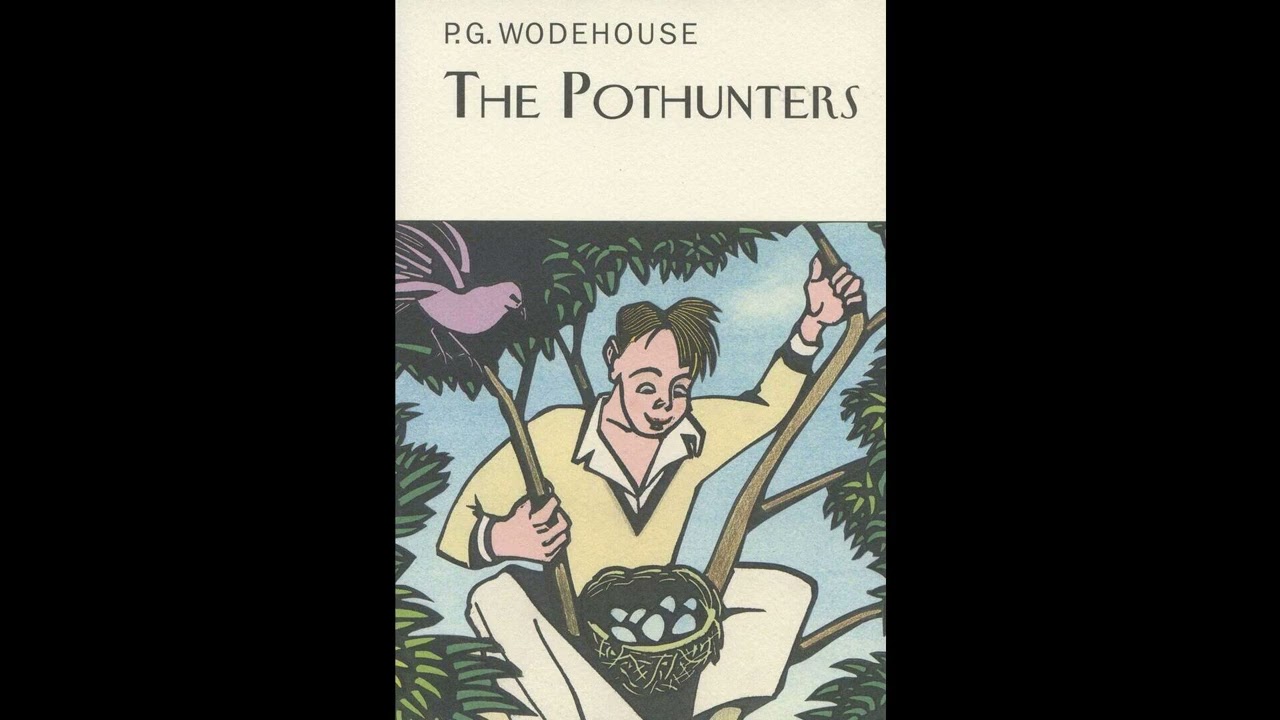
Before he spun the delightful sagas of Jeeves and Wooster, before the eccentricities of Blandings Castle took shape, P.G. Wodehouse introduced his singular comedic genius to the world with The Pothunters. This charming debut novel, published in 1902, provides an early, illuminating glimpse into the mind of a writer who would become one of the most beloved humorists in English literature. It invites listeners into a familiar, yet distinctly Wodehousian, world: the British public school. For anyone seeking to understand the genesis of Wodehouse's unparalleled wit and his peerless command of prose, or simply desiring a comforting dose of lighthearted mystery and gentle satire, this foundational text remains as fresh and engaging today as it was over a century ago. It’s a foundational piece, demonstrating the nascent brilliance that would define his later, more famous works. The story unfolds within the structured, yet ever-so-slightly chaotic environment of a fictional British public school, a microcosm of society where prefects wield considerable authority, masters struggle with their charges, and the unwritten rules of schoolboy honor dictate much of daily life. At the heart of the narrative is a rather significant incident: the mysterious disappearance of the Pothunters' Cup, a coveted silver prize awarded for rifle shooting. This isn't merely a misplaced object; it's an affront to the school's prestige and a potential blot on the record of its most promising students. The initial investigation falls to the school's authorities, including the well-meaning but often outmaneuvered masters Mr. Blackburn and Mr. Scotter, who approach the conundrum with varying degrees of seriousness and exasperation. As the search for the missing trophy intensifies, suspicion begins to fall on various boys, including the slightly nervous Welsh and the more self-assured Stanning. The ensuing confusion and the earnest, if somewhat bumbling, attempts to uncover the culprit drive much of the plot. Chief among the amateur sleuths is Charteris, a senior boy with a keen eye for observation and a dry wit, who takes it upon himself to sift through the clues and interrogate his peers. The narrative skillfully navigates the intricate social dynamics of the school, presenting a series of humorous misunderstandings, false leads, and the ever-present threat of a scandal that could tarnish the reputation of both individuals and the institution itself. Wodehouse, with a deft touch, crafts a world where serious matters are often met with unexpected levity, and the quest for truth is as much about protecting friendships and maintaining decorum as it is about finding a silver cup. The arc of the story follows the escalating search, the mounting pressure on the boys, and the subtle shifts in alliances and suspicions, all leading towards an eventual, unexpected resolution that respects the comedic tone established from the outset. Sir Pelham Grenville Wodehouse, affectionately known as "Plum," was born in Guildford, Surrey, England, in 1881. His early life, particularly his education at Dulwich College, would prove immensely influential, providing the vivid backdrop for many of his early school stories, including The Pothunters. After a brief, unenthusiastic stint at the Hong Kong and Shanghai Bank, Wodehouse committed himself fully to writing, a decision that gifted the world nearly a hundred novels and more than two hundred short stories over his astonishingly prolific career. He migrated frequently throughout his life, living in both the United States and France, but his literary sensibility remained quintessentially English. His most celebrated creations include the effete but charming Bertie Wooster and his sagacious valet Jeeves, the denizens of Blandings Castle—a bucolic retreat populated by absent-minded peers and their prize-winning pigs—and a host of other memorable characters like Ukridge and Mr. Mulliner. Wodehouse’s literary footprint extends beyond prose; he also achieved significant success as a lyricist for musical comedies, collaborating with luminaries such as Jerome Kern and Guy Bolton, contributing to Broadway shows that would define the Golden Age of American musical theatre. His later life was marked by a controversial internment in Germany during World War II and subsequent broadcasts that, though innocuous in intent, led to accusations of collaboration. Despite this difficult period, his reputation as a master stylist endured, and he was knighted shortly before his death in 1975 in Long Island, New York. Wodehouse occupies a unique and revered place in the English literary canon, recognized for his consistently elegant prose, his intricate plotting, and a brand of humor that relies on linguistic precision, character-driven farce, and an unshakeable optimism. His work is often considered a distinct movement unto itself, offering escapism into a beautifully crafted, slightly absurd world. At its core, The Pothunters skillfully enacts several enduring themes, often with a light comedic touch that belies their underlying significance. One prominent theme is the code of schoolboy honor and reputation. The missing cup isn't just a physical object; its absence triggers a crisis of integrity within the school. When a master suggests that perhaps an "outsider" might be responsible, the boys are aghast; the very idea threatens their collective sense of a closed, honorable society. The shame of being suspected, or of the school itself suffering a blot on its record, drives much of the characters' actions, from the earnest efforts to find the culprit to the protective instincts towards their peers. This reflects the intense social pressure and the deeply ingrained values of fairness and loyalty prevalent in such institutions. Another key theme Wodehouse introduces is amateur sleuthing and the humor of mistaken identity. While the mystery of the missing cup forms the central conflict, the methods employed to solve it are distinctly Wodehousian. Characters like Charteris try their hand at deduction, but their efforts are often laced with youthful overconfidence, leading to comical misinterpretations and suspicions cast in the wrong directions. For instance, an innocent exchange about a new acquisition might be twisted into proof of theft, or a nervous disposition mistaken for guilt. This narrative device allows Wodehouse to showcase his talent for building suspense not through genuine threat, but through the delightful absurdity of human error and the foibles of those convinced they are on the verge of uncovering the truth, creating a gentle form of satire on detection itself. Published in 1902, The Pothunters emerged during the nascent years of the Edwardian era in Britain, a period of relative social stability and imperial confidence following the long reign of Queen Victoria. Culturally, the British public school system was at the zenith of its influence, seen as the crucible for forging the nation's future leaders and gentlemen. Stories set in these institutions, often emphasizing character building, sportsmanship, and moral fortitude—like Thomas Hughes's Tom Brown's Schooldays—were enormously popular. Wodehouse, a recent alumnus of Dulwich College himself, was tapping directly into this established literary genre. However, Wodehouse's approach, even in this early work, marked a subtle departure from the earnest moralizing sometimes found in earlier school stories. While still valuing honor and fair play, his focus was increasingly on the human comedy inherent in the boys' interactions, the masters' struggles, and the general charming absurdity of the school setting. The early 20th century was also seeing a shift in literary tastes, moving away from the more somber, detailed realism of the Victorians towards lighter, more sophisticated forms of entertainment. Wodehouse's precise, elegant prose and his dedication to pure, intelligent humor perfectly aligned with and helped to define this burgeoning "new humor," setting him apart as a distinct and refreshing voice in the literary landscape of his time. Listening to The Pothunters as an audiobook offers a unique and particularly enjoyable way to appreciate Wodehouse's early genius. His prose, with its perfectly cadenced sentences, precise word choices, and intricate comedic timing, truly comes alive when read by a skilled narrator. The subtle irony, the rapid-fire dialogue, and the often-exaggerated expressions of the characters gain an extra layer of nuance through spoken performance. As the story unfolds over several hours, it's an ideal companion for moments of relaxation or for enhancing a daily commute, allowing the listener to fully immerse themselves in the bygone world of schoolboy capers. Pay close attention to the pacing, which can range from brisk descriptions of school life to deliberate pauses that allow a witty observation or a punchline to land with maximum effect. The distinct voices given to the masters and the various students will help to flesh out the diverse cast, creating a vivid atmosphere of youthful energy and gentle intrigue that is a hallmark of Wodehouse's enduring appeal.
Enjoyed The Pothunters? A few ways to support us
Audible & Amazon links are affiliate; we may earn a small commission at no extra cost.
About this production
Human narration by a volunteer reader from LibriVox.org, the public-domain audiobook project. LibriVox volunteers record literary works whose copyright has expired in the United States, releasing the resulting recordings into the public domain.
The Pothunters by P.G. Wodehouse. The underlying text is in the U.S. public domain. We do not republish any modern copyrighted edition, translation, or commentary.
The 4K cinematic visuals accompanying this audiobook are generated by an AI image model from prompts derived from the source text. No copyrighted photos, paintings, or stock footage are used. AI generation is disclosed on every video on our YouTube channel as required by YouTube's altered/synthetic content policy.
English subtitles are transcribed from the LibriVox recording with OpenAI Whisper. Translations into the 11 other supported languages are produced by Meta's NLLB-200 neural translation model. No human translator's copyrighted translation is used.
Questions about sourcing or rights? See our DMCA & Sourcing policy or contact us.
View 10 famous quotes from this book →
Enjoyed this audiobook?
If you'd like to own a copy of The Pothunters or hear a professionally produced edition, the links below help support free audiobook production at no extra cost to you.
As an Amazon Associate we earn from qualifying purchases. Audible / print links are affiliate.