Babbitt
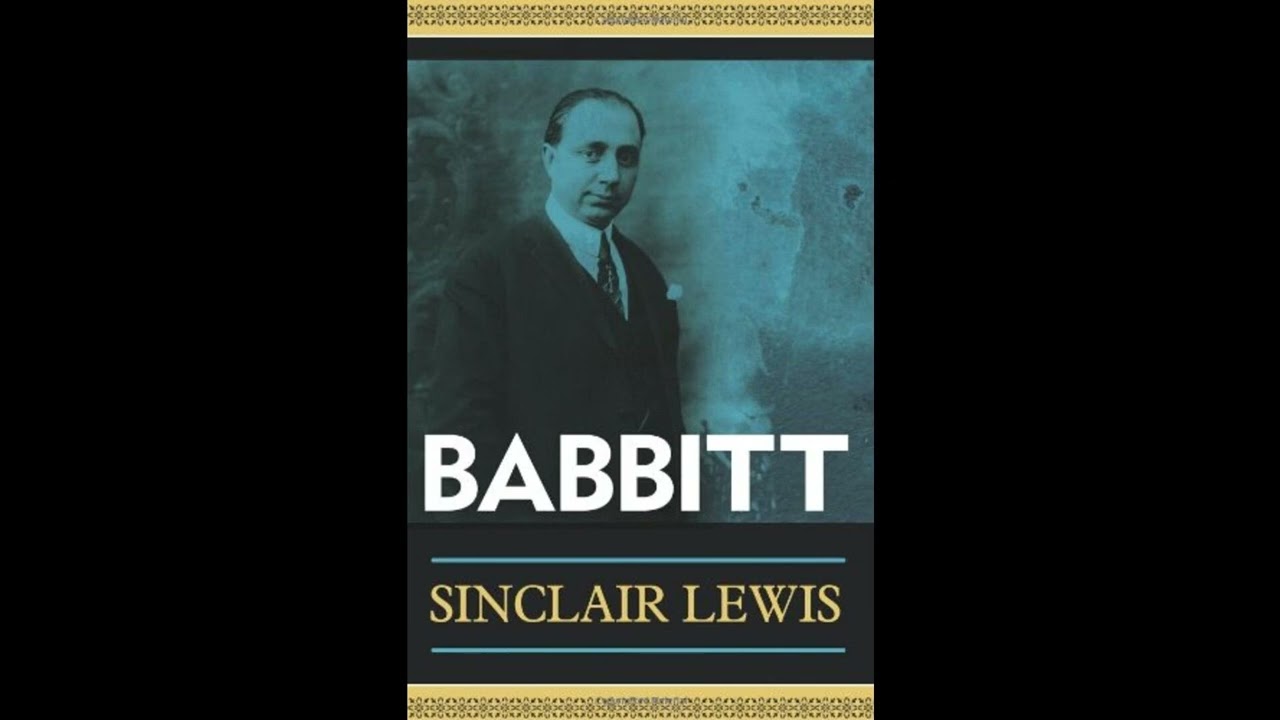
Sinclair Lewis’s Babbitt stands as a definitive American novel, a cutting, yet often sympathetic, portrait of the burgeoning middle class in the early 20th century. This story, published a century ago, remains remarkably pertinent today, offering listeners a mirror to contemporary anxieties about success, conformity, and the elusive nature of happiness within a consumer-driven society. It asks us to consider whether our pursuit of the American Dream leads to genuine fulfillment or merely a comfortable cage of our own making. For anyone who has ever questioned the expectations placed upon them, or wondered about the cost of fitting in, Babbitt offers both a chuckle of recognition and a poignant challenge. The novel transports us to Zenith, a bustling, prosperous Midwestern city that serves as a microcosm of America’s industrial expansion and boosterish optimism in the 1920s. Here we meet George F. Babbitt, a forty-six-year-old real estate broker, a pillar of his community, and the quintessential "standardized American citizen." He lives in a comfortable, modern house in the desirable Floral Heights neighborhood, complete with the latest gadgets and a garage for his expensive motor car. George is a member of every important club, a Rotarian, a Republican, and a fervent believer in progress, efficiency, and the Zenith way of life. His days are a predictable rhythm of business dealings, hearty lunches with fellow businessmen, and evenings spent with his wife Myra and their three children, occasionally punctuated by bridge parties or community gatherings. Yet, beneath this veneer of success and contented conformity, George harbors a subtle, nagging discontent. He has fleeting dreams of an idealized "fairy girl," memories of a simpler youth, and a persistent feeling that something fundamental is missing from his meticulously ordered existence. This unspoken yearning begins to push him towards minor acts of rebellion. He befriends characters on the fringes of Zenith society—an unconventional poet, a radical lawyer—and briefly contemplates political defiance, even an extramarital affair. These forays into non-conformity are clumsy and tentative, often born more out of a vague dissatisfaction than a deep conviction, but they represent George's desperate attempts to find authentic meaning beyond the slogans and material comforts of his world. The narrative follows his struggle to reconcile his inner desires with the powerful social pressures to remain a respectable, predictable member of Zenith’s business class, ultimately charting the arc of a man grappling with the very definition of a "good life." Sinclair Lewis, born Harry Sinclair Lewis in Sauk Centre, Minnesota in 1885, was an author deeply rooted in the American landscape he so incisively chronicled. His experiences growing up in a small Midwestern town, then attending Yale University, provided him with a dual perspective: an intimate understanding of provincial life and an intellectual distance to critique it. Before achieving fame as a novelist, Lewis worked various jobs—as a journalist, editor, and even as a secretary to Jack London—honing his observational skills and his ear for dialogue. He was a restless figure, traveling extensively both within the United States and abroad, marrying twice, and always seeking new material for his pointed social commentaries. Lewis’s literary output began in the early 1910s, but it was with Main Street in 1920 that he truly found his voice, creating a sensation with its unflinching look at small-town narrow-mindedness. This was followed in quick succession by Babbitt (1922), Arrowsmith (1925), a scathing indictment of the medical profession, and Elmer Gantry (1927), which satirized religious evangelism. His critical success culminated in 1930 when he became the first American to be awarded the Nobel Prize in Literature. The Swedish Academy recognized his vigorous and graphic powers of description and his ability to create new types of people, for his works had helped to change how America saw itself. Lewis’s writing positioned him firmly within the American realist tradition, often employing satire to expose the hypocrisies and limitations of the rapidly modernizing nation. Babbitt deftly illustrates several core American themes, chief among them the suffocating grip of conformity. George Babbitt’s entire life is dictated by unspoken rules: what car to drive, what clubs to join, what opinions to hold. We see this vividly in his morning ritual, where he dons the "uniform" of the businessman, mentally reciting the latest booster slogans, an act of self-indoctrination into the Zenith ideal. Another prominent theme is the hollowness of material success and consumerism. Babbitt’s house, filled with every modern convenience, and his ever-present motor car, are symbols of his achievement, yet they fail to fill the void within him. His occasional discontent, fleeting as it is, speaks to the illusion that acquiring more possessions will equate to more happiness. The novel also portrays the pressure of the American Dream, particularly how it can warp individual aspirations into a collective, often superficial, pursuit. Babbitt’s friends, like Verona and Chum Frink, parrot the same optimistic, self-serving rhetoric, illustrating how an entire community can become ensnared in a cycle of performative success. Lastly, the book examines the male midlife crisis, a universal experience that Lewis renders with specificity. Babbitt’s attempts to find solace in forbidden friendships or fleeting romance are not merely diversions but symptomatic of a deeper yearning for authenticity and purpose beyond his prescribed role as a successful, respectable businessman. His quiet rebellion, even when it falters, underscores the difficulty of forging an individual identity in the face of overwhelming societal expectations. When Babbitt appeared in 1922, the United States was experiencing a profound cultural transformation. The "Roaring Twenties" were in full swing, characterized by post-World War I prosperity, rapid industrialization, and the rise of a pervasive consumer culture. This era saw the widespread adoption of automobiles, radios, and household appliances, all of which promised to make life easier and more enjoyable, yet often came with a hidden cost of debt and a drive for conformity. Politically, the nation was grappling with the aftermath of Prohibition, the growing power of big business, and a general disillusionment with idealism following the war. Literarily, the period was marked by a shift away from Victorian gentility towards a more gritty, realistic portrayal of American life. Many writers of the "Lost Generation"—Hemingway, Fitzgerald, Faulkner—were coming of age, critically examining the flaws beneath the shiny surface of American progress. Lewis’s work fit squarely into this movement, giving voice to the simmering discontent and anxieties of an upwardly mobile middle class that was, perhaps for the first time on such a grand scale, confronting the psychological toll of a relentlessly conformist, materialist society. Babbitt emerged precisely at the moment when America needed to look in the mirror and question what its newfound prosperity was truly buying. Listening to Babbitt as an audiobook allows the listener to fully appreciate Lewis’s masterful ear for dialogue and his keen sense of social satire. A skilled narrator can bring to life the distinct voices of Zenith’s citizens—the bombastic pronouncements of George Babbitt, the vapid chatter of Myra and her friends, the earnest but misguided pronouncements of the various club members. The rhythm of Babbitt’s often-frantic life, his internal monologues, and the subtle shifts in his emotional landscape are conveyed with particular intimacy through spoken word. The novel's run length, spanning several hours, makes it an ideal companion for long commutes, household chores, or simply an evening dedicated to immersive listening, allowing the narrative to unfold at a natural pace that highlights the humor, the pathos, and the biting observations of a society caught between its aspirations and its realities.
Enjoyed Babbitt? A few ways to support us
Audible & Amazon links are affiliate; we may earn a small commission at no extra cost.
About this production
Human narration by a volunteer reader from LibriVox.org, the public-domain audiobook project. LibriVox volunteers record literary works whose copyright has expired in the United States, releasing the resulting recordings into the public domain.
Babbitt by Sinclair Lewis. The underlying text is in the U.S. public domain. We do not republish any modern copyrighted edition, translation, or commentary.
The 4K cinematic visuals accompanying this audiobook are generated by an AI image model from prompts derived from the source text. No copyrighted photos, paintings, or stock footage are used. AI generation is disclosed on every video on our YouTube channel as required by YouTube's altered/synthetic content policy.
English subtitles are transcribed from the LibriVox recording with OpenAI Whisper. Translations into the 11 other supported languages are produced by Meta's NLLB-200 neural translation model. No human translator's copyrighted translation is used.
Questions about sourcing or rights? See our DMCA & Sourcing policy or contact us.
Enjoyed this audiobook?
If you'd like to own a copy of Babbitt or hear a professionally produced edition, the links below help support free audiobook production at no extra cost to you.
As an Amazon Associate we earn from qualifying purchases. Audible / print links are affiliate.