King Coal
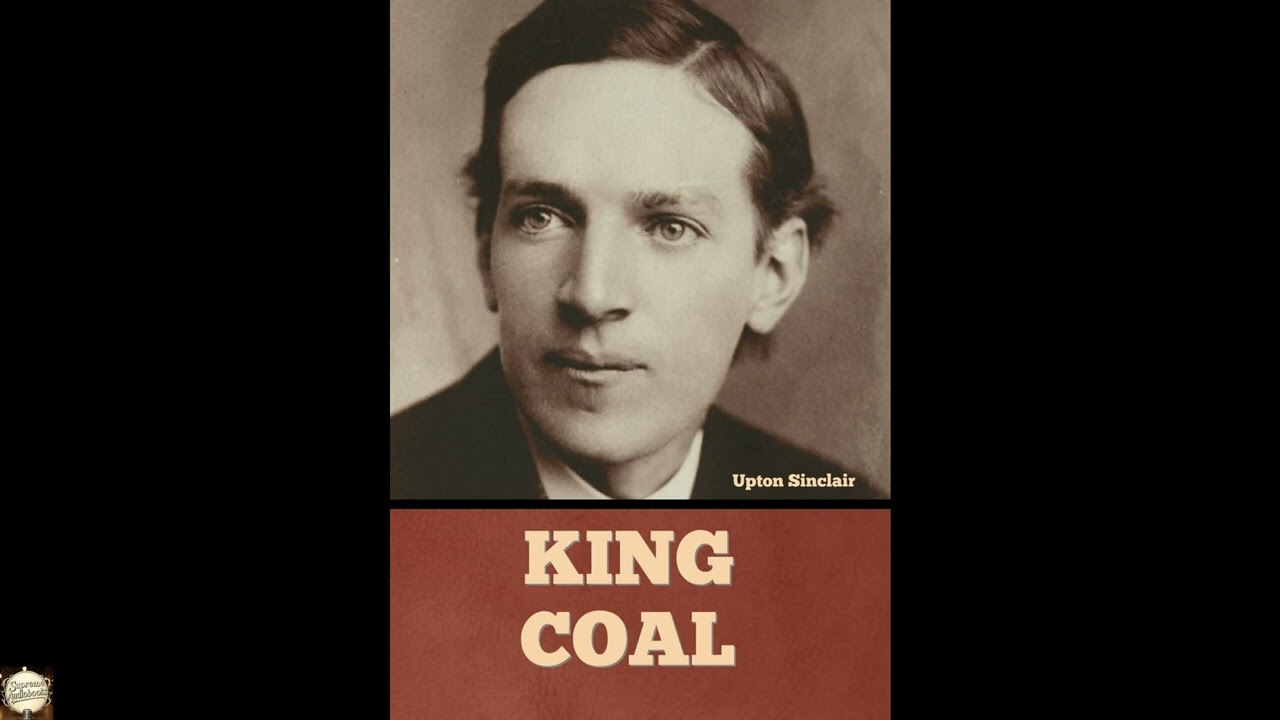
For those drawn to stories of social justice, of individuals fighting against overwhelming systems, Upton Sinclair's King Coal remains as potent and relevant today as it was nearly a century ago. This isn't merely a tale from a bygone era; it is a stark and deeply human exposé of industrial power, worker exploitation, and the enduring struggle for dignity. It pulls back the curtain on the hidden costs of our modern world, asking us to confront the origins of the energy that fuels society and the human lives sacrificed to extract it. Listeners who appreciate incisive social commentary wrapped in a compelling narrative will find themselves quickly absorbed by its unflinching honesty and its passionate plea for a more equitable world. The novel transports us to the rugged, often unforgiving landscape of a sprawling coal camp in the American West during the early twentieth century. Here, we meet Hal Warner, a young, idealistic, and privileged Yale graduate who possesses an uncommon desire to understand the plight of the working man. Rejecting the comforts of his wealthy background, Hal goes undercover, adopting the name Joe Smith, to work as a common laborer in the mines. His initial curiosity soon gives way to a horrifying awakening as he is plunged into a world defined by suffocating darkness, perilous working conditions, and the omnipresent threat of injury or death. He witnesses firsthand the systematic abuses perpetuated by the powerful Consolidated Coal Company – the exploitative company store that traps miners in perpetual debt, the abysmal wages, the shoddy and dangerous equipment, and the constant surveillance by company guards determined to stamp out any hint of dissent. Hal's journey is one of profound transformation. He lives among the diverse community of miners—immigrants from various European nations, Black Americans, and others—all united by their shared hardship and their struggle for survival. He sees the divisions deliberately sown by the company to prevent solidarity, but also the deep-seated human kindness and resilience that thrives amidst adversity. As Hal witnesses strikes crushed with brutal violence, union organizers blacklisted, and families suffering unimaginable deprivation, his initial detached observation evolves into a burning sense of outrage and a commitment to expose the truth, no matter the personal cost. The story builds toward an inevitable clash, depicting the escalating tensions between labor and capital with visceral detail, leaving the listener to ponder the human toll of industrial progress. Upton Sinclair, born in Baltimore in 1878, dedicated his long and prolific life to exposing injustice. A self-proclaimed socialist and a tireless advocate for social reform, Sinclair became one of America's most prominent "muckraking" journalists and novelists. His literary career, which spanned over six decades until his death in 1968, was marked by an unwavering commitment to using fiction as a tool for change. His most famous work, The Jungle (1906), famously depicted the horrific conditions of the Chicago meatpacking industry, leading directly to the passage of the Pure Food and Drug Act and the Meat Inspection Act. He applied a similar investigative rigor to many other industries, from oil to journalism, in works like Oil! (1927) and The Brass Check (1919), often conducting extensive research and even going undercover himself, much like his character Hal Warner. Sinclair’s distinctive style blended journalistic accuracy with narrative power, making his novels both informative and deeply moving. He was a master of social realism, portraying the lives of ordinary people caught in extraordinary circumstances with empathy and stark detail. His work cemented his place as a significant figure in American literary history, not only for its artistic merit but for its undeniable impact on public policy and social consciousness. He believed literature could, and should, directly influence society, and his extensive bibliography stands as a testament to that conviction, chronicling the social and economic struggles of the twentieth century with an urgent, moral voice. At its core, King Coal powerfully enacts several enduring themes. One central idea is industrial exploitation, vividly shown through the company store system where miners are forced to buy goods at inflated prices, trapping them in a cycle of debt and dependence. We see how wages are meticulously controlled to ensure families can barely survive, highlighting the deliberate mechanisms used to extract maximum profit at the expense of human well-being. Another significant theme is class conflict and social inequality. The novel starkly contrasts the opulence and detachment of the mine owners and management with the grinding poverty and desperate lives of the workers. Hal Warner's initial disorientation upon entering the mines, a stark contrast to his privileged upbringing, immediately demonstrates this chasm and the profound lack of understanding between the two classes. The novel also illuminates the crucial theme of unionization and labor rights. It portrays the dangerous and clandestine efforts of miners to organize, to form a collective voice against the monolithic power of the company. We witness the constant threat of violence, the infiltration by company spies, and the brutal suppression of any attempt to improve working conditions or secure fair wages—a testament to the desperate fight for basic human rights in a ruthless industrial landscape. Finally, the story touches on the profound impact of truth and exposure as a tool for change. Hal's entire mission is to bear witness and document, believing that if the truth of these conditions were widely known, reform would be inevitable. His detailed observations and internal struggle to remain objective while experiencing the hardship firsthand underscore the moral imperative of speaking truth to power. King Coal emerged during a tumultuous period in American history, often referred to as the Progressive Era. The early twentieth century was a time of immense industrial expansion, but also growing awareness of the social problems that accompanied it: unchecked corporate power, urban poverty, and widespread labor abuses. It was an era of strikes, sometimes violent, as workers fought for better conditions against powerful industrialists. Sinclair's novel draws heavily from real events, most notably the Ludlow Massacre of 1914, where striking miners and their families in Colorado were attacked by state militia and company guards, resulting in numerous deaths. The "muckraking" movement, a form of investigative journalism, was at its peak, with authors like Ida Tarbell and Lincoln Steffens exposing corruption and injustice. Sinclair was not just documenting history; he was actively participating in a cultural and political moment that demanded reform and sought to empower the common person against entrenched interests. Listening to King Coal as an audiobook offers a particularly immersive and affecting experience. The story's narrative urgency, its directness in describing the grim realities of the mines and the lives of the workers, translates powerfully through spoken word. A skilled narrator can bring out Hal's initial naiveté and his gradual, painful transformation, giving voice to his internal conflicts and growing moral outrage. The diverse accents and dialects of the mining community, from various immigrant groups to Southern laborers, can be rendered with authenticity, enriching the atmosphere of the company town. Listen for the shift in pacing as the story moves from observational moments to the building tension of impending conflict and the visceral descriptions of life underground. The sheer length of several hours allows ample time to become fully absorbed in this pivotal historical narrative, allowing the listener to truly inhabit the world Sinclair so meticulously crafted and feel the weight of its important message.
Enjoyed King Coal? A few ways to support us
Audible & Amazon links are affiliate; we may earn a small commission at no extra cost.
About this production
Human narration by a volunteer reader from LibriVox.org, the public-domain audiobook project. LibriVox volunteers record literary works whose copyright has expired in the United States, releasing the resulting recordings into the public domain.
King Coal by Upton Sinclair. The underlying text is in the U.S. public domain. We do not republish any modern copyrighted edition, translation, or commentary.
The 4K cinematic visuals accompanying this audiobook are generated by an AI image model from prompts derived from the source text. No copyrighted photos, paintings, or stock footage are used. AI generation is disclosed on every video on our YouTube channel as required by YouTube's altered/synthetic content policy.
English subtitles are transcribed from the LibriVox recording with OpenAI Whisper. Translations into the 11 other supported languages are produced by Meta's NLLB-200 neural translation model. No human translator's copyrighted translation is used.
Questions about sourcing or rights? See our DMCA & Sourcing policy or contact us.
Enjoyed this audiobook?
If you'd like to own a copy of King Coal or hear a professionally produced edition, the links below help support free audiobook production at no extra cost to you.
As an Amazon Associate we earn from qualifying purchases. Audible / print links are affiliate.