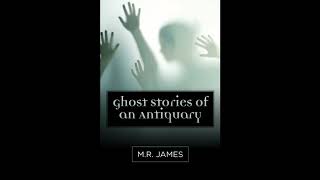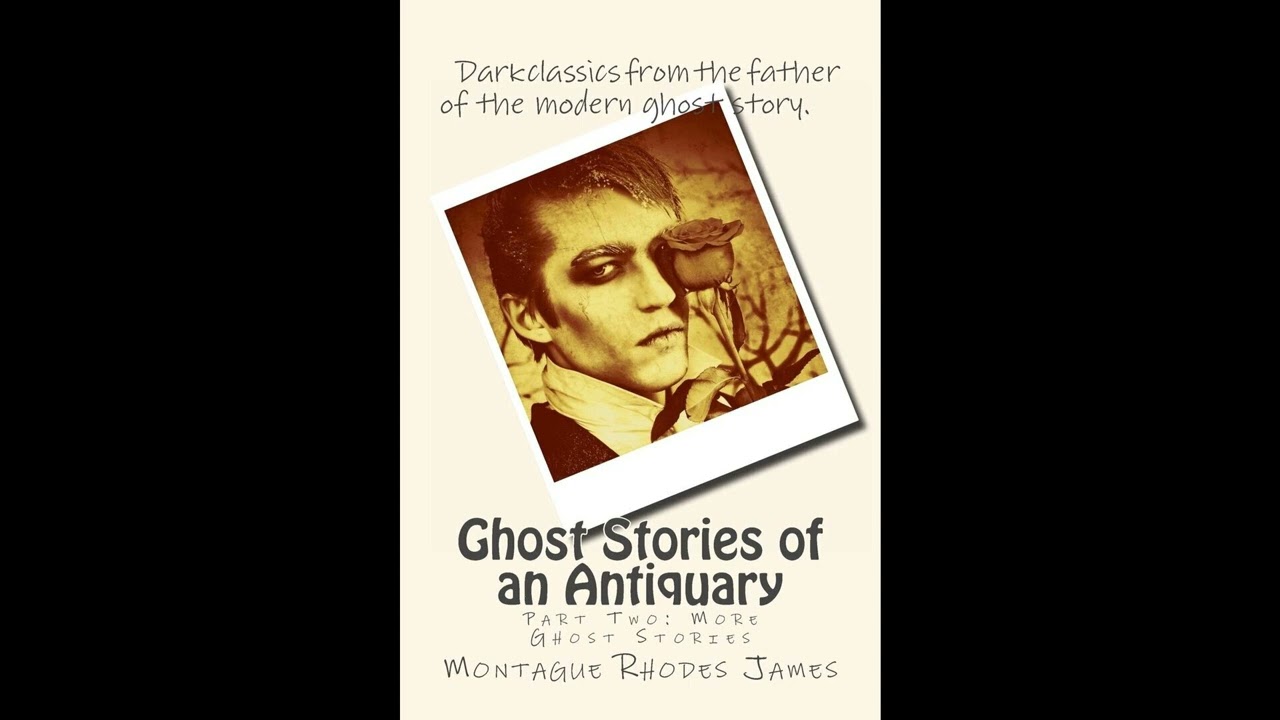
Ghost Stories of an Antiquary: Part 2: More Ghost Stories
Step into a world where the shadows lengthen in dusty libraries, ancient churchyards hold unspeakable secrets, and the quiet pursuits of scholarship can uncover a terror far older and more potent than any living fear. Montague Rhodes James, universally known as M.R. James, did not simply tell ghost stories; he crafted meticulously observed narratives designed to create a creeping unease, a cold dread that lingers long after the final word. Ghost Stories of an Antiquary: Part 2: More Ghost Stories presents a selection of his finest chilling tales, each one a testament to his unique genius for understated horror. These are not stories of ghoulish excess or overt violence, but of insidious intrusions into the mundane, where rational men confront the utterly irrational, and the past refuses to stay buried. For anyone seeking the perfect blend of scholarly precision and supernatural dread, these stories remain as potent and unsettling today as they were over a century ago. The stories in this collection often begin in familiar, comfortable settings: a quiet cathedral town, a gentleman's club, the hallowed halls of a university, or a country estate where historical research is underway. Typically, the central figure is an unassuming, often academic, man—a professor, a parson, an antiquarian—who, through a chance discovery or an act of seemingly innocent research, inadvertently disturbs something ancient and malevolent. Perhaps it is an old manuscript with peculiar marginalia, a curious object acquired from a dealer, or a neglected tomb that holds more than just human remains. The narratives slowly build their atmosphere of foreboding. An odd sound in an empty room, a fleeting glimpse of something out of place, a recurring nightmare, or an unexplained chill in the air all contribute to a growing sense of dread for the protagonist. The conflict in these tales rarely stems from overt confrontation. Instead, the horror is a slow, insidious corruption of reality, a persistent violation of the natural order that wears down the protagonist's reason and peace of mind. The threat often manifests as a lingering presence, a disembodied force, or a subtly monstrous entity that seems to have a perverse, deliberate interest in its victim. The arc usually involves the protagonist's initial dismissal of strange occurrences, followed by a gradual, horrifying realization of the supernatural threat, and often culminates in a narrow escape—though sometimes, the fate of the central figure is left disturbingly ambiguous, implying a lasting terror or an unsettling transformation. The genius lies in what is left unsaid, the horrors hinted at rather than explicitly described, allowing the listener's own imagination to fill in the most terrifying details. Montague Rhodes James, born in 1862, was a scholar through and through, a man steeped in the study of medieval manuscripts and biblical texts. His academic career was distinguished; he rose to become the Provost of King's College, Cambridge, and later of Eton College. This deep immersion in history, architecture, and ancient languages provided the perfect backdrop and an endless source of inspiration for his tales of the uncanny. Far from being a reclusive figure, James was known for his genial nature and for entertaining friends with readings of his ghost stories on Christmas Eve—an annual tradition that lent a personal, intimate quality to their genesis. He primarily published four collections of these stories between 1904 and 1925, cementing his reputation as the foremost master of the literary ghost story. James's contribution to the genre cannot be overstated. He eschewed the Gothic melodrama and the often-sentimental "psychic research" narratives common in Victorian ghost stories, opting instead for a cool, detached style, grounded in academic realism. He created a new kind of terror, often dubbed "antiquarian horror," where the past is not merely a setting but an active, malicious force. His method involved setting ordinary, often scholarly, men against malevolent, preternatural entities, subtly disrupting their ordered lives. His influence can be seen in generations of horror writers, from H.P. Lovecraft, who admired James's precise construction of dread, to contemporary authors who continue to borrow from his playbook of quiet, scholarly terror. He carved out a distinct and enduring place for himself in the literary canon, demonstrating how intellectual rigor could be harnessed to produce genuinely frightening fiction. A key theme running through James's stories is the peril of unchecked curiosity, particularly in an academic context. His characters are often scholars or collectors whose intellectual pursuits lead them to uncover dangerous knowledge or artifacts. For instance, a professor meticulously studying an ancient text might find its marginalia hinting at a dark ritual, or an antiquarian purchasing a unique engraving might discover it depicts more than just a landscape. This innocent intellectual pursuit inadvertently opens a door to forces they are ill-equipped to comprehend or control, demonstrating that some secrets are best left undisturbed. Another prominent theme is the malevolence of the past. The supernatural entities in James's stories are rarely new or contemporary; they are almost always ancient, tied to forgotten histories, old sins, or long-dead individuals. This connection imbues them with a deep-seated, persistent evil that seems to defy explanation or easy vanquishing. Furthermore, James masterfully employs the theme of the unseen or gradually revealed threat. The horror rarely appears suddenly or overtly. Instead, it builds through subtle hints, unsettling atmospheres, and fleeting perceptions. A rustle in an empty room, a figure glimpsed from the corner of an eye, or an object subtly changing its position are all methods James uses to create a slow, accumulating dread, making the listener question what they are truly perceiving. This is tied closely to the theme of the inadequacy of rationalism. His characters, often men of science or logical thought, find their ordered, rational world utterly incapable of explaining or confronting the supernatural phenomena they encounter. Their logic and learning fail them, leaving them exposed and vulnerable to powers that operate by an entirely different, terrifying set of rules. The early 20th century, the period when M.R. James was writing and publishing most of these stories, was a time of significant cultural shifts. The Victorian era, with its moral certainties and societal strictures, was giving way to the Edwardian age, marked by both a flourishing of scientific advancement and a persistent fascination with the occult and spiritualism. While science pushed the boundaries of the known, there remained a widespread interest in what lay beyond human understanding, providing fertile ground for tales of the supernatural. James's particular brand of horror also emerged as a counterpoint to the more gothic and sentimental ghost stories of earlier decades. His precise, understated style and academic settings reflected a growing preference for realism and psychological nuance even within fantastic narratives. These stories, read aloud in the quietude of a Cambridge college or Eton, captured a sense of underlying unease and a questioning of the rational order that resonated with the sensibilities of a society on the cusp of profound change, just years before the Great War would reshape the world. Listening to Ghost Stories of an Antiquary: Part 2: More Ghost Stories as an audiobook offers a singular opportunity to experience these tales in a way that truly honors their origins. James himself read these stories aloud to appreciative audiences, and the spoken word naturally lends itself to their slow-burn suspense and meticulously crafted atmosphere. A skilled narrator can amplify the quiet dread, carefully modulating pacing and tone to build tension without resorting to cheap scares. The run length provides ample time to settle into the peculiar world James creates, letting the subtle shifts in voice, the precise articulation of scholarly details, and the gradual introduction of unsettling elements draw you deeper into each narrative. Pay attention to the narrator's interpretation of dialogue and descriptions—the slight tremor in a character's voice as they confront the inexplicable, or the clinical precision used to describe a horrifying object. These stories are best savored in the dark, perhaps on a quiet evening drive or during a contemplative walk, allowing the spoken word to truly conjure the ancient, creeping horrors that M.R. James so brilliantly conceived.
Enjoyed Ghost Stories of an Antiquary: Part 2: More Ghost Stories? A few ways to support us
Audible & Amazon links are affiliate; we may earn a small commission at no extra cost.
About this production
Human narration by a volunteer reader from LibriVox.org, the public-domain audiobook project. LibriVox volunteers record literary works whose copyright has expired in the United States, releasing the resulting recordings into the public domain.
Ghost Stories of an Antiquary: Part 2: More Ghost Stories by Montague Rhodes James. The underlying text is in the U.S. public domain. We do not republish any modern copyrighted edition, translation, or commentary.
The 4K cinematic visuals accompanying this audiobook are generated by an AI image model from prompts derived from the source text. No copyrighted photos, paintings, or stock footage are used. AI generation is disclosed on every video on our YouTube channel as required by YouTube's altered/synthetic content policy.
English subtitles are transcribed from the LibriVox recording with OpenAI Whisper. Translations into the 11 other supported languages are produced by Meta's NLLB-200 neural translation model. No human translator's copyrighted translation is used.
Questions about sourcing or rights? See our DMCA & Sourcing policy or contact us.
Enjoyed this audiobook?
If you'd like to own a copy of Ghost Stories of an Antiquary: Part 2: More Ghost Stories or hear a professionally produced edition, the links below help support free audiobook production at no extra cost to you.
As an Amazon Associate we earn from qualifying purchases. Audible / print links are affiliate.