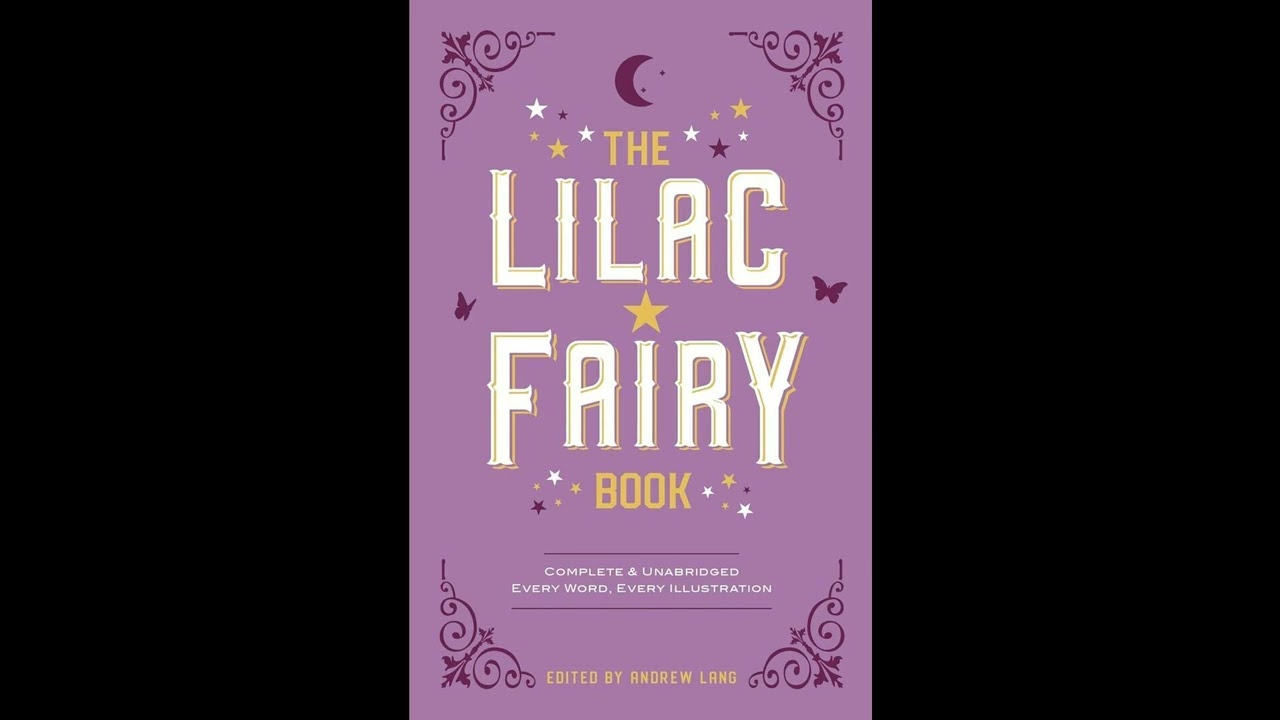
The Lilac Fairy Book
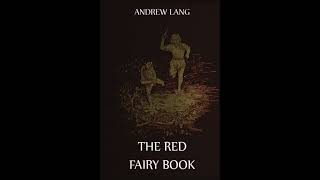
Imagine stepping into a world where every whispered tale finds its voice, where magic truly exists, and courage always finds a way. Andrew Lang's The Lilac Fairy Book, published in 1910, represents the grand crescendo of his celebrated series, a farewell bouquet of narratives from across the globe. This collection offers more than mere entertainment; it's an invitation to reconnect with foundational narratives that have shaped cultures and ignited imaginations for centuries, reminding us that humanity's hopes, fears, and triumphs are woven into shared archetypes that resonate just as powerfully today. Within The Lilac Fairy Book, listeners will discover a vast continent of stories, each a jewel gathered from distant shores. This volume presents a magnificent array of narratives from diverse traditions. Tales from Portugal, Wales, and Ireland sit beside those from Serbia, China, and Japan, offering unique cultural lenses through which to view familiar themes. Here you meet resilient princesses who overcome wicked stepmothers, humble peasants who rise to prominence through cunning or kindness, and brave princes who face formidable beasts or solve impossible riddles to win true love. The thread uniting these diverse narratives is the struggle between good and ill, often mediated by supernatural forces. Characters begin in challenging circumstances – poverty, enchantment, or under a dark prophecy – and must navigate trials. They might receive help from talking animals or wise old women, or fall prey to the trickery of giants, witches, or jealous rivals. Each story, while distinct in setting, follows an arc where individuals are tested and, through their virtues or ingenuity, find a path toward a better destiny. The exact outcomes are never certain, keeping the listener enthralled as they root for protagonists to overcome obstacles. Andrew Lang, born in Selkirk, Scotland, in 1844, was an intellectual giant of the late Victorian and Edwardian eras. Educated at St Andrews and Oxford, he was a polymath who contributed to classics, poetry, literary criticism, history, anthropology, and journalism. His most lasting legacy, however, is linked to the series of "Coloured Fairy Books," of which The Lilac Fairy Book is the last. He, with the essential assistance of his wife, Leonora Blanche Alleyne Lang, translated, adapted, and edited these international tales for an English-speaking audience. Lang's motivation stemmed from a deep appreciation for the pure narrative quality of traditional fairy tales, which he felt was overshadowed by moralizing children's literature. He sought to present stories with their original wonder intact, believing in imaginative storytelling to delight without overt instruction. Beyond the fairy books, his contributions to anthropology with works like Custom and Myth solidified his place as a crucial bridge between scholarly research and popular entertainment, making folklore accessible to millions. The stories within The Lilac Fairy Book consistently highlight several profound themes. One prominent idea is the clear distinction between good and ill, a fundamental aspect of traditional fairy tales. Characters like a virtuous maiden facing jealous stepsisters, or a kind-hearted youth sharing his meal, often find their benevolent actions rewarded. Vanity, greed, and cruelty invariably lead to unhappy consequences. This moral clarity offers a simple yet powerful framework for understanding human behavior and its repercussions, demonstrating that actions, both noble and nefarious, carry their own weight. Another recurring theme is transformation – both physical and situational. Characters might be magically changed into animals or objects, only to regain their true form through an act of love or bravery. Conversely, a humble miller's son can become a king, or a neglected princess can find her true power, illustrating a path from obscurity to recognition. These transformations reflect not only the magical potential within the tales but also the human capacity for growth, adaptation, and overcoming adversity. Furthermore, the breadth of tales from disparate parts of the world underscores cultural exchange, revealing how fundamental human experiences and narrative patterns appear in countless forms, fostering a sense of shared humanity. The Lilac Fairy Book appeared at a fascinating juncture – the twilight of the Edwardian era in Britain, a period of both stability and impending change. Culturally, there was a growing academic interest in anthropology and the systematic study of folklore, seeking to understand human societies through their traditional narratives. Figures like Lang, straddling scholarship and popular publishing, made these studies accessible. Children's literature also evolved, moving beyond strictly moralizing fables towards imaginative stories that delighted rather than preached. Lang's project was a conscious effort to counter the prevailing trend of sanitizing or overly moralizing fairy tales. He sought to present stories closer to their oral origins, valuing their intrinsic dramatic power and fantastical elements. The early twentieth century also saw heightened public interest in the wider world, driven by exploration and expanding communications. By gathering tales from such a diverse array of global sources, Lang catered to this curiosity, offering a window into the imaginative lives of people far removed from their familiar European settings. His collection served as both a reflection of and a contribution to the cultural milieu, a testament to the need for magic and wonder in a rapidly modernizing world. To listen to The Lilac Fairy Book as an audiobook is to return these stories to their purest form: the spoken word. Fairy tales originated around hearths and campfires, passed down by voice for generations. A skilled narrator breathes new life into the whimsical characters, the sinister villains, and the brave heroes with distinct voices and nuanced pacing. Listeners will find themselves transported by the evocative descriptions and the direct address of the storyteller, experiencing the suspense of a magical chase or the warmth of a happy reunion. The several hours of listening provide ample time to settle into the rhythms of these diverse narratives, making it ideal for quiet afternoons, long drives, or shared moments, allowing the age-old magic of these tales to truly sink in.
Enjoyed The Lilac Fairy Book? A few ways to support us
Audible & Amazon links are affiliate; we may earn a small commission at no extra cost.
About this production
Human narration by a volunteer reader from LibriVox.org, the public-domain audiobook project. LibriVox volunteers record literary works whose copyright has expired in the United States, releasing the resulting recordings into the public domain.
The Lilac Fairy Book by Andrew Lang. The underlying text is in the U.S. public domain. We do not republish any modern copyrighted edition, translation, or commentary.
The 4K cinematic visuals accompanying this audiobook are generated by an AI image model from prompts derived from the source text. No copyrighted photos, paintings, or stock footage are used. AI generation is disclosed on every video on our YouTube channel as required by YouTube's altered/synthetic content policy.
English subtitles are transcribed from the LibriVox recording with OpenAI Whisper. Translations into the 11 other supported languages are produced by Meta's NLLB-200 neural translation model. No human translator's copyrighted translation is used.
Questions about sourcing or rights? See our DMCA & Sourcing policy or contact us.
Enjoyed this audiobook?
If you'd like to own a copy of The Lilac Fairy Book or hear a professionally produced edition, the links below help support free audiobook production at no extra cost to you.
As an Amazon Associate we earn from qualifying purchases. Audible / print links are affiliate.