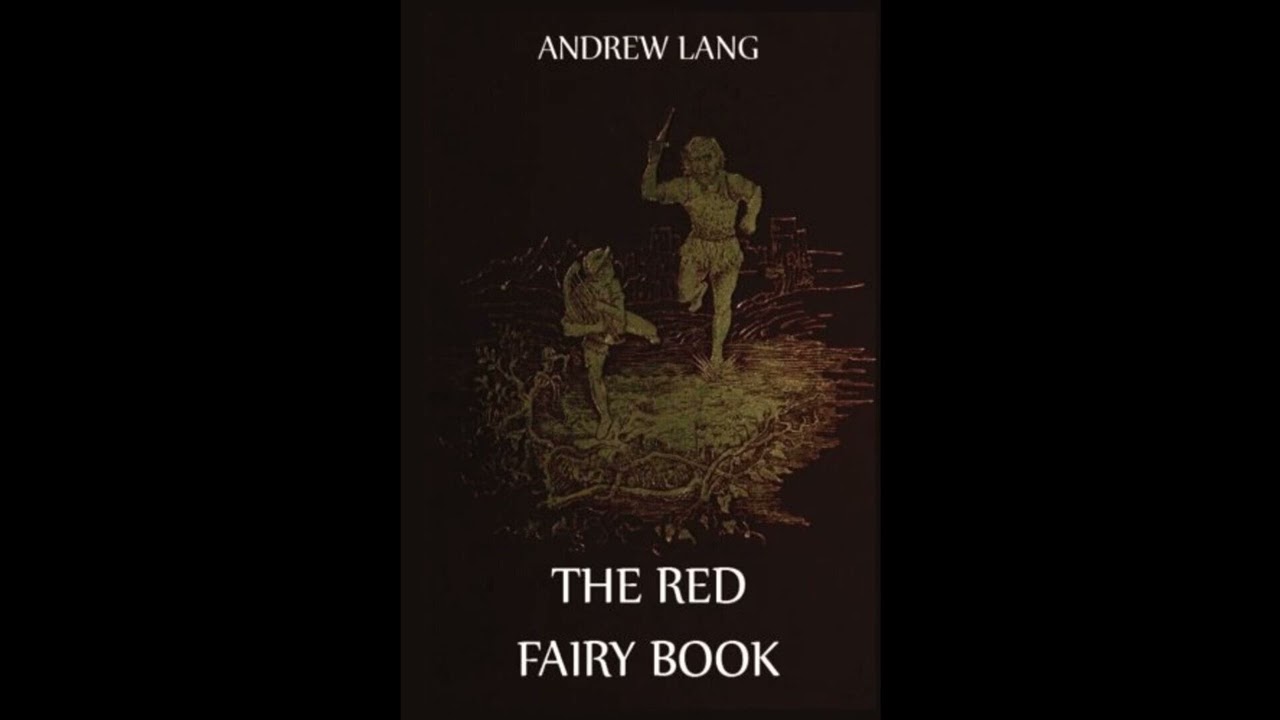
The Red Fairy Book
For countless generations, before the advent of written language and long before the printed page, the oldest stories of humanity traveled on the wind, passed from speaker to listener around hearth fires and under starlit skies. These were the fairy tales — narratives of wonder, peril, transformation, and enduring truth that shaped cultures and ignited imaginations. Andrew Lang’s The Red Fairy Book stands as a monumental collection, not merely reprinting these ancient whisperings but carefully curating and presenting them anew for a hungry Victorian audience, and in doing so, ensuring their legacy for listeners today. It is a work that reminds us of the power of storytelling to connect us to our past, to our shared human experience, and to the boundless realm of possibility that lies just beyond the everyday. Within the pages of The Red Fairy Book, a listener finds themselves transported to a myriad of magical realms, often rooted in the familiar landscapes of European folklore but always imbued with an element of the extraordinary. From grand castles nestled deep within enchanted forests to humble cottages at the edge of shadowed woods, the settings shift with each story, yet a common thread of magic and fate runs through them all. Here, listeners will encounter figures both noble and ignoble: virtuous princesses suffering under cruel enchantments, resourceful commoners outwitting giants and witches, valiant princes seeking their fortunes or breaking ancient curses. The central conflict in many of these tales often pits the forces of good against malevolence, or tests the courage and character of individuals against overwhelming odds. Whether it is a young hero seeking to marry a princess against the wishes of a powerful king, or a maiden enduring the tyranny of a wicked stepmother, the stories consistently present characters grappling with profound challenges. The arc of these narratives frequently follows a pattern of an initial misfortune or an impossible quest, leading protagonists through a series of trials where their kindness, cunning, or purity of heart is tested. Along the way, they often receive aid from unexpected sources—a talking animal, a benevolent fairy, or a wise old woman—who provide magical objects or crucial advice. This assistance typically helps the hero or heroine overcome the seemingly insurmountable obstacles placed in their path, leading towards a resolution that rewards virtue and punishes vice. While each story within the collection stands on its own, together they weave a rich pattern of humanity's hopes, fears, and moral understandings, creating a collective narrative that speaks to the deep-seated desire for justice and the triumph of perseverance. Listeners will find themselves cheering for the downtrodden, marveling at acts of heroism, and pondering the consequences of both good and ill deeds. Andrew Lang, the remarkable compiler of this collection, was born in Selkirk, Scotland, in 1844, and lived a life defined by an extraordinary breadth of intellectual curiosity until his passing in 1912 in Banchory, Scotland. Educated at St Andrews University and Balliol College, Oxford, Lang became a polymath of the Victorian era, distinguishing himself as a poet, novelist, literary critic, anthropologist, historian, and journalist. His prodigious output spanned numerous fields, from academic studies of mythology and religion to popular history books and translations of ancient Greek texts, including seminal work on Homer's Odyssey and Iliad. He was a frequent contributor to Longman's Magazine and a prominent figure in London literary circles. Lang's enduring legacy, however, is most famously tied to his series of "Colour Fairy Books," of which The Red Fairy Book is an early and prominent example. These books, though published under his name, were often the result of a collaborative effort, particularly with his wife, Leonora Blanche Alleyne, and a team of translators and researchers who helped gather tales from various global traditions. Lang’s motivation was not merely to entertain but also to counter the moralistic and often didactic children’s literature prevalent in his time, advocating instead for stories that stimulated imagination and wonder. His work in collecting and popularizing these traditional tales cemented his place as a pivotal figure in both folklore studies and the development of children's literature, shaping the reading habits of generations and introducing countless young minds to the universal appeal of these ancient narratives. The stories within The Red Fairy Book enact several powerful and enduring themes that resonate across cultures and centuries. Foremost among these is the stark dichotomy of good versus evil, a concept often presented through archetypal characters. In "Jack and the Beanstalk," for instance, the cruel, man-eating Giant represents a clear force of malevolence that Jack, a seemingly simple boy, must overcome through cleverness and courage. Another pervasive theme is that of transformation and metamorphosis, which frequently manifests as characters changing their outward form or dramatically altering their social standing. Consider tales like "The Twelve Dancing Princesses," where a curse forces princesses to dance away their nights, or the many stories where humble characters, through acts of kindness or bravery, are transformed from paupers to royalty. These changes are not merely physical; they often represent a moral or spiritual evolution. A third significant theme is justice and consequences, where virtuous acts are unfailingly rewarded and wickedness inevitably meets a fitting comeuppance. In "The Golden Goose," the kindest son, Simpleton, shares his food with a tiny grey man and is subsequently granted a magical goose that brings him fortune, while his greedy brothers meet less fortunate ends. This demonstrates the idea that kindness and generosity lead to prosperity, whereas selfishness leads to ruin. Finally, the collection highlights the power of virtue and humility, suggesting that true strength often lies not in physical might or social status, but in an individual's intrinsic goodness, honesty, and empathy. The seemingly weakest or most unassuming characters often succeed where the powerful and proud fail, a testament to the idea that genuine moral character is the most potent force in the world. The Red Fairy Book emerged in the late Victorian era, a period of immense change and complex cultural currents. Published in 1890, it appeared at a time when British society was grappling with the implications of rapid industrialization, scientific advancements – particularly Darwin's theories – and the expansion of the British Empire. This scientific and rationalist worldview, however, also fostered a counter-current: a renewed public interest in folklore, myth, and the supernatural, perhaps as a way to reconnect with older forms of understanding and wonder. The German Romantic movement, with the Brothers Grimm’s collection of German folk tales, had long influenced European literary sensibilities, rekindling an appreciation for traditional narratives. Moreover, the late nineteenth century saw the burgeoning recognition of childhood as a distinct and important phase of life, deserving of its own literature, rather than merely being a time for moral instruction or simplified adult texts. Lang's work directly addressed this need, providing children with stories that celebrated imagination and heroism without overt didacticism. His collections were a deliberate response to the duller or overly moralistic children’s books of the time. By drawing from a wide array of European sources, Lang not only preserved stories that might otherwise have faded but also shaped the literary landscape for generations of young readers, firmly embedding these tales into the English-speaking cultural consciousness. Listening to The Red Fairy Book as an audiobook offers a particularly resonant experience, returning these stories to their fundamental oral tradition. Unlike reading them silently, the spoken word brings a different kind of life to the narrative. The several hours of running time provide ample opportunity to become fully immersed, whether during a commute, an evening wind-down, or a quiet afternoon. A skilled narrator can modulate their voice to distinguish between a sly fox and a booming giant, a cowering princess and a brave knight, lending distinct personality to each character and making the dialogue leap from the page. The pacing can ebb and flow with the rhythm of each tale—sometimes quick and suspenseful, at other times gentle and contemplative. Listeners can savor the descriptive passages that paint vivid pictures of enchanted forests or grand ballrooms, and feel the atmosphere of danger or delight intensify through vocal interpretation. It is an opportunity to truly hear the magic unfold, to let the narrative wash over you as it would have around those ancient hearth fires, connecting you directly to the voice of a storyteller.
Enjoyed The Red Fairy Book? A few ways to support us
Audible & Amazon links are affiliate; we may earn a small commission at no extra cost.
About this production
Human narration by a volunteer reader from LibriVox.org, the public-domain audiobook project. LibriVox volunteers record literary works whose copyright has expired in the United States, releasing the resulting recordings into the public domain.
The Red Fairy Book by Andrew Lang. The underlying text is in the U.S. public domain. We do not republish any modern copyrighted edition, translation, or commentary.
The 4K cinematic visuals accompanying this audiobook are generated by an AI image model from prompts derived from the source text. No copyrighted photos, paintings, or stock footage are used. AI generation is disclosed on every video on our YouTube channel as required by YouTube's altered/synthetic content policy.
English subtitles are transcribed from the LibriVox recording with OpenAI Whisper. Translations into the 11 other supported languages are produced by Meta's NLLB-200 neural translation model. No human translator's copyrighted translation is used.
Questions about sourcing or rights? See our DMCA & Sourcing policy or contact us.
Enjoyed this audiobook?
If you'd like to own a copy of The Red Fairy Book or hear a professionally produced edition, the links below help support free audiobook production at no extra cost to you.
As an Amazon Associate we earn from qualifying purchases. Audible / print links are affiliate.