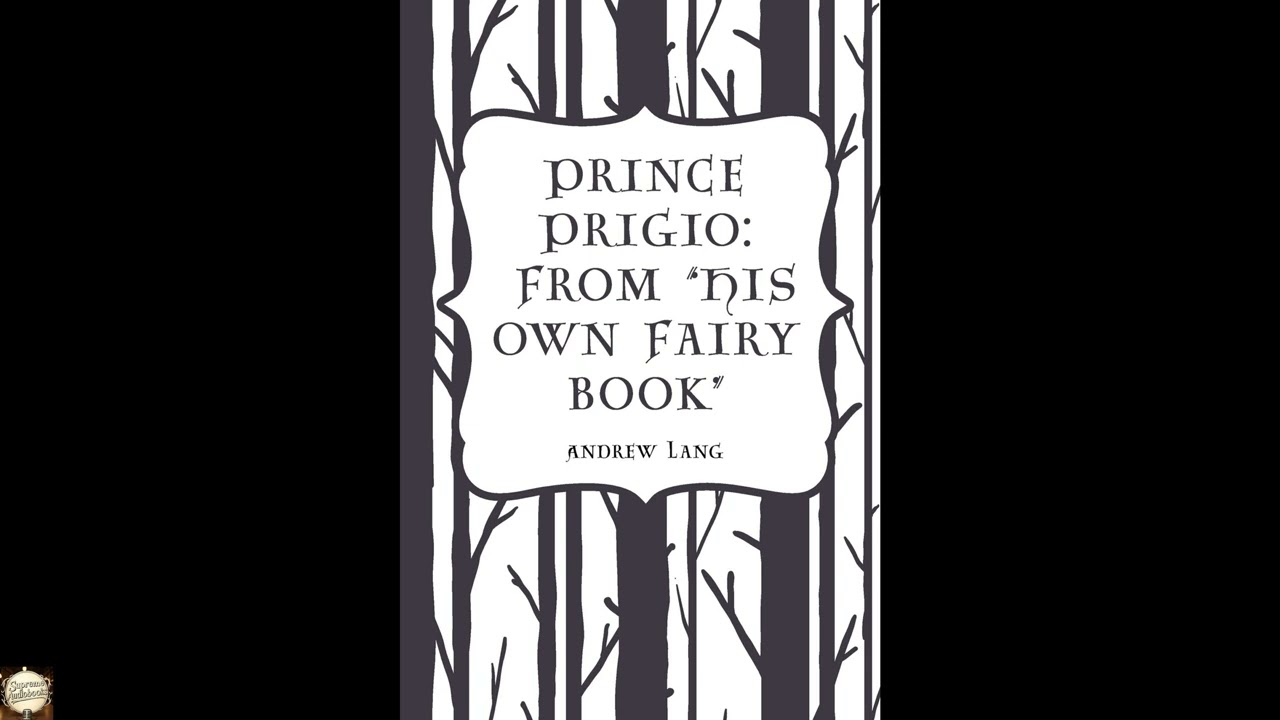
Prince Prigio: From "His Own Fairy Book"
Step into the whimsical yet remarkably astute world of Andrew Lang’s Prince Prigio, a forgotten jewel from "His Own Fairy Book" that playfully dissects the very essence of classic folklore. More than just a charming tale for children, this novella-length story offers a sophisticated, satirical inversion of traditional fairy tale tropes, presenting a hero whose greatest gift is also his biggest burden. In an age where intellect is often glorified, Prince Prigio asks what happens when cleverness becomes a curse, forcing us to consider the true meaning of wisdom, happiness, and the magic that lies beyond pure logic. It’s a delightful listen for anyone who appreciates sharp wit, keen observation, and a fresh perspective on timeless narratives. Our story begins in the somewhat unremarkable Kingdom of Pantouflia, a land where magic, though existent, is largely ignored or treated with dismissive skepticism by its pragmatic inhabitants. The stage is set for an unusual royal birth, that of Prince Prigio, whose arrival is marked by the customary gathering of fairy godmothers. But instead of granting him charm, courage, or good looks, one particularly mischievous fairy bestows upon Prigio the gift of being "too clever." This isn’t the cleverness of quick wit or strategic thinking; it's an overwhelming, debilitating rationality that allows him to see through all illusions, debunk all myths, and solve every problem with an irritating ease. As a child, Prigio is insufferable, proving the non-existence of ghosts, solving riddles before they're fully asked, and generally making everyone around him feel quite dull. As he grows, Prince Prigio’s excessive intellect alienates him from his parents, the King and Queen, who wish their son were as charmingly average as the rest of the kingdom. He has no patience for poetry, no belief in true love, and absolutely no faith in magic, despite living in a world where it occasionally manifests. His unwavering logic prevents him from appreciating the subtle beauties and mysteries of life, leaving him isolated and perpetually unsatisfied. The central conflict arises when Pantouflia faces genuine threats that demand more than just logical solutions – threats that require a touch of the very magic Prigio disdains. He must confront his own intellectual arrogance and, perhaps, learn to embrace the irrational if he is to save his kingdom and, indeed, himself from a life devoid of wonder. Andrew Lang, born in Selkirk, Scotland, in 1844, was a towering figure in late Victorian letters. A polymath whose interests spanned poetry, journalism, literary criticism, anthropology, and classical scholarship, Lang is perhaps best known today as the compiler and editor of the seminal "Fairy Books" series. This collection, beginning with The Blue Fairy Book in 1889, brought countless traditional tales from around the world to a generation of English-speaking children, cementing his legacy as a popularizer of folklore. He graduated from St Andrews and Merton College, Oxford, and maintained a deep scholarly interest in mythology and the origins of religion, contributing significantly to the emerging field of folklore studies. Beyond his groundbreaking work as a collector and editor, Lang also penned original fairy tales, among which Prince Prigio (1889) and its sequel, Prince Ricardo (1893), stand out. These stories reveal a sophisticated understanding of the genre he so ardently championed, allowing him to both celebrate and playfully subvert its conventions. Lang was not just a storyteller; he was a bridge between the ancient world of myth and the modern pursuit of scientific inquiry, a scholar who could effortlessly shift from dissecting Homeric epic to crafting new narratives that resonated with the spirit of his time. His vast body of work established him as a significant voice, one who championed both the enduring power of narrative and the rigorous demands of intellectual curiosity, before his death in 1912. At its core, Prince Prigio keenly examines the distinction between intelligence and true wisdom. Prigio, with his preternatural ability to solve problems and debunk myths, possesses an undeniable intellect, yet he is unhappy and isolated. For instance, early in the story, he dismisses the legend of a dragon by logically deducing its impossibilities, rather than engaging with the imaginative power of the tale. This shows how his cleverness, while impressive, blinds him to deeper truths and the value of belief. The story suggests that an overreliance on pure reason can be as limiting as a lack of intelligence, particularly when it comes to understanding human nature or the inexplicable elements of existence. The book also acts as a brilliant satire of traditional fairy tale conventions. Lang flips common tropes on their head, from the "gift" of a fairy godmother turning into a curse, to a prince who is anything but charming or beloved. The King and Queen, far from reveling in their son’s genius, openly lament it, wishing he were as dull and conventional as other royal children. This reversal highlights the inherent absurdities in some classic narratives, where certain traits are universally glorified without considering their practical or emotional consequences. Through Prigio's encounters with actual magic, such as the magical sword and the fearsome Firedrakes, Lang illustrates how even the most rational mind must eventually confront the limits of logic and perhaps even concede to the fantastic. When Prince Prigio was published in 1889, the late Victorian era was a fascinating period of cultural ferment. It was a time marked by significant scientific advancement and a burgeoning rationalist worldview, epitomized by figures like Charles Darwin and the ongoing Industrial Revolution. Yet, concurrently, there was a powerful counter-current: a widespread fascination with folklore, mythology, and the romantic past. Movements like the Arts and Crafts revival and the Celtic Revival expressed a yearning for simpler times and a return to traditional aesthetics and narratives. Andrew Lang stood precisely at this crossroads. He was a scholar steeped in classical learning and anthropological theory, yet he devoted immense energy to collecting and preserving the very fairy tales that some of his contemporaries might have dismissed as childish fables. Prince Prigio emerged from this tension, offering a story that simultaneously celebrated and critiqued the genre, bridging the gap between a world increasingly defined by science and one that still clung to the enchantment of old stories. To hear Prince Prigio as an audiobook is to experience Andrew Lang’s subtle wit and delightful prose in its purest form. The story’s narrative voice, with its dry humor and occasional asides, truly comes alive when read aloud, allowing the listener to fully appreciate the ironic tone that underlies much of Prigio’s predicament. A skilled narrator can perfectly capture the prince’s initially insufferable intellect, the exasperation of his parents, and the eventual dawning of wonder in his rational mind. The story’s "several hours" run length makes it an ideal choice for a sustained listen, offering enough time to become fully immersed in Pantouflia and its peculiar hero, yet short enough to hold one's attention without distraction. Listen for the subtle shifts in pacing, the nuanced characterizations in dialogue, and the overall atmospheric quality that brings Lang’s unique brand of magical realism vividly to life.
Enjoyed Prince Prigio: From "His Own Fairy Book"? A few ways to support us
Audible & Amazon links are affiliate; we may earn a small commission at no extra cost.
About this production
Human narration by a volunteer reader from LibriVox.org, the public-domain audiobook project. LibriVox volunteers record literary works whose copyright has expired in the United States, releasing the resulting recordings into the public domain.
Prince Prigio: From "His Own Fairy Book" by Andrew Lang. The underlying text is in the U.S. public domain. We do not republish any modern copyrighted edition, translation, or commentary.
The 4K cinematic visuals accompanying this audiobook are generated by an AI image model from prompts derived from the source text. No copyrighted photos, paintings, or stock footage are used. AI generation is disclosed on every video on our YouTube channel as required by YouTube's altered/synthetic content policy.
English subtitles are transcribed from the LibriVox recording with OpenAI Whisper. Translations into the 11 other supported languages are produced by Meta's NLLB-200 neural translation model. No human translator's copyrighted translation is used.
Questions about sourcing or rights? See our DMCA & Sourcing policy or contact us.
Enjoyed this audiobook?
If you'd like to own a copy of Prince Prigio: From "His Own Fairy Book" or hear a professionally produced edition, the links below help support free audiobook production at no extra cost to you.
As an Amazon Associate we earn from qualifying purchases. Audible / print links are affiliate.