American Fairy Tales
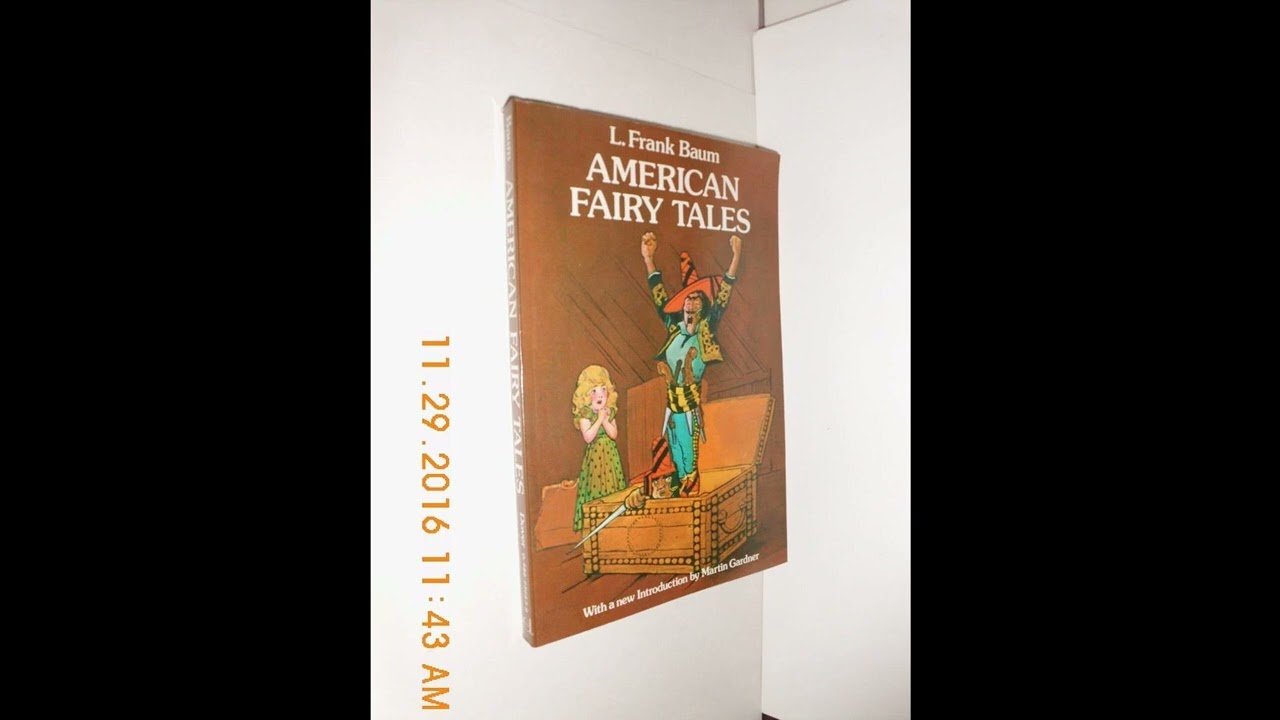
Before L. Frank Baum introduced the world to Dorothy and the Yellow Brick Road, he presented a different kind of American magic. His collection, American Fairy Tales, published in 1901, offers a unique window into the nascent imagination of a nation carving out its own identity, even in the realm of myth and fantasy. These stories move beyond the familiar European forests and castles, instead presenting wonders that feel distinctly homegrown, often springing from everyday life and reflecting a burgeoning American spirit of ingenuity and optimism. For anyone curious about the roots of American fantasy literature, or simply seeking clever tales that blend the mundane with the miraculous, this collection provides an experience both historically significant and wonderfully entertaining. It is a foundational text demonstrating Baum’s singular vision, a compelling argument that America, too, possessed the landscapes and the dreams for its own peculiar brand of enchantment. This anthology gathers twelve distinct narratives, each a self-contained venture into the peculiar corners of Baum’s imagination. Listeners will encounter a cast of characters who are often quite ordinary – a humble farmer, a curious child, a small-town inventor – suddenly thrust into extraordinary circumstances. One tale introduces a delightful young girl whose unusual birth gives her the power to understand the language of all animals, leading to humorous and sometimes poignant interactions. Another follows a boy who discovers a peculiar device that can bring inanimate objects to life, causing delightful chaos and unexpected friendships. The conflicts rarely involve grand battles against evil wizards or ancient curses; instead, they often revolve around clever problem-solving, overcoming personal foibles, or simply navigating the delightful illogic of a suddenly magical world. The settings, too, feel familiar yet subtly altered: not dark, brooding woods, but sun-dappled groves, bustling towns, or even quiet parlors where magic might suddenly emerge from a common household object. What binds these diverse stories is a consistent tone of lighthearted wonder and a distinctly American outlook, where common sense often proves as potent as any spell. Lyman Frank Baum was born in Chittenango, New York, in 1856, into a prosperous family whose wealth came from oil. His early life was a varied one, marked by several different careers before he found his true calling as a writer. He tried his hand as a chicken breeder, a traveling salesman, and even a newspaper editor in South Dakota, where he observed the rapidly changing American landscape and the lives of those shaping it. These experiences, though seemingly disparate, no doubt provided him with a keen understanding of human nature and the diverse fabric of American society. It was not until he was in his forties that Baum achieved widespread fame with The Wonderful Wizard of Oz in 1900, a book that fundamentally reshaped children's literature. He went on to write dozens more books, including thirteen sequels to Oz, creating one of the most beloved and enduring fantasy worlds in literature. Baum’s desire was to create a new kind of fairy tale, one without the terrifying moralizing or grim events often found in the European collections of the Brothers Grimm or Hans Christian Andersen, aiming instead for pure joy and imagination for American children. Baum’s stories frequently highlight American ingenuity and self-reliance. Characters in American Fairy Tales rarely wait for a fairy godmother to solve their predicaments; instead, they often use their wits, their inventiveness, or their own unique talents to navigate the fantastical problems that arise. In "The Box of Robbers," for instance, a simple farmer’s quick thinking and resourcefulness are what outsmart a predicament involving an unexpected delivery. This theme reflects a period in American history where practical solutions and individual initiative were highly valued, embodying the spirit of frontier resourcefulness even when faced with magical rather than mundane challenges. Another prominent theme is the idea of ordinary settings giving way to the extraordinary, demonstrating a belief that wonder is not confined to distant lands but can emerge from the familiar. A talking scarecrow appearing in a field or a magical instrument discovered in an attic reminds listeners that enchantment can exist just beyond the veil of everyday perception, a reassuring and delightful notion for both children and adults. The collection also subtly examines morality and consequence, as characters often learn valuable lessons about responsibility and empathy through their unusual encounters, sometimes with humorous results, always without heavy-handed instruction. The early 20th century in America was a dynamic period, characterized by rapid industrialization, increasing urbanization, and a growing sense of national identity. As the country transitioned from an agrarian society to an industrial power, there was a palpable desire to forge cultural products that were distinctly American, not merely imitations of European traditions. In the literary world, this meant a demand for children's literature that spoke to American experiences and values. European fairy tales, with their often dark themes and ancient settings, felt increasingly distant from the modern American child. L. Frank Baum consciously set out to address this gap, envisioning tales that embraced American optimism, a lighthearted spirit, and a sense of possibility. His work reflected a progressive era where societal change was seen as achievable, and where the future seemed bright. American Fairy Tales thus emerged as a direct response to this cultural moment, offering stories that were fresh, optimistic, and rooted in an imaginative landscape that mirrored the evolving American dream. Listening to American Fairy Tales as an audiobook offers a singular opportunity to immerse oneself in Baum's whimsical narratives. The clarity of his prose and the often conversational tone of his stories lend themselves perfectly to narration, allowing the listener to absorb each tale as if it were being personally recounted. With several hours of content, it is an ideal companion for a variety of listening occasions—whether savoring individual stories during a short commute or enjoying a longer, continuous session during a family road trip. A skilled narrator brings Baum’s diverse characters to life, from the peculiar magical beings to the distinctly human children, distinguishing their voices and personalities with nuanced delivery. The pacing of these stories, often starting with a gentle introduction before building to a charmingly absurd climax, is wonderfully enhanced through the spoken word, creating an atmospheric experience that draws one deeper into each unique fantasy. This format truly allows the wit and warmth of Baum’s language to shine, revealing the enduring charm of these pioneering American fables.
Enjoyed American Fairy Tales? A few ways to support us
Audible & Amazon links are affiliate; we may earn a small commission at no extra cost.
About this production
Human narration by a volunteer reader from LibriVox.org, the public-domain audiobook project. LibriVox volunteers record literary works whose copyright has expired in the United States, releasing the resulting recordings into the public domain.
American Fairy Tales by L. Frank Baum. The underlying text is in the U.S. public domain. We do not republish any modern copyrighted edition, translation, or commentary.
The 4K cinematic visuals accompanying this audiobook are generated by an AI image model from prompts derived from the source text. No copyrighted photos, paintings, or stock footage are used. AI generation is disclosed on every video on our YouTube channel as required by YouTube's altered/synthetic content policy.
English subtitles are transcribed from the LibriVox recording with OpenAI Whisper. Translations into the 11 other supported languages are produced by Meta's NLLB-200 neural translation model. No human translator's copyrighted translation is used.
Questions about sourcing or rights? See our DMCA & Sourcing policy or contact us.
Enjoyed this audiobook?
If you'd like to own a copy of American Fairy Tales or hear a professionally produced edition, the links below help support free audiobook production at no extra cost to you.
As an Amazon Associate we earn from qualifying purchases. Audible / print links are affiliate.