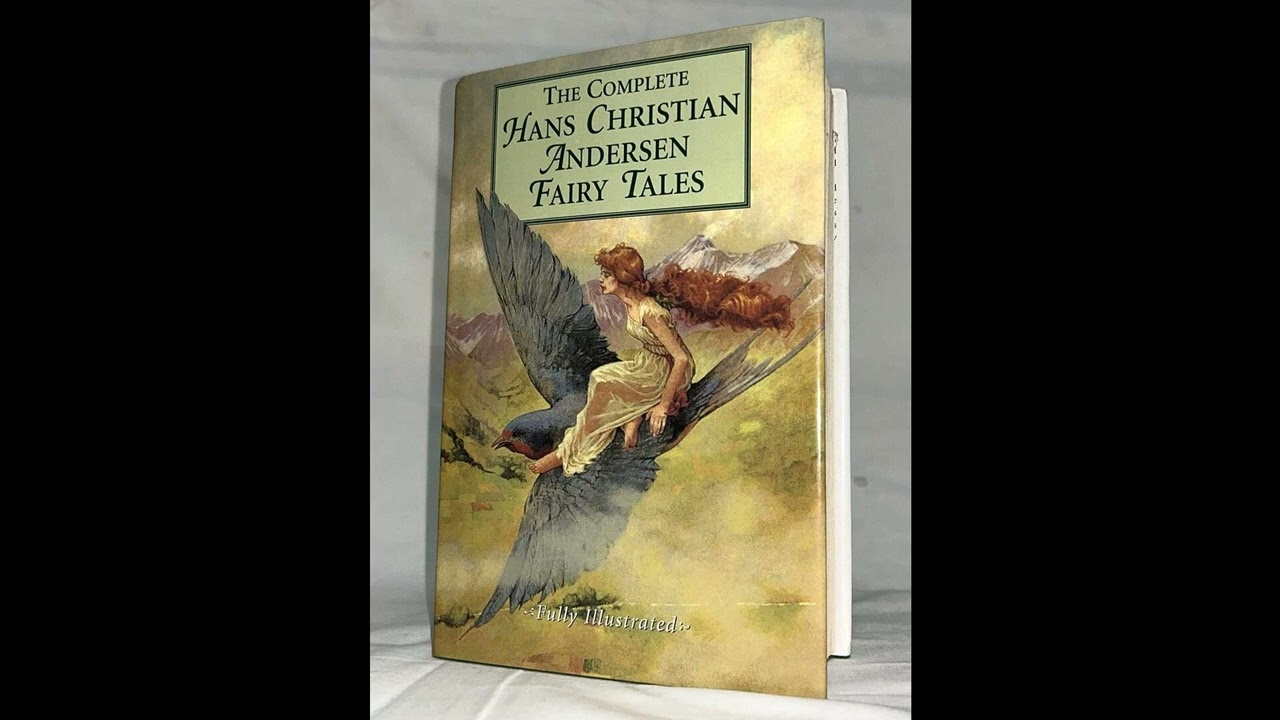
The Complete Hans Christian Andersen Fairy Tales
Step into a world where seashells whisper secrets, tin soldiers march with valiant hearts, and the most extraordinary magic often hides within the everyday. The Complete Hans Christian Andersen Fairy Tales is more than just a collection of stories; it is a profound entry point into the human condition, crafted by one of literature's most perceptive observers. These are not merely tales for children, though they have delighted generations of young readers. They are profound meditations on love, loss, identity, and sacrifice, offering insights that resonate with adults today as powerfully as they did when first penned. To listen to these tales is to confront the stark beauty and sometimes bitter truths of existence, all while being carried along by a storyteller of unparalleled grace and wit. Within these pages, or rather, across these hours of spoken word, a vast panorama of characters and settings unfolds. We meet princesses who yearn for true connection, humble villagers facing incredible moral dilemmas, and creatures from the natural world—a steadfast tin soldier, a lonely mermaid, a vain emperor, a struggling duckling—whose experiences mirror the struggles and triumphs of human life. The settings range from the bustling streets of European cities, where poverty can strike with cruel indifference, to grand palaces and the ethereal depths of the ocean. Each story presents a distinct microcosm, often blending the whimsical and the mundane, where ordinary objects gain sentience and speak profound truths, and where fantastical elements are treated with a disarming realism. Central to many of Andersen's narratives is a protagonist grappling with a significant challenge: finding a sense of belonging, overcoming societal prejudice, or pursuing an elusive dream. We witness heartfelt longing, such as a young mermaid's yearning for an immortal soul and a life on land, or a small, overlooked bird struggling to find its place among peers. Conflicts often stem from both internal desires and external pressures, whether it is the cruel indifference of society, the limitations of one's circumstances, or the difficult choices demanded by love and ambition. The stories frequently trace a path from innocence or hope through trial and tribulation, revealing the character's fortitude and capacity for self-discovery, leading to a poignant resolution that rarely offers simple happy endings but rather a deeper understanding of life's complexities. The genius behind these stories was Hans Christian Andersen, born in Odense, Denmark, on April 2, 1805. His humble origins—his father was a shoemaker, his mother a laundress—profoundly shaped his perspective. Andersen's early life was marked by poverty and a fervent, almost desperate, ambition to succeed in the arts. He left Odense for Copenhagen at 14, initially seeking fame as a singer, dancer, and actor, experiencing many years of struggle before receiving support from influential patrons who recognized his talent and helped fund his education. Though he initially sought recognition as a novelist and playwright, publishing works like the semi-autobiographical novel The Improvisatore, it was in the fairy tale genre that he found his true voice and enduring fame. Andersen's personal life was often solitary, marked by unrequited loves and a persistent feeling of being an outsider, which he channeled into his literary creations. He traveled extensively across Europe, meeting prominent figures such as Charles Dickens and Victor Hugo, drawing inspiration from these encounters and the diverse landscapes he observed. He elevated the fairy tale from a simple folk tradition to a sophisticated literary form, imbued with psychological depth, social commentary, and deeply personal emotion. His method was not merely to retell ancient legends but to create entirely original narratives, often populated by talking objects, animals, and children, all imbued with distinct personalities and purposes. His place in the literary canon is secure as one of the most translated authors in the world, a pioneer who transformed children's literature while simultaneously writing for adults. His work is often associated with the Danish Golden Age, and while influenced by Romanticism, Andersen frequently subverted its pure idealism with a bracing realism and melancholy that distinguished his style from that of his contemporaries. His unique blend of fantasy, pathos, humor, and social critique ensures his continued relevance, making him a central figure in both Danish literature and global storytelling. Several enduring themes emerge repeatedly throughout Andersen's collection, lending them their timeless resonance. One prominent theme is the search for identity and belonging, vividly portrayed in "The Ugly Duckling," where a bird endures scorn and loneliness before realizing its true, majestic nature. Similarly, "The Little Mermaid" presents a profound yearning to transcend one's natural state and find acceptance in a vastly different world, illustrating the lengths to which one might go for transformation and inclusion. The inherent struggle to be seen and understood, often against a backdrop of misunderstanding and prejudice, runs through many of his narratives. Another powerful theme is the contrast between appearance and reality, often used to critique societal vanity and superficiality. "The Emperor's New Clothes" serves as a brilliant satire on hypocrisy and the human tendency to perpetuate illusions rather than speak uncomfortable truths. Andersen also consistently addresses sacrifice and the nature of love, perhaps most famously in "The Little Mermaid," where selfless devotion comes with immense personal cost and suffering. Conversely, "The Little Match Girl" starkly reveals societal indifference and the harsh realities of poverty, contrasting fleeting dreams and the warmth of memory with the brutal coldness of human neglect. These examples showcase Andersen's ability to infuse simple narratives with complex moral and emotional dilemmas. The mid-19th century, when Hans Christian Andersen penned most of his enduring tales, was a period of significant change across Europe. Culturally, the Romantic movement was flourishing, emphasizing emotion, individualism, and the glorification of nature, yet Andersen often tempered this with a dose of realism and skepticism. Industrially, nations were modernizing, leading to growing urbanization and stark social stratification, with extreme wealth existing alongside abject poverty—a contrast frequently observed and subtly critiqued in his stories. In Denmark itself, there was a burgeoning national identity and a concurrent focus on Danish language and literature. Literarily, this era saw an increased interest in collecting and publishing folk tales, a trend popularized by the Brothers Grimm in Germany. However, Andersen distinguished himself not by merely recording existing folklore, but by creating original tales. He used the structure and appeal of the fairy tale to convey sophisticated ideas about human nature, social justice, and spiritual matters, making his work accessible to children while offering profound reflections for adults. His stories emerged from a time of both national pride and social upheaval, providing a lens through which to examine universal human experiences against a backdrop of specific historical developments, often subtly challenging the prevailing norms of his society. Listening to The Complete Hans Christian Andersen Fairy Tales as an audiobook offers a unique opportunity to rediscover these narratives in their most immediate form. The narrator's voice becomes the conduit for Andersen's precise prose, bringing out the subtle wit, the understated melancholy, and the soaring hope that often co-exist within a single tale. The run length, encompassing several hours of storytelling, allows for deep immersion, whether you choose to listen to stories individually during a short commute or engage in longer sessions, letting Andersen's world unfold around you. A skilled narrator can modulate pacing to perfectly capture the suspense of a quest, the quiet contemplation of a character's inner thoughts, or the brisk, often ironic, unfolding of societal observation. The dialogue, deceptively simple at times, gains distinct character and emotional weight through varied voices, breathing life into a vast array of protagonists, from the earnest to the proud, the vulnerable to the wise. Ultimately, the spoken word enriches the atmosphere of each story, making the icy beauty of "The Snow Queen" or the desolate streets of "The Little Match Girl" feel palpably present, inviting you to experience the full spectrum of Andersen's unique literary magic.
Enjoyed The Complete Hans Christian Andersen Fairy Tales? A few ways to support us
Audible & Amazon links are affiliate; we may earn a small commission at no extra cost.
About this production
Human narration by a volunteer reader from LibriVox.org, the public-domain audiobook project. LibriVox volunteers record literary works whose copyright has expired in the United States, releasing the resulting recordings into the public domain.
The Complete Hans Christian Andersen Fairy Tales by Hans Christian Andersen. The underlying text is in the U.S. public domain. We do not republish any modern copyrighted edition, translation, or commentary.
The 4K cinematic visuals accompanying this audiobook are generated by an AI image model from prompts derived from the source text. No copyrighted photos, paintings, or stock footage are used. AI generation is disclosed on every video on our YouTube channel as required by YouTube's altered/synthetic content policy.
English subtitles are transcribed from the LibriVox recording with OpenAI Whisper. Translations into the 11 other supported languages are produced by Meta's NLLB-200 neural translation model. No human translator's copyrighted translation is used.
Questions about sourcing or rights? See our DMCA & Sourcing policy or contact us.
Enjoyed this audiobook?
If you'd like to own a copy of The Complete Hans Christian Andersen Fairy Tales or hear a professionally produced edition, the links below help support free audiobook production at no extra cost to you.
As an Amazon Associate we earn from qualifying purchases. Audible / print links are affiliate.