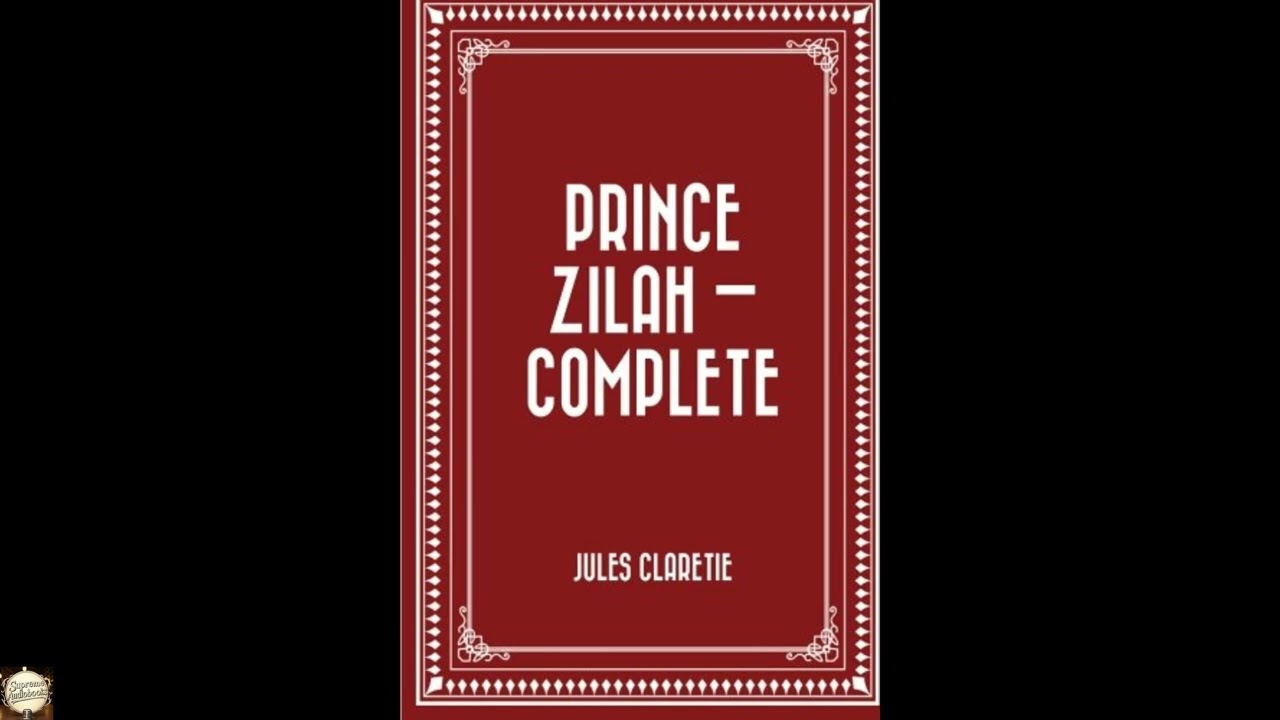
Prince Zilah
Step into the opulent, glittering, yet often treacherous world of Belle Époque Paris with Jules Claretie's Prince Zilah, an audiobook that pulsates with the very heart of nineteenth-century romantic intrigue and social drama. This isn't just a story about love; it's a keen examination of reputation, the corrosive power of secrets, and the intoxicating, dangerous allure of a society obsessed with appearances. What draws listeners to this narrative even today is its unflinching look at the human cost of conforming to societal expectations, and the burning question of whether true passion can ever survive the crucible of scandal. It’s a compelling portrait of desires clashing with decorum, echoing anxieties about identity and belonging that resonate far beyond its historical setting. The story unfolds in the dazzling salons and hushed boudoirs of Parisian high society, a realm where whispers can ruin lives and a single misstep can shatter a carefully constructed image. At its center is the enigmatic Prince Zilah, a Hungarian nobleman of fierce passion and untamed spirit who arrives in the French capital. He is quickly drawn into the orbit of Countess Hélène de Valdes, a woman of breathtaking beauty and elusive charm, whose elegance and reserve make her the darling of Parisian society. Hélène, however, carries a guarded demeanor, hinting at a past she meticulously keeps hidden. Their initial encounters spark an undeniable connection, an electric current of attraction that defies the rigid conventions of their world. As Zilah's pursuit intensifies, the narrative skillfully peels back layers of social veneer, revealing the pressures that surround Hélène and the profound risks involved in yielding to such a powerful, unconventional love. Claretie constructs a world where every glance, every conversation, every perceived slight holds immense significance, where the potential for scandal looms large over any deviation from accepted norms. The central conflict arises from the irresistible force of Zilah's affection against the immovable object of Hélène's carefully guarded reputation and her hidden history. Their burgeoning relationship is a tightrope walk over the abyss of public judgment and personal ruin, forcing both characters to confront difficult truths about themselves and the society they inhabit. The arc of the story sees their connection deepen, moving from initial fascination to a profound entanglement, all while the specter of Hélène's past and the strictures of their present society threaten to tear them apart, leading them to a pivotal moment where profound choices must be made. Jules Claretie, the celebrated French novelist, dramatist, and journalist, was a prominent figure of the French literary scene in the late nineteenth and early twentieth centuries. Born in Limoges, he established himself early on as a prolific writer, known for his keen observations of Parisian life and his dramatic flair. Beyond his novels, Claretie held significant cultural positions, most notably serving as the director of the Comédie-Française, France's national theater, for over three decades. This role allowed him to shape the theatrical landscape of his era, demonstrating his profound influence on French culture. His literary output was diverse, encompassing historical works, contemporary novels, and plays. He was elected to the Académie française, a testament to his standing among his peers. Claretie possessed a remarkable ability to blend elements of literary realism—chronicling the social nuances and everyday realities of his time—with the engaging romanticism often found in popular fiction. While perhaps not as widely known internationally as contemporaries like Émile Zola or Guy de Maupassant, Claretie's work provides a unique and often more accessible window into the passions and politics of fin-de-siècle France, earning him a respected place in the canon of French literature. His storytelling often combined sharp social commentary with emotionally charged narratives, a style that shines through vividly in Prince Zilah. At its core, Prince Zilah examines the enduring theme of reputation versus genuine passion. Hélène's every action is dictated by the fear of her past being exposed, illustrating how society's judgment can become a suffocating cage, forcing individuals to sacrifice personal happiness for the sake of appearances. We see this acutely in her initial resistance to Zilah's advances, her almost desperate attempts to maintain an impenetrable façade. Another powerful theme is the inherent conflict between individual desire and societal constraints. Zilah, with his fiery, unreserved nature, constantly pushes against the rigid rules of Parisian high society, personifying the struggle to live authentically in a world that demands conformity. His intense pursuit of Hélène becomes a battle against the unspoken laws of their social circle, a dramatic assertion of personal will against collective expectation. The book also delves into the complex nature of identity and the burden of secrets. Hélène's mysterious background and the undisclosed events that haunt her underscore how a hidden past can profoundly shape one's present and future relationships. Her character embodies the psychological toll of living a life built on evasion, where the truth constantly threatens to unravel one's carefully constructed world. This interplay between the known and the unknown, the public and the private self, adds layers of psychological depth to the romantic narrative, making the characters feel both grand and deeply human. Claretie’s novel emerged during the Belle Époque, a period of immense social and cultural transformation in France. This era, stretching from the late 19th century into the early 20th, was characterized by relative peace, economic prosperity, and an explosion of artistic and scientific innovation. Paris, in particular, was the undisputed cultural capital of the world, a hub of fashion, art, and intellectual discourse. Yet beneath this glittering surface, profound anxieties simmered. Political scandals, burgeoning social reform movements, and the rapid pace of modernization created a society ripe for literary exploration. Claretie’s work, including Prince Zilah, reflected this duality, showcasing the glamour and strict etiquette of the upper classes while simultaneously hinting at the moral complexities and underlying tensions that defined the age. It was a time when the individual's place in society was being re-evaluated, and narratives that questioned the established order or exposed its hypocrisies found fertile ground. Listening to Prince Zilah as an audiobook offers a unique opportunity to immerse oneself completely in Claretie's meticulously crafted world. A skilled narrator can bring the subtle nuances of Belle Époque dialogue to life, articulating the charged silences and dramatic declarations with equal precision. The several hours of runtime become an extended invitation to stroll through the grand avenues of Paris, to eavesdrop on hushed conversations in exclusive drawing-rooms, and to feel the palpable tension between the characters. Listen for the narrator's pacing, which will undoubtedly build the story's suspense and emotional intensity, allowing the drama to unfold naturally. Pay attention to how different voices distinguish the passionate, sometimes impetuous Zilah from the elegant, yet profoundly guarded Hélène, and how their interactions reveal more than words alone could convey. The atmospheric descriptions and the subtle shifts in tone become particularly vivid through sound, deepening the connection to this compelling story of love, reputation, and the secrets that bind us.
Enjoyed Prince Zilah? A few ways to support us
Audible & Amazon links are affiliate; we may earn a small commission at no extra cost.
About this production
Human narration by a volunteer reader from LibriVox.org, the public-domain audiobook project. LibriVox volunteers record literary works whose copyright has expired in the United States, releasing the resulting recordings into the public domain.
Prince Zilah by Jules Claretie. The underlying text is in the U.S. public domain. We do not republish any modern copyrighted edition, translation, or commentary.
The 4K cinematic visuals accompanying this audiobook are generated by an AI image model from prompts derived from the source text. No copyrighted photos, paintings, or stock footage are used. AI generation is disclosed on every video on our YouTube channel as required by YouTube's altered/synthetic content policy.
English subtitles are transcribed from the LibriVox recording with OpenAI Whisper. Translations into the 11 other supported languages are produced by Meta's NLLB-200 neural translation model. No human translator's copyrighted translation is used.
Questions about sourcing or rights? See our DMCA & Sourcing policy or contact us.
Enjoyed this audiobook?
If you'd like to own a copy of Prince Zilah or hear a professionally produced edition, the links below help support free audiobook production at no extra cost to you.
As an Amazon Associate we earn from qualifying purchases. Audible / print links are affiliate.