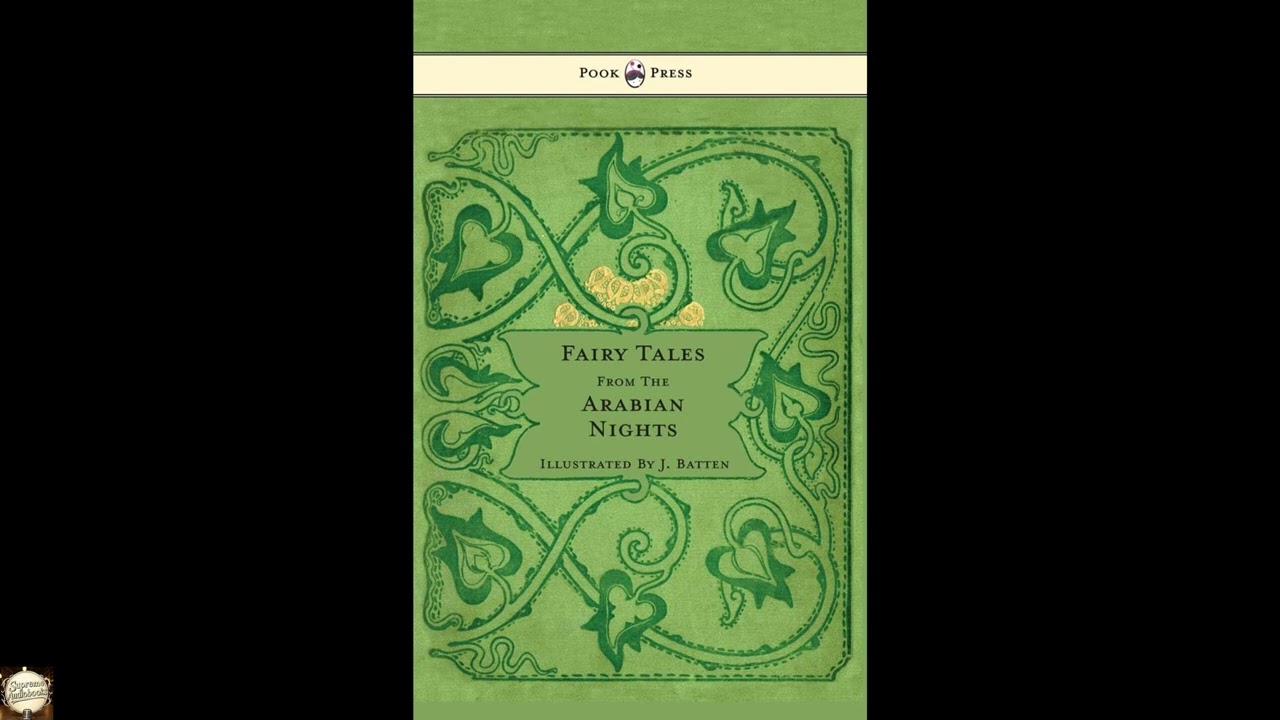
Fairy Tales From The Arabian Nights
For generations, the collection known as Fairy Tales From The Arabian Nights has stood as a colossal pillar of world literature, a source of wonder that continues to fuel imagination across continents and cultures. This isn’t merely a book of stories; it is a gateway, an entire universe of ancient wisdom, astounding magic, daring adventure, and profound human drama. From its legendary frame story to the individual narratives it holds, these tales have shaped how we think about storytelling itself, influencing countless writers, artists, and dreamers since their genesis. Listening to these narratives today offers a direct connection to the fundamental power of spoken word, reminding us why stories began in the first place: to entertain, to teach, and to survive. The genesis of these stories is rooted in a compelling, life-or-death situation. We are introduced to the tyrannical King Shahryar, ruler of a vast empire spanning parts of India and China. Heartbroken and enraged by the infidelity of his first wife, he declares a grim decree: each night he will marry a new virgin, only to execute her the following morning. This monstrous cycle brings terror to his kingdom, until Scheherazade, the vizier's brilliant and resourceful daughter, volunteers to become his next bride. Her plan is audacious: she will tell the king a story, but strategically pause at the most suspenseful moment at dawn, leaving him no choice but to spare her life for one more night to hear the conclusion. This ingenious setup provides the stage for a thousand and one nights of narrative marvels, a seemingly endless parade of characters and settings that transport the listener to an array of exotic lands. From the bustling bazaars of Baghdad to the pearl-diving coasts, from the opulent palaces of sultans to the dangerous lairs of genies, each tale unfolds with dazzling detail. We meet cunning merchants, brave sailors, wise sages, and desperate lovers. There is the tale of Aladdin and his wondrous lamp, the maritime adventures of Sinbad the Sailor across seven voyages, and the ingenious schemes of Ali Baba and the Forty Thieves. Each story, while distinct, contributes to Scheherazade’s overarching goal, subtly influencing the king night after night, shifting his perspective through the sheer force of narrative and the moral lessons embedded within the fantastical occurrences. The identity of the author of Fairy Tales From The Arabian Nights remains shrouded in the mists of time, for these stories did not spring from a single pen but are the cumulative result of centuries of oral tradition and scholarly compilation. Its origins lie in the ancient storytelling traditions of Persia, India, and Arabia, likely taking shape and gathering new tales during the Islamic Golden Age—a period of immense cultural and scientific flourishing from roughly the 8th to the 13th centuries. Various versions and manuscripts circulated throughout the Middle East, with different compilers adding, subtracting, and refining the stories according to local tastes and literary conventions. The collection as it became known to the Western world largely owes its popularization to the French Orientalist Antoine Galland, whose translation, Les mille et une nuits, appeared between 1704 and 1717. Galland introduced European audiences to many of the now-famous tales, including Aladdin and Ali Baba, which were not present in the earliest Arabic manuscripts he consulted, suggesting he either heard them from a Syrian storyteller or added them from other sources. Following Galland, other significant translations and adaptations emerged, such as the elaborate and influential versions by Sir Richard Burton in the late 19th century, which aimed for greater authenticity and included a vast range of commentary on Middle Eastern customs and folklore. The very nature of this work, born from collective imagination and continually reshaped, makes it a living testament to the power of shared human narrative. At its core, Fairy Tales From The Arabian Nights champions storytelling as a potent force for transformation and even salvation. Scheherazade's ingenious use of narrative is not merely entertainment; it is her weapon, her shield, and her tool for redemption. Through her nightly recitations, she slowly but surely dismantles King Shahryar's hardened heart, illustrating how stories can heal profound trauma and reshape a worldview. Consider how the king, initially a figure of vengeful cruelty, becomes an eager, expectant listener, his humanity gradually reawakening through the shared experience of each unfolding tale. Beyond this foundational theme, the collection addresses universal concerns such as justice and morality. Many narratives present clear consequences for actions, rewarding generosity and punishing avarice or deceit. In the story of the merchant and the genie, the merchant's accidental killing of the genie's son sets off a complex chain of events, forcing a reflection on responsibility, mercy, and the arbitrary nature of fate. Another persistent theme is the interplay of fate and free will. Characters often find themselves in situations seemingly beyond their control, yet their choices—whether to be clever, courageous, or cruel—ultimately determine their destinies. The stories consistently blend the ordinary with the extraordinary, showing how everyday human experiences of love, loss, ambition, and trickery can intertwine with the utterly fantastical—genies, flying objects, talking animals—making the magical feel surprisingly grounded and relatable. The diverse stories within this collection emerged from a fascinating period of cultural exchange and intellectual ferment. The Islamic world, stretching from Spain to India, was a nexus of trade, scholarship, and artistic innovation. Cities like Baghdad, Damascus, and Cairo were cosmopolitan centers where ideas, goods, and narratives flowed freely between different peoples. Scholars translated and preserved texts from ancient Greece, Persia, and India, and new forms of literature, poetry, and scientific inquiry flourished. The oral tradition of storytelling was a vital part of daily life, with professional storytellers (or hakawati) performing in coffeehouses and public squares, sharing tales that entertained and educated. These stories often carried moral lessons, reflected social norms, or simply offered a vibrant escape into the realm of imagination, fulfilling a deep-seated human need for narrative during an era of significant global interconnection. Listening to Fairy Tales From The Arabian Nights as an audiobook brings these ancient, orally transmitted stories full circle, returning them to their most natural and impactful form. A skilled narrator breathes life into Scheherazade’s determined voice, captures King Shahryar’s changing demeanor, and differentiates the vast array of characters—from the booming commands of a genie to the whispered pleas of a princess. The "several hours" run length is perfect for extended listening sessions, allowing the listener to become fully immersed in the rhythm and flow of the narratives, much like the king himself was nightly entranced. Pay attention to how the pacing shifts between the dramatic tension of the frame story and the varied tones of the individual tales, how the narrator’s voice paints vivid scenes of ancient markets and magical landscapes, and how the dialogue conveys both the wit and wisdom embedded in these enduring narratives. This format allows the magic of these stories to truly unfold, not just in the mind's eye, but in the very air around you.
Enjoyed Fairy Tales From The Arabian Nights? A few ways to support us
Audible & Amazon links are affiliate; we may earn a small commission at no extra cost.
About this production
Human narration by a volunteer reader from LibriVox.org, the public-domain audiobook project. LibriVox volunteers record literary works whose copyright has expired in the United States, releasing the resulting recordings into the public domain.
Fairy Tales From The Arabian Nights. The underlying text is in the U.S. public domain. We do not republish any modern copyrighted edition, translation, or commentary.
The 4K cinematic visuals accompanying this audiobook are generated by an AI image model from prompts derived from the source text. No copyrighted photos, paintings, or stock footage are used. AI generation is disclosed on every video on our YouTube channel as required by YouTube's altered/synthetic content policy.
English subtitles are transcribed from the LibriVox recording with OpenAI Whisper. Translations into the 11 other supported languages are produced by Meta's NLLB-200 neural translation model. No human translator's copyrighted translation is used.
Questions about sourcing or rights? See our DMCA & Sourcing policy or contact us.
Enjoyed this audiobook?
If you'd like to own a copy of Fairy Tales From The Arabian Nights or hear a professionally produced edition, the links below help support free audiobook production at no extra cost to you.
As an Amazon Associate we earn from qualifying purchases. Audible / print links are affiliate.
More by Unknown
Narrative of Services in the Liberation of Chili, Peru, and Brazil, from Spanish and- Full Audiobook

The Life Savers: A Story of the United States Life-Saving Service
Notes and Queries, Index of Volume 1, November, 1849-May, 1850