Pauline's Passion and Punishment
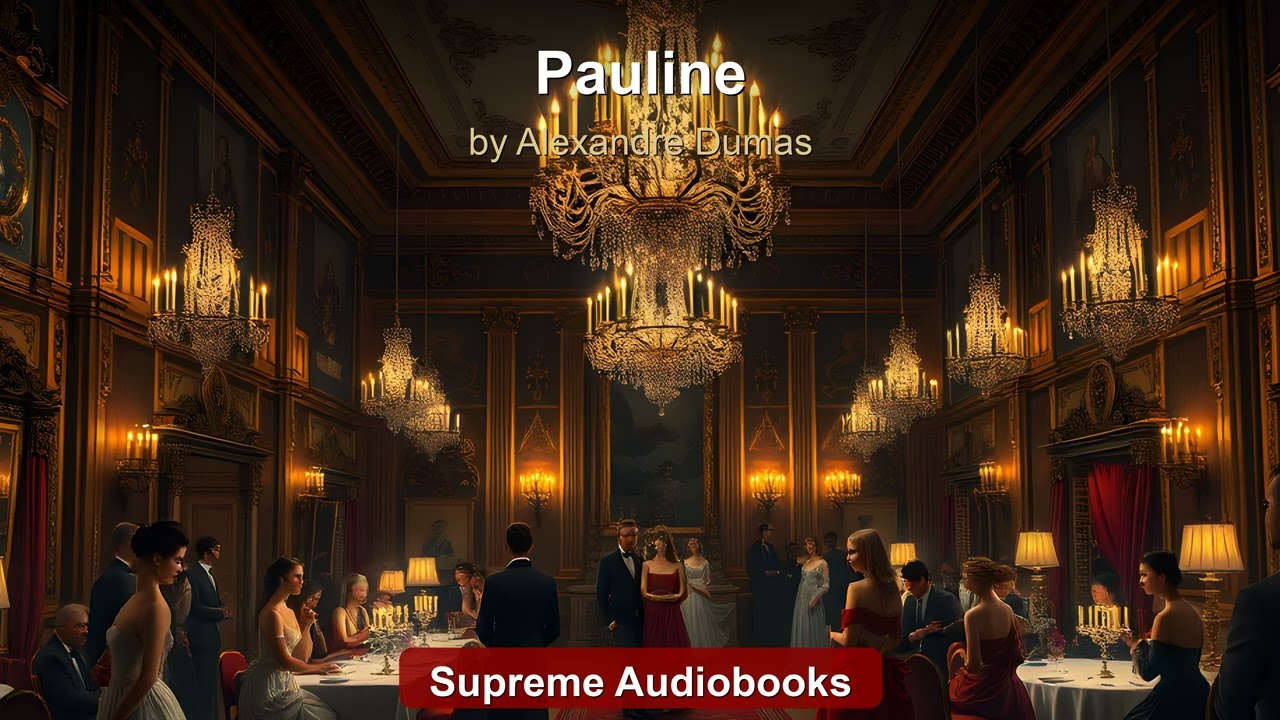
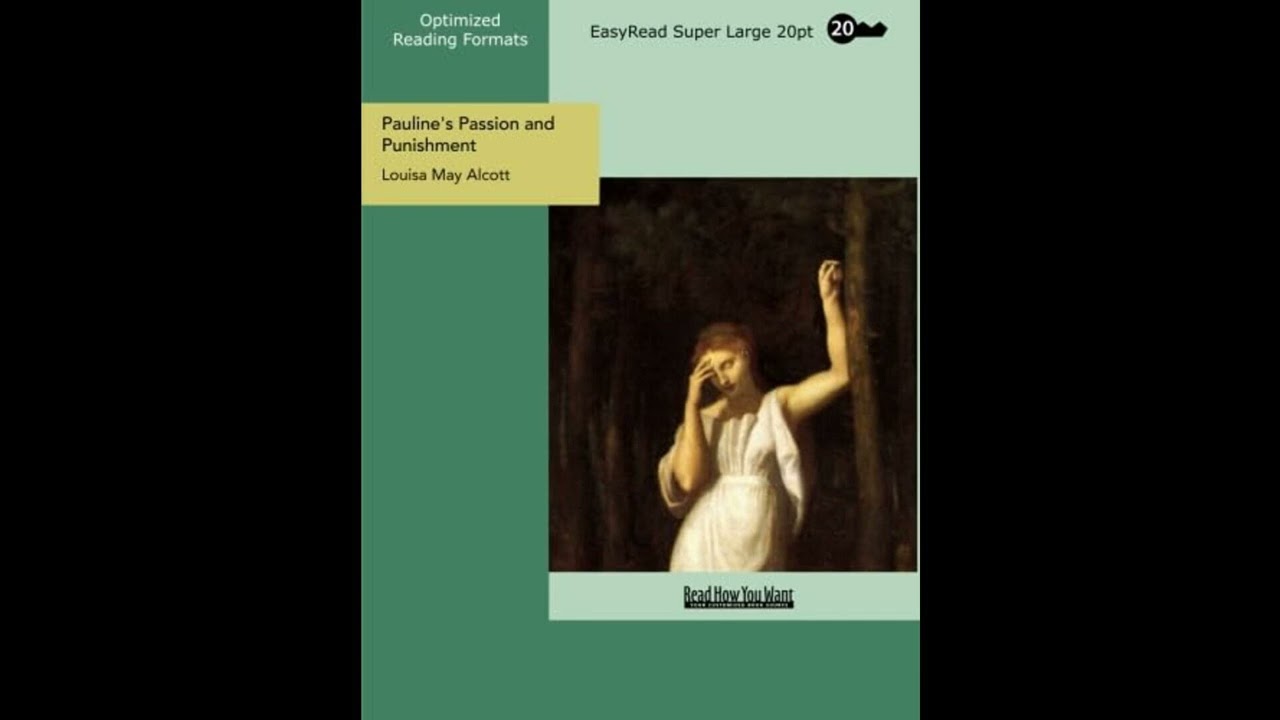
Long before Louisa May Alcott penned the beloved stories of the March sisters, she cultivated a distinct, often darker voice, one that found its full, dramatic expression in works like Pauline's Passion and Punishment. This novella, a compelling dive into the turbulent depths of human emotion and societal expectation, presents a side of Alcott far removed from the cozy domesticity of Little Women. It is a story that strips away sentimental pretense, laying bare the fierce independence and retaliatory spirit of a woman scorned, offering a potent reminder that the complexities of love, betrayal, and the pursuit of justice resonate just as powerfully in any era. Listeners today will find themselves engrossed not only by its dramatic plot but by the nuanced psychological portrait of its protagonist, a woman whose fight against the constraints of her world feels remarkably contemporary. The narrative unfolds in a world of European high society, a setting that initially promises elegance and romantic intrigue. Here we meet Pauline, a woman of striking beauty and formidable spirit, whose very nature seems to defy the quiet subservience expected of her sex. She falls deeply, passionately in love with Julian, a man whose charm and intelligence capture her heart. Their connection burns brightly, promising a future of shared affection and happiness. However, this idyllic vision is soon shattered by a cruel betrayal, a wound inflicted by Julian that strikes not only at Pauline's affections but at her honor and reputation. The initial conflict centers on this devastating deception, which leaves Pauline not merely heartbroken, but profoundly wronged and humiliated. Stripped of her illusions and wounded to her core, Pauline transforms. Her sorrow hardens into a steely resolve, and her initial passion morphs into a calculated determination to seek retribution. The story then chronicles her meticulous and often morally ambiguous quest for justice, or perhaps, revenge. She navigates the treacherous waters of social intrigue, using her intelligence and cunning to plot a course that will bring her betrayer to account. The tale skillfully builds suspense as Pauline executes her elaborate plan, forcing her adversaries—and the reader—to confront the difficult questions of moral culpability, the price of deceit, and the lengths to which a person will go to reclaim their dignity in a world that often denies women such agency. The arc of the story sees Pauline through moments of triumph and despair, constantly pushing against the boundaries of what is considered acceptable behavior for a woman of her time, leading to a dramatic confrontation that promises a reckoning. Louisa May Alcott, born in Germantown, Pennsylvania, in 1832, grew up amidst the intellectual ferment of New England Transcendentalism. Her father, Bronson Alcott, was a prominent philosopher and educator, and the family’s circle included luminaries like Ralph Waldo Emerson and Henry David Thoreau. Despite this rich intellectual environment, the Alcotts often faced dire poverty, a reality that profoundly shaped Louisa’s work ethic and her understanding of social inequality. She began writing at an early age, contributing to periodicals and eventually serving as a nurse during the American Civil War, an experience she chronicled in Hospital Sketches. This period of her life was marked by a relentless drive to support her family through her pen. While Alcott gained widespread fame and financial stability with Little Women in 1868, and its sequels Little Men and Jo's Boys, she had already established a prolific career writing sensational short stories and novellas under the pseudonym A.M. Barnard. These "blood-and-thunder" tales, often published anonymously in popular magazines, allowed her to unleash a bolder, more subversive imagination, indulging in plots featuring crime, passion, revenge, and unconventional female characters that directly challenged Victorian sensibilities. Pauline's Passion and Punishment belongs to this significant, yet often overlooked, phase of her literary output, revealing her versatility and her keen insight into the darker corners of human psychology, well beyond the domestic sphere for which she is most remembered. She passed away in Boston in 1888, leaving a legacy that continues to be reevaluated and appreciated for its depth and complexity. Several profound themes emerge from Pauline's Passion and Punishment, making it a fertile ground for reflection. Foremost among them is female agency and the defiance of societal norms. Pauline's decision to actively pursue revenge, rather than passively suffer her fate, directly counters the Victorian ideal of womanly submission. One scene, for instance, might depict her meticulously planning her strategy, her mind alight with a keen intellect typically reserved for male characters, demonstrating her refusal to be merely a victim. Another key theme is the destructive power of unbridled passion and the consequences of revenge. While Pauline's actions are understandable given her betrayal, the narrative subtly questions the moral cost of her chosen path. For example, the text might describe moments where her single-minded pursuit isolates her, suggesting that even justified retribution can extract a heavy personal toll, transforming the seeker as much as the sought. The novella also keenly observes the role of social class and reputation in dictating individual destinies, especially for women. Pauline's initial downfall is exacerbated by the damage to her standing in society, and her subsequent efforts involve navigating this same social labyrinth, using its rules against itself. A pivotal moment could illustrate her calculated reappearance in society, carefully orchestrating perceptions to turn the tide against her former lover. Finally, the story touches upon the hidden depths of human nature, revealing that even within supposedly polite society, deceit, malice, and a fierce capacity for vengeance lie just beneath the surface. This is shown through the complex, shifting portrayal of Julian, and by the revelation of unforeseen capacities within Pauline herself, challenging simplistic notions of good and evil. Pauline's Passion and Punishment first appeared in Frank Leslie's Illustrated Newspaper in 1862, a turbulent year during the height of the American Civil War. This era was characterized by enormous social upheaval and a burgeoning popular press eager for dramatic content. Victorian society, while outwardly emphasizing morality and domesticity, simultaneously possessed a voracious appetite for sensational stories of crime, intrigue, and forbidden passion. Alcott, a financially struggling writer with a family to support, found a ready market for her "potboilers" in these popular magazines. This provided her with an outlet for her more adventurous literary impulses, allowing her to experiment with narratives that pushed the boundaries of conventional female experience and morality, a sharp contrast to the sentimental domestic fiction often expected of women authors. The novella emerged from this specific confluence of Alcott's personal financial need, the public's desire for gripping narratives, and the cultural landscape that permitted, even encouraged, certain forms of literary daring under the cloak of anonymity or pseudonym. Listening to Pauline's Passion and Punishment as an audiobook brings Alcott's dramatic prose to life with an immediacy that reading alone cannot always achieve. A skilled narrator can imbue Pauline's intense emotions – her initial ardor, her profound hurt, and her chilling resolve – with a palpable presence, making her struggle intimately felt. The several hours of listening time allow for a gradual immersion into this world of passion and consequence, ideal for long commutes or quiet evenings. Pay close attention to the pacing of the narration, which should build the narrative tension expertly, particularly as Pauline’s plans unfold. The subtle shifts in voice for different characters, the nuanced delivery of dialogue that hints at hidden motives, and the overall atmospheric rendering of nineteenth-century European society all contribute to a truly compelling and memorable listening experience, revealing the dramatic heart of a lesser-known, yet incredibly potent, work from a literary giant.
Enjoyed Pauline's Passion and Punishment? A few ways to support us
Audible & Amazon links are affiliate; we may earn a small commission at no extra cost.
About this production
Human narration by a volunteer reader from LibriVox.org, the public-domain audiobook project. LibriVox volunteers record literary works whose copyright has expired in the United States, releasing the resulting recordings into the public domain.
Pauline's Passion and Punishment by Louisa May Alcott. The underlying text is in the U.S. public domain. We do not republish any modern copyrighted edition, translation, or commentary.
The 4K cinematic visuals accompanying this audiobook are generated by an AI image model from prompts derived from the source text. No copyrighted photos, paintings, or stock footage are used. AI generation is disclosed on every video on our YouTube channel as required by YouTube's altered/synthetic content policy.
English subtitles are transcribed from the LibriVox recording with OpenAI Whisper. Translations into the 11 other supported languages are produced by Meta's NLLB-200 neural translation model. No human translator's copyrighted translation is used.
Questions about sourcing or rights? See our DMCA & Sourcing policy or contact us.
Enjoyed this audiobook?
If you'd like to own a copy of Pauline's Passion and Punishment or hear a professionally produced edition, the links below help support free audiobook production at no extra cost to you.
As an Amazon Associate we earn from qualifying purchases. Audible / print links are affiliate.

![by Margaret [Harriet Margaret Stone Lothrop]. Sidney by Unknown — free full audiobook](https://img.youtube.com/vi/k_Gr_WSxsPA/mqdefault.jpg)