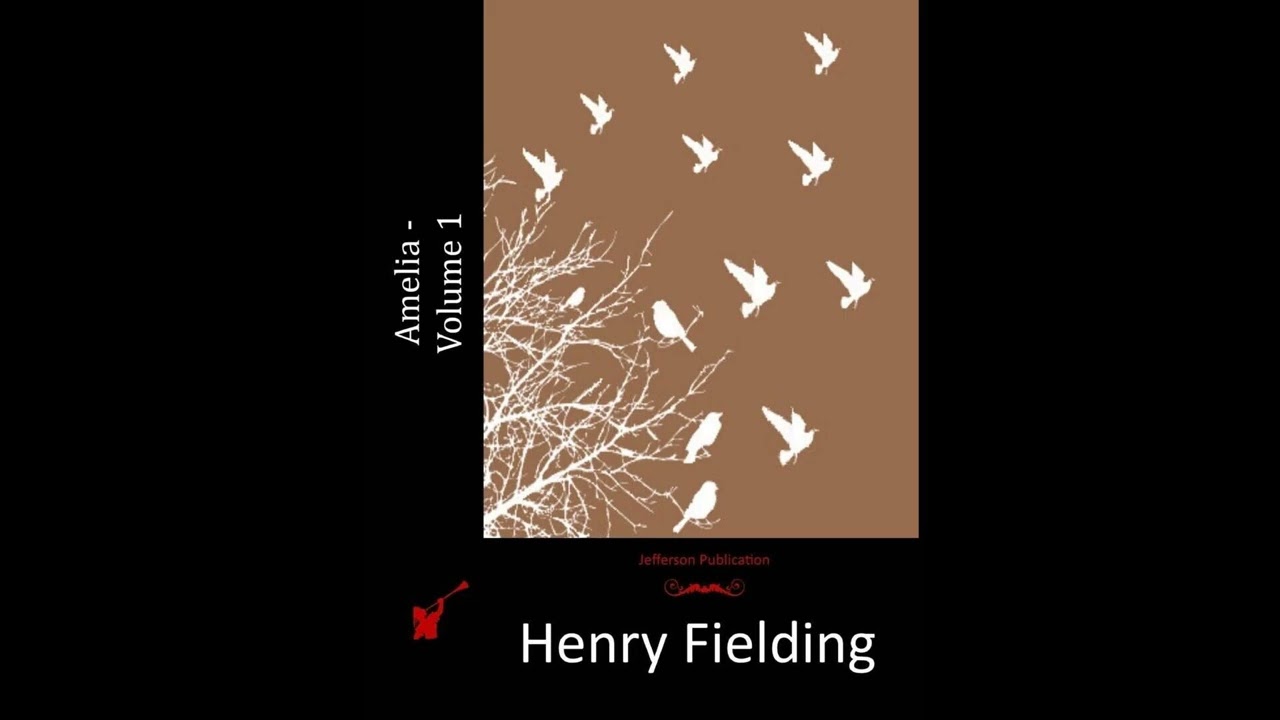
Amelia - Volume 1
Henry Fielding’s Amelia, published in 1751, offers a profound and often heartbreaking look into the domestic trials and social injustices faced by a virtuous woman and her flawed husband in eighteenth-century London. Far removed from the boisterous comic adventuring of his earlier works, this novel presents a more sober, deeply felt account of human suffering and resilience. It challenges the listener to confront the harsh realities of a society where reputation is fragile, justice is often bought, and true goodness frequently goes unrewarded. Yet, at its core, Amelia is also a testament to enduring love and the quiet strength of character, proving that fidelity and integrity can persist even in the direst circumstances. This story resonates keenly today as it probes universal questions about social responsibility, the pressures on marriage, and the individual's struggle against an indifferent or hostile world. The narrative plunges us into the tumultuous lives of the titular Amelia Booth and her husband, Captain William Booth. Set against the grimy backdrop of London’s debtors’ prisons, corrupt courts, and fashionable yet hypocritical society, their story begins with Booth’s unjust imprisonment for an alleged assault. Here, he meets Miss Matthews, a woman with a troubled past whose own history intertwines dangerously with his. Meanwhile, Amelia, a woman renowned for her beauty and unshakeable virtue, navigates the perils of the city alone, attempting to secure her husband's release while caring for their young children. Her unwavering devotion is constantly tested by poverty, the schemes of predatory individuals, and the widespread gossip that threatens to ruin her good name. Captain Booth, a well-meaning but imprudent man, frequently finds himself entangled in financial difficulties and moral compromises due to his love of gambling and a certain naiveté regarding human nature. His repeated misfortunes are not always malicious but often stem from poor judgment and an inability to resist temptation. Around Amelia and Booth circulate an assortment of vivid characters: the seemingly benevolent but manipulative Colonel James, a former army friend of Booth who harbors dark intentions towards Amelia; the gossiping and meddlesome Mrs. Trent, their landlady; and various corrupt lawyers, magistrates, and opportunists who prey on the vulnerable. The story follows the Booths through a relentless series of tribulations, each new obstacle threatening to tear their family apart and push Amelia to the brink of despair. Henry Fielding, born in 1707 in Sharpham, Somerset, England, left an indelible mark on English literature before his death in 1754. His early life was marked by education at Eton College, followed by legal studies at Leiden University in Holland, though he did not complete his degree. Turning his hand to the stage, Fielding became a prolific playwright, producing over two dozen satirical comedies and farces for the London theaters in the 1730s. His sharp wit and political commentary, however, ultimately ran afoul of the government, leading to the Licensing Act of 1737, which dramatically curtailed theatrical freedom and effectively ended his career as a dramatist. Forced to seek new employment, Fielding returned to the study of law, eventually qualifying as a barrister and, in 1748, being appointed Chief Magistrate for Westminster. This position placed him squarely in the midst of London’s crime and poverty, giving him firsthand experience with the legal system and the suffering of the urban poor. These experiences profoundly shaped his later novels, providing the gritty realism and incisive social criticism for which he became known. Alongside his judicial duties, he co-founded the Bow Street Runners, one of England’s first professional police forces. Fielding’s literary legacy includes other foundational novels like Joseph Andrews, a burlesque of Samuel Richardson’s Pamela, and Tom Jones, often considered his comedic masterpiece. He is widely credited as one of the key figures in the development of the English novel as a form, moving it towards greater realism and psychological depth. Amelia stands as a powerful commentary on the pervasive social injustices of its era. Fielding, drawing on his personal experience as a magistrate, unflinchingly exposes the venality and arbitrary nature of the legal system. Listeners encounter scenes where Booth is imprisoned for debt or minor offenses, highlighting how the poor were systematically disadvantaged, subject to the whims of corrupt officials, and left vulnerable to unscrupulous lawyers. The novel also powerfully interrogates the institution of marriage and the ideal of domestic virtue. Amelia herself stands as the embodiment of patience, loyalty, and unwavering moral fortitude in the face of relentless adversity, offering a profound counterpoint to her husband's worldly failings and the duplicity of other characters. Her quiet endurance and commitment to her family form the moral compass of the story. Furthermore, Fielding uses the narrative to underscore the crucial distinction between appearance and reality, particularly concerning social standing and moral character. Many characters in the novel present a respectable facade to society while secretly harboring deceitful intentions or leading lives of moral decay. Colonel James, with his outward show of friendship and generosity, serves as a prime example of this hypocrisy, his true malicious designs gradually revealed. The fragility of reputation, especially for women, is a constantly recurring concern; Amelia’s good name is repeatedly threatened by gossip and false accusations, showcasing how easily a woman’s standing could be ruined in the eyes of society, regardless of her true virtue. This serves as a stark reminder that public perception often mattered more than genuine character in eighteenth-century England. When Amelia was published in 1751, Great Britain was still navigating the social and political landscape of the mid-18th century. The nation had recently emerged from the Jacobite Rebellion of 1745, and while domestic peace had been largely restored, the burgeoning population of London presented significant challenges related to crime, poverty, and public health. Fielding’s novel emerged during a period when the novel itself was gaining traction as a dominant literary form, competing with older genres like drama and poetry. His work specifically engaged with the contemporary debates surrounding public morality, the administration of justice, and the rapidly changing urban environment. The legal system, as portrayed in Amelia, was notoriously harsh and often corrupt, lacking the systematic reforms that would come much later. Fielding’s direct experience as a justice of the peace provided him with unparalleled insight into these systemic flaws, allowing him to paint a vivid and critical picture of metropolitan life and the plight of its most vulnerable inhabitants. Listening to Amelia as an audiobook offers a uniquely immersive way to experience Fielding’s final great novel. The narrative’s "several hours" run length allows for deep engagement with the Booths' unfolding saga, making it an ideal companion for commutes, long walks, or periods of quiet contemplation. A skilled narrator can deftly handle Fielding's characteristic blend of authorial commentary, sharp dialogue, and detailed descriptive passages, guiding the listener through the complex social dynamics and moral quandaries of the story. Listen for the subtle shifts in pacing as the narrative moves from moments of tense drama in a prison cell to the quiet pathos of Amelia's domestic struggles. A good voice performance will differentiate the broad cast of characters, giving life to Amelia’s steadfast dignity, Booth’s well-meaning but often exasperating temperament, and the various rogues and do-gooders who populate their world. The audio format also excels at conjuring the atmospheric details of eighteenth-century London, allowing the listener to truly inhabit the struggles and small triumphs of this unforgettable couple.
Enjoyed Amelia - Volume 1? A few ways to support us
Audible & Amazon links are affiliate; we may earn a small commission at no extra cost.
About this production
Human narration by a volunteer reader from LibriVox.org, the public-domain audiobook project. LibriVox volunteers record literary works whose copyright has expired in the United States, releasing the resulting recordings into the public domain.
Amelia - Volume 1 by Henry Fielding. The underlying text is in the U.S. public domain. We do not republish any modern copyrighted edition, translation, or commentary.
The 4K cinematic visuals accompanying this audiobook are generated by an AI image model from prompts derived from the source text. No copyrighted photos, paintings, or stock footage are used. AI generation is disclosed on every video on our YouTube channel as required by YouTube's altered/synthetic content policy.
English subtitles are transcribed from the LibriVox recording with OpenAI Whisper. Translations into the 11 other supported languages are produced by Meta's NLLB-200 neural translation model. No human translator's copyrighted translation is used.
Questions about sourcing or rights? See our DMCA & Sourcing policy or contact us.
Enjoyed this audiobook?
If you'd like to own a copy of Amelia - Volume 1 or hear a professionally produced edition, the links below help support free audiobook production at no extra cost to you.
As an Amazon Associate we earn from qualifying purchases. Audible / print links are affiliate.