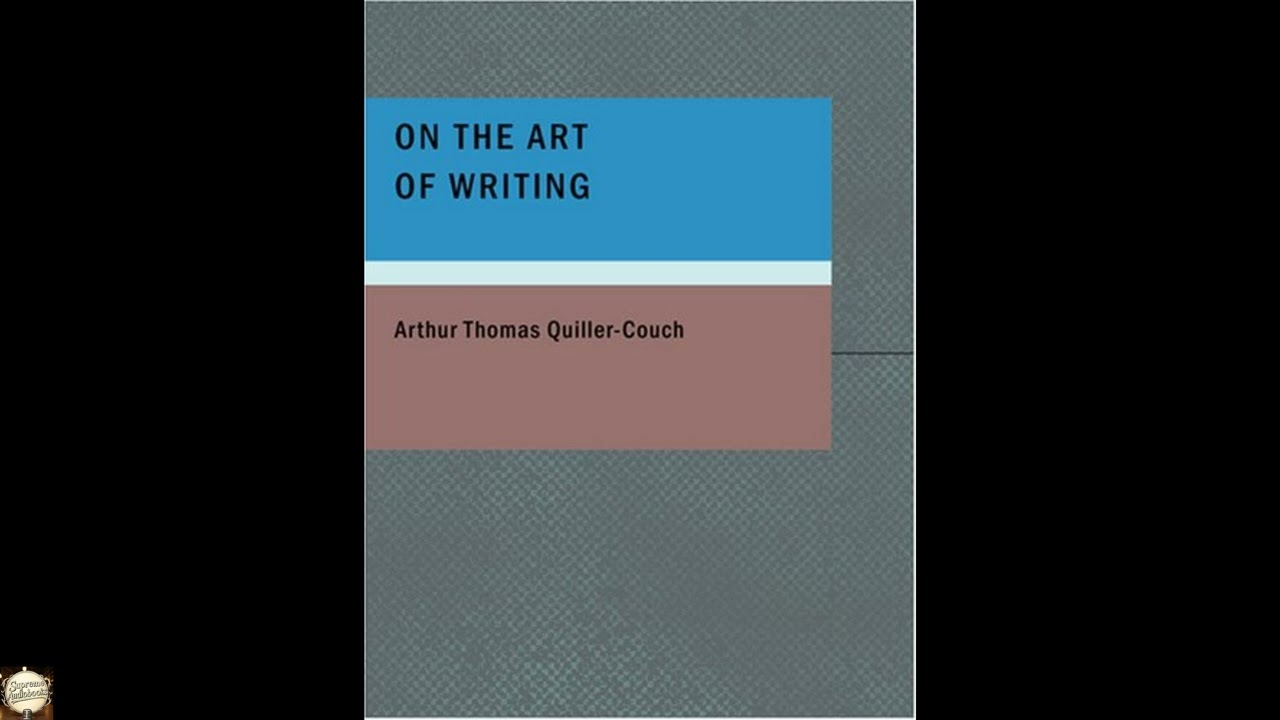
On the Art of Writing: Lectures delivered in the University of Cambridge
The ability to express oneself with clarity, precision, and persuasive power stands as one of humanity's most enduring and vital skills. In an era saturated with information, where brevity often overshadows thoughtfulness and immediacy can sacrifice nuance, the principles of effective writing are more relevant than ever. This unique collection, "On the Art of Writing: Lectures delivered in the University of Cambridge," offers not just a guide, but a deep philosophical and practical immersion into the craft of shaping thought into compelling prose. Far from a dry textbook, these lectures invite the listener into a hallowed academic space, presenting foundational wisdom that transcends fleeting trends and speaks to the core challenges faced by anyone striving to communicate through the written word. It is a testament to the enduring quest for articulate expression, offering a rare opportunity to absorb insights from a tradition of unparalleled intellectual rigor. Imagine yourself seated within the venerable lecture halls of Cambridge University, a bastion of academic excellence and intellectual inquiry. The air hums with anticipation as the lecturer begins, not with a preachy directive, but with an invitation to consider the very essence of language itself. The initial lectures lay the groundwork, meticulously dissecting the fundamental building blocks of communication. They address the crucial importance of grammar, not as a rigid set of rules, but as the skeleton upon which meaning is elegantly constructed. Listeners are guided through the nuances of syntax, learning how sentence structure can amplify or diminish impact, and how the careful choice of a single word can shift an entire argument. The central conflict these lectures address is the universal struggle every writer faces: how to bridge the gap between an abstract idea in the mind and its concrete, unambiguous representation on the page. As the series progresses, the scope broadens from foundational mechanics to the more elusive qualities of style and voice. The "main characters" in this intellectual drama are not individuals but rather the collective voice of the lecturer, drawing upon centuries of literary tradition, and the implicit presence of the eager, striving student seeking mastery. The lectures systematically dismantle common writing pitfalls, illustrating how verbosity can obscure, how vague phrasing can mislead, and how an uncultivated style can alienate readers. Listeners are encouraged to develop an ear for rhythm and cadence, to understand how the flow of prose influences comprehension and engagement. The arc of these teachings moves from the necessary discipline of correct expression to the liberating artistry of truly effective communication, offering not formulas, but principles for the aspiring writer to internalize and adapt. The author of "On the Art of Writing" remains unknown, lending a certain mystique and collective wisdom to these lectures. They emerge from a long and distinguished tradition of scholarly inquiry into rhetoric and composition, characteristic of institutions like the University of Cambridge. Such lectures were typically delivered by esteemed senior academics, drawing upon their own extensive experience in scholarship, critical analysis, and pedagogical practice. Their anonymity allows the wisdom itself to take center stage, unburdened by individual biography, representing perhaps the accumulated insights of generations of Cambridge thinkers dedicated to the mastery of language. This work stands as a powerful example of the enduring commitment to fostering articulate thought within the academic community. Rather than focusing on a single, celebrated individual, it invites us to consider the continuous legacy of instruction that shaped countless minds within the university's historic walls. It is a record of an institutional voice, dedicated to maintaining the highest standards of written expression, ensuring that the art of conveying complex ideas with precision and elegance remained central to intellectual life. Several prominent themes surface throughout these lectures, each illustrated with practical examples and astute observations. One central theme is Clarity and Precision, which is repeatedly emphasized as the bedrock of all good writing. For instance, a lecture might meticulously examine the difference between active and passive voice, demonstrating how active constructions lend directness and vigor to a sentence, preventing ambiguity. The anonymous lecturer might present a passage riddled with vague pronouns or convoluted clauses, then systematically reconstruct it, revealing how specific noun choices and deliberate sentence architecture illuminate the intended meaning. This is not merely about correctness, but about ensuring that a reader cannot misinterpret the author's intent. Another key theme is the development of Distinctive Voice and Style. While adherence to grammar is crucial, the lectures also advocate for cultivating a personal yet appropriate stylistic signature. For example, a discussion might contrast the formal eloquence suited for academic discourse with the more direct, engaging style appropriate for persuasive essays, showing how different rhetorical situations demand different approaches. The lecturer might use excerpts from well-known works to illustrate how authors like certain essayists or literary critics achieved their unique impacts, dissecting their choices of vocabulary, sentence length, and figurative language, always with an eye toward how these choices serve the overall communicative purpose. The lectures subtly suggest that while rules provide structure, true artistry lies in the conscious manipulation of those rules to create a memorable and effective impact. These lectures likely emerged during a period of significant intellectual and social ferment, perhaps in the late nineteenth or early twentieth century. This was an era when the demands for clear communication were rapidly expanding, both within academia and in wider public discourse. The growth of mass literacy, the expansion of the press, and the increasing complexity of scientific and philosophical thought all necessitated more robust and systematic approaches to teaching writing. Universities like Cambridge played a pivotal role in standardizing English language instruction and refining rhetorical theory. Such courses would have been crucial for preparing students not only for academic careers but also for leadership roles in law, government, and industry, where effective written communication was paramount. The work reflects a time when the meticulous study of language was seen not as a mere academic exercise, but as a fundamental pillar of national intellect and cultural advancement. Listening to "On the Art of Writing" as an audiobook offers a unique and deeply immersive experience. The very nature of lectures, designed to be heard, means that the nuances of pacing, inflection, and emphasis bring the material to life in a way that reading print alone cannot fully capture. The narrator's voice, carefully chosen for its clarity and thoughtful delivery, becomes your guide through these intricate discussions on language. You can absorb the wisdom at your own pace, whether during a contemplative walk, a quiet evening at home, or even in short, focused segments throughout your day. Pay attention to how the narrator articulates complex ideas, allowing moments for reflection, mirroring the original lecture hall experience. The several hours of content allow for a gradual assimilation of principles, making this an ideal companion for anyone committed to refining their command of the written word.
Enjoyed On the Art of Writing: Lectures delivered in the University of Cambridge? A few ways to support us
Audible & Amazon links are affiliate; we may earn a small commission at no extra cost.
About this production
Human narration by a volunteer reader from LibriVox.org, the public-domain audiobook project. LibriVox volunteers record literary works whose copyright has expired in the United States, releasing the resulting recordings into the public domain.
On the Art of Writing: Lectures delivered in the University of Cambridge by Arthur Quiller-Couch. The underlying text is in the U.S. public domain. We do not republish any modern copyrighted edition, translation, or commentary.
The 4K cinematic visuals accompanying this audiobook are generated by an AI image model from prompts derived from the source text. No copyrighted photos, paintings, or stock footage are used. AI generation is disclosed on every video on our YouTube channel as required by YouTube's altered/synthetic content policy.
English subtitles are transcribed from the LibriVox recording with OpenAI Whisper. Translations into the 11 other supported languages are produced by Meta's NLLB-200 neural translation model. No human translator's copyrighted translation is used.
Questions about sourcing or rights? See our DMCA & Sourcing policy or contact us.
Enjoyed this audiobook?
If you'd like to own a copy of On the Art of Writing: Lectures delivered in the University of Cambridge or hear a professionally produced edition, the links below help support free audiobook production at no extra cost to you.
As an Amazon Associate we earn from qualifying purchases. Audible / print links are affiliate.