English Literary Criticism
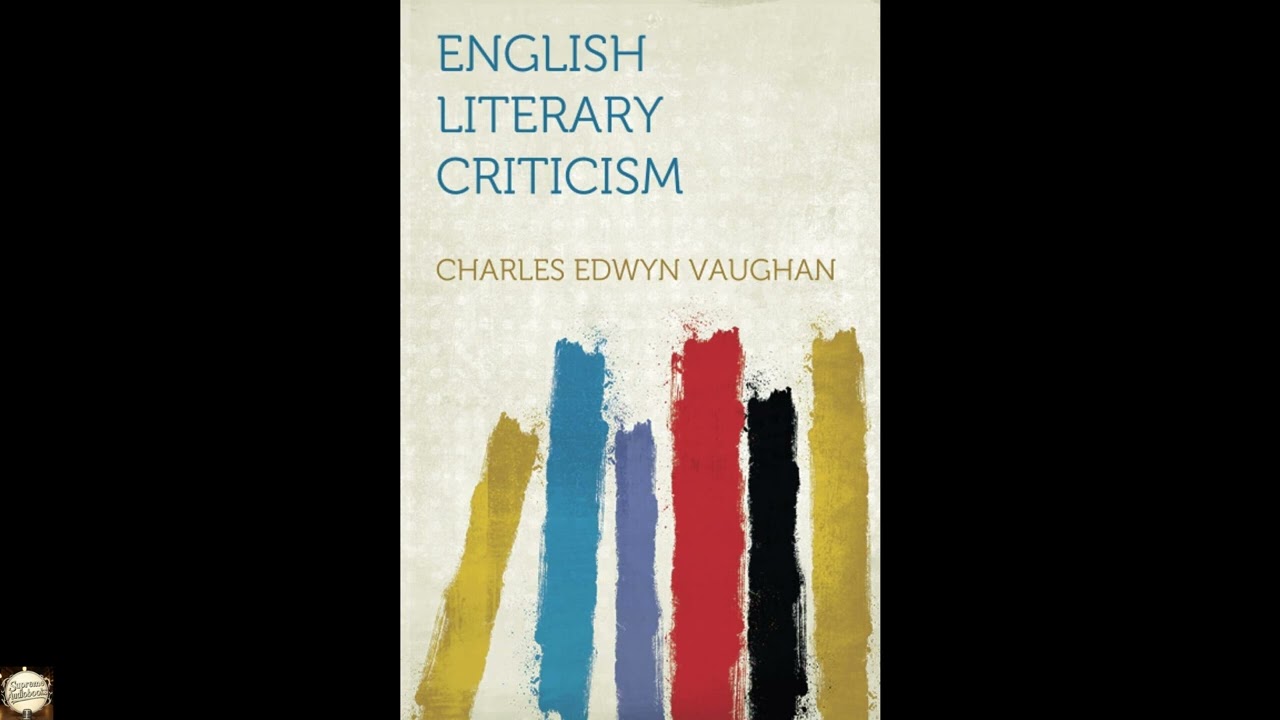
For anyone seeking to understand not just what English literature is, but how we have come to think about it, to judge it, and to place it within the vast unfolding of human expression, Charles Edwyn Vaughan's English Literary Criticism offers an essential guide. This monumental work is not a collection of stories or poems, but rather the story of how we tell stories and value poems – a compelling history of ideas that shaped the very way we read. It pulls back the curtain on the critical frameworks that have defined our literary heritage, revealing the intellectual currents that underpin centuries of English letters. To engage with Vaughan is to gain a deeper appreciation for the nuanced arguments, the passionate defenses, and the shifting philosophies that continue to inform our literary landscape, making this audiobook as vital for the seasoned scholar as it is for the curious newcomer hungry to understand the foundations of critical thought. The volume itself performs a magnificent intellectual sweep, charting the evolution of critical thinking from its nascent forms in England through to the author's contemporary age. It begins by examining the earliest glimmers of literary judgment, often intertwined with rhetorical study or moral philosophy, showing how the desire to understand and evaluate writing has always been present. As the discourse progresses, Vaughan systematically introduces the listener to successive periods, each marked by distinct critical preoccupations and methodologies. We observe, for instance, the classical influences that dominated early Renaissance thought—a concern with decorum, imitation, and the didactic purpose of art—and then witness the gradual emergence of more subjective, author-centered approaches as the literary landscape matured. Vaughan's presentation of this historical "plot" centers on the dynamic interplay between philosophical shifts and practical literary output. He meticulously details how critics like Ben Jonson, grappling with the legacy of antiquity, sought to establish firm rules for dramatic construction, striving for a clarity and order that mirrored the intellectual zeitgeist. Later, he brings to life the Restoration era's witty polemics and formal debates, often led by figures such as John Dryden, who wrestled with questions of poetic license versus established convention. The "arc" of this narrative moves towards the Romantic movement, where the very definition of literature expanded dramatically, embracing emotion, imagination, and the individual genius as paramount. Here, the "conflict" becomes less about adhering to external rules and more about articulating an inner vision, a shift that Vaughan meticulously traces, showing how critical discourse adapted to celebrate this burgeoning individuality without ever quite losing sight of its historical antecedents. He does not provide a definitive answer to "what is good criticism" but rather orchestrates a grand symphony of evolving answers. Charles Edwyn Vaughan, born in 1853, was a prominent English scholar and professor whose intellectual life was dedicated to the study and dissemination of literature. Educated at Balliol College, Oxford, he pursued an academic career that saw him hold distinguished chairs, including Professor of English Literature at University College, Cardiff, and later at the University of Leeds. Vaughan was not merely a passive observer of literary history but an active participant in shaping the academic discipline of English studies during a period when it was truly coming into its own. His scholarly output was characterized by a meticulous attention to detail and a broad understanding of European intellectual traditions, frequently drawing connections between English thought and Continental philosophy. Beyond English Literary Criticism, Vaughan is perhaps best known for his comprehensive two-volume edition of the political writings of Jean-Jacques Rousseau, a monumental undertaking that showcased his profound engagement with European Romanticism and its philosophical underpinnings. He also published a significant history of English Romanticism in the eighteenth century, further cementing his reputation as a leading authority on that pivotal literary movement. His contributions were essential in establishing the academic rigor and historical depth expected of literary scholarship in the late nineteenth and early twentieth centuries, placing him squarely within a generation of scholars who professionalized the study of English literature as a university discipline. His work on Rousseau, in particular, highlighted his ability to synthesize complex philosophical ideas with their literary manifestations, a skill that pervades his critical survey of English criticism. One primary theme running through Vaughan’s English Literary Criticism is the evolution of critical standards. He demonstrates how the very metrics for evaluating literature are not static but are shaped by prevailing cultural, philosophical, and aesthetic ideals. For example, he presents the Augustan age’s emphasis on "wit" and "judgment" – criteria rooted in classical decorum and a desire for social refinement – by illustrating how Alexander Pope, in his Essay on Criticism, lays down precepts for taste and good sense. Vaughan shows how this contrasts sharply with the later Romantic emphasis on "imagination" and "feeling," where a critic like Samuel Taylor Coleridge, in his Biographia Literaria, elevates the poet’s creative faculty and the reader’s emotional response as central to a work’s value. This shift is not merely observed but meticulously analyzed through specific examples of critical texts. Another significant thread Vaughan uncovers is the interplay between literature and morality. From early periods where literature was often expected to be overtly didactic, teaching virtue or promoting social good, to later periods where its moral purpose became more subtle, or even secondary to aesthetic concerns, Vaughan traces this ongoing tension. He might cite Sidney’s Defence of Poesie, where the poet is portrayed as a superior moral teacher to the philosopher, captivating the reader with delightful instruction. This can be contrasted with the more subjective or even amoral aesthetic theories that began to emerge towards the end of the nineteenth century, where beauty and form could, for some, trump any overt ethical agenda. Vaughan uses these shifts to illustrate how literary criticism continually grapples with the broader societal role and responsibility of art. Vaughan’s English Literary Criticism was published in 1904, a period of profound transition at the turn of the twentieth century. This was an era marked by the professionalization of academic disciplines, including English literature, which was becoming firmly established in universities. The late Victorian and Edwardian periods were characterized by a desire to categorize, historicize, and systematize knowledge, following the great intellectual movements of the nineteenth century that valued order and scientific inquiry. Vaughan's comprehensive survey emerged from this intellectual climate, where there was a perceived need to consolidate and interpret the vast body of English critical thought that had accumulated over centuries. It was also a time when the legacy of Romanticism and its focus on individual genius was still strong, even as new, more "modern" aesthetic theories began to take hold. His work thus serves as both a culmination of historical scholarship and a bridge to the nascent critical methodologies of the dawning modern age. Listening to English Literary Criticism as an audiobook transforms a potentially dense academic text into an engaging, auditory experience. The extended run length, comprising several hours of carefully articulated prose, allows the listener to absorb complex arguments and historical progressions at a thoughtful pace. A skilled narrator brings clarity to Vaughan's meticulous scholarship, making the distinctions between critical theories and the nuances of historical context easier to follow than perhaps on the printed page. The measured rhythm of the narration provides space for reflection, encouraging deeper engagement with the evolving ideas of literary judgment. It’s an ideal format for those who wish to integrate serious intellectual study into their daily routines, whether during a commute, while exercising, or during quiet moments of contemplation, allowing the grand narrative of English critical thought to unfold with compelling lucidity.
Enjoyed English Literary Criticism? A few ways to support us
Audible & Amazon links are affiliate; we may earn a small commission at no extra cost.
About this production
Human narration by a volunteer reader from LibriVox.org, the public-domain audiobook project. LibriVox volunteers record literary works whose copyright has expired in the United States, releasing the resulting recordings into the public domain.
English Literary Criticism by Charles Edwyn Vaughan. The underlying text is in the U.S. public domain. We do not republish any modern copyrighted edition, translation, or commentary.
The 4K cinematic visuals accompanying this audiobook are generated by an AI image model from prompts derived from the source text. No copyrighted photos, paintings, or stock footage are used. AI generation is disclosed on every video on our YouTube channel as required by YouTube's altered/synthetic content policy.
English subtitles are transcribed from the LibriVox recording with OpenAI Whisper. Translations into the 11 other supported languages are produced by Meta's NLLB-200 neural translation model. No human translator's copyrighted translation is used.
Questions about sourcing or rights? See our DMCA & Sourcing policy or contact us.
Enjoyed this audiobook?
If you'd like to own a copy of English Literary Criticism or hear a professionally produced edition, the links below help support free audiobook production at no extra cost to you.
As an Amazon Associate we earn from qualifying purchases. Audible / print links are affiliate.