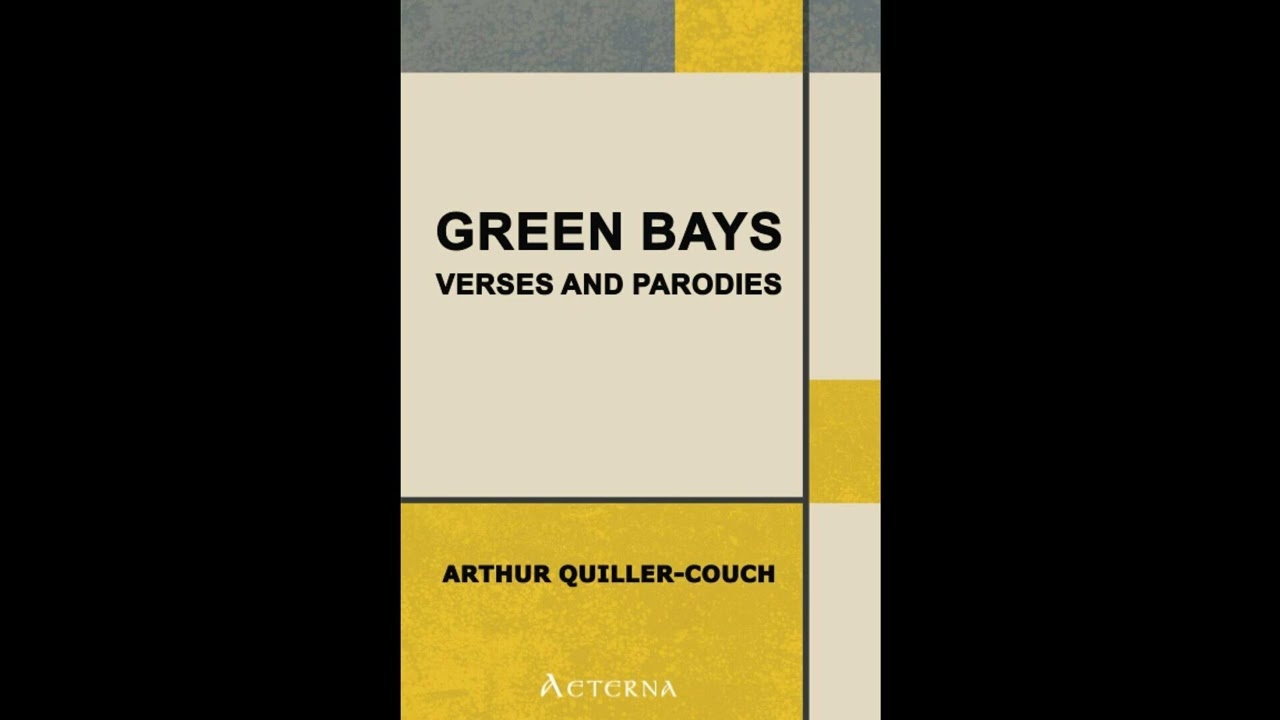
Green Bays. Verses and Parodies
Step into a world where wit dances with reverence, and the clever turn of phrase holds sway. Sir Arthur Thomas Quiller-Couch’s Green Bays. Verses and Parodies offers a delightful collection that, even today, serves as a charming and insightful looking glass into the literary landscape of a bygone era. This volume is not merely a historical curiosity; it is a testament to the enduring power of language and the playful spirit of literary commentary. For modern listeners, it presents a unique opportunity to appreciate the nuances of poetic form, the subtle art of imitation, and the intellectual humor that comes from recognizing a beloved style deftly re-imagined. It speaks to anyone who appreciates the craft of writing and the joy of seeing it twisted just so, creating something both familiar and refreshingly new. Within the pages—or rather, the soundscapes—of Green Bays, listeners encounter a varied literary feast, far removed from the structure of a conventional novel. Instead of a linear narrative, the collection unfolds as a series of standalone poetic pieces, each a miniature world unto itself. Quiller-Couch, with a keen ear for rhythm and an astute eye for detail, presents a spectrum of verses that range from heartfelt and original compositions to the playful, often hilarious, parodies that give the book its particular fame. The setting is primarily the English literary mind at the turn of the twentieth century, with its established traditions, beloved figures, and occasional grandiloquence. The "characters" here are less individuals and more the distinct poetic voices Quiller-Couch either adopts or lampoons. We hear echoes of Victorian poets, the solemnity of epic verse, the light touch of lyric poetry, and the earnestness of didactic odes, all filtered through Quiller-Couch's discerning sensibility. The central "conflict," if one can call it that, lies in the author’s playful engagement with these forms and figures: sometimes a direct, affectionate imitation, other times a gentle exaggeration designed to highlight a characteristic stylistic tic or thematic preoccupation. The arc of the collection moves from genuine poetic expression to brilliant mimicry, inviting the listener to join in a shared game of literary recognition and appreciation, without ever devolving into harsh criticism or cynicism. The author of this discerning collection was Sir Arthur Thomas Quiller-Couch, born in 1863 in Bodmin, Cornwall, a place that would deeply influence much of his later work and provide the backdrop for many of his novels. Known to generations simply as "Q," he was a towering figure in English letters, a man whose career spanned the roles of novelist, poet, literary critic, anthologist, and influential academic. Educated at Clifton College and Trinity College, Oxford, he was steeped in classical learning and the great traditions of English literature, knowledge he would later disseminate with characteristic charm and wisdom. After some years as a freelance writer in London, Quiller-Couch returned to his beloved Cornwall, settling in Fowey, which often served as the inspiration for the fictional Troy in his adventure novels, such as The Splendid Spur and The Ship of Stars. Perhaps his most enduring legacy, beyond his original fiction and poetry, stems from his role as editor of The Oxford Book of English Verse, a landmark anthology that shaped the poetic tastes of generations. In 1912, he was appointed King Edward VII Professor of English Literature at Cambridge University, a position he held until his passing in 1944. There, his lectures on writing and literature, later published as On the Art of Writing and On the Art of Reading, championed clear prose, sound construction, and a love for the inherent beauty of the English language, firmly establishing his place as a significant literary voice. At the heart of Green Bays lie several compelling themes, perhaps none more prominent than the art of literary homage and satire. Quiller-Couch masterfully demonstrates how parody can be both a tribute and a gentle critique. For instance, a listener might encounter a poem that mirrors the long, rolling sentences and moralizing tone of a renowned Victorian poet, complete with archaic diction and a sweeping natural scene. Yet, by slightly overemphasizing a particular characteristic – a repeated rhetorical flourish or an overly sentimental conclusion – Quiller-Couch reveals the essence of that poet's style, prompting both a chuckle of recognition and a renewed appreciation for the original. This form of imitation functions as an act of profound engagement, demanding an intimate understanding of the source material. Another significant theme is the nature of poetic form and expression itself. By adopting different voices and styles, Quiller-Couch invites us to consider what makes a sonnet a sonnet, or a ballad a ballad. He might construct a seemingly earnest lyric poem about nature, only to subtly introduce an absurd image or an unexpected twist of logic in the final stanza, challenging our expectations of the genre. This playful approach encourages us to look beyond the surface of a poem and appreciate the mechanics and conventions that govern its construction, highlighting the artistry and deliberate choices behind every verse. Through this lens, the collection becomes a lesson in literary craftsmanship, showcasing the versatility and expressive potential of the English language. This collection emerged during a fascinating moment in literary history, roughly spanning the late Victorian and early Edwardian periods. It was a time of immense literary output, characterized by both the enduring influence of grand Victorian figures and the stirrings of new, more experimental voices. The literary world was one of public readings, widespread magazine publication, and an educated populace keen on discussing and dissecting the works of the day. Parody, in particular, was a highly esteemed form of intellectual amusement. It required not only a nimble wit from the author but also a considerable degree of literary sophistication from the audience, who would recognize the specific poets, styles, and often the actual lines being echoed or gently mocked. It reflected a cultural moment where a shared literary heritage was broadly understood and celebrated, providing a fertile ground for Quiller-Couch's specific brand of erudite humor. For those seeking to truly experience the ingenuity of Green Bays, the audiobook format offers an unparalleled advantage. Poetry, by its very nature, is designed to be heard, and the clever rhythms and subtle sonic cues in Quiller-Couch's verses and parodies truly come alive when narrated by a skilled voice artist. Over several hours of listening, a careful narrator can draw out the particular cadences of each imitated poet, from the stately grandeur of one to the clipped lightness of another, making the act of recognition all the more satisfying. The comedic timing inherent in the parodies, the shift in tone from earnestness to gentle mockery, can be perfectly modulated, allowing the listener to fully appreciate the linguistic dexterity at play. It transforms a silent read into an engaging performance, bridging the gap between the historical text and our modern ears, allowing the humor and the brilliance to resonate with immediate clarity.
Enjoyed Green Bays. Verses and Parodies? A few ways to support us
Audible & Amazon links are affiliate; we may earn a small commission at no extra cost.
About this production
Human narration by a volunteer reader from LibriVox.org, the public-domain audiobook project. LibriVox volunteers record literary works whose copyright has expired in the United States, releasing the resulting recordings into the public domain.
Green Bays. Verses and Parodies by Arthur Quiller-Couch. The underlying text is in the U.S. public domain. We do not republish any modern copyrighted edition, translation, or commentary.
The 4K cinematic visuals accompanying this audiobook are generated by an AI image model from prompts derived from the source text. No copyrighted photos, paintings, or stock footage are used. AI generation is disclosed on every video on our YouTube channel as required by YouTube's altered/synthetic content policy.
English subtitles are transcribed from the LibriVox recording with OpenAI Whisper. Translations into the 11 other supported languages are produced by Meta's NLLB-200 neural translation model. No human translator's copyrighted translation is used.
Questions about sourcing or rights? See our DMCA & Sourcing policy or contact us.
Enjoyed this audiobook?
If you'd like to own a copy of Green Bays. Verses and Parodies or hear a professionally produced edition, the links below help support free audiobook production at no extra cost to you.
As an Amazon Associate we earn from qualifying purchases. Audible / print links are affiliate.
More by Arthur Quiller-Couch
More Audiobooks
Religious Poems, Part 1. : Part 5 From Volume II of The Works of John Greenleaf Whi
Snow Bound, and other poems : Part 4 From Volume II of The Works of John Greenleaf
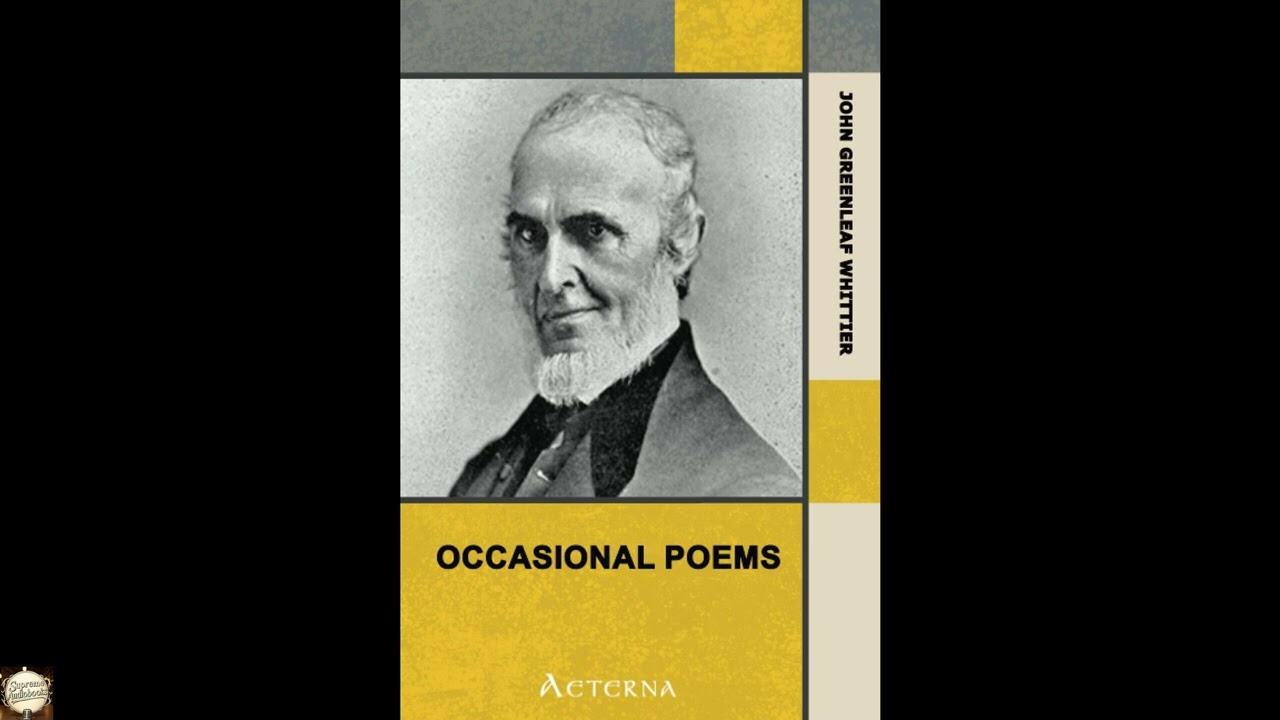
Occasional Poems. Part 3 from Volume IV of The Works of John Greenleaf Whittier
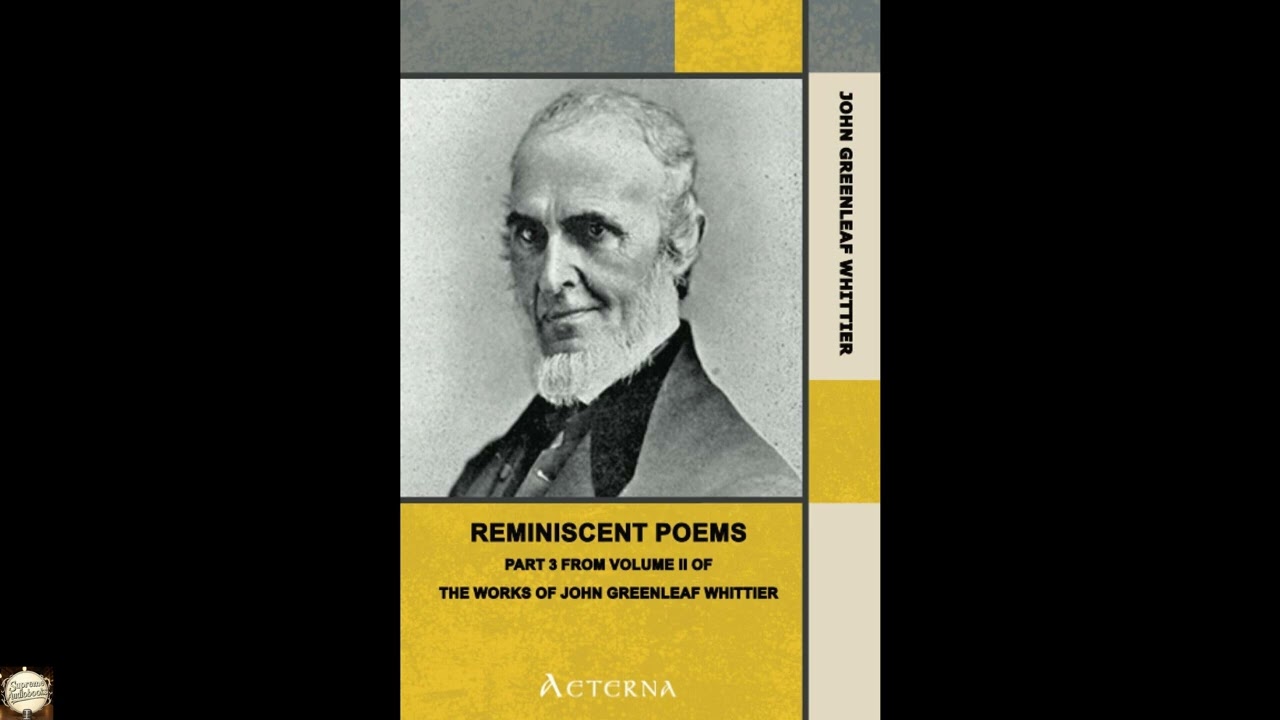
Reminiscent Poems. Part 3 From Volume II of The Works of John Greenleaf Whittier