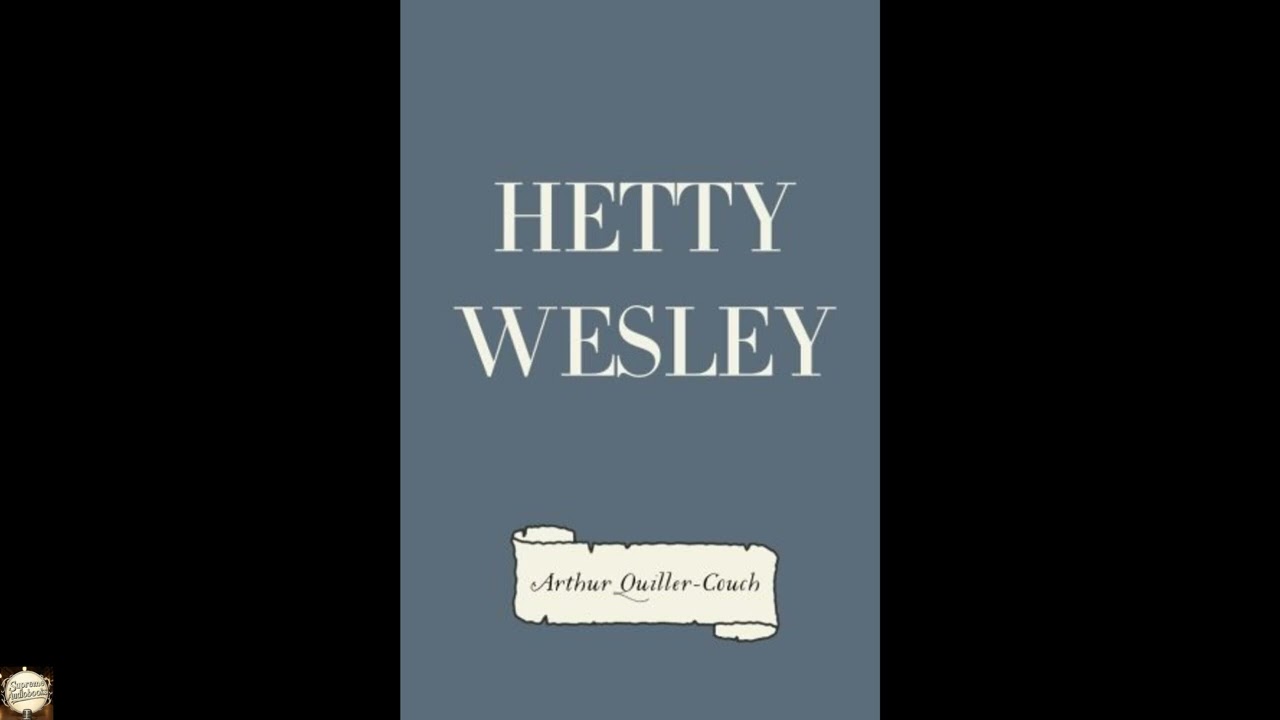
Hetty Wesley
Among the towering figures of eighteenth-century Methodism, John and Charles Wesley stand as monumental forces of religious revival. Yet, in their shadow lived a sister, Hetty Wesley, a woman of singular spirit and poetic sensibility whose life unfolded as a private drama of duty, desire, and defiance. Arthur Quiller-Couch’s novel, Hetty Wesley, published in 1903, brings her story vividly to life, not as a mere footnote to her famous brothers, but as a compelling human narrative that speaks to the enduring struggles of individual freedom against societal and familial expectation. This account of a spirited woman trapped by the conventions of her era resonates with powerful clarity even for listeners today, offering a poignant look at the cost of personal choice and the complex nature of forgiveness within the bounds of a devout family. The story begins in the early eighteenth century within the bustling, often chaotic, Epworth Rectory in rural Lincolnshire, home to Reverend Samuel Wesley, his formidable wife Susanna, and their large brood of children. At the heart of this household is Hetty, a young woman of striking beauty and keen intellect, possessing a poetic gift that sets her apart from her more outwardly pious siblings. Her father, a strict and scholarly Anglican clergyman, governs his family with a firm hand, expecting unwavering obedience and devotion, while her mother, a woman of immense strength and quiet faith, tries to navigate the storms of her husband's temperament and their children's varied personalities. Hetty's brothers, John and Charles, are still young, showing early signs of the intellectual and spiritual fervor that would later define their lives, but here they are seen through the eyes of their sister, within the intimate confines of their family. Hetty's youthful vitality and yearning for a different life soon clash with the rigid atmosphere of the rectory. Her affections are drawn to Mr. Greaves, an attractive but unsuitable suitor who offers a glimpse of a world beyond the confines of clerical respectability. This initial romantic entanglement leads to a profound rupture, forcing Hetty into a situation of deep shame and ostracism within her family and the wider community. Her subsequent attempts to forge a life for herself are marked by hardship and disappointment, as she grapples with the consequences of her choices and the unforgiving judgment of society. The narrative follows her arduous path as she tries to reconcile her past, seek a measure of peace, and rebuild relationships with those she loves, all while enduring a life far removed from the promise of her youth. Arthur Quiller-Couch, widely known by his pseudonym "Q", was born in Bodmin, Cornwall, in 1863, and lived until 1944. An academic, novelist, literary critic, and poet, he carved out a distinguished career in English letters. Educated at Clifton College and Trinity College, Oxford, he began writing while still a student. His early career saw him establish a reputation for adventure novels and historical romances, many set in his beloved Cornwall, such such as The Splendid Spur and The Astonishing History of Troy Town. In 1912, he was appointed King Edward VII Professor of English Literature at Cambridge University, a position he held until his death. Quiller-Couch was knighted in 1910, acknowledging his significant contributions to literature and education. Beyond his novels, he is perhaps best remembered as the editor of The Oxford Book of English Verse, a landmark anthology that shaped generations of poetry readers. As a literary critic and a lecturer, he was a strong advocate for clear, concise prose and imaginative storytelling. Though his own fiction might be less frequently read today than his critical essays and anthologies, Quiller-Couch remains a respected figure in the history of English literature, bridging the late Victorian and Edwardian eras with his erudition and commitment to the craft of writing. Hetty Wesley stands as one of his more enduring fictional works, offering a sensitive character study within a meticulously rendered historical setting. The story of Hetty Wesley enacts several potent themes. One prominent concern is the conflict between individual desire and societal or familial duty. Hetty, with her sensitive nature and poetic inclinations, chafes under the strictures of her father's rigid household and the expectations placed upon a woman of her standing in the early eighteenth century. Her pursuit of love, even if ill-advised, represents a profound assertion of self against the prevailing tides of religious orthodoxy and domestic obligation, demonstrating the profound difficulty of carving out a personal identity when it conflicts with deeply held traditions. Another central theme is the unforgiving nature of social judgment and the struggle for forgiveness. Following her initial romantic misfortune, Hetty is subjected to a harsh condemnation that isolates her from much of her family and community. The novel meticulously portrays the arduous path she must tread to achieve a degree of acceptance and peace, highlighting the slow, often painful process by which individuals and families come to terms with actions deemed transgressive. Her experience also sheds light on the often-unspoken limitations placed upon women, whose reputations could be irrevocably damaged by a single misstep, irrespective of their innate worth or intellectual gifts. The gradual, nuanced emotional shifts within the Wesley family, particularly Susanna’s steadfast love and the evolving understanding of her famous brothers, underscore the complex interplay of piety, pride, and compassion. Quiller-Couch published Hetty Wesley in 1903, firmly placing it within the Edwardian period in England. This era, following the long reign of Queen Victoria, was a time of subtle but significant transition, as society began to question some of the stricter moral and social codes of the preceding century. While it looked back to an earlier period—the novel is set in the first half of the eighteenth century, a time of significant religious and social ferment with the rise of Methodism—its creation reflects an Edwardian fascination with re-examining historical figures and the psychological motivations behind their well-known public lives. Writers of this period often sought to humanize historical personages, bringing a more nuanced psychological lens to their narratives. Quiller-Couch, a scholar steeped in literary history, was perhaps drawn to Hetty’s story as a way to illuminate the human cost of the religious fervor and social rigidity that characterized her family’s rise, offering a more intimate, domestic perspective on the dawn of a major religious movement. Listening to Hetty Wesley as an audiobook allows for an immediate immersion in its historical atmosphere and emotional depth. The several hours of narration provide ample time to settle into the rhythms of early eighteenth-century English life, particularly within the distinct world of the Epworth Rectory. A skilled narrator can artfully convey the subtle tensions and profound affections that bind the Wesley family, distinguishing the stern pronouncements of Reverend Wesley from the quiet wisdom of Susanna, and capturing the youthful fire of John and Charles, as well as Hetty's own poignant blend of defiance and vulnerability. The pacing of the spoken word can enhance the story’s unfolding drama, allowing listeners to fully appreciate the delicate nuances of its dialogue and the emotional weight of Hetty’s experiences, bringing the sounds and sensibilities of a bygone era directly into the present moment.
Enjoyed Hetty Wesley? A few ways to support us
Audible & Amazon links are affiliate; we may earn a small commission at no extra cost.
About this production
Human narration by a volunteer reader from LibriVox.org, the public-domain audiobook project. LibriVox volunteers record literary works whose copyright has expired in the United States, releasing the resulting recordings into the public domain.
Hetty Wesley by Arthur Quiller-Couch. The underlying text is in the U.S. public domain. We do not republish any modern copyrighted edition, translation, or commentary.
The 4K cinematic visuals accompanying this audiobook are generated by an AI image model from prompts derived from the source text. No copyrighted photos, paintings, or stock footage are used. AI generation is disclosed on every video on our YouTube channel as required by YouTube's altered/synthetic content policy.
English subtitles are transcribed from the LibriVox recording with OpenAI Whisper. Translations into the 11 other supported languages are produced by Meta's NLLB-200 neural translation model. No human translator's copyrighted translation is used.
Questions about sourcing or rights? See our DMCA & Sourcing policy or contact us.
Enjoyed this audiobook?
If you'd like to own a copy of Hetty Wesley or hear a professionally produced edition, the links below help support free audiobook production at no extra cost to you.
As an Amazon Associate we earn from qualifying purchases. Audible / print links are affiliate.