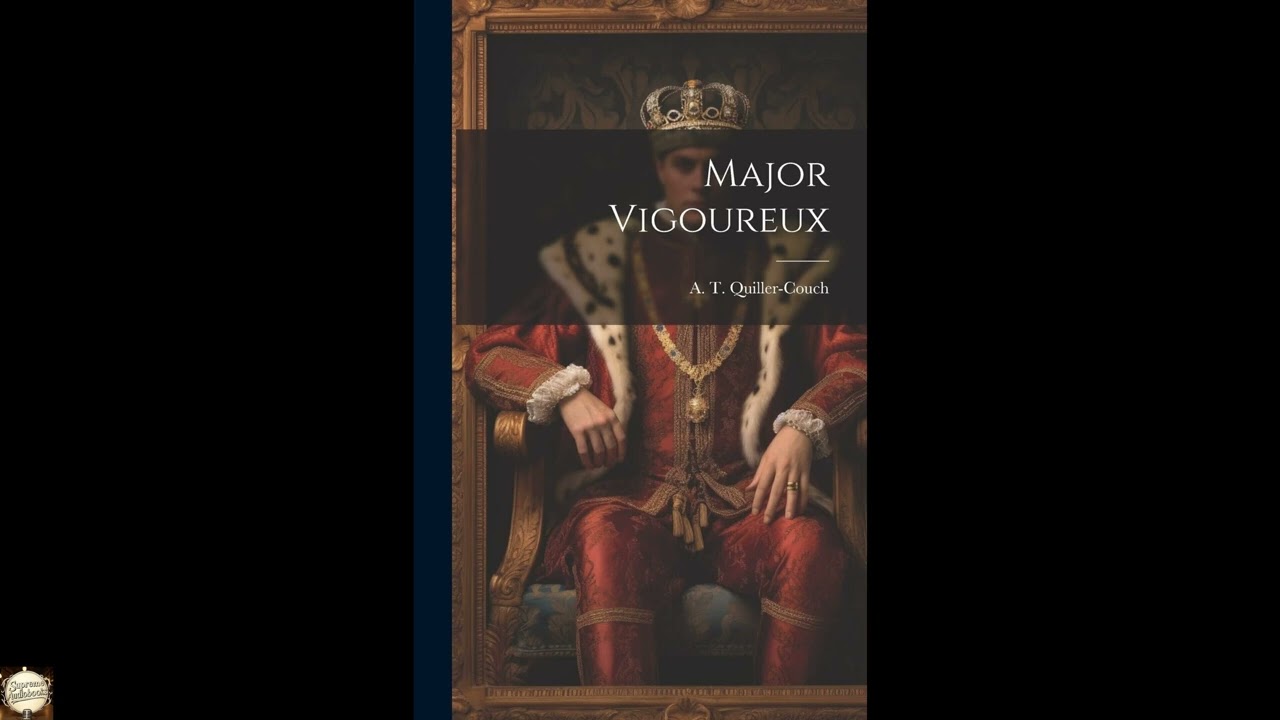
Major Vigoureux
Enter the rugged, windswept landscape of coastal Cornwall, a place where ancient ways cling stubbornly against the currents of change, and where the echoes of tradition resonate through every village lane. It is against this evocative backdrop that A T Quiller-Couch's Major Vigoureux unfurls its quiet drama, a story that resonates with poignant relevance even today. This is a novel about a man of steadfast duty, a community facing an uncertain future, and the enduring human struggle to reconcile personal integrity with societal pressures. For anyone who has ever felt the weight of expectation or the quiet pull of a place, this story offers not grand spectacle, but the profound human truth of a life lived with principle amidst a world that seems to forget them. The story centers on Major Vigoureux, a man whose very name suggests strength and a certain old-world gravitas. He is the last male descendant of a once-prominent family, and as such, he shoulders the responsibility of being Governor of the fictional Cornish island and parish of Pen-men-du. This is no ordinary governorship; it is a hereditary position that ties him inextricably to the welfare of his small, isolated domain and its inhabitants. Vigoureux is a character shaped by the sea and the land, by the unwritten laws of his community, and by a deep, almost spiritual commitment to his inherited office. His life is one of routine, duty, and a quiet, unassuming guardianship over the lives of his people. Yet, the tranquility of Pen-men-du and the Major's settled existence are soon to be disturbed by the arrival of the modern world in the form of an ambitious young lawyer from the mainland, intent on shaking up the ancient customs and challenging the Major's authority. This external pressure, coupled with personal challenges and the gradual encroachment of "progress" upon his traditional sphere, forces Major Vigoureux to confront not only the practicalities of governance but also the very core of his identity. He finds himself caught between the desire to preserve the heritage and independence of Pen-men-du and the undeniable forces of a changing society. The narrative follows his quiet struggle, his sometimes-misunderstood actions, and his profound devotion to his charge, even as the world around him clamors for new ways. Quiller-Couch carefully constructs a drama of character and circumstance, allowing us to witness the Major's inner fortitude and the steadfastness of his spirit as he navigates the complex demands placed upon him by his office, his community, and his own moral compass. A T Quiller-Couch, often known simply as 'Q', was a literary figure of considerable repute in his time. Born Arthur Thomas Quiller-Couch in 1863 in Bodmin, Cornwall, his origins in that distinctive region deeply influenced his writing. Educated at Newton Abbot College and Trinity College, Oxford, he enjoyed a distinguished academic career, eventually becoming the King Edward VII Professor of English Literature at Cambridge University in 1912, a post he held until his death in 1944. This blend of scholarly rigor and intimate connection to his Cornish roots defined much of his output. Beyond his academic work, which included editing the influential Oxford Book of English Verse, Quiller-Couch was a prolific novelist and short story writer. His early career saw him writing swashbuckling adventure stories like Dead Man's Rock (1887) and The Splendid Spur (1889), which gained him popular success. However, he gradually shifted towards more character-driven regional fiction, often set in his beloved Cornwall, a transition exemplified by novels such as Troy Town (1899) and The Ship of Stars (1899). He was a significant voice in the late Victorian and Edwardian literary landscape, bridging the gap between adventure romance and the emerging realism of the era, always maintaining a distinctive prose style marked by its elegance and precision. Knighted in 1910, his enduring legacy lies not only in his own fiction but also in his considerable contributions to literary criticism and education, fostering a love for English literature in generations of students. Major Vigoureux portrays several enduring themes with sensitivity and depth. Central to the narrative is the theme of duty and responsibility. Major Vigoureux is defined by his commitment to his hereditary role as Governor, a position he does not merely hold but embodies. His actions, from the smallest administrative task to confronting larger threats, are driven by an unshakeable sense of what he owes to Pen-men-du and its people. For instance, when presented with proposals to "modernize" the island's unique legal system, Vigoureux weighs the perceived efficiency against the deep-seated customs and the inherent character of his community, showcasing his profound sense of stewardship. Another significant theme is the clash between tradition and progress. The ancient, almost feudal order of Pen-men-du, upheld by the Major, comes into direct contact with the practical, commercial imperatives of the mainland and its legal representatives. This conflict is not merely ideological but plays out in the daily lives of the islanders and the challenges to their age-old practices, from fishing rights to land ownership. Furthermore, the novel considers the nature of quiet heroism. Vigoureux is not a hero of grand battles or dramatic pronouncements; his heroism lies in his steadfastness, his integrity, and his willingness to face adversity with dignity and principle. He represents a kind of unsung fortitude, the strength found in adherence to one's values even when those values are questioned or seen as antiquated. The story also foregrounds the power of place and community. Cornwall itself, with its distinct culture and geography, is more than just a backdrop; it is an active force shaping the characters and their destinies. Pen-men-du, as an isolated island, functions almost as a microcosm of this larger Cornish identity, highlighting the unique bonds and challenges of a close-knit, independent society. When Major Vigoureux was published in 1907, Britain was firmly in the Edwardian era, a period often characterized by a blend of lingering Victorian formality and an increasing awareness of social, economic, and technological change. This was a time when the British Empire was at its zenith, yet internal anxieties about industrialization, urban poverty, and the shifting class structure were growing. The early 20th century saw the rapid expansion of railways, burgeoning new industries, and the early stirrings of mass communication, all of which contributed to a sense that the world was moving faster than ever before. Literarily, while modernism was beginning to emerge with authors like Joseph Conrad and E. M. Forster pushing boundaries, there remained a strong public appetite for more traditional narratives, especially those that evoked regional character or historical adventure. Quiller-Couch, with his blend of romantic storytelling and keen observation of human nature set against a specific, beloved locale, fit perfectly within this literary landscape, offering readers a grounding in familiar values even as the world outside was in flux. The novel thus reflects the anxieties and fascinations of its age, particularly the tension between preserving cherished local identities and adapting to an increasingly interconnected and modernizing nation. Listening to Major Vigoureux as an audiobook presents a unique opportunity to immerse oneself fully in Quiller-Couch's meticulously crafted world. The several hours of narration allow the story to unfold at a deliberate pace, giving ample room for the listener to absorb the intricate details of Pen-men-du and the nuances of Major Vigoureux's character. Pay close attention to the narrator's interpretation of Quiller-Couch's elegant prose, particularly the descriptions of the Cornish landscape, which are almost lyrical in their beauty and atmospheric power. The subtle inflections in dialogue will reveal much about the personalities and social dynamics of the island community, bringing the distinct voices of its inhabitants to life. The measured pacing of the narrative is designed to reflect the steadfastness of its central figure and the slow, inexorable march of the changes he faces, allowing the listener to savor the unfolding drama and the quiet strength at its heart.
Enjoyed Major Vigoureux? A few ways to support us
Audible & Amazon links are affiliate; we may earn a small commission at no extra cost.
About this production
Human narration by a volunteer reader from LibriVox.org, the public-domain audiobook project. LibriVox volunteers record literary works whose copyright has expired in the United States, releasing the resulting recordings into the public domain.
Major Vigoureux by Arthur Quiller-Couch. The underlying text is in the U.S. public domain. We do not republish any modern copyrighted edition, translation, or commentary.
The 4K cinematic visuals accompanying this audiobook are generated by an AI image model from prompts derived from the source text. No copyrighted photos, paintings, or stock footage are used. AI generation is disclosed on every video on our YouTube channel as required by YouTube's altered/synthetic content policy.
English subtitles are transcribed from the LibriVox recording with OpenAI Whisper. Translations into the 11 other supported languages are produced by Meta's NLLB-200 neural translation model. No human translator's copyrighted translation is used.
Questions about sourcing or rights? See our DMCA & Sourcing policy or contact us.
Enjoyed this audiobook?
If you'd like to own a copy of Major Vigoureux or hear a professionally produced edition, the links below help support free audiobook production at no extra cost to you.
As an Amazon Associate we earn from qualifying purchases. Audible / print links are affiliate.