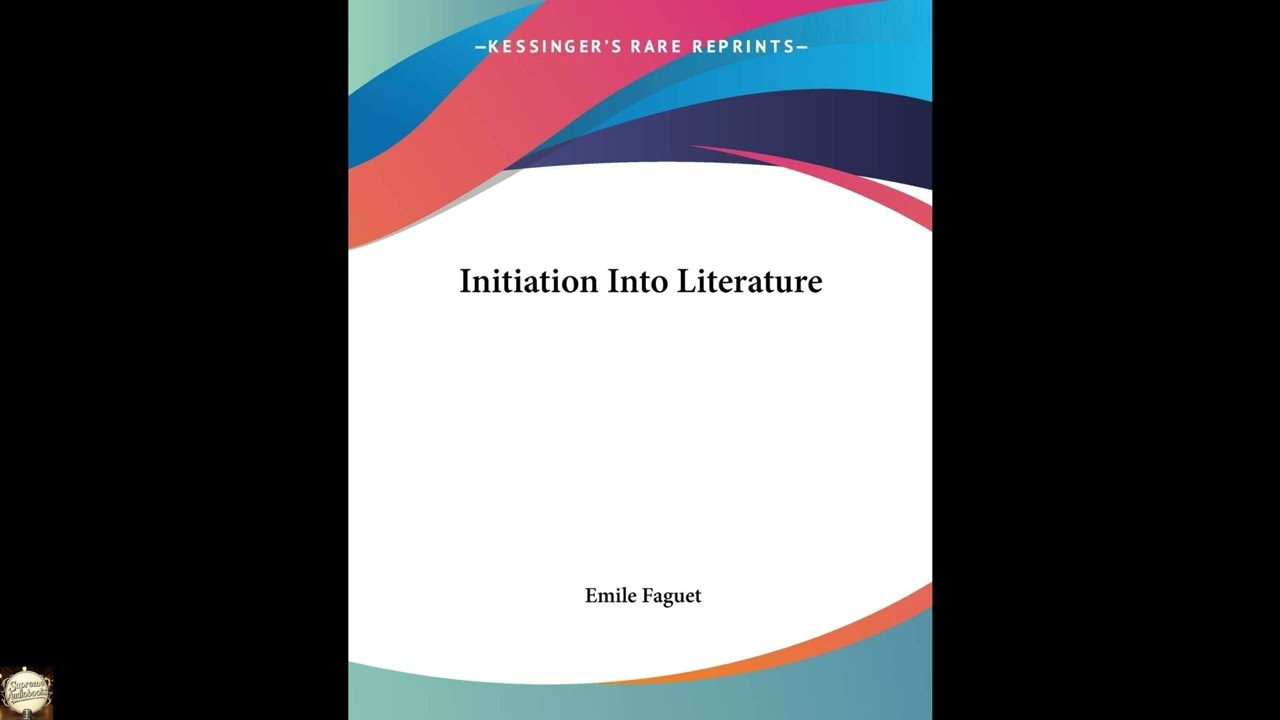
Initiation Into Literature
"Initiation Into Literature" by Emile Faguet is more than simply a book; it is a key, a compass for anyone wishing to unlock the profound depths of human letters. In an age where information often leaves little room for reflection, Faguet's enduring guide offers a methodical yet inspiring path to engaging with literary works. This text invites us not merely to consume stories or poems, but to understand their construction, their historical resonance, and their enduring power. It serves as a personal mentor, ushering the reader through the foundational principles of literary appreciation. For anyone overwhelmed by the sheer volume of classic texts or wishing for a clearer lens, Faguet provides an invaluable, time-tested approach that remains remarkably pertinent today. Within "Initiation Into Literature," the primary "setting" is the vast, often intimidating, intellectual landscape of literary history and criticism itself. It is a passage through the library of human thought, from early epic poems to the nuanced novels of Faguet's own time. The central "character" is the aspiring reader, eager yet perhaps uncertain, standing at the threshold of this immense realm. They seek not just knowledge, but a method—a way to connect with the expressions of human experience found in plays, essays, and verse. Emile Faguet assumes the role of an expert guide, leading this intellectual quest. He introduces the "characters" of the literary canon—not as static figures, but as voices in an ongoing conversation. We encounter the architects of genres, the innovators who reshaped forms, and the thinkers who articulated profound truths. The initial "conflict" the reader faces is the challenge of moving past a purely aesthetic or superficial encounter with literature—the struggle against passive reception, against judging a work without understanding its internal logic, its historical moorings, or its artistic intent. The "arc of the story" is thus an intellectual progression. Faguet’s method begins with fundamental questions: What defines literature? How do different genres function? What tools do we need to truly appreciate a text? The narrative builds systematically, moving from the appreciation of individual works to understanding broader literary movements and how literature reflects and shapes culture. It’s an initiation that equips the reader with critical thinking skills, transforming them from a bewildered observer into an active participant in the dialogue of human letters, cultivating a deeper, more confident capacity for literary discernment. Emile Faguet, a prominent figure in French literary criticism, was born in La Roche-sur-Yon, Vendée, in 1847. His intellectual path led him to the prestigious École Normale Supérieure, where he honed the keen analytical mind that would define his career. He distinguished himself as a professor at the Sorbonne and was elected to the Académie française in 1900. Throughout his life, which concluded in 1916, Faguet remained a prolific writer, known for his sharp critical judgments and firm adherence to classical principles of clarity and reason. Faguet’s place in the literary canon is that of a traditionalist and humanist, deeply engaged with his time but often skeptical of emerging trends like Naturalism and Symbolism, which he sometimes viewed as deviations from literary purpose. His critical output was vast and influential, extending far beyond "Initiation Into Literature." Other significant contributions include Dix-neuvième siècle: études littéraires, a study of 19th-century French literature, Histoire de la littérature française, and Politiques et moralistes du dix-neuvième siècle, where he analyzed the thinkers who shaped the moral and political landscape of his era. He advocated for a rigorous, historically informed approach to reading, viewing literature not just as entertainment but as a crucial pillar of intellectual and moral development. Faguet’s "Initiation Into Literature" enacts several profound themes, paramount among them the Art of Reading Actively. This book is a sustained argument against passive consumption, insisting that a literary text demands engagement. Faguet guides the reader through the layers of a seemingly straightforward poem, demonstrating how to unpack its metaphors, discern its rhythmic patterns, and recognize its intertextual references, transforming the act of reading into an intellectual partnership. It is not enough, he posits, to simply follow a plot; one must apprehend the craft. Another crucial theme is the indispensability of Historical Context as a Key to Understanding. Faguet consistently illustrates that a work of literature cannot be fully grasped in isolation from the epoch that produced it. When discussing, say, a classical French tragedy, he illuminates the societal conventions, philosophical debates, and artistic constraints of 17th-century France that shaped its characters’ dilemmas and dictated its very form. This approach ensures the reader develops an appreciation for how texts emerge from and speak to specific cultural moments. Furthermore, Faguet underscores the Continuity and Evolution of Literary Forms. He traces the lineage of genres, revealing how, for example, the novel developed from earlier narrative traditions, adapting and transforming across centuries, each iteration a response to its predecessors. He shows how literature is a living tradition, a continuous dialogue across time, not a series of disconnected artifacts. Emile Faguet wrote "Initiation Into Literature" during a period of intense cultural and intellectual change in France, spanning the late 19th and early 20th centuries. This era was marked by the ascendance of scientific thought, a questioning of traditional values, and the emergence of new literary schools such as Symbolism and Naturalism, which often challenged the aesthetic principles Faguet cherished. Simultaneously, education was becoming more widespread, creating a broader, more diverse readership than ever before. This context provides a vital lens through which to understand the book’s emergence. As literature became more accessible, there was a pressing need for a guide that could teach discernment and cultivate deeper appreciation. Faguet’s work can be seen, in part, as a thoughtful response to these developments—a reaffirmation of classical rigor and humanist values in the face of what he perceived as literary excesses or a decline in intellectual standards. He provided a structured, principled framework for approaching literature, intended to equip new readers, as well as seasoned scholars, with tools to navigate a rapidly evolving literary landscape. Listening to "Initiation Into Literature" as an audiobook offers a uniquely immersive experience, allowing the listener to engage with Faguet's guidance as if receiving a personal lecture from a seasoned scholar. The several-hours run length is ideal for absorbing complex ideas in manageable segments, whether during a commute, on a leisurely walk, or in quiet contemplation. A skilled narrator brings Faguet's arguments to life with thoughtful, measured pacing that encourages reflection and ensures his nuanced points have time to settle. The voice conveys the necessary authority and erudition, without sounding dry, transforming academic prose into an inviting conversation. This format allows the listener to fully focus on the intellectual substance and careful construction of Faguet's arguments, fostering a scholarly and contemplative atmosphere that is both enlightening and inspiring.
Enjoyed Initiation Into Literature? A few ways to support us
Audible & Amazon links are affiliate; we may earn a small commission at no extra cost.
About this production
Human narration by a volunteer reader from LibriVox.org, the public-domain audiobook project. LibriVox volunteers record literary works whose copyright has expired in the United States, releasing the resulting recordings into the public domain.
Initiation Into Literature by Emile Faguet. The underlying text is in the U.S. public domain. We do not republish any modern copyrighted edition, translation, or commentary.
The 4K cinematic visuals accompanying this audiobook are generated by an AI image model from prompts derived from the source text. No copyrighted photos, paintings, or stock footage are used. AI generation is disclosed on every video on our YouTube channel as required by YouTube's altered/synthetic content policy.
English subtitles are transcribed from the LibriVox recording with OpenAI Whisper. Translations into the 11 other supported languages are produced by Meta's NLLB-200 neural translation model. No human translator's copyrighted translation is used.
Questions about sourcing or rights? See our DMCA & Sourcing policy or contact us.
Enjoyed this audiobook?
If you'd like to own a copy of Initiation Into Literature or hear a professionally produced edition, the links below help support free audiobook production at no extra cost to you.
As an Amazon Associate we earn from qualifying purchases. Audible / print links are affiliate.