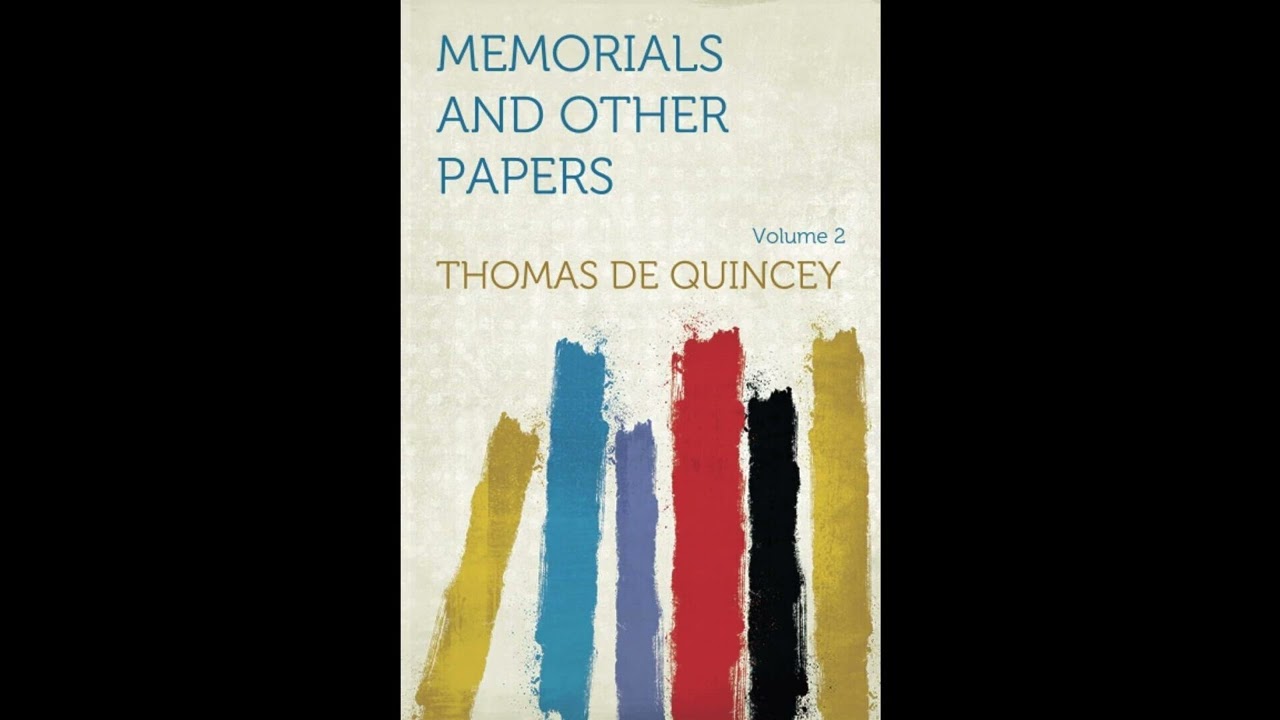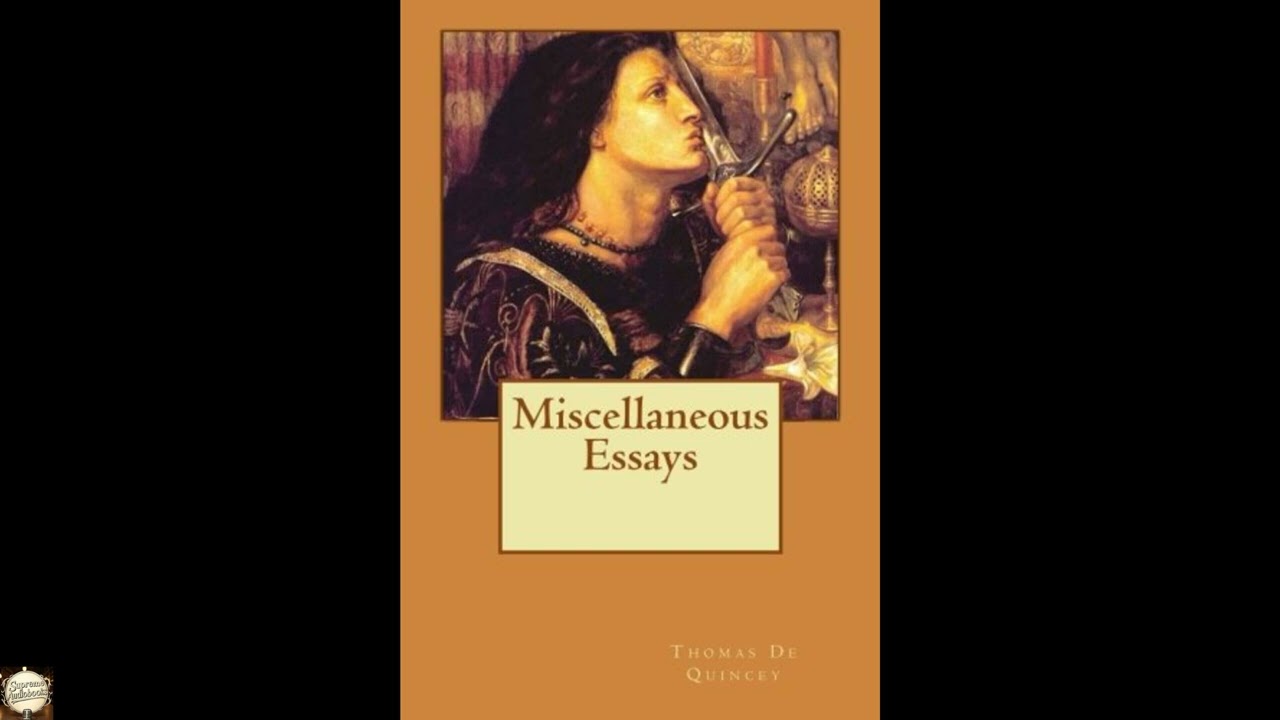
Autobiographic Sketches
Step into the singular mind of Quincey Thomas De, a literary titan whose Autobiographic Sketches offers an unparalleled glimpse into the formation of a genius. This collection, a cornerstone of English letters, invites listeners to experience the very fabric of memory—how it shapes identity, colors our perception of the past, and ultimately defines us. Far from a mere chronicle of events, these sketches are a profound meditation on human experience, rendered with a prose so rich and introspective that it continues to resonate with anyone seeking to understand the mysterious currents of selfhood. Listening today, one discovers not only the lost world of early 19th-century England but also the enduring power of a writer’s honest reckoning with his own beginnings. The narrative of Autobiographic Sketches unfolds not as a conventional, linear story, but as a series of vivid, intricately detailed episodes from De Quincey's early life. We are transported, initially, to his childhood in Manchester, then to the various English schools that both captivated and frustrated his burgeoning intellect. His early years are painted with a blend of idyllic beauty and underlying melancholy, capturing the keen sensitivities of a remarkable child observing the world around him. The author meticulously reconstructs scenes of domestic life, the peculiar dynamics of his family, and the profound impact of loss and early intellectual awakenings. Each sketch functions as a complete world, reflecting the author’s unique gift for weaving together precise detail with philosophical rumination. A significant arc in these recollections details De Quincey’s daring flight from the confines of his grammar school, a pivotal act of rebellion and a testament to his yearning for intellectual freedom. This decision plunges him into a period of acute poverty and struggle in the labyrinthine streets of London. Here, the sketches take on a grittier, more immediate quality, as the young scholar navigates a world starkly different from his privileged upbringing. He encounters a cast of transient figures, witnesses the harsh realities of urban destitution, and endures profound loneliness. This period, recounted with unsparing honesty, forms a crucial foundation for understanding the complex character of the man he would become—a man forever marked by both intellectual brilliance and a deep familiarity with human suffering. The author, Quincey Thomas De, born Thomas Penson Quincey in Manchester in 1785, stands as one of the most distinctive voices of the Romantic era, though his contributions often manifested in prose rather than poetry. A child prodigy, he astonished his family and tutors with his formidable intellect and linguistic abilities, mastering Greek and Latin at an age when most children were still learning basic arithmetic. His early life was characterized by a constant intellectual hunger, which often put him at odds with the conventional educational establishments of his time. After his dramatic departure from Manchester Grammar School, he spent a period of destitution in London, a formative experience that profoundly influenced his later writing. Later, De Quincey matriculated at Worcester College, Oxford, though he never completed his degree, instead choosing to immerse himself in private study and an eclectic array of literature. He became closely associated with the Lake Poets, particularly William Wordsworth and Samuel Taylor Coleridge, residing for a time near Grasmere in the Lake District. His literary output was prolific, encompassing essays, literary criticism, and biographical pieces. While Autobiographic Sketches provides insights into his formative years, he is perhaps most celebrated for Confessions of an English Opium-Eater (1821), a groundbreaking work that candidly detailed his experiences with laudanum addiction and its profound psychological effects. Other notable contributions include "On the Knocking at the Gate in Macbeth" and the haunting Suspiria de Profundis. He died in Edinburgh, Scotland, in 1859, leaving behind a legacy of exquisite prose and pioneering psychological autobiography. One of the central themes permeating Autobiographic Sketches is the subjective nature of memory itself. De Quincey does not simply recount events; he dissects them, analyzing the emotional resonance and psychological impact of each experience as it unfolds through the filter of adult reflection. For instance, his vivid recollections of childhood dreams and nightmares are not just whimsical anecdotes; they become portals into the developing psyche, demonstrating how deeply early impressions can etch themselves onto the soul. This profound engagement with memory elevates the work beyond mere autobiography, making it a study in how we construct our own pasts, often embellishing, prioritizing, and reinterpreting to create a coherent narrative of self. Another key theme is the tension between innocence and the harsh realities of the world. De Quincey’s portrayal of his youthful sensitivity, juxtaposed against the often brutal circumstances he faced – particularly during his time on the streets of London – highlights the inevitable loss of a certain kind of innocence. His experience of profound loneliness and hunger, recounted with an almost clinical detachment yet imbued with deep emotional truth, illustrates the jarring transition from sheltered childhood to independent struggle. The work also delves into the theme of intellectual isolation, showcasing a mind so advanced and particular that it often found itself at odds with conventional society, pushing De Quincey towards a solitary, internal world rich with thought and observation. The period in which Autobiographic Sketches was written and published was a time of immense change in Britain. The early to mid-19th century saw the profound societal shifts brought about by the Industrial Revolution, leading to burgeoning urban centers, increasing social stratification, and new challenges to traditional ways of life. Politically, the aftermath of the Napoleonic Wars left Europe in a state of redefinition, while within Britain, movements for social reform and political enfranchisement were gaining momentum. It was also the height of the Romantic movement in literature, characterized by an emphasis on individualism, emotion, the sublime in nature, and a fascination with the inner life. De Quincey's work emerged from this fertile ground, yet he forged his own path within the Romantic landscape. While his contemporaries like Wordsworth and Coleridge often sought inspiration in nature and the pastoral, De Quincey turned inward, examining the complex machinery of the human mind and the landscapes of memory and dream. His pioneering use of autobiography as a literary form, elevating personal experience to a subject worthy of serious artistic treatment, was a significant contribution to the era. He pushed the boundaries of prose, demonstrating its capacity for intricate psychological analysis and emotional depth, aligning with the Romantic spirit of individual expression while carving out a unique niche for himself. Listening to Autobiographic Sketches as an audiobook offers a unique gateway into De Quincey's elaborate, often labyrinthine prose. His sentences are not always straightforward; they are carefully constructed, unfurling with clauses and parentheticals that demand a certain patience and attention. In the hands of a skilled narrator, these intricate structures come alive, their rhythm and cadence guiding the listener through the author's precise observations and profound meditations. The several hours of listening time allow for a true immersion, making it perfect for sustained engagement during commutes, quiet evenings, or long walks. Pay close attention to the narrator’s pacing, how they manage the subtle shifts in De Quincey's tone—from nostalgic warmth to stark realism, from philosophical musing to vivid sensory description—allowing the full atmospheric weight of early 19th-century England and the author's internal world to settle over you.
Enjoyed Autobiographic Sketches? A few ways to support us
Audible & Amazon links are affiliate; we may earn a small commission at no extra cost.
About this production
Human narration by a volunteer reader from LibriVox.org, the public-domain audiobook project. LibriVox volunteers record literary works whose copyright has expired in the United States, releasing the resulting recordings into the public domain.
Autobiographic Sketches by Thomas De Quincey. The underlying text is in the U.S. public domain. We do not republish any modern copyrighted edition, translation, or commentary.
The 4K cinematic visuals accompanying this audiobook are generated by an AI image model from prompts derived from the source text. No copyrighted photos, paintings, or stock footage are used. AI generation is disclosed on every video on our YouTube channel as required by YouTube's altered/synthetic content policy.
English subtitles are transcribed from the LibriVox recording with OpenAI Whisper. Translations into the 11 other supported languages are produced by Meta's NLLB-200 neural translation model. No human translator's copyrighted translation is used.
Questions about sourcing or rights? See our DMCA & Sourcing policy or contact us.
Enjoyed this audiobook?
If you'd like to own a copy of Autobiographic Sketches or hear a professionally produced edition, the links below help support free audiobook production at no extra cost to you.
As an Amazon Associate we earn from qualifying purchases. Audible / print links are affiliate.