East of Paris: Sketches in the Gâtinais, Bourbonnais, and Champagne
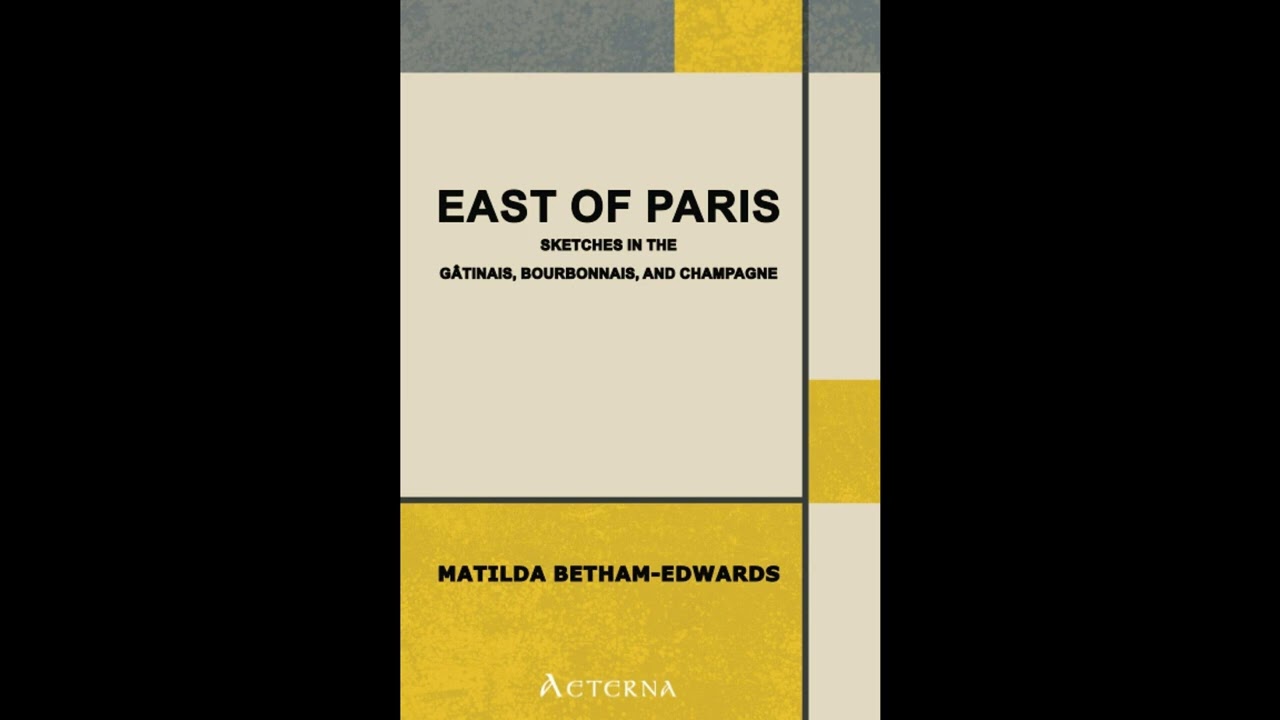
Step into a quiet corner of late nineteenth-century France, a landscape often overshadowed in popular imagination by Paris itself, yet teeming with its own distinct charm and history. "East of Paris: Sketches in the Gâtinais, Bourbonnais, and Champagne" by Matilda Betham-Edwards offers just such an invitation, a meticulously observed and deeply personal record of regions rarely visited by the casual tourist then or now. This is not a grand historical narrative or a sweeping romance, but rather a collection of keenly observed vignettes that illuminate the daily rhythms, unique customs, and enduring character of rural France just as the modern world began to cast its long shadow. For anyone seeking a deeper connection to a bygone era, an understanding of cross-cultural observation, or simply a beautifully rendered escape into the French countryside, this forgotten gem provides an experience both illuminating and profoundly satisfying. The book unfurls across several distinct French provinces, beginning in the Gâtinais, a region known for its forests and fertile plains, often called the "Garden of France." Here, the author acts as a thoughtful and curious wanderer, taking us through small towns like Montargis, describing its canals, its quiet squares, and the everyday lives of its inhabitants. She notes the architecture, the local markets, the particularities of regional dress, and the subtle nuances of social interaction, always with an eye for authenticity over romantic idealization. From the Gâtinais, the narrative arc carries us southeast into the Bourbonnais, a historical duchy with its own proud traditions, rustic landscapes, and spa towns like Vichy, though Betham-Edwards focuses on the less trodden paths, revealing the heart of the countryside and its resilient communities. Finally, the journey concludes in the famed Champagne region, not merely focusing on its celebrated vineyards but exploring its historic towns, its Roman roads, and the people who cultivate its rich soil. Throughout these transitions, the overarching narrative is the author's quest to understand and document the authentic spirit of provincial France before it was irrevocably altered by progress. She interacts with farmers, innkeepers, local officials, and fellow travelers, gathering their stories and perspectives, always striving to paint a complete picture. The "conflict," if one can call it that in a book of sketches, lies in the gentle tension between the author's English sensibility and the deeply ingrained French customs she encounters, a constant process of comparison, appreciation, and occasional bemusement, all delivered with an underlying respect for the differences she observes. Her story is one of gradual immersion, of piecing together the larger mosaic of a national character through countless small, vivid details. Matilda Betham-Edwards, born in 1836 in Westerfield, Suffolk, England, was a prodigious and influential writer of the Victorian era. The daughter of a farmer, her early life instilled in her a deep connection to rural landscapes and the lives of ordinary people, themes that would resonate throughout her extensive body of work. A fiercely independent woman, Betham-Edwards was known for her intellectual curiosity and her strong Francophile tendencies, becoming a prominent interpreter of French life and culture to English readers. She made frequent, extended visits to France, often residing there for months at a time, allowing her to gain an intimate understanding of the country beyond its major cities. Her literary career was diverse, encompassing novels, poetry, children's literature, and essays, but she is perhaps best remembered today for her travel writing and her insightful depictions of French provincial life. A contemporary and friend of George Eliot, Betham-Edwards moved in significant literary circles, yet maintained her distinct voice and focus. Among her many other notable works are "A Year in Western France" (1875), "France of To-day" (1892), and her autobiography, "Mid-Victorian Memories" (1919). Her commitment to depicting reality and fostering Anglo-French understanding positioned her as a significant cultural bridge-builder in a period often marked by nationalistic tensions. She passed away in 1919, leaving behind a legacy of detailed observation and empathetic portrayal that continues to resonate. One of the central themes running through "East of Paris" is the profound act of cultural observation and appreciation. Betham-Edwards doesn't merely describe what she sees; she seeks to understand the why behind French customs and traditions. For instance, she might meticulously detail the meticulous arrangement of produce in a market stall or the particularity of a regional dish, not just as a visual curiosity, but as a window into the local economy, social hierarchy, and the deep pride inhabitants take in their heritage. Her recounting of a conversation with a village elder about changes in farming practices or a visit to a small-town fete demonstrates her effort to peel back layers and truly grasp the nuances of local life. Another compelling theme is the nuanced portrayal of rural life against the backdrop of encroaching modernity. Published in 1894, the book captures France on the cusp of significant change, with industrialization and urbanization slowly altering the fabric of traditional society. Betham-Edwards subtly highlights this by drawing attention to ancient agricultural methods still in practice, the enduring simplicity of village architecture, and the slower pace of life, often juxtaposed with brief mentions of railways or distant industrial hums. This gives the "sketches" a powerful sense of historical documentation, showing how certain ways of living were cherished even as their eventual transformation became inevitable, serving as a gentle elegy for traditions perhaps already fading even as she recorded them. "East of Paris" emerged in a fascinating period of European history, known in France as the Belle Époque and in England as the late Victorian era. It was a time of relative peace and prosperity, but also one of rapid technological advancement and profound social change. The bicycle and eventually the automobile were beginning to reshape travel, while photography was revolutionizing how people perceived distant places. Yet, the written travelogue remained a powerful and popular medium for conveying detailed, personal impressions of foreign lands, offering a depth and subjectivity that early photography could not. There was a burgeoning interest in understanding "the other" – particularly between England and France – and works like Betham-Edwards's served to bridge cultural divides and challenge stereotypes. The rise of women writers in the Victorian era also provided a fertile ground for such a book. Women like Betham-Edwards were increasingly taking on public roles as authors, journalists, and social commentators, using their unique perspectives to inform and entertain. Her ability to travel independently and publish her observations spoke to a growing sense of female agency within the literary sphere. By focusing on less-traveled regions and offering a sympathetic, informed view of French provincial life, Betham-Edwards contributed significantly to the evolving understanding of France within the English-speaking world, moving beyond the traditional grand tours to reveal the true heart of the country. Listening to "East of Paris" as an audiobook offers a uniquely immersive and meditative experience. The "several hours" run length allows the listener to settle in, letting the author's detailed observations unfold at a measured pace. A skilled narrator can truly bring to life the distinct character of each region Betham-Edwards describes, from the rustling of the Gâtinais forests to the bustling sounds of a Champagne market town. The narration can highlight the subtle shifts in her tone, from scholarly inquiry to charming anecdote, and differentiate any quoted dialogue she presents from her own reflective commentary. This oral presentation allows the listener to absorb the intricate descriptions of landscapes, architecture, and local customs almost as if being guided personally through the French countryside. It's an ideal listen for quiet moments, for walks, or for anyone seeking to be transported to a meticulously rendered, richly detailed corner of the past, allowing the sound of the words to paint a vivid mental picture of a France that once was.
Enjoyed East of Paris: Sketches in the Gâtinais, Bourbonnais, and Champagne? A few ways to support us
Audible & Amazon links are affiliate; we may earn a small commission at no extra cost.
About this production
Human narration by a volunteer reader from LibriVox.org, the public-domain audiobook project. LibriVox volunteers record literary works whose copyright has expired in the United States, releasing the resulting recordings into the public domain.
East of Paris: Sketches in the Gâtinais, Bourbonnais, and Champagne by Matilda Beth. The underlying text is in the U.S. public domain. We do not republish any modern copyrighted edition, translation, or commentary.
The 4K cinematic visuals accompanying this audiobook are generated by an AI image model from prompts derived from the source text. No copyrighted photos, paintings, or stock footage are used. AI generation is disclosed on every video on our YouTube channel as required by YouTube's altered/synthetic content policy.
English subtitles are transcribed from the LibriVox recording with OpenAI Whisper. Translations into the 11 other supported languages are produced by Meta's NLLB-200 neural translation model. No human translator's copyrighted translation is used.
Questions about sourcing or rights? See our DMCA & Sourcing policy or contact us.
Enjoyed this audiobook?
If you'd like to own a copy of East of Paris: Sketches in the Gâtinais, Bourbonnais, and Champagne or hear a professionally produced edition, the links below help support free audiobook production at no extra cost to you.
As an Amazon Associate we earn from qualifying purchases. Audible / print links are affiliate.