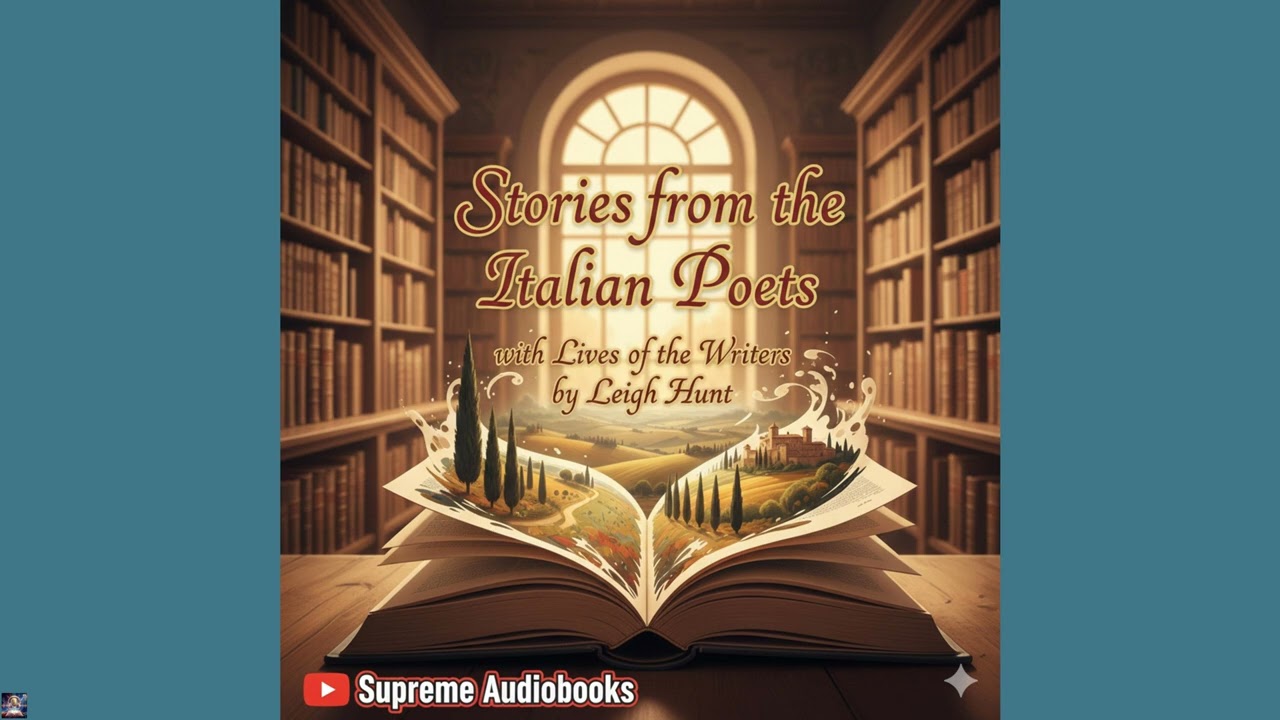
Stories from the Italian Poets: with Lives of the Writers - Leigh Hunt
Imagine a gathering where the greatest storytellers of Italy, from the profound Florentine visionary to the chivalrous chroniclers of romance, share their epic sagas directly with you. Stories from the Italian Poets: with Lives of the Writers by Leigh Hunt offers precisely this intimate experience, serving as a gracious introduction to a literary tradition that has shaped Western thought and art for centuries. This compendium isn't merely an academic survey; it’s a living retelling, presented through the perceptive and often witty lens of a prominent English man of letters. For modern listeners, it’s an invitation to connect with foundational narratives that continue to resonate—tales of love, betrayal, divine judgment, and heroic struggle—all rendered with a keen appreciation for their enduring human relevance and poetic grandeur. This unique compilation acts as both an anthology and a critical companion, guiding listeners through the most significant poetic achievements of Italy. Rather than presenting the original verse, Leigh Hunt reconstructs the narratives of the Divina Commedia, the epic romances of Ariosto’s Orlando Furioso, the crusading fervor of Tasso’s Gerusalemme Liberata, and other influential works, transforming them into accessible prose. The structure is methodical yet engaging: each section introduces a major poet, provides a concise biographical sketch, and then unwinds the principal tales from their body of work. Listeners will find themselves transported to Dante’s terrifying descent through Hell and Purgatory, witnessing his encounters with historical and mythological figures, and ascending with him towards Paradise. The collection then shifts tone to the fantastic world of chivalry and magic crafted by Ludovico Ariosto. Hunt meticulously recounts episodes from the sprawling Orlando Furioso, a poem teeming with knights, sorceresses, mythical beasts, and quests for love and glory. We encounter the valiant Orlando driven to madness by unrequited love for Angelica, the warrior maiden Bradamante, and the sorceress Alcina. Following this, the listener is led into the more somber, grand epic of Torquato Tasso’s Jerusalem Delivered, a vivid account of the First Crusade. Here, Hunt emphasizes the clashing ideologies, the heroism of figures like Godfrey of Bouillon and Rinaldo, and the tragic love story between the Christian warrior Rinaldo and the Saracen sorceress Armida, all set against a backdrop of divine and demonic interference. Hunt’s skillful narrative thread ensures that even these complex, multi-layered stories unfold with clarity, allowing the fundamental drama and character motivations to shine. James Henry Leigh Hunt, born in Southgate, London, in 1784, was a prominent English critic, essayist, poet, and political commentator whose life spanned the Romantic and early Victorian periods. He became known for his liberal politics and his association with the second generation of Romantic poets, most notably Percy Bysshe Shelley and John Keats, whom he championed in his literary journals. Hunt’s early career saw him establish The Examiner, a weekly political and literary paper, through which he became a vocal critic of the government and the monarchy. His outspokenness led to his infamous two-year imprisonment from 1813 to 1815 for libel against the Prince Regent, a period during which he continued to write and receive visits from literary friends such as Charles Lamb and Lord Byron. Beyond his political journalism, Hunt made significant contributions to literature. His own poetry, including The Story of Rimini and Abou Ben Adhem, showcased his talent for narrative and lyrical expression, though he is perhaps better remembered today for his critical writings and his role as a literary mentor and friend. He fostered the careers of younger poets and helped shape the aesthetic sensibilities of the era. His autobiography provides a vivid account of his life and times, offering invaluable insights into the literary and social fabric of early 19th-century England. His work on the Italian poets reflects a broader European literary trend of revisiting and reinterpreting classical and medieval sources, making them accessible to a wider audience eager for knowledge and entertainment. Several potent themes resonate throughout Stories from the Italian Poets. One prominent thread is the eternal conflict between free will and predestination, particularly evident in Dante’s Inferno. As Dante descends through the circles of hell, he witnesses souls enduring punishments fitting their earthly sins, raising questions about divine justice and the choices that lead individuals to their ultimate fate. Consider the scene with Paolo and Francesca, doomed lovers bound together by their shared sin, whose tragic story underscores the destructive power of passion and the inexorable consequences of their actions. Another powerful theme is the heroic ideal versus human folly. In Ariosto’s Orlando Furioso, the titular hero, a paragon of chivalry and strength, is driven to madness by unrequited love, showing how even the greatest virtues can be undermined by intense human emotion. His wild rampage across Europe, a poignant and at times comical depiction, reveals the vulnerability of even the most formidable figures to the torments of the heart. Furthermore, the collection consistently emphasizes the power of narrative itself—how stories, whether divine visions or epic romances, shape understanding, inspire action, and provide moral frameworks for navigating a complex world. Leigh Hunt compiled this work during the mid-19th century, a period in Britain marked by significant social and intellectual ferment. The Romantic movement, with its emphasis on emotion, individualism, and the sublime in nature and art, had deeply influenced the literary landscape. There was also a growing appetite among the reading public for accessible versions of classical and foreign literature, as education became more widespread and leisure time increased for certain segments of society. Hunt’s political leanings as a radical and proponent of liberty aligned with a broader spirit of inquiry and reform. His personal struggles and resilience informed his empathetic understanding of the human condition, which he brought to his interpretations of these ancient Italian narratives. The book emerged as part of a cultural moment that valued both individual expression and a connection to the grand literary traditions of Europe, seeking to bridge the gap between academic scholarship and popular appreciation. Listening to Stories from the Italian Poets as an audiobook transforms it into a truly immersive experience. The narrator’s voice becomes Leigh Hunt’s own genial presence, guiding you through the intricate narratives and biographical details with a steady, engaging pace. The length, spanning several hours, is ideal for extended periods of focused listening, allowing the grandeur and scope of these epic tales to fully unfold without interruption. You can appreciate the narrator’s careful inflection and nuanced delivery as they differentiate between the grave pronouncements of Dante’s Inferno, the lively adventures of Ariosto’s knights, and the martial solemnity of Tasso’s crusaders. This spoken presentation allows the narrative flow, character voices, and underlying emotional weight of Hunt’s retellings to come alive, making it easier to absorb the rich details and profound insights contained within these foundational works of Western literature.
Enjoyed Stories from the Italian Poets: with Lives of the Writers - Leigh Hunt? A few ways to support us
Audible & Amazon links are affiliate; we may earn a small commission at no extra cost.
About this production
Human narration by a volunteer reader from LibriVox.org, the public-domain audiobook project. LibriVox volunteers record literary works whose copyright has expired in the United States, releasing the resulting recordings into the public domain.
Stories from the Italian Poets: with Lives of the Writers - Leigh Hunt by Leigh Hunt. The underlying text is in the U.S. public domain. We do not republish any modern copyrighted edition, translation, or commentary.
The 4K cinematic visuals accompanying this audiobook are generated by an AI image model from prompts derived from the source text. No copyrighted photos, paintings, or stock footage are used. AI generation is disclosed on every video on our YouTube channel as required by YouTube's altered/synthetic content policy.
English subtitles are transcribed from the LibriVox recording with OpenAI Whisper. Translations into the 11 other supported languages are produced by Meta's NLLB-200 neural translation model. No human translator's copyrighted translation is used.
Questions about sourcing or rights? See our DMCA & Sourcing policy or contact us.
Enjoyed this audiobook?
If you'd like to own a copy of Stories from the Italian Poets: with Lives of the Writers - Leigh Hunt or hear a professionally produced edition, the links below help support free audiobook production at no extra cost to you.
As an Amazon Associate we earn from qualifying purchases. Audible / print links are affiliate.