Legends And Romances Of Spain (1920)
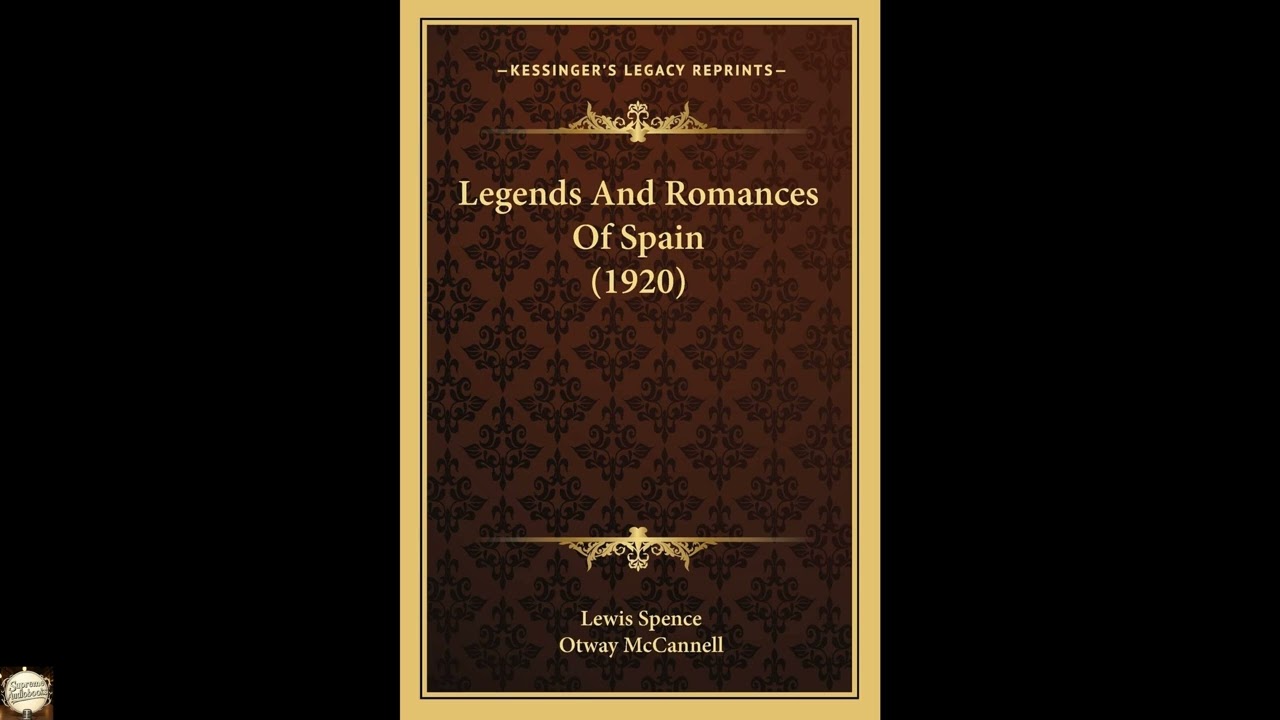
"Legends And Romances Of Spain (1920)" by Lewis Spence opens a direct portal to the enduring spirit of a nation forged in myth, conquest, and fervent imagination. This isn't merely a historical account; it is a living collection of tales that once shaped identities, explained the inexplicable, and brought a supernatural glow to the everyday lives of the Spanish people. From the echoing halls of forgotten kingdoms to the sun-drenched battlefields where Moor and Christian clashed, these stories resonate with a truth more profound than mere fact—the truth of human aspiration, fear, and wonder. In an age often seeking meaning amidst its own complexities, returning to these foundational narratives offers not just entertainment, but a vital connection to the wellsprings of Western culture, reminding us how stories bridge the past and present, offering solace, insight, and an unshakeable sense of shared humanity. Lewis Spence guides his listener through a magnificent panorama of narratives, each tale a facet of Spain's legendary past. The setting shifts continuously, from the mist-shrouded peaks of the Pyrenees to the sun-baked plains of Andalusia, from ancient caves to grand cathedrals built in the wake of the Reconquista. Rather than a singular narrative, Spence presents a meticulously curated collection that acts as a chronological and thematic progression through the development of Spanish mythos, introducing earliest pagan deities and nature spirits, which slowly give way to heroic sagas and divine interventions. The central "characters" are not individual protagonists, but archetypes and legendary figures whose deeds echo across centuries. Listeners will meet names like El Cid, whose military prowess and loyalty became national legend, and the infamous Don Juan, whose exploits and damnation serve as a moral parable. We are also introduced to saints, wise Moorish caliphs, and spectral queens. The overarching "conflict" often manifests as the dramatic clash between Christian and Moorish civilizations, yet it also frequently addresses universal themes: the pursuit of honor, forbidden love, and humanity's perennial wrestling with fate and free will. The arc of the story, then, is the arc of Spain itself through the eyes of its storytellers, revealing how successive historical layers contributed to a unified, yet diverse, body of folklore that transmits cultural memory and articulates a nascent national character. The compiler of these extraordinary tales, Lewis Spence (1874-1955), was a distinguished Scottish journalist, poet, and perhaps most notably, a prolific mythographer and folklorist. Born in Dundee, Scotland, Spence dedicated a significant portion of his intellectual life to the study of ancient cultures and their belief systems, becoming a recognized authority on comparative mythology. His career was marked by a passionate endeavor to document and interpret the mythological traditions of various civilizations, often with a keen eye for their psychological and cultural significance. He served as a sub-editor for "The Scotsman" for many years, a role that honed his prose and allowed him to communicate complex ideas with clarity. Spence was a key figure in the early 20th-century Scottish Renaissance, a movement that sought to revitalize Scottish culture through its literature and history. While he also produced poetry, his most enduring legacy lies in his extensive non-fiction works that introduced countless readers to the world's myths. His other notable books include "The Popol Vuh," a pioneering translation of the sacred book of the Maya, and "An Introduction to Mythology," which offered a comprehensive overview of the field. Spence's contributions established him as a significant popularizer of mythological studies, making arcane subjects approachable without sacrificing scholarly integrity, thereby securing his place in the canon of folklore scholarship. "Legends And Romances Of Spain" holds considerable literary and cultural significance, not only as a repository of narratives but also as a demonstration of key thematic threads. One prominent theme is cultural syncretism and the formation of identity. Spence’s collection repeatedly illustrates how Spanish identity emerged from a complex blend of influences: ancient Iberian animism, Roman legacy, Visigothic governance, and the nearly eight centuries of Moorish presence. We see this in tales where Christian saints are venerated alongside pagan sites, or where Moorish monarchs are portrayed with virtues ascribed to Christian knights, reflecting a cross-pollination of values. Another central theme is the enduring power of storytelling and oral tradition. These legends were spoken, sung, and passed from generation to generation, serving as communal memory. Spence’s compilation allows us to appreciate how these narratives functioned to transmit moral lessons and historical understanding. We witness the recurrence of specific motifs—the hero’s quest, the treacherous villain, divine or demonic forces—speaking to universal human experiences. Furthermore, the collection consistently foregrounds heroism and chivalry, particularly as they relate to the Reconquista, with figures like El Cid exemplifying loyalty and unwavering faith. The book also presents a constant interaction with the supernatural and the sacred, where miracles are commonplace, underscoring the deep spiritual conviction and mystical imagination inherent in Spanish folklore. The publication of "Legends And Romances Of Spain" in 1920 places it within a fascinating moment in early 20th-century intellectual history. The world was still reeling from the First World War, an event that prompted a widespread reassessment of national identities and foundational myths. This era saw a significant resurgence of interest in anthropology and comparative mythology, with influential works by figures like James Frazer and Carl Jung. Spence's book fits squarely into this intellectual trend, offering a comprehensive look at a nation’s legendary bedrock. Spain itself was undergoing profound transformations after losing its last colonial possessions in 1898, with intellectuals focused on defining a new national identity. Spence's scholarly yet accessible synthesis provided a timely collection for a public hungry for narratives that spoke to the enduring power of human imagination in a rapidly changing world. Listening to "Legends And Romances Of Spain" as an audiobook offers a uniquely fitting and deeply immersive experience. These stories were originally born from the spoken word, passed down through generations. To hear them narrated is to reconnect with their most primal form. A skilled narrator breathes new life into ancient voices, distinguishing characters and lending gravitas to pronouncements or an eerie whisper to a ghostly encounter. The several hours of listening time allow for true absorption into these diverse narratives, an ideal companion for commutes or relaxed evenings. Listeners can appreciate the nuanced pacing and subtle voice shifts that create distinct characters, as the overall atmosphere—be it reverence, adventure, or somber mystery—is masterfully crafted, inviting you to inhabit Spain's legendary landscapes.
Enjoyed Legends And Romances Of Spain (1920)? A few ways to support us
Audible & Amazon links are affiliate; we may earn a small commission at no extra cost.
About this production
Human narration by a volunteer reader from LibriVox.org, the public-domain audiobook project. LibriVox volunteers record literary works whose copyright has expired in the United States, releasing the resulting recordings into the public domain.
Legends And Romances Of Spain (1920) by Lewis Spence. The underlying text is in the U.S. public domain. We do not republish any modern copyrighted edition, translation, or commentary.
The 4K cinematic visuals accompanying this audiobook are generated by an AI image model from prompts derived from the source text. No copyrighted photos, paintings, or stock footage are used. AI generation is disclosed on every video on our YouTube channel as required by YouTube's altered/synthetic content policy.
English subtitles are transcribed from the LibriVox recording with OpenAI Whisper. Translations into the 11 other supported languages are produced by Meta's NLLB-200 neural translation model. No human translator's copyrighted translation is used.
Questions about sourcing or rights? See our DMCA & Sourcing policy or contact us.
Enjoyed this audiobook?
If you'd like to own a copy of Legends And Romances Of Spain (1920) or hear a professionally produced edition, the links below help support free audiobook production at no extra cost to you.
As an Amazon Associate we earn from qualifying purchases. Audible / print links are affiliate.