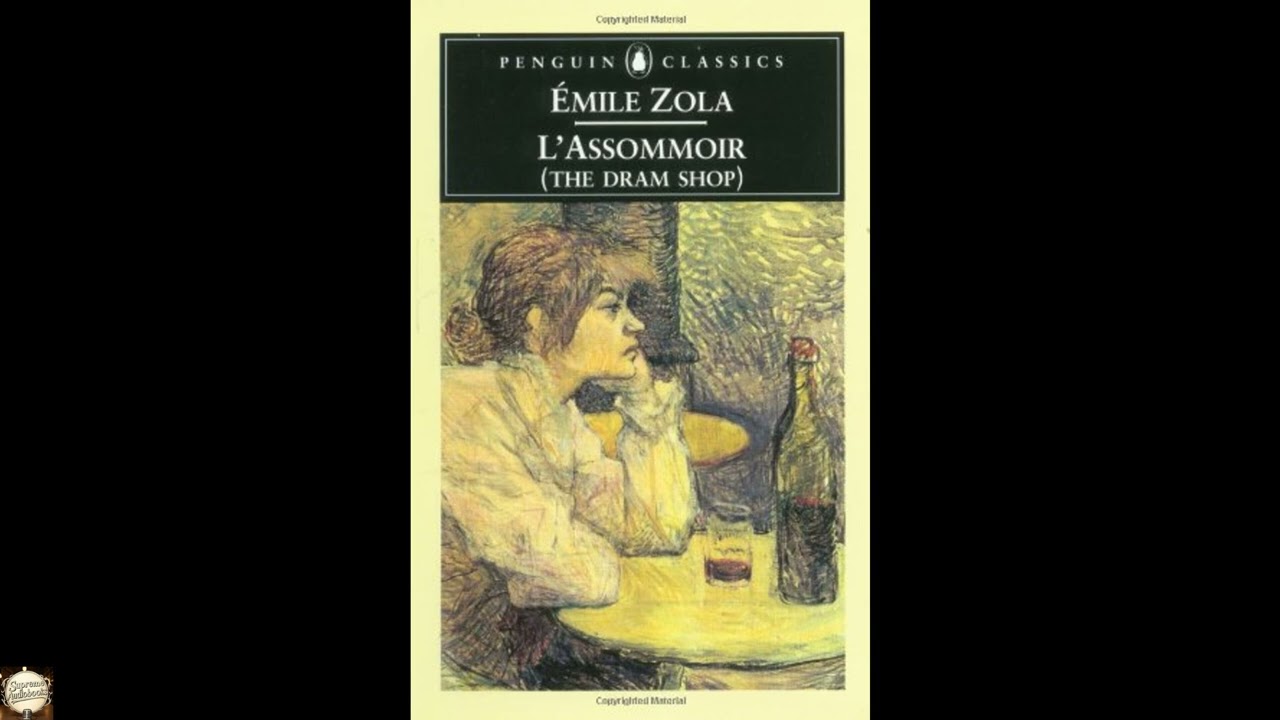
L'Assommoir (The Dram Shop)
Step into the grimy, bustling heart of working-class Paris in the 1860s, a world brought to vivid, unsparing life by Émile Zola’s L'Assommoir, or The Dram Shop. This isn't a story of grand romance or high society, but a raw, unflinching descent into the lives of ordinary people battling the relentless forces of poverty, addiction, and social decay. Why should a listener care about Gervaise Macquart’s struggle today? Because her fight for dignity, her hopes and failures, mirror the enduring human drama of striving against overwhelming odds. It's a profound examination of how environment and circumstance can conspire to shape—and sometimes shatter—a life, making it a powerful and deeply relevant listen for anyone grappling with questions of individual agency versus the pressures of society. Our story centers on Gervaise Macquart, a young, hardworking laundress, who arrives in the Goutte d'Or district of Paris with her two children, having been abandoned by her shiftless lover, Lantier. Despite her difficult start, Gervaise possesses a remarkable resilience and a quiet dream: to live a clean, respectable life, free from hunger and the constant threat of destitution. She finds a measure of stability with Coupeau, a kind-hearted roofer, and together they strive to build a modest home. Their early days are marked by diligence and a shared optimism, even as the squalor and temptations of their neighborhood—with its ever-present distilleries and cheap drinking establishments—loom large. For a time, Gervaise's dreams seem within reach. She works tirelessly, eventually opening her own laundry shop, a beacon of order and cleanliness amidst the chaos. Her industry earns her respect in the community, and her marriage to Coupeau brings a period of relative peace and even a touch of prosperity. Yet, their fragile happiness is constantly threatened by the precariousness of their existence and the insidious influence of the dram shop. An accident befalls Coupeau, rendering him unable to work, and his subsequent idleness and the easy comfort found in drink begin to unravel the fabric of their lives. As Coupeau slides deeper into alcoholism, and the parasitic Lantier reappears, Gervaise finds her hard-won stability eroding, her dreams slowly giving way to the grinding reality of her environment. Émile Zola, the author who cast this searing light on Parisian life, was born in Paris in 1840 but spent his formative years in Aix-en-Provence, a childhood friend to the future painter Paul Cézanne. He returned to Paris in his youth, struggling as a clerk before finding his footing as a journalist and literary critic. Zola became the leading figure of Naturalism, a literary movement that sought to apply the methods of scientific observation to fiction, viewing characters as products of their heredity and environment. He believed the novelist should act as an impartial scientist, dissecting society's ills with unflinching precision. Zola's monumental Les Rougon-Macquart series—a cycle of twenty novels chronicling a single family under the Second Empire—was his life's work. L'Assommoir, published in 1877, stands as the seventh volume in this ambitious project and is often considered one of its crowning achievements. Beyond the Rougon-Macquart saga, Zola penned other significant works such as Thérèse Raquin and the powerful polemic J'Accuse...! which played a pivotal role in the Dreyfus Affair. He was a vocal social critic, often using his pen to expose injustice and advocate for the working class, solidifying his place as a giant in French literature who profoundly influenced the development of the modern novel. He died in 1902 under mysterious circumstances. At its core, L'Assommoir is a harrowing study of social determinism, meticulously illustrating how characters are often trapped by their inherited traits and the crushing weight of their surroundings. We see this vividly in Coupeau's tragic downfall, where an injury leads to idleness, which then seamlessly transitions into the neighborhood's endemic drinking culture, a seemingly inevitable path given the lack of alternatives and the pervasive presence of cheap liquor. The novel also serves as a potent, terrifying portrait of alcoholism, depicting its insidious progression not just as a moral failing but as a disease that systematically destroys health, family, finances, and hope. The titular "dram shop" itself becomes a character, a malevolent force always ready to offer temporary oblivion at the cost of utter ruin. Furthermore, Zola brings into sharp focus the relentless burden of poverty and class struggle, showcasing how even the most earnest efforts to escape destitution are often undermined by misfortune, exploitation, and the sheer cost of survival. Gervaise's earnest ambition to create a clean, respectable life is a constant battle against the encroaching squalor and the fragile economics of her world. The novel also offers a nuanced look at gender roles and female agency within this environment. Gervaise begins with strength and entrepreneurial spirit, yet her ultimate fate is inextricably tied to the weaknesses and demands of the men around her, revealing the limited avenues for independence available to women of her class. When L'Assommoir was published in 1877, France was in the midst of profound societal change. The Second Empire, under Napoleon III, had overseen a period of rapid industrialization and the dramatic renovation of Paris by Baron Haussmann, which simultaneously created grand boulevards and exacerbated the overcrowding and squalor of working-class districts. This era saw the emergence of a distinct urban proletariat, and with it, growing awareness of widespread poverty, social alienation, and public health issues. Zola’s Naturalism emerged as a direct response to these conditions, pushing beyond the existing Realist tradition to analyze society with a clinical, almost scientific detachment, aiming to expose the brutal truths often ignored by more romanticized literature. The novel was a sensation, sparking both widespread condemnation for its frank language and subject matter—particularly its use of Parisian street slang—and fervent praise for its groundbreaking realism and social commentary. It challenged prevailing literary conventions by giving voice and narrative weight to characters from the lowest strata of society, demonstrating that their lives, however grim, were worthy of serious artistic consideration. Zola’s work forced the literary world, and indeed society, to confront uncomfortable realities about class, vice, and the human condition, making it a pivotal text in the history of French literature and a powerful record of its time. Listening to L'Assommoir as an audiobook offers an exceptionally immersive experience. A skilled narrator can perfectly capture the shifting moods of Gervaise’s world—from the clamor of the laundry and the clinking glasses of the dram shop to the hushed despair of a cold, empty room. The book’s length, several hours, allows for a deep, unhurried dive into Zola's meticulously detailed environment, letting the listener become fully absorbed in the gradual, inexorable arc of Gervaise’s story. Pay close attention to the raw, authentic dialogue, which Zola painstakingly researched, and how the narration brings out the distinct voices and mannerisms of the varied cast of characters. The pacing of the narration can underscore the slow, grinding nature of poverty and the quick, destructive pull of addiction, allowing Zola’s potent atmosphere and social critique to truly resonate.
Enjoyed L'Assommoir (The Dram Shop)? A few ways to support us
Audible & Amazon links are affiliate; we may earn a small commission at no extra cost.
About this production
Human narration by a volunteer reader from LibriVox.org, the public-domain audiobook project. LibriVox volunteers record literary works whose copyright has expired in the United States, releasing the resulting recordings into the public domain.
L'Assommoir (The Dram Shop) by Émile Zola. The underlying text is in the U.S. public domain. We do not republish any modern copyrighted edition, translation, or commentary.
The 4K cinematic visuals accompanying this audiobook are generated by an AI image model from prompts derived from the source text. No copyrighted photos, paintings, or stock footage are used. AI generation is disclosed on every video on our YouTube channel as required by YouTube's altered/synthetic content policy.
English subtitles are transcribed from the LibriVox recording with OpenAI Whisper. Translations into the 11 other supported languages are produced by Meta's NLLB-200 neural translation model. No human translator's copyrighted translation is used.
Questions about sourcing or rights? See our DMCA & Sourcing policy or contact us.
Enjoyed this audiobook?
If you'd like to own a copy of L'Assommoir (The Dram Shop) or hear a professionally produced edition, the links below help support free audiobook production at no extra cost to you.
As an Amazon Associate we earn from qualifying purchases. Audible / print links are affiliate.