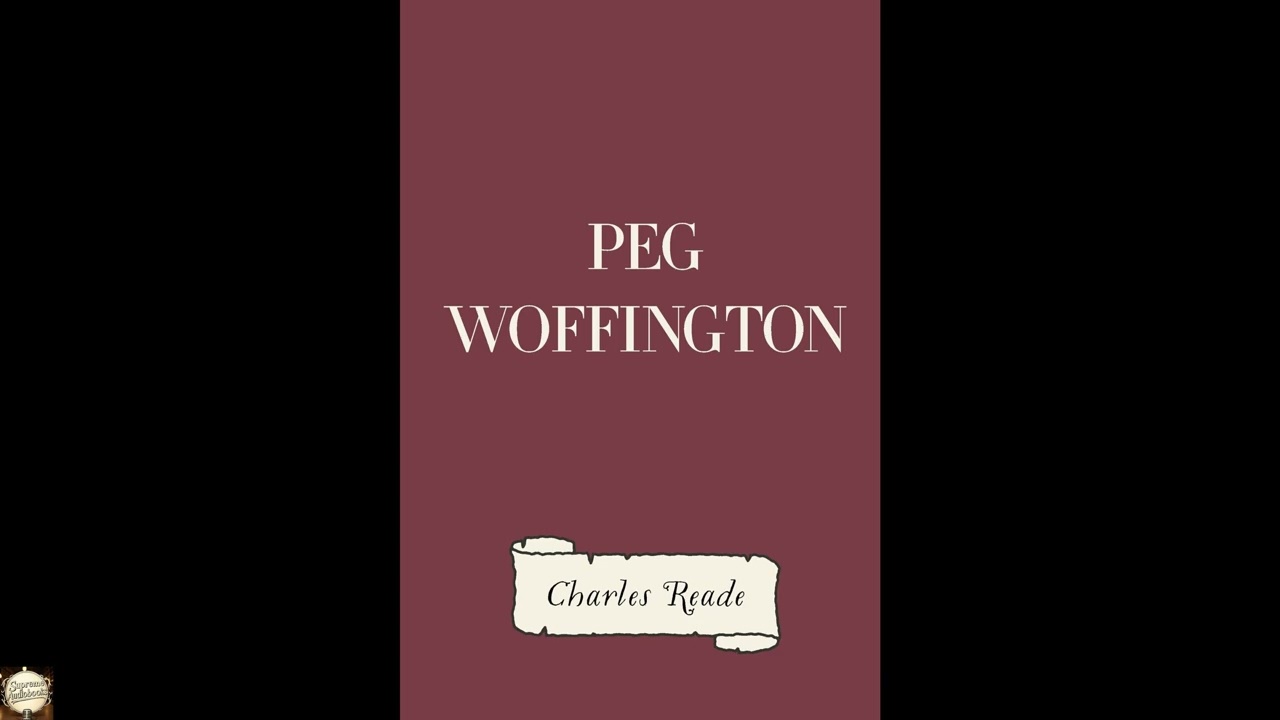
Peg Woffington
Step into the powdered wigs and vibrant bustle of 18th-century London, a city where the stage held sway over hearts and minds, and where one magnetic actress captivated an entire nation. Charles Reade's Peg Woffington plunges listeners into this glamorous, often morally ambiguous world, weaving a tale of love, illusion, and the surprising truths revealed when art collides with life. It’s a compelling story not just for its historical charm, but for its timeless examination of identity, the deceptive nature of appearances, and the difficult choices faced when confronted with the raw honesty of the human heart. This classic isn't merely a period piece; it’s a spirited drama about what it means to truly see someone, beyond the roles they play. The story unfolds in the dazzling, often cutthroat, theatrical milieu of Drury Lane, London, where the renowned Irish actress Peg Woffington reigns supreme. Known for her wit, beauty, and incredible versatility, Peg particularly shines in male roles, embodying characters like Sir Harry Wildair with such conviction that audiences often forget she is a woman. Into her orbit drifts Ernest Vane, a wealthy, sensitive, and somewhat naive young country gentleman, who becomes utterly smitten by Peg’s stage presence and perceived charms. He is a man easily swayed by passion and idealism, neglecting his simple, loving wife, Mabel Vane, who waits patiently and somewhat naively in their rustic country home. Ernest’s infatuation with Peg grows, leading him to frequent her theatrical circles and lavish her with attention, convinced he has found his soulmate in the brilliant star. However, the glittering facade of the stage and the whirlwind of romantic passion begin to crack when Mabel, worried and heartbroken by her husband’s prolonged absence and silence, travels to London to find him. Her arrival introduces a profound moral dilemma into Peg’s life. Confronted by the quiet sincerity and unassuming beauty of Mabel, a woman who embodies everything the theatrical world is not, Peg finds herself in an unexpected position. She must now grapple with her own feelings, Ernest’s misguided devotion, and the innocent suffering of a woman whose love is as genuine as Peg's own performances are skillful. The subsequent encounters force Peg to choose between self-interest and a selfless act of compassion, propelling the narrative towards a poignant confrontation of truths hidden behind carefully constructed illusions. The author behind this engaging drama was Charles Reade, a prominent English novelist and dramatist of the Victorian era. Born in Ipsden, Oxfordshire, in 1814, Reade pursued an academic career at Magdalen College, Oxford, where he became a Fellow. Though he trained as a lawyer and was called to the bar, his true passions lay in literature and the theatre. He began his literary career primarily as a playwright, often collaborating with others, before turning his talents to fiction. Reade gained renown for his "novels with a purpose," meticulously researched stories often based on real-life events or contemporary social issues, which he used to advocate for various reforms. Reade’s commitment to detailed research and his dramatic storytelling made him a distinctive voice among his contemporaries. While perhaps best known for his historical novel The Cloister and the Hearth (1861), considered by many to be his magnum opus, Peg Woffington (1852) stands as an early testament to his ability to blend historical romance with astute psychological observation. Other notable works include Hard Cash (1863), a critique of the Victorian asylum system, and It Is Never Too Late to Mend (1856), which shed light on prison conditions. Reade's place in the literary canon is that of a popular and often sensational storyteller, whose works entertained vast audiences while subtly, and sometimes not so subtly, addressing societal concerns of his time. He died in 1884, leaving behind a body of work characterized by its narrative drive and often vivid characterizations. At its heart, Peg Woffington keenly observes the distinction between appearance and reality. Peg herself is a master of illusion on stage, blurring gender lines and emotional boundaries with her acting. This thematic thread extends to Ernest Vane, whose perception of Peg is initially based purely on her glamorous public persona, rather than her true character. He falls for an idea, a performance, rather than the woman herself, highlighting how easily superficial allure can eclipse deeper truths. For example, Peg's portrayal of Sir Harry Wildair is so convincing that it underscores the very flexibility of identity and the ease with which one can be deceived by a compelling facade. Another central theme concerns the nature of love and fidelity, and the clash between different forms of affection. Ernest’s infatuation with Peg is passionate but shallow, rooted in fantasy, while Mabel’s devotion to Ernest is quiet, steadfast, and sacrificial. The novel contrasts the electrifying, dramatic love of the stage with the enduring, unassuming love found in domesticity. Peg, despite her worldly experience and professional success, is deeply moved by Mabel's simple goodness, forcing her to confront the moral implications of her relationship with Ernest and to question the true value of love and loyalty. This internal struggle and the eventual choices Peg makes demonstrate a profound understanding of the human capacity for both error and redemption. When Reade penned Peg Woffington in 1852, England was firmly entrenched in the mid-Victorian era, a period of immense social and industrial change, but also one marked by rigid moral codes and a strong emphasis on domesticity. The theatre, while a popular form of public entertainment, occupied a somewhat ambiguous social standing. Actresses, despite their fame, often faced scrutiny and were sometimes associated with a less respectable way of life, contrasted sharply with the idealized "angel in the the house" domestic woman. Reade's novel, though set in the 18th century, reflects these Victorian sensibilities and anxieties about female roles, public morality, and the boundaries of proper conduct. The novel’s genesis as a play, Masks and Faces, co-written with Tom Taylor, further grounds it in the theatrical world of its own creation. Its swift adaptation into a novel capitalized on the burgeoning popularity of fiction and the public's appetite for backstage stories and historical romances. Reade's deep interest in historical figures and settings provided a perfect canvas for exploring contemporary ideas about sincerity, performance, and the complexities of human relationships within a colorful, distant frame, making it palatable to Victorian readers who relished both escapism and subtle social commentary. Listening to Peg Woffington as an audiobook offers a uniquely immersive experience, perfectly suited to a narrative so deeply intertwined with performance. The very essence of an actress’s life, her voice, her mannerisms, and the subtle shifts in her emotional landscape, are brought to life by a skilled narrator. You can truly hear the spirited wit of Peg, the naive earnestness of Ernest, and the quiet dignity of Mabel, allowing their individual voices to define their characters in a way that mere text cannot fully convey. The several hours of listening provide ample opportunity to sink into the period atmosphere, savor the clever dialogue, and appreciate the dramatic pacing, as the narrator guides you through the glamour and the moral dilemmas of this touching historical romance. It is an invitation to witness a world where art imitates life, and life, in turn, is transformed by art, all delivered with the intimacy and immediacy only an auditory presentation can provide.
Enjoyed Peg Woffington? A few ways to support us
Audible & Amazon links are affiliate; we may earn a small commission at no extra cost.
About this production
Human narration by a volunteer reader from LibriVox.org, the public-domain audiobook project. LibriVox volunteers record literary works whose copyright has expired in the United States, releasing the resulting recordings into the public domain.
Peg Woffington by Charles Reade. The underlying text is in the U.S. public domain. We do not republish any modern copyrighted edition, translation, or commentary.
The 4K cinematic visuals accompanying this audiobook are generated by an AI image model from prompts derived from the source text. No copyrighted photos, paintings, or stock footage are used. AI generation is disclosed on every video on our YouTube channel as required by YouTube's altered/synthetic content policy.
English subtitles are transcribed from the LibriVox recording with OpenAI Whisper. Translations into the 11 other supported languages are produced by Meta's NLLB-200 neural translation model. No human translator's copyrighted translation is used.
Questions about sourcing or rights? See our DMCA & Sourcing policy or contact us.
Enjoyed this audiobook?
If you'd like to own a copy of Peg Woffington or hear a professionally produced edition, the links below help support free audiobook production at no extra cost to you.
As an Amazon Associate we earn from qualifying purchases. Audible / print links are affiliate.