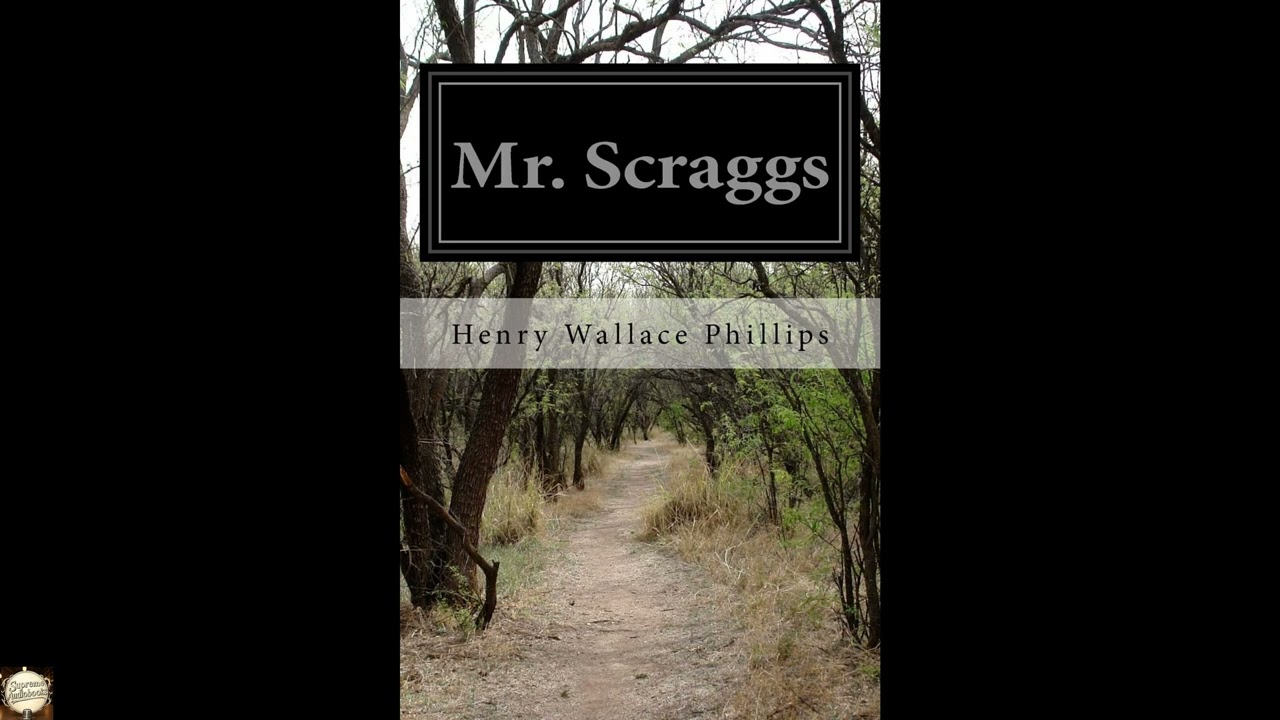
Mr. Scraggs
Step into a world where the extraordinary hides in the ordinary, where a single, unforgettable character can illuminate the human condition with surprising clarity and warmth. Henry Wallace Phillips’s Mr. Scraggs is precisely that kind of book: a delightful rediscovery from the turn of the twentieth century, presenting a portrait of a man whose stubborn individuality and peculiar logic make him both exasperating and utterly endearing. Though it might not be a name often heard in contemporary literary circles, this singular work stands as a testament to the enduring appeal of well-drawn characters and the quiet humor found in everyday existence. It is a story that, despite its period setting, speaks to the universal struggle between conformity and personal freedom, offering smiles and gentle reflection in equal measure. The story introduces us to Mr. Scraggs, a man of, shall we say, particular habits, residing in the burgeoning American West at a time when raw frontier spirit was slowly giving way to the march of civilization and its accompanying conventions. Scraggs, however, remains stubbornly rooted in his own unique interpretation of reality. We find him living a relatively solitary life, often at odds with the more conventional citizens of his small, dusty town, not out of malice, but from a profound inability to see the world through anyone else’s eyes. His primary conflict arises from a seemingly simple ambition: to protect his small patch of land and his even smaller flock of chickens from the encroachment of progress, specifically a proposed railroad line that threatens to cut directly through his property. As the narrative unfolds, Scraggs’s antics in defense of his peculiar domestic empire provide much of the book’s charm and humor. He devises schemes that are as elaborate as they are ultimately impractical, engaging in a one-man war against surveyors, town councilmen, and anyone else who dares to question his methods or his right to be wonderfully, obstinately himself. The humor often springs from the deadpan seriousness with which Scraggs pursues his aims, whether it’s attempting to train a belligerent rooster into a guard dog or trying to patent a nonsensical contraption designed to repel unwanted visitors. His interactions with his long-suffering neighbors, who often find themselves unwilling participants in his quixotic crusades, form the heart of the story, painting a vivid picture of a small community grappling with the forces of change and the endearing eccentricities of one of its most memorable members. Henry Wallace Phillips, though perhaps not a household name today, was a celebrated chronicler of American life during the late nineteenth and early twentieth centuries. Born in the Midwest and later spending significant time in the evolving American West, Phillips possessed a keen ear for regional dialect and an even keener eye for the idiosyncrasies of character that defined a rapidly changing nation. He began his writing career contributing short stories and serialized pieces to popular magazines of the era, such as The Saturday Evening Post and Collier's Weekly, where his tales of cowboys, prospectors, and small-town eccentrics found a wide and appreciative audience. Phillips was particularly adept at blending humor with a subtle undercurrent of social commentary, often using the seemingly simple lives of his characters to reflect on larger American themes. Beyond Mr. Scraggs, he authored several collections of short stories, including Red Saunders' Pets and Other Critters and Plain Mary, which further showcased his distinctive voice and his ability to craft memorable, often humorous, narratives rooted in the landscapes and people of his time. He belongs to a fascinating cadre of American writers who captured the spirit of a transitional period, straddling the decline of the frontier myth and the rise of a more industrialized, modern society, securing his place as a noteworthy, if sometimes overlooked, voice in early American realism and humor. The central themes of Mr. Scraggs resonate with a surprising contemporary relevance. One prominent idea is the celebration of individualism against conformity. Scraggs’s steadfast refusal to bend to societal norms or the pressures of progress is not just comedic; it is a quiet assertion of personal freedom. For instance, his elaborate and often absurd methods for mending a fence, rather than simply buying new lumber, highlight his belief in his own ingenuity and distrust of standardized solutions, even when they are clearly more efficient. This stubborn independence reminds listeners of the value of thinking for oneself, even when it leads to unconventional outcomes. Another significant theme is the humor in human foibles. Phillips masterfully uses Scraggs’s peculiar logic and his unwavering self-assurance in the face of absurdity to generate laughter. A scene where Scraggs tries to communicate with his chickens as if they are sentient beings capable of understanding complex instructions, much to the exasperation of a passing clergyman, exemplifies how the author finds comedy in the gap between intention and reality, and in the inherent quirks of human behavior. Phillips also touches on the theme of nostalgia for a simpler era, as Scraggs’s resistance often feels like a symbolic stand against the inevitable march of an industrializing world, mourning the loss of a certain untamed wildness. The setting of Mr. Scraggs places it firmly within the American literary tradition of the late 19th and early 20th centuries, a period of immense change and self-definition for the United States. Following the Civil War, the nation experienced unprecedented industrial growth, westward expansion, and a growing sense of national identity. This era saw the rise of the "local color" movement in literature, where authors sought to capture the distinct customs, dialects, and landscapes of particular regions, often with a blend of realism and sentimentalism. Phillips’s work fits perfectly into this context, providing a vivid snapshot of a specific place and time, much like the writings of Mark Twain or Bret Harte. Culturally, the period was marked by rapid urbanization and the decline of the rural, agrarian lifestyle that had long defined much of America. Mr. Scraggs thus emerged from a fascination with the characters and settings that represented a fading way of life, or those who struggled to adapt to new realities. The demand for stories that reflected the unique spirit of the American individual, particularly those who carved out their own existence on the fringes of society, was strong, and Phillips skillfully tapped into this cultural appetite with his distinctively American voice and his affectionate portrayal of a memorable character resisting the current of his times. Listening to Mr. Scraggs as an audiobook offers a unique opportunity to immerse oneself in Phillips’s distinct voice and the delightful world he created. The spoken word brings Scraggs’s peculiar logic and the reactions of his community to life with an immediacy that print alone cannot always convey. A skilled narrator can capture the subtle humor in Scraggs’s deadpan pronouncements, the exasperation of his neighbors, and the quaint charm of the turn-of-the-century American West. Pay close attention to the pacing of the narration, which can often underscore Scraggs’s deliberate actions and the often-slow-burning comedic setups. The varied character voices will enhance the sense of a bustling, opinionated community, making you feel as if you are right there, eavesdropping on Scraggs’s latest, improbable plan. The approximately several-hour run time makes it an ideal companion for a long drive, an afternoon of chores, or a quiet evening by the fire, allowing you to savor the wit and wisdom of this overlooked American literary treasure at a comfortable pace.
Enjoyed Mr. Scraggs? A few ways to support us
Audible & Amazon links are affiliate; we may earn a small commission at no extra cost.
About this production
Human narration by a volunteer reader from LibriVox.org, the public-domain audiobook project. LibriVox volunteers record literary works whose copyright has expired in the United States, releasing the resulting recordings into the public domain.
Mr. Scraggs by Henry Wallace Phillips. The underlying text is in the U.S. public domain. We do not republish any modern copyrighted edition, translation, or commentary.
The 4K cinematic visuals accompanying this audiobook are generated by an AI image model from prompts derived from the source text. No copyrighted photos, paintings, or stock footage are used. AI generation is disclosed on every video on our YouTube channel as required by YouTube's altered/synthetic content policy.
English subtitles are transcribed from the LibriVox recording with OpenAI Whisper. Translations into the 11 other supported languages are produced by Meta's NLLB-200 neural translation model. No human translator's copyrighted translation is used.
Questions about sourcing or rights? See our DMCA & Sourcing policy or contact us.
Enjoyed this audiobook?
If you'd like to own a copy of Mr. Scraggs or hear a professionally produced edition, the links below help support free audiobook production at no extra cost to you.
As an Amazon Associate we earn from qualifying purchases. Audible / print links are affiliate.