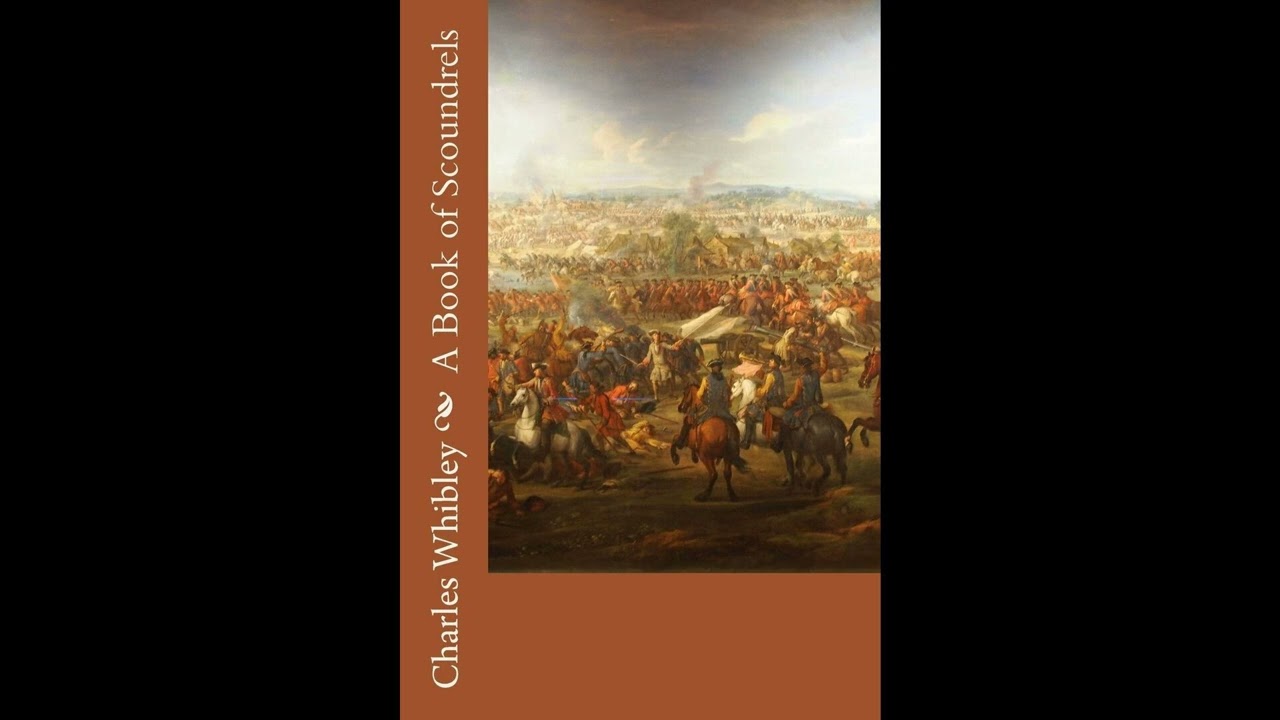
A Book of Scoundrels
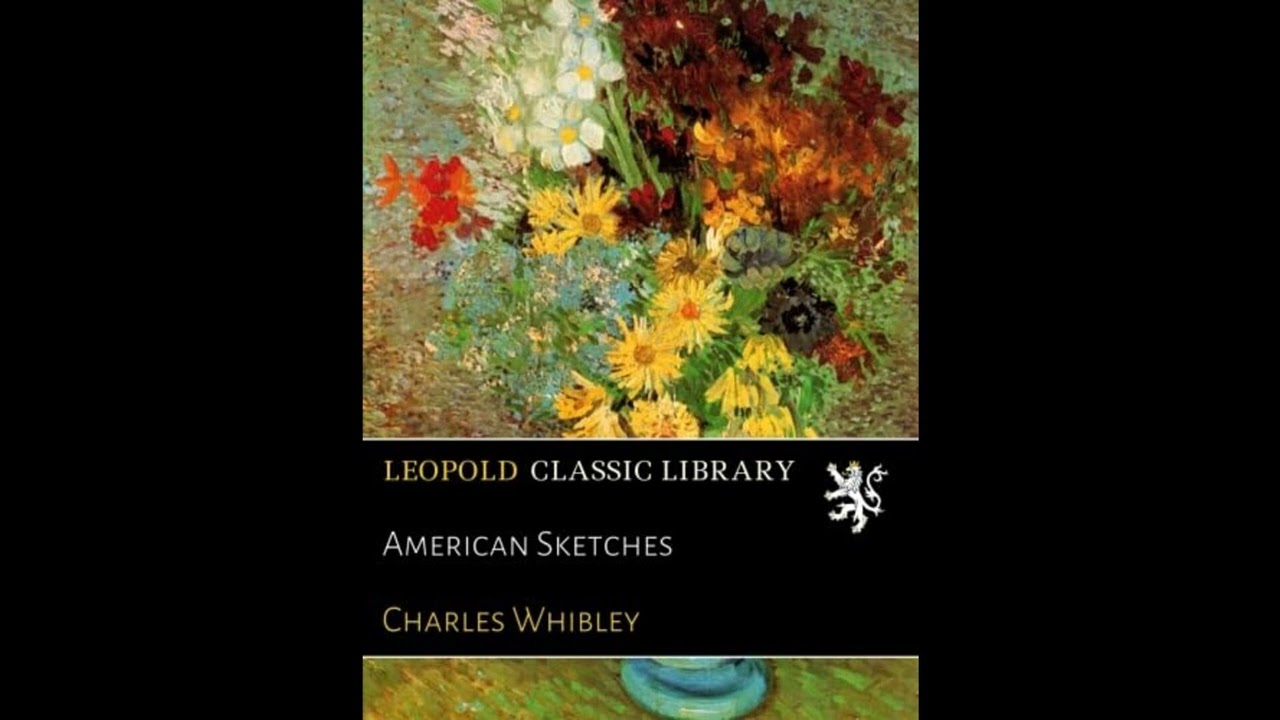
Step into a hidden world of audacious rogues and cunning criminals, a historical demimonde where wit and audacity were often as prized as the coin in one's purse. Charles Whibley's A Book of Scoundrels invites us to cast aside conventional notions of heroism and virtue, instead turning our gaze toward the figures who defied society's rules with flair and often, ultimately, fatal consequences. This collection is not merely a recounting of misdeeds; it is a shrewd examination of human nature at its most rebellious, a testament to the enduring fascination with those who live by their own code, and a sharp reminder that the line between infamy and legend has always been thin. For anyone curious about the darker currents of history, the evolution of crime, and the perennial struggle between law and liberty, Whibley offers a series of portraits that resonate with surprising relevance today. Whibley structures his book as a series of biographical sketches, each shining a light on a distinct character from Britain's criminal underworld, primarily from the 18th century and earlier. We meet Jonathan Wild, often termed "The Great Thief-Taker," a man who expertly manipulated both the criminal fraternity and the forces of law, ostensibly helping to recover stolen goods while secretly orchestrating the very thefts himself. His story unwinds as a chilling testament to corruption and the cynical exploitation of public trust, culminating in a dramatic fall from grace. Then there is Jack Sheppard, the legendary house-breaker and prison-escape artist, whose daring feats and repeated elusions of justice captivated the public imagination, transforming him into a folk hero despite his violent profession. Sheppard's narrative is a thrilling cat-and-mouse game, punctuated by daring breakouts and a seemingly unquenchable thirst for freedom. Beyond these well-known figures, Whibley introduces us to other captivating figures such as George Barrington, the "Prince of Pickpockets," whose charm and eloquent pleas often softened the hearts of judges, and Mary Frith, also known as Moll Cutpurse, a fierce and cross-dressing highwaywoman who defied gender norms and societal expectations with equal bravado. Each chapter presents a distinct life, tracing their rise from humble origins to notorious status, detailing their signature methods, their brushes with the law, and ultimately, their often grim ends. The arc of these individual stories typically follows a pattern of escalating defiance, fleeting success, and eventual downfall, allowing Whibley to examine how different personalities adapted to, exploited, and ultimately succumbed to the pressures of their dangerous lives. Charles Whibley (1863–1930) was an influential English literary journalist, critic, and author, a prominent figure in the intellectual landscape of the late Victorian and early Edwardian eras. Born in London and educated at Bristol Grammar School and Jesus College, Cambridge, Whibley quickly established a reputation for his incisive wit, erudition, and fiercely independent critical spirit. He became a significant contributor to Blackwood's Magazine, a venerable Scottish literary journal, where his essays and commentaries frequently appeared. Whibley was part of a circle of writers and intellectuals that included figures like William Ernest Henley, who shared an appreciation for classical learning and a robust, often conservative, view of literature and culture. Beyond A Book of Scoundrels, which was published in 1897, Whibley penned numerous critical essays, biographies, and historical works. His oeuvre includes volumes like Literary Portraits, Studies in Frankness, and his multi-volume biography of William Makepeace Thackeray, which showcased his deep literary understanding and biographical skill. He was known for his elegant, if sometimes acerbic, prose style, his meticulous research, and his ability to bring historical figures to vivid life. Whibley's place in the literary canon is that of a discerning critic and essayist who championed classical English prose and a rigorous approach to historical and literary inquiry, standing somewhat apart from the more experimental currents of his time, yet deeply respected for his scholarship and command of language. The lives presented in A Book of Scoundrels give rise to several compelling themes. One central idea is the romanticization of the criminal outsider. Whibley subtly shows how society, even as it condemns their actions, often finds a perverse attraction to figures who operate beyond the law. Jack Sheppard, for example, despite being a genuine threat, became an object of public fascination, his escapes recounted with a mixture of horror and admiration, showcasing the inherent human tendency to cheer for the underdog or the audacious rebel. Another significant theme is the complex nature of justice and morality. Through figures like Jonathan Wild, who blur the lines between law enforcement and criminality, Whibley forces us to question the mechanisms of justice in a period prone to corruption and public spectacle. The book acts as a mirror, reflecting society's own ethical compromises and its often inconsistent application of punishment. Furthermore, Whibley frequently addresses the construction of reputation and infamy. He illustrates how the deeds of these scoundrels, whether through their own self-promotion, the sensationalism of the press, or the collective imagination, become woven into the fabric of public memory, transforming mere criminals into legendary figures. This points to the power of narrative and the way certain individuals, for better or worse, manage to carve out a place in history. Finally, the book indirectly explores social class and opportunity. Many of Whibley's subjects rise from poverty or obscurity, using their wits and ruthlessness to achieve a measure of power or wealth, however transient. This undercurrent reveals the stark realities of a society where legitimate avenues for advancement were often limited, pushing some to extraordinary, albeit illicit, means. A Book of Scoundrels emerged from the late Victorian sensibility, a period often referred to as the fin-de-siècle. Published in 1897, the book coincided with a time of increasing social change and a certain anxiety about the moral fabric of society. The Victorian era, while ostensibly one of order and progress, also possessed a darker underbelly, with widespread urban poverty and persistent crime. This context fostered a public fascination with sensational stories and the darker aspects of human nature, which dime novels and burgeoning popular journalism eagerly exploited. Whibley's work can be seen as a more scholarly and reflective contribution to this interest, offering a historical perspective rather than mere titillation. It also reflects a cultural moment that looked back with a blend of nostalgia and critical distance at earlier periods of British history, often seen as more robust or colourful, even in their lawlessness, than the increasingly regulated present. His meticulous research and classical prose also placed the work firmly within the tradition of literary non-fiction and biographical writing that flourished among educated circles of the time. Listening to A Book of Scoundrels as an audiobook offers a unique gateway into Whibley's erudite yet lively prose. The narrated experience transforms what might be dense historical accounts into immediate, compelling storytelling. A skilled narrator brings Whibley's distinctive voice to life—his dry wit, his scholarly authority, and his subtle irony become palpable, adding layers of nuance to the author's observations on human character and societal failings. The several hours of listening time allow for a gradual immersion in these historical narratives, perfect for extended commutes, contemplative walks, or focused periods of literary engagement. Pay attention to the narrator's pacing, which will likely match Whibley's measured yet engaging style, allowing you to savour the detailed descriptions of 18th-century London streets, the tense courtrooms, and the dramatic escapes. The clarity of the voice will highlight Whibley's elegant sentence structures and his precise word choices, ensuring that the listener grasps the full intellectual and dramatic impact of these unforgettable lives.
Enjoyed A Book of Scoundrels? A few ways to support us
Audible & Amazon links are affiliate; we may earn a small commission at no extra cost.
About this production
Human narration by a volunteer reader from LibriVox.org, the public-domain audiobook project. LibriVox volunteers record literary works whose copyright has expired in the United States, releasing the resulting recordings into the public domain.
A Book of Scoundrels by Charles Whibley. The underlying text is in the U.S. public domain. We do not republish any modern copyrighted edition, translation, or commentary.
The 4K cinematic visuals accompanying this audiobook are generated by an AI image model from prompts derived from the source text. No copyrighted photos, paintings, or stock footage are used. AI generation is disclosed on every video on our YouTube channel as required by YouTube's altered/synthetic content policy.
English subtitles are transcribed from the LibriVox recording with OpenAI Whisper. Translations into the 11 other supported languages are produced by Meta's NLLB-200 neural translation model. No human translator's copyrighted translation is used.
Questions about sourcing or rights? See our DMCA & Sourcing policy or contact us.
Enjoyed this audiobook?
If you'd like to own a copy of A Book of Scoundrels or hear a professionally produced edition, the links below help support free audiobook production at no extra cost to you.
As an Amazon Associate we earn from qualifying purchases. Audible / print links are affiliate.