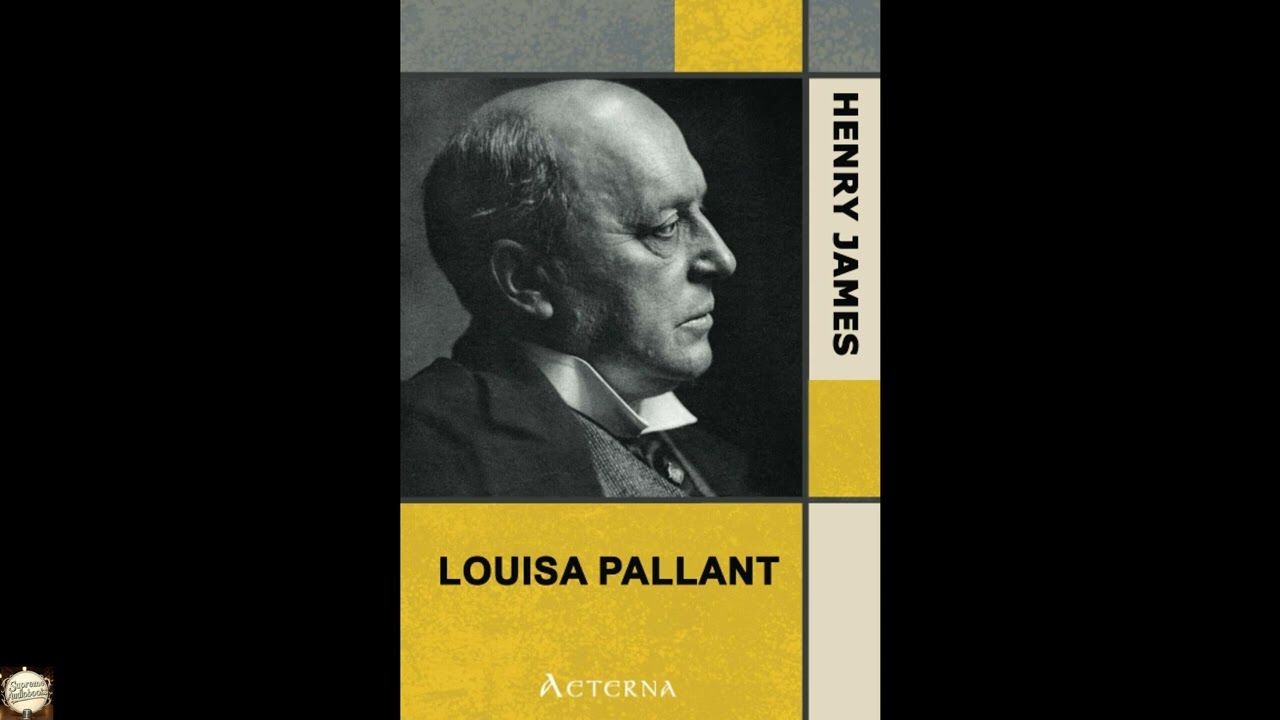
Louisa Pallant
Henry James’s novella, Louisa Pallant, offers listeners a fascinating descent into the complexities of human character and the enduring shadow of a past reputation. It is a story that, despite being written in an earlier era, resonates keenly with contemporary concerns about inherited traits, social judgment, and the difficult choices we make when confronted with uncomfortable truths. We are drawn into a world where perception can be as powerful as reality, where the sins of the mother may, or may not, be visited upon the daughter, forcing a young man to question the very nature of love and moral integrity. This examination of hidden motives and calculated performances speaks to anyone who has ever pondered the authenticity of personal connection and the influence of family history. The story unfolds through the observations of Frank Grenfell, a young American enjoying a leisurely life in Europe, who becomes captivated by the elegant and enigmatic Mrs. Louisa Pallant and her remarkably beautiful daughter, Linda. Their initial encounter is one of charming society and pleasant conversation, yet an undercurrent of something unsettling soon emerges. Mrs. Pallant, a woman of striking presence, carries a certain history, a past scandal that seems to cling to her like a faint perfume. As Frank finds himself increasingly drawn to Linda, he is simultaneously disturbed by the growing suspicion that the daughter might possess the same unsettling qualities as her mother, qualities that once brought Mrs. Pallant into disrepute. This central conflict drives Frank’s internal drama: his burgeoning affection for Linda clashes with the subtle warnings and his own unease, hinting at a potentially destructive inheritance. An astute observer of human nature, James carefully constructs a world where social standing and personal integrity are constantly under scrutiny. Frank’s romantic interest in Linda becomes a tense psychological standoff as he tries to reconcile the appealing surface with the potential for deeper, inherited flaws. He finds himself caught between the allure of the present and the specter of the past, compelled to scrutinize every gesture and word for a sign of what truly lies beneath. Henry James, born in New York City in 1843, was one of the most significant literary figures of the late nineteenth and early twentieth centuries. He spent much of his adult life as an expatriate in Europe, primarily in England, eventually becoming a British citizen shortly before his death in 1916. This transatlantic experience profoundly shaped his literary perspective, allowing him to observe with keen insight the cultural clashes and social nuances between Americans and Europeans. His novels and novellas often center on the theme of innocent Americans encountering the older, more complex, and sometimes corrupt societies of the Old World, a thematic thread famously woven through works like Daisy Miller and The Portrait of a Lady. James was a master of psychological realism, focusing less on external action and more on the inner lives, motivations, and perceptions of his characters. His distinct style, characterized by long, intricate sentences and a meticulous attention to detail, was revolutionary in its time, pushing the boundaries of what fiction could achieve in terms of representing consciousness. Alongside Louisa Pallant, his extensive body of work includes celebrated novels such as The Turn of the Screw, a chilling ghost story, and The Ambassadors, a sophisticated examination of expatriate life. James is considered a pivotal figure bridging the gap between traditional nineteenth-century realism and early twentieth-century modernism, leaving an indelible mark on the landscape of English literature. Louisa Pallant is a compelling illustration of several key themes that preoccupied James throughout his career. One prominent theme is the idea of inherited characteristics versus individual free will. Frank Grenfell grapples with the question of whether Linda Pallant is destined to repeat her mother's morally dubious past or if she possesses the autonomy to forge her own honorable path. For instance, the narrator often watches Linda closely, seeking any gesture, any inflection of voice, that might betray the "fatal heredity" he has been warned about, comparing her expressions to those he attributes to her mother's perceived duplicity. Another crucial theme is social reputation and its lasting impact. Mrs. Pallant's history, though never explicitly detailed, is enough to cast a long shadow over her present, influencing how others perceive her and, by extension, her daughter. The whispers and unspoken judgments of society become a powerful, almost tangible force, shaping Frank’s decisions and anxieties. A third theme James explores is moral judgment and the burden of perception. Frank finds himself in the unenviable position of having to judge Linda not only on her own merits but also through the lens of her mother's rumored misconduct. A specific moment where this plays out is Frank's internal debate after receiving a pointed warning from a family elder; he struggles to distinguish genuine affection from a growing sense of foreboding, his perception colored by the narrative others have supplied about the Pallant women. The novella also touches on the power dynamics within families, particularly between mothers and daughters, and how parental influence, both overt and subtle, can guide or mislead a child's destiny. The unspoken understanding and almost complicit bond between Louisa and Linda, observed by Frank, adds a layer of mystery and potential danger to their interactions, hinting at a shared, perhaps even cultivated, approach to navigating the world. The late nineteenth century, when this novella was penned, was a period marked by significant social change and a blossoming of psychological literature. Victorian sensibilities regarding women's roles, marriage, and public decorum were still strong, making any hint of scandal or moral transgression a weighty matter. Society placed immense importance on reputation, particularly for women, and a stain on one's character could have devastating social consequences. James’s detailed examination of how a past scandal affects present lives speaks directly to these societal pressures. Furthermore, this was a time when authors were increasingly interested in the internal lives of their characters, moving beyond purely external plot points to plumb the depths of human consciousness, making Louisa Pallant a quintessential work of its era in its focus on perception, doubt, and subtle psychological conflict. Listening to Louisa Pallant as an audiobook offers a unique opportunity to immerse oneself in Henry James’s distinctive prose. The narrator’s voice brings a crucial dimension to Frank Grenfell's internal deliberations, allowing the listener to experience his nuanced observations and shifts in understanding firsthand. The measured pacing of the prose, often characterized by its careful, almost deliberate unfolding of thought, lends itself perfectly to audio, inviting focused contemplation rather than hasty consumption. Pay close attention to the dialogue, as James often reveals more through what is left unsaid or through subtle inflections than through overt declarations. The spoken word can illuminate the psychological atmosphere—the tension, the charm, the underlying menace—that permeates the story, making the experience of this complex and thought-provoking novella all the more immediate and profound.
Enjoyed Louisa Pallant? A few ways to support us
Audible & Amazon links are affiliate; we may earn a small commission at no extra cost.
About this production
Human narration by a volunteer reader from LibriVox.org, the public-domain audiobook project. LibriVox volunteers record literary works whose copyright has expired in the United States, releasing the resulting recordings into the public domain.
Louisa Pallant by Henry James. The underlying text is in the U.S. public domain. We do not republish any modern copyrighted edition, translation, or commentary.
The 4K cinematic visuals accompanying this audiobook are generated by an AI image model from prompts derived from the source text. No copyrighted photos, paintings, or stock footage are used. AI generation is disclosed on every video on our YouTube channel as required by YouTube's altered/synthetic content policy.
English subtitles are transcribed from the LibriVox recording with OpenAI Whisper. Translations into the 11 other supported languages are produced by Meta's NLLB-200 neural translation model. No human translator's copyrighted translation is used.
Questions about sourcing or rights? See our DMCA & Sourcing policy or contact us.
Enjoyed this audiobook?
If you'd like to own a copy of Louisa Pallant or hear a professionally produced edition, the links below help support free audiobook production at no extra cost to you.
As an Amazon Associate we earn from qualifying purchases. Audible / print links are affiliate.