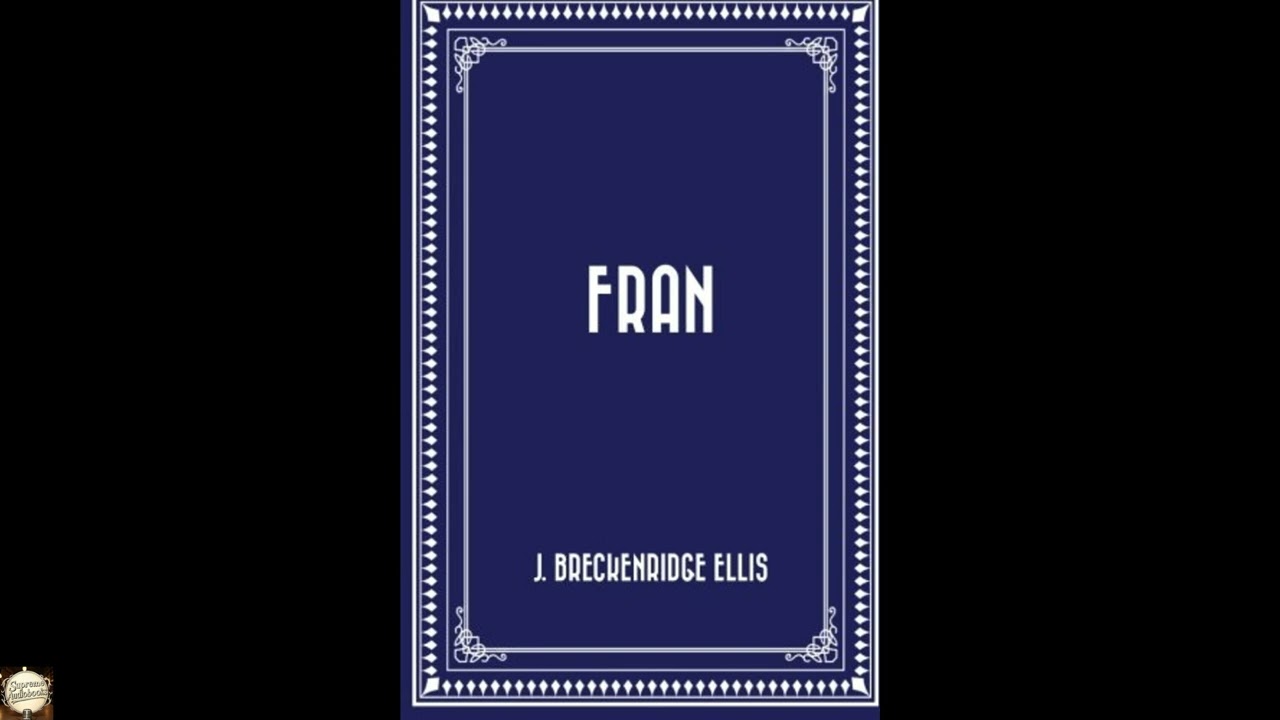
Fran
Imagine a young woman, intelligent and spirited, standing at a crossroads in an era of profound societal change. Such is the compelling portrait at the heart of J. Breckenridge Ellis’s novel, Fran, a work that offers a quiet yet powerful meditation on independence and the search for authentic living. Though perhaps not as widely known today as some of its contemporaries, Fran presents an acutely observed narrative that remains strikingly relevant. It speaks to anyone who has ever felt the weight of expectation or longed to forge their own path, making it a resonant listen for a modern audience still grappling with similar questions of self-determination and belonging. This audiobook provides a chance to rediscover a thoughtful voice from America’s literary past. The story unfolds in a meticulously rendered American setting, likely a small town or rural community, during a period when tradition still held significant sway but modern ideas were beginning to ripple through society. Our protagonist, Fran, is not merely a figure of her time but a woman wrestling with its constraints. She possesses a keen mind and an independent spirit, qualities that, while admirable, often set her apart from the more conventional expectations of her family and neighbors. The narrative establishes early on a central conflict: Fran’s desire for a life of intellectual stimulation and personal freedom against the prevailing societal pressure for her to settle into a more predictable domestic role. This tension creates a compelling emotional core as Fran navigates a world filled with well-meaning but often suffocating advice. Fran’s interactions with the various personalities in her orbit – a pragmatic mother, a circle of earnest but perhaps uninspired suitors, and the watchful eyes of the community – continually highlight her unique position. A promising yet mysterious suitor enters her life, further complicating her already intricate emotional landscape. Fran finds herself drawn to the possibility of love and companionship, yet fiercely committed to maintaining her intellectual integrity and individual agency. The unfolding events see Fran making decisions that challenge the social fabric around her, forcing both herself and those who care for her to confront deeply held beliefs about women’s roles, happiness, and duty. The narrative skillfully builds towards a crucial point where Fran must make a life-altering choice, one that promises either profound fulfillment or deep regret, all without revealing the ultimate resolution of her complex situation. The author, J. Breckenridge Ellis, was a prolific American writer who lived from 1870 to 1956. Born in Missouri, he spent much of his life rooted in the American Midwest, an influence clearly seen in the settings and characterizations of his novels. Ellis was not only a novelist but also a minister and a former member of the Missouri state legislature, experiences that undoubtedly informed his keen observations of human nature and community life. His work often reflects a moral sensibility, but one tempered by a deep understanding of the complexities and contradictions within everyday people. Though popular in his time, particularly in the early twentieth century, Ellis’s contributions have been somewhat overlooked in subsequent literary discussions. Ellis penned numerous novels and short stories throughout his career. Among his other notable works are The Stork's Nest, which also examines community dynamics, and Arkinsaw Cousins, a regional novel that portrays life in the American South. He was known for his clear, accessible prose and his ability to craft engaging narratives centered on relatable characters facing believable dilemmas. While he may not be easily categorized into a single, dominant literary movement, his writing shares characteristics with both late-nineteenth-century realism and the burgeoning regionalist literature that sought to capture the distinct flavors of American life beyond the major urban centers. Fran stands as a testament to his skill in crafting quiet dramas of personal awakening and societal expectation. One of the central themes that resonates through Fran is the struggle between individual identity and societal expectation. Fran's internal monologues and her polite yet firm resistance to conventional pathways exemplify this. For instance, when presented with the prospect of an advantageous marriage that promises comfort but little intellectual spark, Fran’s quiet refusal, though met with confusion by her family, underscores her conviction that genuine happiness cannot be found by simply conforming to external pressures. Another powerful theme is the pursuit of knowledge and intellectual freedom. Fran is often found with a book, her mind engaged with ideas beyond the daily gossip and domestic concerns of her peers. A scene where she discusses a philosophical text with an unexpected acquaintance reveals her thirst for mental stimulation, setting her apart and highlighting her desire for a life of meaning rather than mere social acceptance. The novel also thoughtfully addresses the nature of love and companionship versus obligation. Fran is not averse to love, but she seeks a connection that honors her intellect and spirit, not just her status as a potential wife. The differing approaches of her various suitors – some offering security, others intellectual partnership, still others an unsettling passion – force Fran to scrutinize what true companionship means to her. Finally, the story implicitly examines the quiet power of unconventional choices. While Fran’s decisions might not involve grand gestures, her steadfast adherence to her own principles, often against the tide of public opinion, shows how personal integrity can be a profound force for change within a seemingly rigid social structure, inspiring a thoughtful reflection on agency and self-worth. The period from which Fran emerged, roughly the turn of the twentieth century, was a time of immense transition in America. The nation was grappling with the aftershocks of the Civil War, the rapid pace of industrialization, and significant shifts in demographics due to immigration and urbanization. Though the story itself may be set in a more rural context, these larger societal currents inevitably influenced individual lives and community values, particularly concerning the roles available to women. The Progressive Era, with its focus on social reform and questioning of established norms, was gaining momentum, indirectly fostering an environment where ideas of female independence and intellectual growth were being debated, even if slowly. Literarily, this was a time when authors were increasingly turning away from purely romantic narratives towards more realistic portrayals of American life. Writers like William Dean Howells and Henry James were dissecting the nuances of character and society with greater psychological depth, while regionalist authors sought to capture the unique voices and experiences of different parts of the country. Fran, with its focus on a woman’s interior life and her struggle against conventional expectations within a specific American milieu, stands as a testament to this burgeoning literary realism and the era's growing interest in the individual’s place within a rapidly changing social fabric. Listening to Fran as an audiobook offers a unique opportunity to immerse oneself in this subtly dramatic narrative. A skilled narrator brings a rich layer of interpretation, lending distinct voices to each character and carefully pacing the prose to highlight moments of quiet contemplation and rising tension. With a run length of several hours, this makes for an ideal companion for long commutes, focused listening sessions, or even as a backdrop to daily tasks, allowing the listener to truly settle into Fran's world. Pay attention to how the narration captures the subtle shifts in Fran’s emotional state, the underlying current of expectation in community dialogue, and the descriptive passages that paint a vivid picture of a bygone American landscape. The spoken word can underscore the novel’s deliberate pace, inviting listeners to reflect alongside Fran on the enduring questions of selfhood and the delicate balance between personal desire and the demands of the world.
Enjoyed Fran? A few ways to support us
Audible & Amazon links are affiliate; we may earn a small commission at no extra cost.
About this production
Human narration by a volunteer reader from LibriVox.org, the public-domain audiobook project. LibriVox volunteers record literary works whose copyright has expired in the United States, releasing the resulting recordings into the public domain.
Fran by J. Breckenridge Ellis. The underlying text is in the U.S. public domain. We do not republish any modern copyrighted edition, translation, or commentary.
The 4K cinematic visuals accompanying this audiobook are generated by an AI image model from prompts derived from the source text. No copyrighted photos, paintings, or stock footage are used. AI generation is disclosed on every video on our YouTube channel as required by YouTube's altered/synthetic content policy.
English subtitles are transcribed from the LibriVox recording with OpenAI Whisper. Translations into the 11 other supported languages are produced by Meta's NLLB-200 neural translation model. No human translator's copyrighted translation is used.
Questions about sourcing or rights? See our DMCA & Sourcing policy or contact us.
Enjoyed this audiobook?
If you'd like to own a copy of Fran or hear a professionally produced edition, the links below help support free audiobook production at no extra cost to you.
As an Amazon Associate we earn from qualifying purchases. Audible / print links are affiliate.