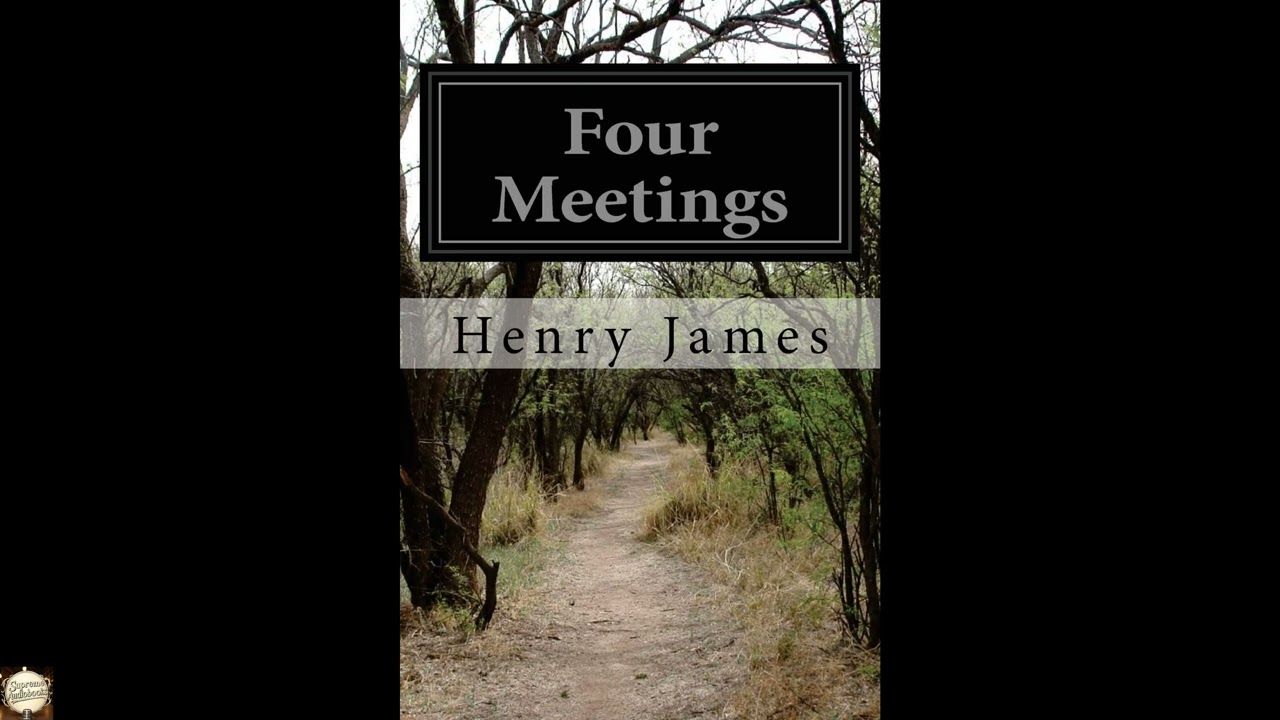
Four Meetings
Henry James’s "Four Meetings" extends an invitation to witness a poignant and quietly devastating human experience—the slow, almost imperceptible erosion of a cherished dream by the relentless demands of reality and the subtle manipulations of others. This is a story about the universal desire for beauty and culture, the yearning to escape the ordinary, and the unforeseen ways life can redirect even the purest aspirations. It asks us to consider the true cost of generosity, the nature of observation, and how even well-meaning individuals can unwittingly contribute to another’s undoing. Though penned in a bygone era, the core struggle of personal ambition clashing with external obligation resonates deeply in any time, making it a compelling, if bittersweet, meditation on human fate. The narrative unfolds through the eyes of an unnamed American gentleman, a keen observer of human nature, as he travels through Europe. His path first crosses with Miss Caroline Spencer in a modest Swiss hotel. She is an unassuming, somewhat plain American woman, remarkable only for the fervent, almost desperate, purity of her desire to see Europe. She has saved diligently, meticulously, to afford this pilgrimage to the Old World, driven by an unshakeable belief in its romantic and cultural allure. Her initial encounter with the narrator reveals her profound innocence and her hopeful, if naive, reverence for European art and history—she envisions a world of classical grandeur and intellectual stimulation, a far cry from her provincial New England home. Their subsequent meetings chart the gradual transformation of Caroline’s bright expectations. Each encounter sees her a little further from her initial dream, her European adventure progressively overshadowed by domestic responsibilities that persistently follow her across the Atlantic. A distant relative's demands for financial assistance, presented under the guise of familial duty, steadily siphon away her precious funds, forcing her to abandon her travel plans and curtail her aesthetic pursuits. The weight of these obligations, and the particular entanglement with a European figure—a “Count”—who proves to be more burden than benefactor, slowly anchors her to a life she never sought, confining her within the very European settings she had imagined as liberating. The story carefully delineates her slow but certain descent from hopeful tourist to resigned fixture in an unglamorous corner of Roman society. Henry James, born in New York City in 1843, became one of the most significant literary figures of the late nineteenth and early twentieth centuries. His family, though American, fostered an environment of intellectual curiosity and frequent European travel, which profoundly shaped his worldview. After studying law briefly at Harvard, James chose literature as his calling, publishing his first story in 1864. He eventually made the momentous decision to move to Europe, settling first in Paris and then, for the majority of his adult life, in England. This expatriate status afforded him a unique perspective on the cultural distinctions between the Old World and the New, a theme that would become central to much of his most celebrated fiction. He became a British subject shortly before his death in London in 1916. James was a master of psychological realism, known for his long, complex sentences and his deep insight into the inner lives of his characters. His body of work includes numerous novels and short stories that dissect social manners, moral dilemmas, and the subtle power dynamics within human relationships. His other notable works, such as The Portrait of a Lady, Daisy Miller, and The Turn of the Screw, likewise reveal his preoccupation with the clash of American innocence and European experience, the sacrifices often demanded of women, and the intricate workings of perception and deception within society. He stands as a towering figure in the realist movement, bridging the gap between Victorian literature and the modern novel. "Four Meetings" showcases several quintessential Jamesian themes, most prominently the collision of American idealism with European reality. Caroline Spencer arrives in Europe brimming with an almost childlike faith in its cultural promise, a characteristic often found in James’s American heroines. Her vision of art and history is pure, untainted by cynicism, yet this very purity makes her vulnerable to the pragmatic, sometimes calculating, nature of the Old World—specifically, the European cousin's demands for financial support and later, the exploitative nature of the "Count." This highlights how initial, rose-tinted perceptions often give way to harsher truths, as seen when her museum visits are replaced by domestic drudgery. Another powerful theme is the nature of sacrifice and duty, particularly as it relates to women in the late 19th century. Caroline's dream is repeatedly deferred and ultimately derailed not by her own failings, but by her unwavering sense of obligation. The narrative subtly condemns a society that permits such sacrifices, depicting her quiet acceptance of her fate as both admirable and tragic. Her readiness to forego her personal aspirations for the perceived needs of others underscores a societal expectation of female selflessness, transforming her European adventure into a poignant demonstration of unrewarded devotion. The story also foregrounds the limitations of observation, as the narrator, despite his sympathetic view, remains largely a passive witness to Caroline's unfolding tragedy, unable or unwilling to intervene decisively. This short novel emerged from a specific cultural moment in the late nineteenth century. Following the American Civil War, the United States experienced a period of significant economic growth, which led to an increase in wealth and leisure time for a segment of the population. This allowed more Americans, particularly women, to travel abroad, often embarking on what was then known as the "Grand Tour" of Europe. For many, like Caroline Spencer, Europe represented a fount of ancient culture, sophisticated manners, and artistic beauty—a stark contrast to what was often perceived as the raw, unrefined character of America. James, having chosen to live as an expatriate, was acutely sensitive to the fascinating, sometimes awkward, and often morally fraught interactions between these two worlds. His stories, including "Four Meetings," frequently examined the innocence, earnestness, and vulnerability of Americans encountering the complexities, conventions, and occasional deceits of European society. The work reflects a wider literary fascination of the period with international encounters and their psychological consequences. Listening to "Four Meetings" as an audiobook offers a unique gateway into James’s meticulous prose and the nuanced emotional landscape he creates. The spoken word can illuminate the deliberate pacing and intricate sentence structures, guiding the listener through the narrator’s observant thoughts and the subtle shifts in Caroline Spencer’s demeanor. A skilled narrator brings a distinct voice to the narrator's analytical yet compassionate perspective, and subtly differentiates the characters through inflection, making their personalities and motivations clearer. The measured rhythm allows time to absorb the psychological insights and the evocative descriptions of European settings, enhancing the story's melancholic atmosphere. The run length provides enough time to settle into James’s world, allowing the story’s quiet heartbreak to unfold slowly and resonate deeply.
Enjoyed Four Meetings? A few ways to support us
Audible & Amazon links are affiliate; we may earn a small commission at no extra cost.
About this production
Human narration by a volunteer reader from LibriVox.org, the public-domain audiobook project. LibriVox volunteers record literary works whose copyright has expired in the United States, releasing the resulting recordings into the public domain.
Four Meetings by Henry James. The underlying text is in the U.S. public domain. We do not republish any modern copyrighted edition, translation, or commentary.
The 4K cinematic visuals accompanying this audiobook are generated by an AI image model from prompts derived from the source text. No copyrighted photos, paintings, or stock footage are used. AI generation is disclosed on every video on our YouTube channel as required by YouTube's altered/synthetic content policy.
English subtitles are transcribed from the LibriVox recording with OpenAI Whisper. Translations into the 11 other supported languages are produced by Meta's NLLB-200 neural translation model. No human translator's copyrighted translation is used.
Questions about sourcing or rights? See our DMCA & Sourcing policy or contact us.
Enjoyed this audiobook?
If you'd like to own a copy of Four Meetings or hear a professionally produced edition, the links below help support free audiobook production at no extra cost to you.
As an Amazon Associate we earn from qualifying purchases. Audible / print links are affiliate.