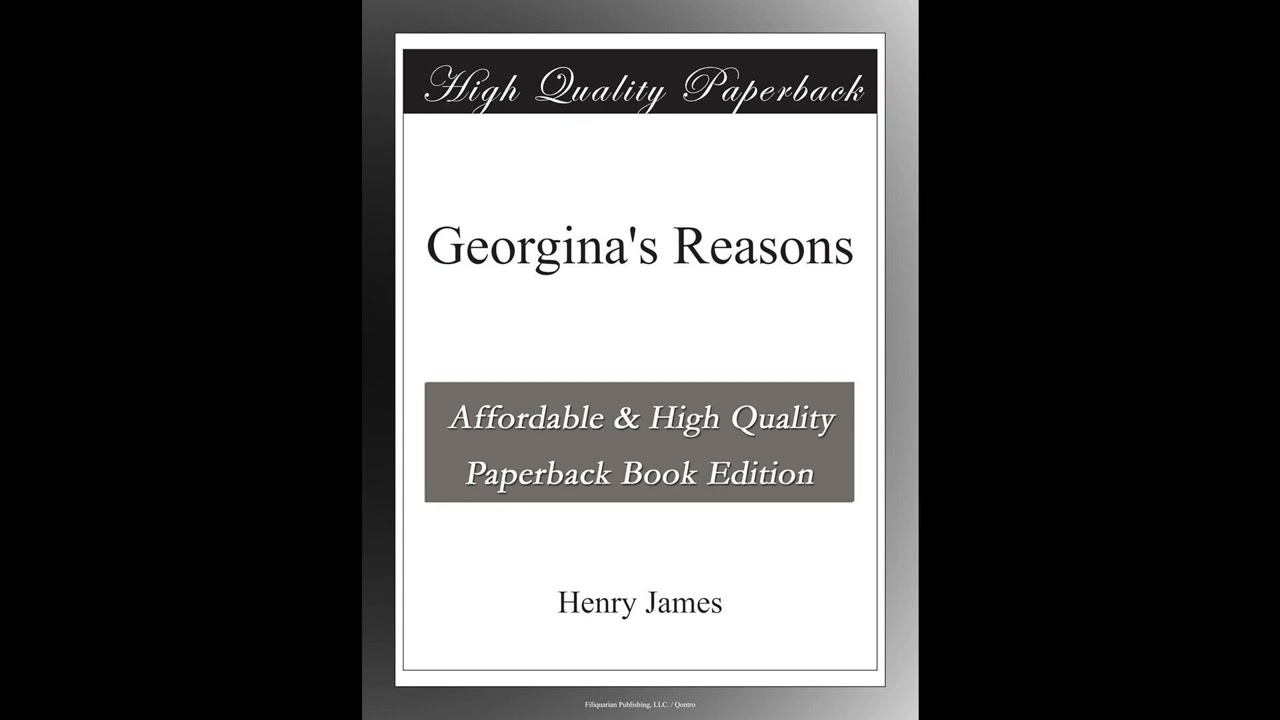
Georgina's Reasons
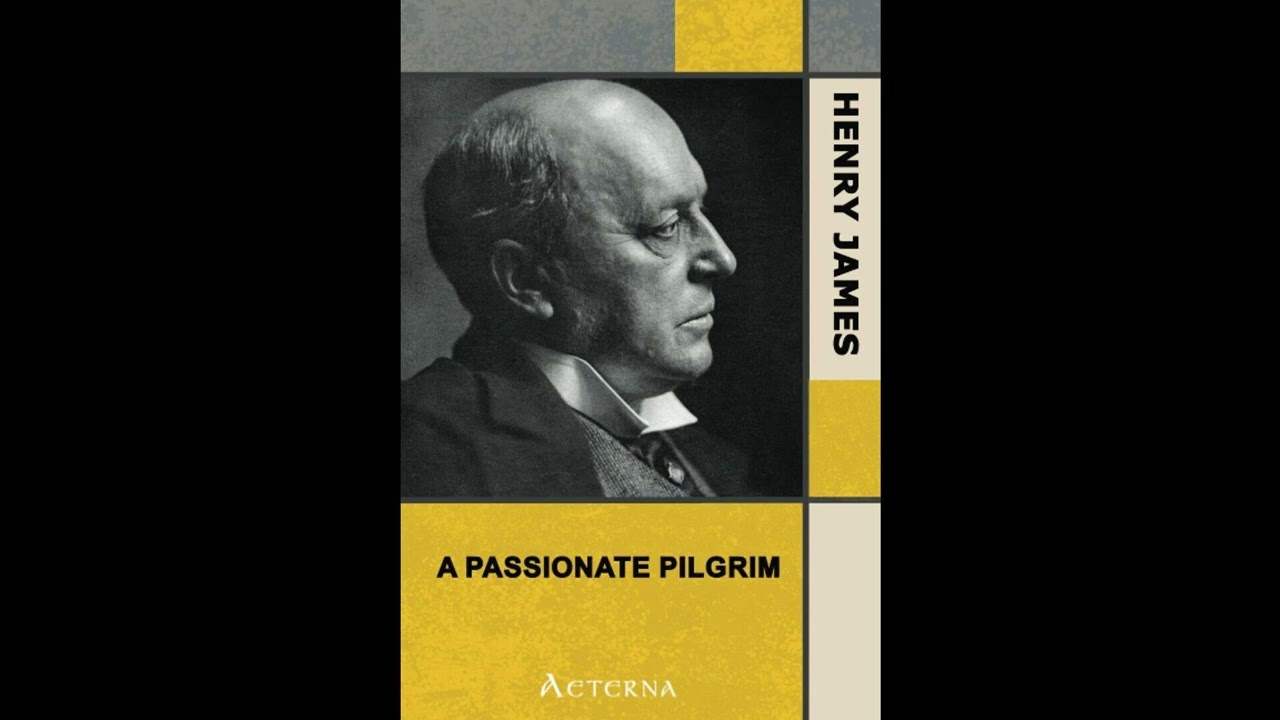
Henry James possessed an unmatched acuity for dissecting the human heart, particularly when it found itself ensnared by the rigid expectations of society. In "Georgina's Reasons," he offers listeners a compact yet profoundly affecting study of a woman driven to extreme measures by circumstance and a desire for social acceptance. This novella, despite its relatively modest length, resonates with the universal anxieties of reputation, identity, and the moral compromises people make to secure their place in the world. It’s a compelling listen for anyone fascinated by the enduring power of secrets and the subtle, often devastating, ways they shape lives, proving that the pressures of the late nineteenth century echo strikingly in our own era of carefully curated personas. The story introduces us to Georgina Gressie, a young American woman living in Europe, whose carefully constructed life and recent, seemingly advantageous marriage are threatened by a past she has gone to great lengths to conceal. From the outset, James establishes an atmosphere charged with underlying tension, as Georgina navigates her new social standing with a constant, almost palpable anxiety. Her husband, Mr. Gressie, remains largely unaware of the specific details haunting his wife, though he perceives a certain evasiveness, a shadow clinging to her demeanor. The central conflict revolves around Georgina's desperate attempts to keep her former life – specifically, a prior marriage – from surfacing and destroying her current happiness and respectability. As the narrative unfolds, we witness Georgina's meticulous efforts to manage this dangerous secret, employing elaborate deceptions and making difficult, often morally questionable, choices. The story’s arc details the increasing pressure on Georgina as various characters, either wittingly or unwittingly, approach the truth, forcing her into tighter corners. Her "reasons" for her actions, though presented with a certain self-justification, compel us to question the lengths to which one might go for social survival and the ultimate cost of such duplicity. The tension builds not through dramatic external events, but through the psychological intensity of Georgina's predicament, a hallmark of James's genius. Henry James, born in New York City in 1843, was one of the most significant figures in nineteenth-century transatlantic literature. The brother of philosopher William James, he spent much of his adult life as an expatriate in Europe, primarily England, a move that profoundly influenced his literary output. This unique perspective allowed him to keenly observe and portray the cultural differences and moral clashes between Americans and Europeans, a recurrent "international theme" in his fiction. His early career saw the publication of novellas like "Daisy Miller," which immediately established his reputation, followed by major novels such as "The Portrait of a Lady," a defining work of realism. James continued to write prolifically, producing a steady stream of novels, novellas, and short stories, including "The Turn of the Screw," a psychologically unsettling ghost story, and the later "great period" novels: "The Wings of the Dove" and "The Ambassadors." He was a master stylist, renowned for his complex, nuanced sentences and his deep psychological insight into his characters' inner lives and motivations. Often associated with the literary movement of realism, James pushed its boundaries, pioneering a form of psychological realism that focused less on external action and more on the subtle workings of consciousness. He became a British subject shortly before his death in London in 1916, cementing his lasting place in the English literary canon. "Georgina's Reasons" enacts several themes with a quiet but insistent power. The most prominent is undoubtedly the overwhelming weight of the past and the desperate struggle to escape its grasp. Georgina's every action is dictated by the fear that her hidden history will surface, a pervasive dread that poisons her present happiness. We see this in her nervous avoidance of certain topics and her almost pathological need to control information, creating a profound sense of anxiety for her character. Another central theme is the unforgiving nature of social conventions and the pressures they exert on individual lives. Georgina's entire elaborate deception stems from her desire to conform to the respectable expectations of her social circle, suggesting that reputation, particularly for women in that era, was paramount. The novella also carefully renders the moral ambiguity inherent in Georgina's "reasons." While her actions are clearly deceptive, James invites us to consider the circumstances that drove her to such extremes, probing the fine line between calculated manipulation and understandable self-preservation. She presents her rationale with a conviction that forces the listener to grapple with the ethics of her choices. Furthermore, the narrative vividly illustrates the distinction between appearance and reality. Georgina outwardly projects an image of refined respectability and conjugal bliss, but underneath, she is a woman consumed by fear and living a lie, a stark contrast that highlights the fragility of her constructed identity. The late nineteenth century, when "Georgina's Reasons" first appeared in 1884, was a period of significant social transformation, particularly for women. While traditional Victorian strictures regarding reputation and propriety still held immense sway, there were also burgeoning calls for greater independence and opportunities for women. This creates a fascinating tension within the story, as Georgina's desperate efforts to maintain her social standing reflect the rigid expectations placed upon women, especially in matters of marriage and past conduct. Simultaneously, the intellectual currents of realism in literature were gaining prominence, moving away from romantic idealism towards a more unflinching portrayal of human psychology and social complexities. James was at the forefront of this shift, using his fiction to dissect the inner lives of his characters against the backdrop of a society grappling with its own changing values and moral codes. His transatlantic perspective uniquely positioned him to observe and comment on the differing standards and freedoms experienced by Americans and Europeans during this dynamic era. Listening to "Georgina's Reasons" as an audiobook offers a singular opportunity to immerse oneself in James's distinctive prose. The careful unfolding of the plot, the nuanced descriptions of psychological states, and the subtle inflections of character are all given voice by a skilled narrator. James's sentences, renowned for their graceful complexity, can be a delight to follow when read aloud, allowing the listener to absorb their rhythm and meaning without the potential for re-reading. The several hours of listening time make this a substantial yet manageable engagement, perfect for an afternoon of focused attention or enjoyed in segments. The pacing is deliberate, mirroring the gradual revelation of Georgina's predicament, and a good narrator will allow the tension to build naturally, emphasizing the unspoken anxieties and the careful calibration of James's dialogue. The atmosphere, a blend of polite society and simmering unease, truly comes alive through an evocative vocal performance.
Enjoyed Georgina's Reasons? A few ways to support us
Audible & Amazon links are affiliate; we may earn a small commission at no extra cost.
About this production
Human narration by a volunteer reader from LibriVox.org, the public-domain audiobook project. LibriVox volunteers record literary works whose copyright has expired in the United States, releasing the resulting recordings into the public domain.
Georgina's Reasons by Henry James. The underlying text is in the U.S. public domain. We do not republish any modern copyrighted edition, translation, or commentary.
The 4K cinematic visuals accompanying this audiobook are generated by an AI image model from prompts derived from the source text. No copyrighted photos, paintings, or stock footage are used. AI generation is disclosed on every video on our YouTube channel as required by YouTube's altered/synthetic content policy.
English subtitles are transcribed from the LibriVox recording with OpenAI Whisper. Translations into the 11 other supported languages are produced by Meta's NLLB-200 neural translation model. No human translator's copyrighted translation is used.
Questions about sourcing or rights? See our DMCA & Sourcing policy or contact us.
Enjoyed this audiobook?
If you'd like to own a copy of Georgina's Reasons or hear a professionally produced edition, the links below help support free audiobook production at no extra cost to you.
As an Amazon Associate we earn from qualifying purchases. Audible / print links are affiliate.