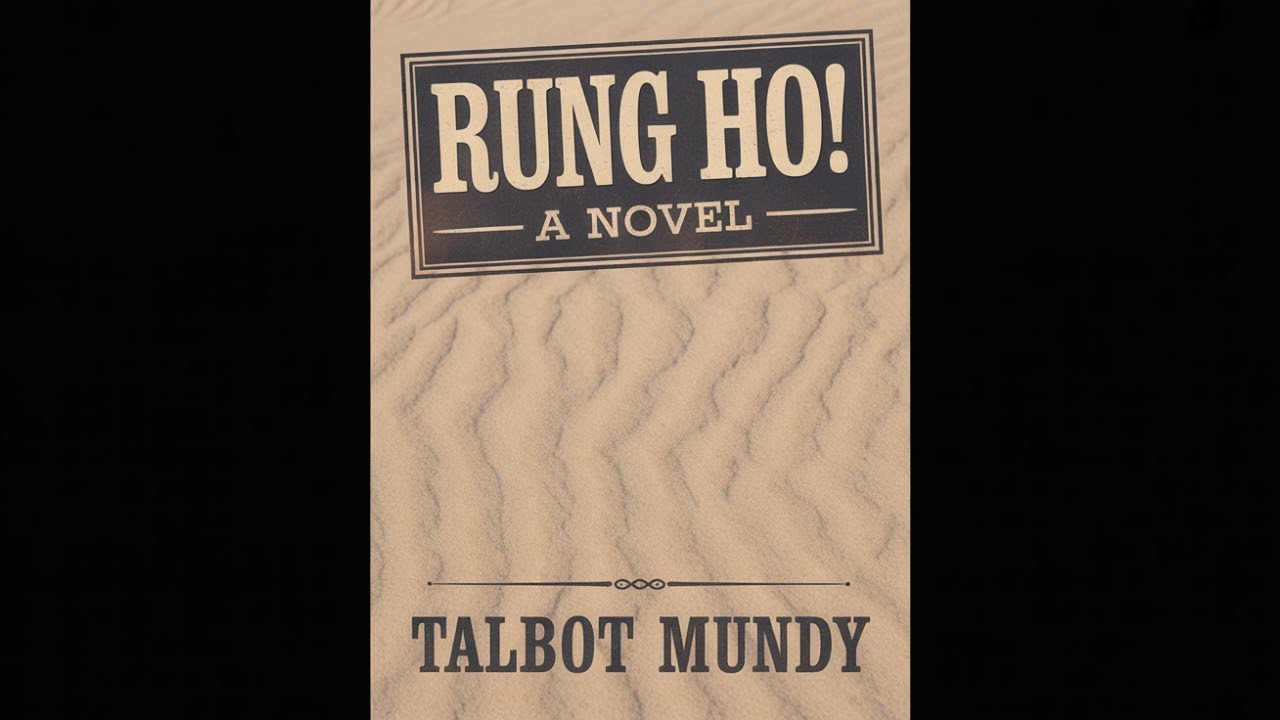
Rung Ho! A Novel
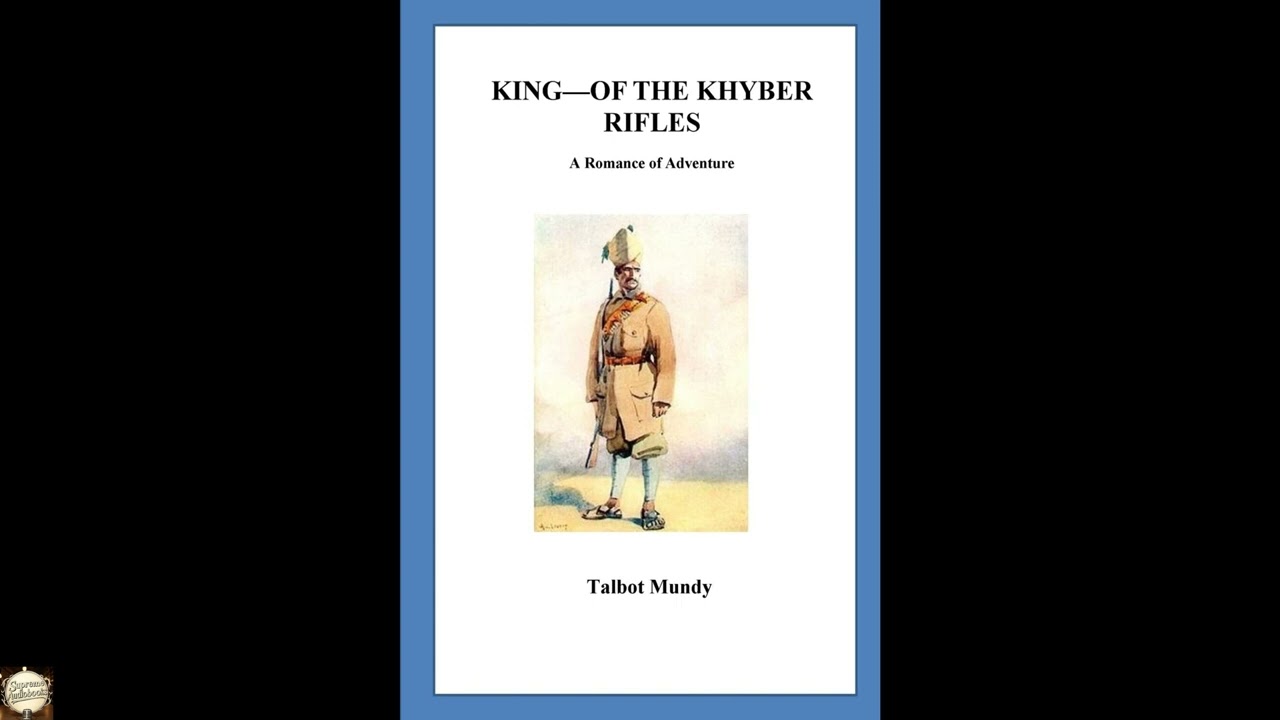
Step into a world where empires clash and individual honor is tested against the vast, untamed landscape of the British Indian frontier. Talbot Mundy’s Rung Ho! A Novel transports listeners to a pivotal moment in history, a time when the echoes of a looming world war began to reverberate even in the remotest corners of the globe. This classic adventure, first published in 1914, offers more than just thrilling escapism; it presents a nuanced look at cross-cultural dynamics, the complexities of imperial rule, and the personal sacrifices demanded by duty. Today, its insights into nationalism, the struggle for autonomy, and the ethical dilemmas of power remain acutely pertinent, inviting a fresh appreciation for a story that bridges the excitement of pulp fiction with a surprising depth of character and observation. The narrative unfolds on the rugged North-West Frontier of India, a region of stark beauty and fierce independence, just as the rumblings of global conflict signal the end of an era. Our main character is Major "King" Thebaw, a young British officer with an unusual affinity for the local Pathan tribes. Unlike many of his peers, Thebaw possesses a genuine understanding and respect for the Pathan way of life, earning him a unique — and often precarious — position between two worlds. The central conflict arises when German agents, keen to destabilize British rule as World War I ignites in Europe, begin to stir up unrest among the Pathan chiefs. The baw is tasked with the delicate mission of maintaining peace and loyalty, a challenge that pits his diplomatic skills and personal courage against the machinations of foreign powers and the deep-seated grievances of the tribes. Accompanied by his steadfast Pathan companion, Mahbub Ali, Thebaw rides into the treacherous hills and valleys, navigating not only physical dangers but also a maze of shifting alliances, ancient feuds, and profound cultural misunderstandings. He encounters powerful tribal leaders, some swayed by promises of German gold and the prospect of liberation, others wary of change and distrustful of all outsiders. The story follows Thebaw as he attempts to forge unity, expose the enemy's plans, and prevent a devastating uprising that could spell disaster for the British Raj. His quest is a relentless race against time, filled with daring escapes, tense negotiations, and moments of profound personal reflection on the nature of loyalty, justice, and the true meaning of empire. The stakes are immense, not just for the British but for the Pathans themselves, whose future hangs in the balance as the global stage prepares for a conflict unlike any seen before. Talbot Mundy, born William Lancaster Gribbon in London in 1879, led a life as adventurous as any of his fictional heroes. His early years were marked by extensive travel and a restless spirit that saw him moving through various professions across the globe. He spent time in Africa as a big-game hunter, engaged in pearl trading, and was rumored to have participated in the Second Boer War, though many details of his early life are veiled in legend and self-mythologizing. Mundy eventually settled in the United States, where he began his prolific writing career. He quickly gained recognition for his exotic adventure stories, which often featured British characters operating in far-flung corners of the world, particularly India and the Middle East. Mundy became a prominent figure in the era of popular adventure fiction, a genre that blended thrilling escapism with sometimes surprisingly philosophical undertones. His most famous work, King of the Khyber Rifles, cemented his reputation as a master of the Indian frontier tale, a field where he stood alongside authors like Rudyard Kipling. Other notable works include the Jimgrim series, set in the Middle East, and Tros of Samothrace, a historical novel set in ancient times. Mundy distinguished himself through his genuine interest in Eastern philosophies and mysticism, often incorporating these elements into his plots and character development. He died in 1940, leaving behind a substantial body of work that continues to fascinate readers interested in the intersections of adventure, colonialism, and spiritual inquiry. Rung Ho! offers listeners several powerful themes that resonate beyond its immediate setting. One key idea is the tension between duty and personal conviction. Major Thebaw, though a British officer, frequently finds himself questioning the methods and assumptions of the colonial administration. He recognizes the inherent dignity of the Pathan people and the justice of some of their grievances, forcing him to balance his oath to the Empire with his own moral compass and his understanding of local customs. A scene where Thebaw mediates a tribal dispute, choosing negotiation and respect over a show of force, exemplifies this internal and external struggle. Another prominent theme is cross-cultural understanding and misunderstanding. Mundy dedicates considerable attention to depicting the Pathan way of life, their codes of honor, their hospitality, and their fierce independence. Through Thebaw's eyes, listeners gain insight into the complexities of inter-ethnic relations, highlighting how prejudice and ignorance can fuel conflict, while empathy and genuine effort can build bridges. The relationship between Thebaw and Mahbub Ali, founded on mutual respect despite their different backgrounds, stands as a testament to this potential for connection. A third significant theme is the lure of the unknown and the call to adventure. The North-West Frontier itself acts as a character — a wild, untamed land that tests the limits of human endurance and ingenuity. Mundy vividly portrays the dangers and exhilaration of life on the edge of civilization, where every valley might hide an ambush and every negotiation carries life-or-death consequences. Furthermore, the book subtly addresses the complexities of imperialism. While written from a perspective within the British Empire, it doesn't shy away from presenting the costs and moral ambiguities of colonial rule. The German attempts to incite rebellion are effective precisely because they tap into existing discontent, forcing Thebaw and the listener to consider the impact of foreign domination on the indigenous populations. The narrative thus becomes a thoughtful commentary on the ethical dilemmas inherent in ruling distant lands and peoples. Rung Ho! emerged at a pivotal moment in history, first appearing in 1914, the very year World War I erupted across Europe. This timing is no mere coincidence; the novel reflects the political anxieties and global machinations of its era. The British Empire, though seemingly at its peak, was acutely aware of growing challenges to its dominion, particularly from rival powers like Germany, who sought to undermine British influence in strategic regions such as India. The "Great Game" — the geopolitical rivalry between the British and Russian Empires for supremacy in Central Asia — had dominated the preceding decades, and German ambition added a new, more aggressive dimension to this struggle. Culturally, the early 20th century was a fertile ground for adventure fiction, a genre that often served to entertain, educate, and subtly reinforce imperial narratives to a public fascinated by distant lands and heroic exploits. Authors like H. Rider Haggard and Rudyard Kipling had already popularized tales of exotic locales and brave British officers. Mundy's work fits comfortably within this tradition, yet it also distinguishes itself by frequently imbuing its adventures with a greater sense of psychological depth and an authentic, if romanticized, engagement with the spiritual and philosophical traditions of the East. Rung Ho! therefore captures the spirit of its time: an empire grappling with its vulnerabilities, a world on the brink of unprecedented conflict, and a public eager for stories that brought the distant dramas of global politics closer to home. Listening to Rung Ho! as an audiobook offers a uniquely immersive experience, transforming the text from static words on a page into a living, breathing narrative. The "several hours" run length allows the story to unfold at a natural pace, giving ample room for Mundy's descriptive prose to paint vivid pictures of the North-West Frontier. A skilled narrator can bring out the distinct voices of the diverse cast—from the measured tones of British officers to the fiery pronouncements of Pathan chiefs—enhancing the drama of the cross-cultural dialogue. Listen for the atmospheric descriptions of the rugged landscape and the subtle inflections in the dialogue that convey the unspoken tensions and alliances. The unfolding plot, with its blend of suspense and action, benefits tremendously from a performance that builds momentum and accentuates the sense of impending danger and daring heroism. An auditory presentation invites you to truly inhabit this world, to feel the dust of the frontier trails and hear the whispers of intrigue, making the adventure feel immediate and profoundly personal.
Enjoyed Rung Ho! A Novel? A few ways to support us
Audible & Amazon links are affiliate; we may earn a small commission at no extra cost.
About this production
Human narration by a volunteer reader from LibriVox.org, the public-domain audiobook project. LibriVox volunteers record literary works whose copyright has expired in the United States, releasing the resulting recordings into the public domain.
Rung Ho! A Novel by Talbot Mundy. The underlying text is in the U.S. public domain. We do not republish any modern copyrighted edition, translation, or commentary.
The 4K cinematic visuals accompanying this audiobook are generated by an AI image model from prompts derived from the source text. No copyrighted photos, paintings, or stock footage are used. AI generation is disclosed on every video on our YouTube channel as required by YouTube's altered/synthetic content policy.
English subtitles are transcribed from the LibriVox recording with OpenAI Whisper. Translations into the 11 other supported languages are produced by Meta's NLLB-200 neural translation model. No human translator's copyrighted translation is used.
Questions about sourcing or rights? See our DMCA & Sourcing policy or contact us.
View 10 famous quotes from this book →
Enjoyed this audiobook?
If you'd like to own a copy of Rung Ho! A Novel or hear a professionally produced edition, the links below help support free audiobook production at no extra cost to you.
As an Amazon Associate we earn from qualifying purchases. Audible / print links are affiliate.