In Morocco
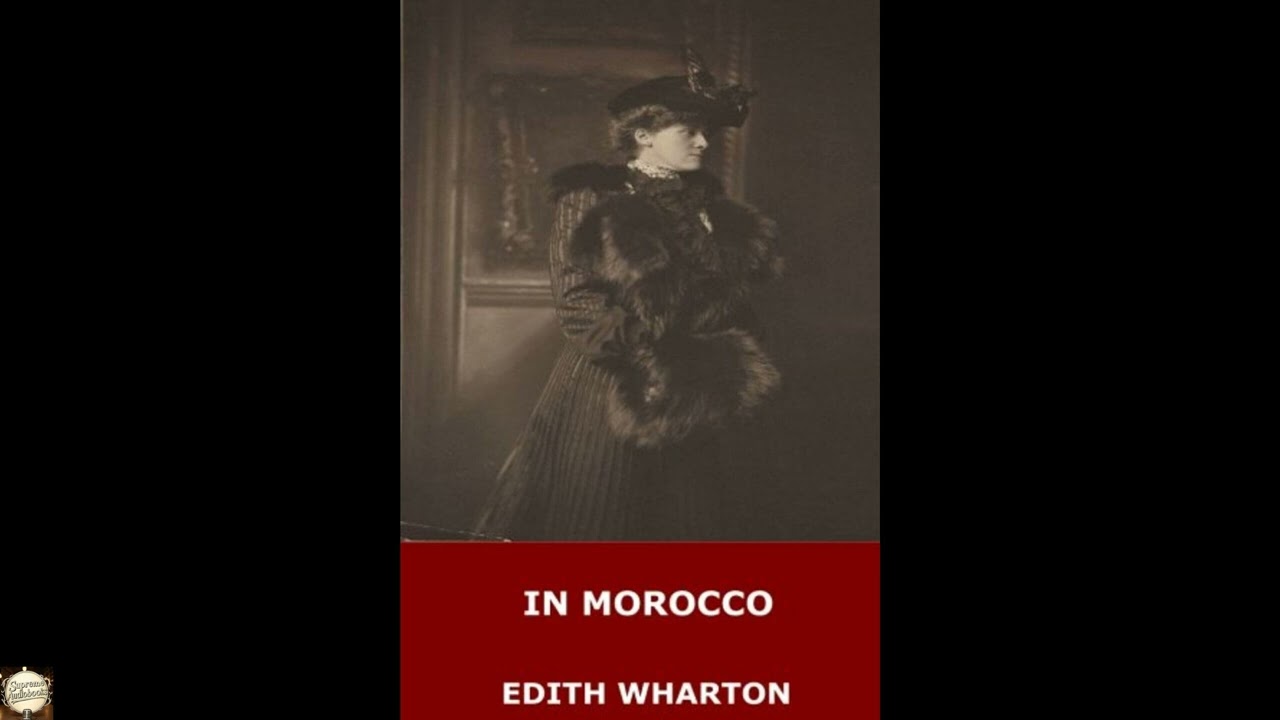
Edith Wharton’s In Morocco offers listeners a rare window into a specific place and time: North Africa in 1917, viewed through the discerning eyes of one of America's most celebrated literary figures. Far from her familiar settings of Gilded Age New York drawing rooms or New England farmhouses, Wharton here acts as an astute observer, bringing her characteristic precision and psychological insight to a world vastly different from her own. This is not a work of fiction, but a highly personal and vivid travelogue, capturing a moment when ancient traditions met burgeoning colonial influence, all against the backdrop of a world at war. For those interested in cultural exchange, the dynamics of power, or simply the sheer beauty of Wharton's prose describing an exotic landscape, this account remains profoundly relevant today, prompting reflection on how we perceive and portray other cultures. Wharton’s narrative unfolds as a grand tour through Morocco, a country at the time under French protectorate and, for Westerners, still largely mysterious and inaccessible. Her travels begin in Rabat, the administrative capital, where she gains entrée into official circles thanks to the patronage of General Lyautey, the French Resident-General. From there, her itinerary takes her through the ancient imperial cities: Fez, with its labyrinthine medinas and spiritual intensity; Meknès, showcasing the monumental ruins of Sultan Moulay Ismaïl’s reign; and the famed red city of Marrakesh, pulsating with life in its Djemaa el-Fna square. The "story" is her sequential immersion in these distinct urban environments, each revealing different facets of Moroccan life, history, and the pervasive French presence. The central figure is Wharton herself, not as a character in a novel, but as the active, ever-present consciousness through which we experience Morocco. She meticulously describes the architecture—the elaborate tilework, the serene courtyards, the formidable kasbahs—and the customs, from religious ceremonies to the daily rhythms of the markets. She details the stark beauty of the landscape, from the Atlantic coast to the Atlas Mountains, and the diverse peoples she encounters: Arabs, Berbers, Jews, and the French administrators. Her experiences range from formal receptions with French officials to rare glimpses inside private Moroccan homes and palaces, each encounter adding to her complex understanding of the country. The arc of the story is the expansion of her perspective, moving from initial impressions to deeper, if always outsider, comprehension of a culture both ancient and in flux. Edith Wharton (1862-1937) was an American novelist, short story writer, and designer, renowned for her sharp social commentary and psychological realism. Born Edith Newbold Jones into a prominent New York family—the "old money" society she would later famously satirize—she grew up immersed in the very social circles she meticulously documented. Her early life was marked by intellectual curiosity that often chafed against the restrictive expectations placed upon women of her class. Her marriage to Edward "Teddy" Wharton was fraught with incompatibility and eventually ended in divorce, a scandal in her era. Wharton spent much of her adult life in France, where she continued to write prolifically and became a formidable literary figure. She cultivated friendships with many prominent intellectuals and artists of her time, including Henry James. Her fiction consistently critiqued the hypocrisy, snobbery, and moral compromises of the American aristocracy, while also probing the inner lives of individuals caught between societal expectation and personal desire. Her most celebrated works include The House of Mirth (1905), which exposed the tragedy of a woman's struggle within a materialistic society, and Ethan Frome (1911), a stark novella about a tragic love triangle in rural New England. In 1921, she became the first woman to win the Pulitzer Prize for Fiction for The Age of Innocence, a brilliant portrayal of Old New York society in the 1870s, making her a foundational figure in American literature. In Morocco brings several significant themes to the fore, presented through Wharton's keen observations. One prominent theme is the clash of cultures and the legacy of colonialism. Wharton arrived in Morocco under French patronage, and her narrative frequently details the interplay between ancient Moroccan traditions and the superimposed French administration. For instance, she describes the French efforts to preserve Moroccan architectural heritage while simultaneously imposing their own infrastructure and bureaucratic systems, offering examples of both respectful cultural conservation and the inherent tensions of colonial power. Listeners hear her describe cities where new French quarters stand in stark contrast to the venerable medinas, illustrating the ongoing negotiation between occupiers and occupied. Another compelling theme is the nature of the observer's gaze and the limitations of Western perception. Wharton, as an educated Western woman, is keenly aware of her outsider status, grappling with what she can genuinely comprehend of a profoundly different culture. She recounts her limited access to the private lives of Moroccan women and acknowledges the "veil" that separates her from true understanding. Her descriptions of religious rituals or the complexities of Moroccan social hierarchy, while detailed, often carry an implicit acknowledgment of the impenetrable aspects of a culture she could only witness from the exterior, reflecting on the challenges of truly knowing the "Other." This self-awareness elevates the travelogue beyond mere description. The historical backdrop to Wharton's trip to Morocco is essential to understanding the work. Written during World War I, in 1917, the world was consumed by conflict, yet Morocco itself, while a French protectorate, was experiencing a period of relative "pacification" under the strategic leadership of General Lyautey. Lyautey's approach to colonial rule was somewhat unique, aiming to preserve Moroccan culture and traditions while gradually integrating the country into the French sphere of influence. Wharton's access to areas generally closed to Westerners, especially women, was largely a direct result of Lyautey's sponsorship, which allowed her to see aspects of the country that few outsiders ever could. The book therefore also serves as an informal document of French colonial policy in action, as Wharton praises Lyautey’s efforts to modernize without entirely destroying the old ways, a perspective that reveals both the enlightened and problematic views of colonialism prevalent at the time. Listening to In Morocco as an audiobook offers a singular opportunity to immerse oneself in Wharton’s precise and evocative prose. A skilled narrator can bring her observations to life, giving voice to her curiosity, her occasional wry humor, and her profound appreciation for beauty, whether in a palace courtyard or a mountain vista. The several-hour run length makes it an ideal companion for extended listening sessions, allowing listeners to absorb the sensory details and historical insights at a measured pace. The pacing of the text itself—a sequence of observations, reflections, and descriptions—lends itself perfectly to audio, inviting a contemplative experience. A well-chosen voice can also subtly convey the atmosphere of the places she visits, from the bustling energy of the souks to the quiet grandeur of ancient ruins, truly placing the listener alongside Wharton as she makes her remarkable discoveries.
Enjoyed In Morocco? A few ways to support us
Audible & Amazon links are affiliate; we may earn a small commission at no extra cost.
About this production
Human narration by a volunteer reader from LibriVox.org, the public-domain audiobook project. LibriVox volunteers record literary works whose copyright has expired in the United States, releasing the resulting recordings into the public domain.
In Morocco by Edith Wharton. The underlying text is in the U.S. public domain. We do not republish any modern copyrighted edition, translation, or commentary.
The 4K cinematic visuals accompanying this audiobook are generated by an AI image model from prompts derived from the source text. No copyrighted photos, paintings, or stock footage are used. AI generation is disclosed on every video on our YouTube channel as required by YouTube's altered/synthetic content policy.
English subtitles are transcribed from the LibriVox recording with OpenAI Whisper. Translations into the 11 other supported languages are produced by Meta's NLLB-200 neural translation model. No human translator's copyrighted translation is used.
Questions about sourcing or rights? See our DMCA & Sourcing policy or contact us.
Enjoyed this audiobook?
If you'd like to own a copy of In Morocco or hear a professionally produced edition, the links below help support free audiobook production at no extra cost to you.
As an Amazon Associate we earn from qualifying purchases. Audible / print links are affiliate.