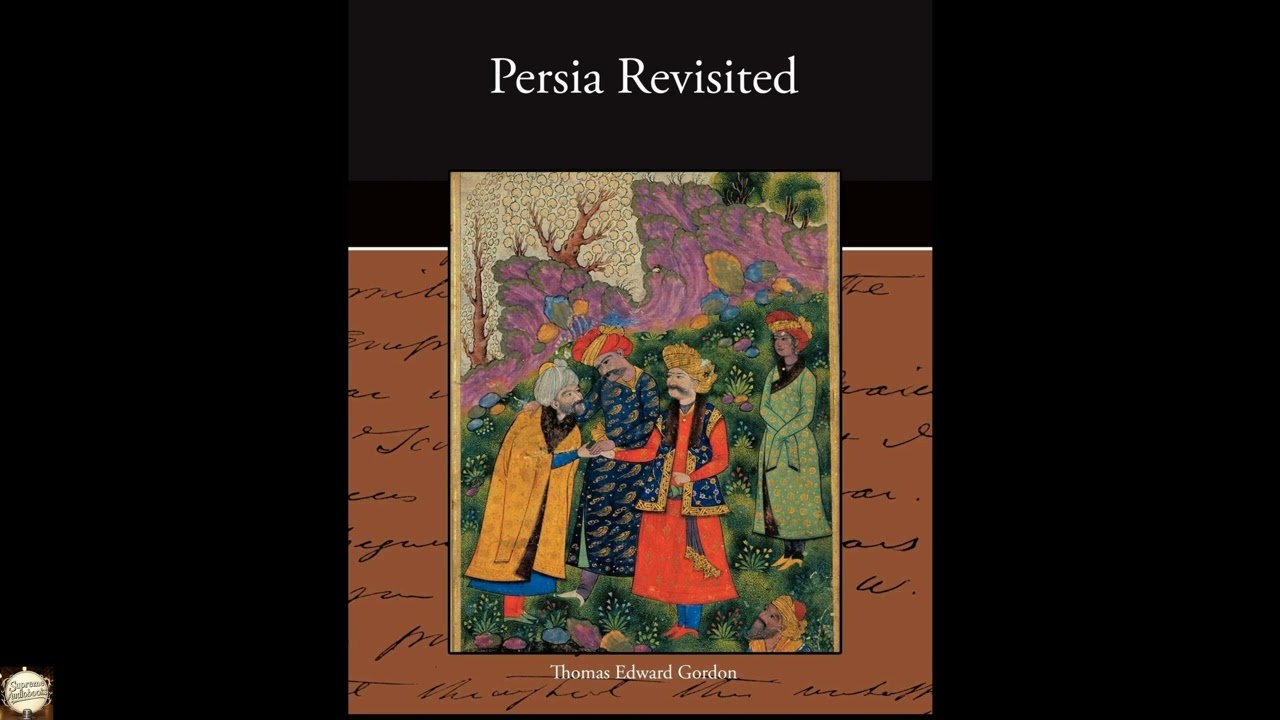
Persia Revisited
Step back in time to an era when the sprawling reaches of Persia held both mystery and strategic significance, a land of ancient empires navigating the currents of modernization and foreign influence. "Persia Revisited" by Sir Thomas Edward Gordon offers a remarkable firsthand account, a window into a pivotal region as seen through the discerning eyes of a seasoned British observer. This classic work of literature is more than just a historical document; it is an intimate engagement with a culture, a geographical expanse, and a political landscape that continues to resonate today. For anyone seeking to understand the enduring complexities of the Middle East, the subtle dynamics of East-West relations, or simply the sheer human spirit encountered in distant lands, Gordon's reflections provide an essential and compelling perspective. The story unfolds as Sir Thomas Edward Gordon, a distinguished figure with a long history of service in the British Empire, returns to Persia, a country he had known intimately years prior. His narrative is less a traditional novel and more a meticulously observed travelogue, chronicling his passage through the rugged mountains and sun-drenched plains of this ancient land. From the bustling bazaars of Tehran to the historic grandeur of Isfahan and Shiraz, Gordon guides his readers through a series of encounters and observations, painting a vivid picture of life under the Qajar dynasty during a period of considerable geopolitical tension. He describes audiences with local governors, conversations with merchants and villagers, and detailed examinations of the natural beauty and architectural wonders that define Persia. Gordon's perspective is uniquely shaped by his dual role as both a returning acquaintance and a keen diplomatic observer. He scrutinizes the evolving social customs, the local power structures, and the impact of burgeoning trade routes, all while juxtaposing his current experiences against his memories of the past. The central arc of the account is this very act of revisiting – comparing what has changed, what has endured, and what new challenges and opportunities have emerged in the intervening years. He provides insights into the political machinations of the day, the challenges of administering justice, and the daily rhythms of a society perched between tradition and the gradual, sometimes reluctant, adoption of new ways. The narrative moves steadily, much like a journey itself, from initial impressions to deeper understandings, never quite concluding but rather offering a continuous stream of nuanced observation. Sir Thomas Edward Gordon, a prominent figure of the Victorian and Edwardian eras, carved out a distinguished career as a soldier, diplomat, and author. Born in Ireland in the mid-19th century, his life was largely defined by service to the British Crown in its vast imperial holdings. He initially served in the British Indian Army, participating in various campaigns and gaining extensive experience in military and political affairs across the subcontinent. His postings often placed him at the geographical and political frontiers of the empire, areas where British interests often intersected with those of other expanding powers, most notably Russia. Beyond his military duties, Gordon proved himself a shrewd observer and a capable diplomat. His assignments frequently involved extended periods in Central Asia and Persia, regions crucial to the "Great Game" – the strategic rivalry between the British and Russian Empires. His diplomatic acumen and linguistic skills allowed him to foster relationships and gain a deeper understanding of local cultures and political systems, which he meticulously documented in his writings. "Persia Revisited" stands alongside other notable works of his, such as "The Roof of the World" and "A Journey through the Pamirs," solidifying his reputation as a significant contributor to the genre of British imperial travel literature and memoir. His place in the literary canon rests on his ability to combine detailed factual reporting with an engaging narrative style, offering valuable historical primary source material filtered through an educated, though distinctly European, lens. One of the central themes Gordon enacts throughout "Persia Revisited" is the intricate dance of cultural encounter and perception. He frequently contrasts Persian customs and belief systems with those of Europe, not always with judgment, but often with a sense of informed curiosity. For instance, his descriptions of local hospitality and intricate social etiquette reveal both his admiration and occasional bewilderment at practices vastly different from his own, such as the elaborate rituals surrounding tea ceremonies or the precise language used in diplomatic exchanges. This continuous negotiation between differing worldviews offers a subtle commentary on the challenges and rewards of cross-cultural communication. Another powerful theme is the inherent tension between memory and change. Gordon's title itself signals this focus, as he consciously revisits places and people from his past. He describes specific instances where a once-thriving caravanserai has fallen into disrepair, or a particular administrative practice has evolved. A memorable passage might detail his return to a particular village, noting the growth of its population or the introduction of new agricultural techniques, prompting a quiet reflection on the relentless march of time and its effects on human societies. Furthermore, the narrative subtly addresses the growing influence of European powers, particularly Britain and Russia, on Persia's internal affairs, revealing the delicate balance of sovereignty and external pressure that characterized the period. He observes the presence of foreign legations, the discussions around trade concessions, and the undercurrents of political maneuvering, all of which speak to the complex web of imperialism impacting a nominally independent nation. "Persia Revisited" was published at a time of profound geopolitical shifts and increasing global interconnectivity, likely in the late 19th or early 20th century. This era was marked by the apex of European colonial power, with Great Britain at its zenith, and a fervent interest in understanding the distant corners of the world. Persia, as an independent but vulnerable state situated between the expanding British Indian Empire and the Russian Empire, was a critical arena for the "Great Game." Books like Gordon's served multiple purposes: informing the British public and government about a strategically vital region, solidifying the author's reputation as an expert, and simply satisfying the public's appetite for accounts of exotic lands. This was also a period when travel literature was becoming increasingly sophisticated, moving beyond mere adventurous tales to include more systematic observation and analysis, reflecting a broader scientific and scholarly impulse to document the world. To experience "Persia Revisited" as an audiobook is to immerse oneself directly into Gordon's observations, allowing his detailed descriptions to conjure the landscapes and bustling cities of old Persia in the imagination. The measured pacing of the narration grants ample opportunity to absorb the nuances of his reflections, from the specific sounds and smells of a crowded bazaar to the quiet dignity of a mountain vista. The spoken word highlights the often formal yet eloquent prose typical of the period, allowing the listener to appreciate the cadence and rhythm of Gordon's writing. Whether he is recounting a diplomatic conversation, describing a local custom, or simply musing on the vastness of the Persian desert, the voice acts as a direct conduit to a world distant in time, yet uncannily relevant in its portrayal of human interaction and geopolitical dynamics. The substantial run length offers a comprehensive engagement, providing a continuous, uninterrupted narrative that invites listeners to dwell within the historical moment Gordon so carefully documented.
Enjoyed Persia Revisited? A few ways to support us
Audible & Amazon links are affiliate; we may earn a small commission at no extra cost.
About this production
Human narration by a volunteer reader from LibriVox.org, the public-domain audiobook project. LibriVox volunteers record literary works whose copyright has expired in the United States, releasing the resulting recordings into the public domain.
Persia Revisited by Thomas Edward Gordon Sir. The underlying text is in the U.S. public domain. We do not republish any modern copyrighted edition, translation, or commentary.
The 4K cinematic visuals accompanying this audiobook are generated by an AI image model from prompts derived from the source text. No copyrighted photos, paintings, or stock footage are used. AI generation is disclosed on every video on our YouTube channel as required by YouTube's altered/synthetic content policy.
English subtitles are transcribed from the LibriVox recording with OpenAI Whisper. Translations into the 11 other supported languages are produced by Meta's NLLB-200 neural translation model. No human translator's copyrighted translation is used.
Questions about sourcing or rights? See our DMCA & Sourcing policy or contact us.
Enjoyed this audiobook?
If you'd like to own a copy of Persia Revisited or hear a professionally produced edition, the links below help support free audiobook production at no extra cost to you.
As an Amazon Associate we earn from qualifying purchases. Audible / print links are affiliate.