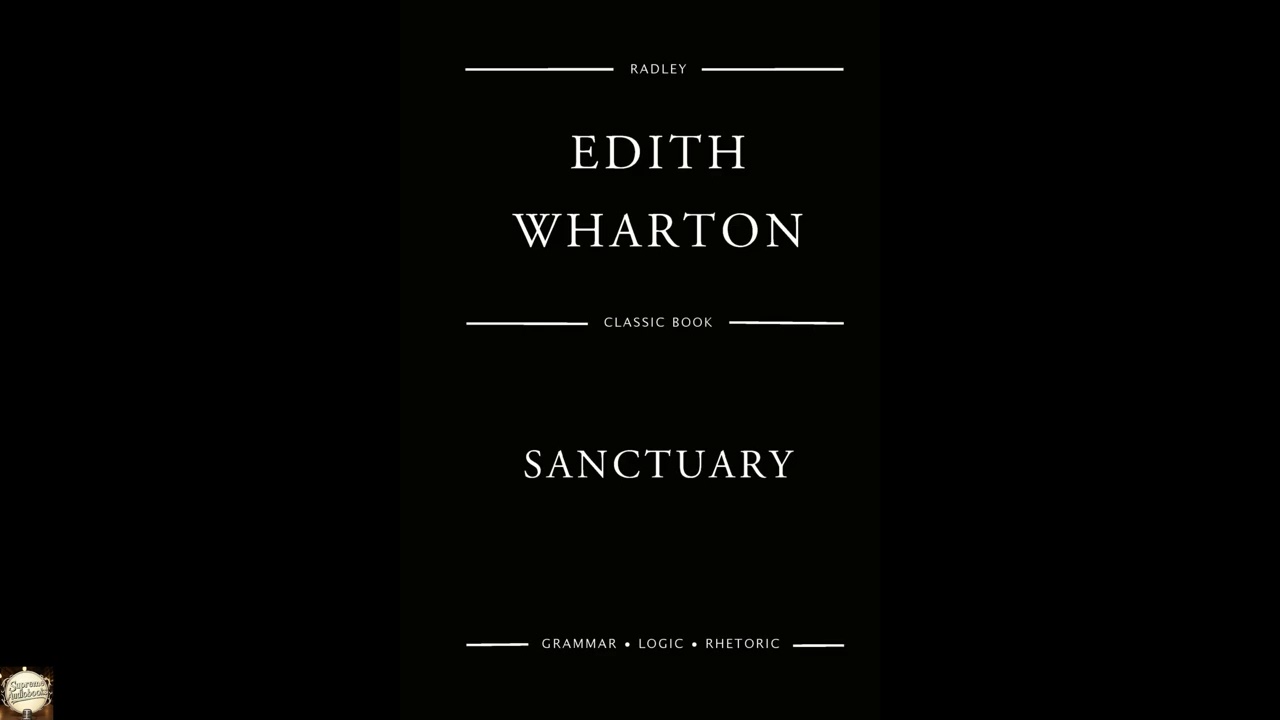
Sanctuary
"Sanctuary" is a novella by Edith Wharton that distills her characteristic examination of moral compromise and the often-suffocating constraints of social expectation into a potent, intimate drama. This concise yet powerful narrative asks whether true love can demand the ultimate sacrifice of self, and if that sacrifice can ever truly redeem. It’s a story that challenges listeners to consider the hidden costs of reputation, the weight of inherited burdens, and the quiet heroism found in an unyielding personal code. For anyone grappling with questions of integrity, fidelity, and the quiet battles waged within a marriage or family, "Sanctuary" offers a resonant and thought-provoking experience, as relevant today as it was at the turn of the twentieth century. The story opens in the late nineteenth century, amidst the refined yet rigid social circles of New York and New England, a world Edith Wharton knew intimately. We meet Kate Peyton, a young woman of keen intellect and deep moral sensibility, preparing for her marriage to the beloved Denis Peyton. Their future together seems bright, promising a life of shared values and contentment. However, an unexpected and devastating revelation shatters Kate’s serene expectations just weeks before their wedding. She uncovers a hidden secret from Denis’s past – a deeply compromising act committed by another, in which Denis played a role that, while not criminal, points to a profound moral failing and a significant act of betrayal against a vulnerable individual. This disclosure forces Kate into an immediate and agonizing internal conflict. She finds herself torn between her profound love for Denis and her unshakeable commitment to ethical principles. Rather than abandoning her fiancé, Kate makes a profound, quiet decision that binds her inextricably to this secret. She resolves to marry Denis, not in ignorance, but with a full, heavy understanding of his past, determined to become a moral "sanctuary" for him, hoping to shield him from the consequences of his actions and, perhaps, to redeem his character through her unwavering love and example. The narrative then shifts forward many years, focusing on Kate’s life as a mother, raising her son, also named Denis. She lives under the constant shadow of the secret, navigating her son’s burgeoning character and choices, and the potential for history to repeat itself, while tirelessly working to instill in him the very moral fiber she found lacking in his father. Her life becomes a quiet testament to her initial vow, a subtle, ongoing battle to ensure the past does not fatally wound the future. Ms. Edith Wharton (1862-1937) stands as one of American literature’s most incisive observers and critics of the Gilded Age, the late nineteenth and early twentieth century period of immense wealth and social stratification. Born Edith Newbold Jones into an old-money New York family – a lineage that famously inspired the phrase “keeping up with the Joneses” – she grew up within the very society she would later dissect with such precision and wit. Her upbringing provided her with an insider’s view of the rigid customs, unspoken rules, and often hypocritical moral codes governing New York’s upper crust, experiences that fueled her most enduring fiction. Wharton’s personal life mirrored some of the societal constraints she depicted. Her marriage to Edward Robbins Wharton, ten years her senior, was largely unhappy and ended in divorce, a significant scandal in her era but a step that allowed her greater personal and artistic freedom. She spent much of her adult life in Europe, particularly France, where she continued to write prolifically and formed friendships with other literary figures like Henry James. Her sharp intellect and command of language were evident from her earliest writings, which often focused on the plight of women trapped by societal expectations, the corrosive effects of materialism, and the emotional cost of conforming to convention. Beyond "Sanctuary," Wharton’s bibliography boasts a remarkable array of canonical works. Listeners familiar with her oeuvre will recognize her distinctive voice in novels like The House of Mirth (1905), which tragically follows Lily Bart's descent through the social strata, or Ethan Frome (1911), a stark, haunting tale of rural New England tragedy. Her crowning achievement, The Age of Innocence (1920), earned her the Pulitzer Prize for Fiction, making her the first woman to receive the honor. Through these works, Wharton established herself as a master of psychological realism, a writer who meticulously crafted narratives that revealed the inner lives and external pressures shaping her characters, securing her enduring place as a foundational figure in American letters. "Sanctuary" functions as a powerful lens through which Wharton examines several profound themes. At its core lies the idea of moral obligation and self-sacrifice. Kate Peyton's decision to marry Denis despite knowing his past is not born of naïveté but a deliberate, almost spiritual, commitment to redeem him through her unwavering goodness. This is illustrated in the quiet scenes where she absorbs the initial shock of the revelation, choosing a path of self-denial rather than public exposure, believing her internal strength can somehow cleanse her husband’s stain. Her life becomes a quiet act of atonement, not for her own sins, but for those of another, highlighting the immense personal cost of such an ethic. Another central theme is the burden of secrets and past actions. The revelation of Denis's youthful compromise casts a long shadow over the entire narrative. It’s not simply a secret kept from society, but one that actively shapes Kate's choices and relationships, especially with her son. Wharton subtly demonstrates how unaddressed moral failings can echo through generations, subtly influencing character and destiny. The atmosphere of impending dread, the quiet watch Kate keeps over her son, striving to prevent him from repeating his father’s errors, paints a vivid picture of how deeply buried truths can still control a person's present and future. Furthermore, the novella critiques the social expectations placed upon women during the period, especially the ideal of the sacrificing wife. Kate’s role as Denis’s "sanctuary" is framed by societal pressures that would have made leaving him scandalous, but Wharton ultimately presents Kate’s agency as a moral choice, albeit a heavy one, rather than mere capitulation. Published in 1903, "Sanctuary" emerged during a transitional era in American history and literature. The turn of the twentieth century was a period still largely shaped by Victorian moral codes, particularly regarding reputation, marriage, and female conduct. The glittering excesses of the Gilded Age, characterized by immense wealth and social display, were beginning to give way to the Progressive Era, a time of social reform and increasing scrutiny of societal injustices. However, the private lives of the upper classes remained strictly governed by convention, making any deviation from the norm a potential catastrophe. In the literary landscape, realism and naturalism held sway, with writers like Henry James and Theodore Dreiser challenging romantic idealism and focusing on the psychological nuances of characters within their social environments. Wharton, deeply embedded in the upper echelons of this society, was uniquely positioned to dissect its hypocrisies and rigidities. "Sanctuary" reflects this intellectual climate by rejecting simplistic notions of good and evil, instead plunging into the complex, often agonizing, moral choices individuals faced when confronted with the collision of personal integrity and societal demands. It's a work that quietly, yet powerfully, illuminates the suffocating pressures on individual conscience in a world obsessed with appearances. Listening to "Sanctuary" as an audiobook offers a uniquely intimate experience of Wharton’s prose. The novella’s relatively short length – several hours – makes it an ideal companion for a long afternoon, a thoughtful commute, or quiet moments when you seek profound introspection. A skilled narrator can bring Kate Peyton’s internal struggle to vivid life, allowing listeners to fully appreciate the quiet strength and poignant sorrow in her voice as she grapples with an almost unbearable ethical dilemma. The pacing, often deliberate and reflective, invites close attention, making Wharton’s precise language and subtle characterizations resonate more deeply when spoken. Hear the hushed tension in the dialogue, the unspoken judgments lurking beneath polite exchanges, and the profound, silent weight of Kate’s sacrifice as it unfolds, creating an atmosphere that draws you fully into her world and her unyielding commitment.
Enjoyed Sanctuary? A few ways to support us
Audible & Amazon links are affiliate; we may earn a small commission at no extra cost.
About this production
Human narration by a volunteer reader from LibriVox.org, the public-domain audiobook project. LibriVox volunteers record literary works whose copyright has expired in the United States, releasing the resulting recordings into the public domain.
Sanctuary by Edith Wharton. The underlying text is in the U.S. public domain. We do not republish any modern copyrighted edition, translation, or commentary.
The 4K cinematic visuals accompanying this audiobook are generated by an AI image model from prompts derived from the source text. No copyrighted photos, paintings, or stock footage are used. AI generation is disclosed on every video on our YouTube channel as required by YouTube's altered/synthetic content policy.
English subtitles are transcribed from the LibriVox recording with OpenAI Whisper. Translations into the 11 other supported languages are produced by Meta's NLLB-200 neural translation model. No human translator's copyrighted translation is used.
Questions about sourcing or rights? See our DMCA & Sourcing policy or contact us.
Enjoyed this audiobook?
If you'd like to own a copy of Sanctuary or hear a professionally produced edition, the links below help support free audiobook production at no extra cost to you.
As an Amazon Associate we earn from qualifying purchases. Audible / print links are affiliate.