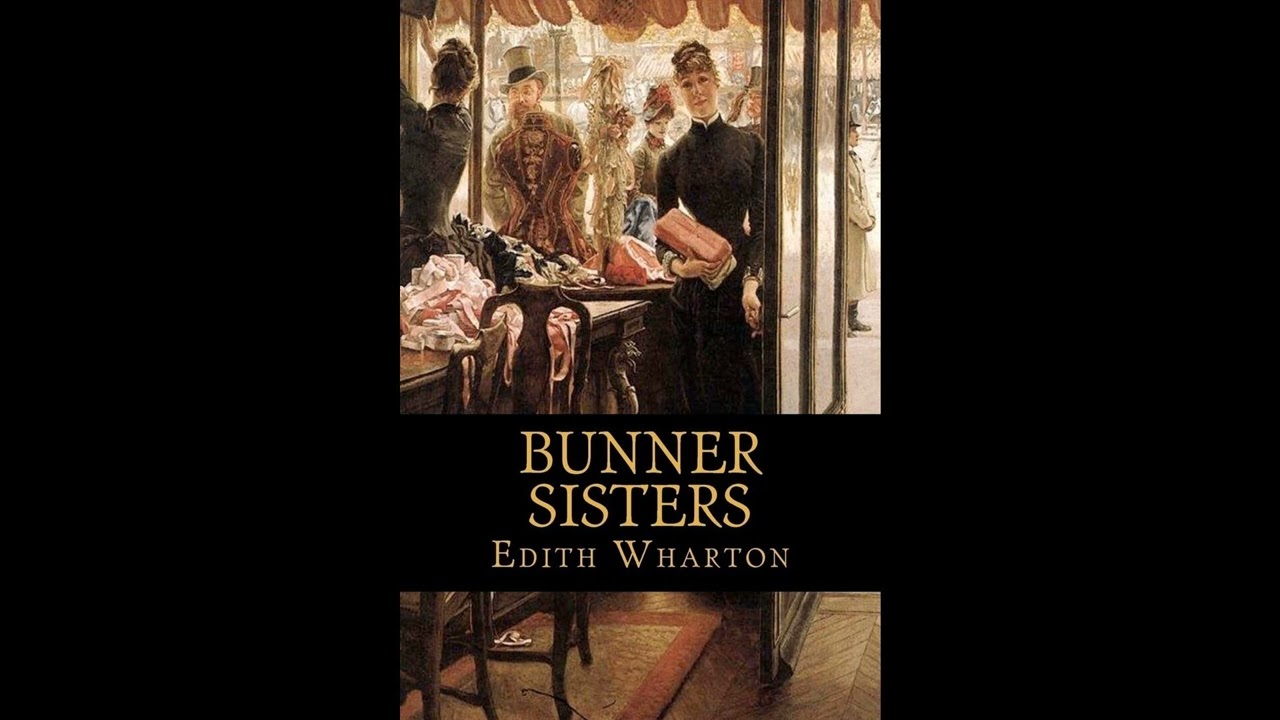
Bunner Sisters
Among the vast catalog of Edith Wharton's incisive observations of American society, Bunner Sisters stands as a quiet yet profound anomaly. This novella, a stark departure from her usual critiques of high-society Gilded Age manners and morals, instead turns a compassionate eye to the lives of two working-class sisters eking out a modest existence in a small New York stationery shop. It is a story of quiet desperation, of profound devotion, and of the crushing weight of limited choices that resonate just as powerfully today as they did over a century ago. Listeners will find in Ann Eliza and Evelina Bunner not only figures from a bygone era, but reflections of universal human yearnings for love, security, and a touch of beauty amidst the mundane. The story opens in the unassuming stationery shop run by Ann Eliza and Evelina Bunner, situated on a quiet, unfashionable street in late 19th-century New York—a world away from the Fifth Avenue drawing rooms Wharton typically depicted. Ann Eliza, the elder sister, is a figure of steady practicality and profound self-sacrifice, her days governed by the meticulous routines of their small business and the constant care she bestows upon Evelina. Evelina, delicate and somewhat dreamy, possesses a fragile beauty and a yearning for a life beyond the shop’s narrow confines, a life suggested by the occasional theatrical posters she admires or the small, coveted trinkets she gazes upon in shop windows. Their existence is a delicate balance of shared work, mutual affection, and an unspoken agreement to protect Evelina’s more tender spirit from the harsher realities of their circumstances. This carefully constructed equilibrium is subtly disrupted when Evelina falls ill, prompting Ann Eliza to seek a cure in the form of a small, decorative clock from a nearby watchmaker, Mr. Herman Ramy. A quiet, scholarly German immigrant who tends his shop with diligent precision, Mr. Ramy quickly becomes a point of interest for both sisters. For Ann Eliza, he represents a potential avenue for Evelina’s happiness, while for Evelina, he hints at a world of broader horizons and perhaps, a deeper connection than she has ever known. This unassuming encounter initiates a slow, almost imperceptible shift in the sisters' relationship and their individual futures, as the unspoken currents of longing and desire begin to surface, threatening to unravel the tight bond that has defined their lives for so long. Edith Wharton, born Edith Newbold Jones in 1862 into one of New York City's most distinguished families, was uniquely positioned to document the societal transformations of her era. Her upbringing within the rigid structures of "Old New York" provided her with an intimate understanding of the customs, expectations, and often stifling constraints faced by women, particularly those of her own social class. Her early life was marked by extensive European travel and a profound passion for literature, though her formal education was largely self-directed. Her marriage in 1885 to Edward Robbins Wharton proved largely unhappy and ended in divorce in 1913, an unconventional move for a woman of her standing at the time. Wharton’s literary output began in earnest in her late thirties, establishing her as a formidable voice in American letters. She achieved widespread acclaim for novels like The House of Mirth (1905), a scathing critique of New York society's treatment of women, and Ethan Frome (1911), a stark tragedy set in rural New England that showcased her versatility. Her most famous work, The Age of Innocence (1920), earned her the Pulitzer Prize for Fiction in 1921, making her the first woman to receive the award. Wharton's work is often associated with the Realist and Naturalist movements, characterized by its psychological depth, keen social commentary, and a mastery of precise, elegant prose. She lived much of her later life in France, where she was awarded the Legion of Honor for her humanitarian work during World War I, and passed away in 1937, leaving behind a legacy of penetrating literary achievement. Bunner Sisters enacts several themes with a quiet power that belies its brief length. One of the most prominent is the theme of sacrifice and selfless devotion. Ann Eliza consistently subordinates her own desires to what she perceives as Evelina's greater needs, a pattern seen when she denies herself a longed-for green bonnet to purchase a small luxury for her younger sister. This constant deferral of personal happiness for the sake of another creates a profound sense of pathos, illustrating the often unacknowledged cost of such a life. Another significant theme is the limited opportunities available to women, especially those without significant wealth or social connections. For the Bunner sisters, their small shop represents both their livelihood and the narrow confines of their independence; marriage, if it comes at all, often seems less like a choice and more like a desperate bid for security. The novella also sharply illuminates the deceptive nature of appearances and the often-harsh collision of dreams with reality. Evelina's initial idealization of Mr. Ramy, and her hope that he might offer an escape to a more beautiful existence, serves as a poignant example. The very clock that brings him into their lives – a symbol of beauty and sophistication – subtly foreshadows the complexities and disappointments that often lie beneath an appealing surface. Finally, the story examines the intricate, almost suffocating love and dependency within the sisterly bond. Their lives are so intertwined that any external influence, however seemingly benign, threatens to disrupt their entire identity, showing how even the deepest affection can become a source of both comfort and constraint. When Bunner Sisters was finally published posthumously in 1916, it offered a glimpse into Wharton's earlier sensibilities, having been written around 1892. This places its composition firmly within the late 19th century, a period of immense social and economic transformation in America. The Gilded Age, characterized by rapid industrialization and the rise of immense fortunes, created stark contrasts between the newly wealthy elite and the burgeoning working and lower-middle classes in cities like New York. While Wharton's reputation largely rested on her portrayals of the upper echelons of this society, Bunner Sisters demonstrates her keen awareness of the lives lived in the shadows of this opulence, showcasing the quiet struggles of those for whom economic survival was a constant, pressing concern. Literarily, this period saw the ascent of Realism and Naturalism, movements that sought to depict life as it truly was, often focusing on the struggles of ordinary people and the deterministic forces of environment and heredity. Authors like Stephen Crane and Theodore Dreiser were publishing unflinching portraits of urban life and its pressures. Wharton's Bunner Sisters aligns with these trends, offering a meticulously observed, unsentimental yet deeply empathetic look at characters whose choices are profoundly shaped by their material circumstances and the societal roles available to them. It underscores her place not just as a chronicler of high society, but as a discerning observer of the broader human condition in a rapidly changing nation. Listening to Bunner Sisters as an audiobook offers a uniquely intimate experience. The story’s gentle pace and focus on the quiet interior lives of its characters are ideally suited to audio narration. A skilled reader can bring out the subtle nuances of Ann Eliza's stoicism and Evelina's fragile hopes, allowing the listener to truly sink into their world. The concise run length, encompassing several hours, makes it an ideal listen for a focused afternoon, a series of calming evenings, or a thoughtful commute. Pay attention to the narrator’s voice as it distinguishes between the sisters’ quiet dialogue, reflecting Ann Eliza’s reserved strength and Evelina’s more delicate inflections. The atmospheric descriptions of the small shop, the sounds of the city outside, and the unspoken emotional currents between the characters become particularly vivid when conveyed through sound, enhancing the sense of immersion in this poignant portrait of a bygone era and its enduring human concerns.
Enjoyed Bunner Sisters? A few ways to support us
Audible & Amazon links are affiliate; we may earn a small commission at no extra cost.
About this production
Human narration by a volunteer reader from LibriVox.org, the public-domain audiobook project. LibriVox volunteers record literary works whose copyright has expired in the United States, releasing the resulting recordings into the public domain.
Bunner Sisters by Edith Wharton. The underlying text is in the U.S. public domain. We do not republish any modern copyrighted edition, translation, or commentary.
The 4K cinematic visuals accompanying this audiobook are generated by an AI image model from prompts derived from the source text. No copyrighted photos, paintings, or stock footage are used. AI generation is disclosed on every video on our YouTube channel as required by YouTube's altered/synthetic content policy.
English subtitles are transcribed from the LibriVox recording with OpenAI Whisper. Translations into the 11 other supported languages are produced by Meta's NLLB-200 neural translation model. No human translator's copyrighted translation is used.
Questions about sourcing or rights? See our DMCA & Sourcing policy or contact us.
Enjoyed this audiobook?
If you'd like to own a copy of Bunner Sisters or hear a professionally produced edition, the links below help support free audiobook production at no extra cost to you.
As an Amazon Associate we earn from qualifying purchases. Audible / print links are affiliate.