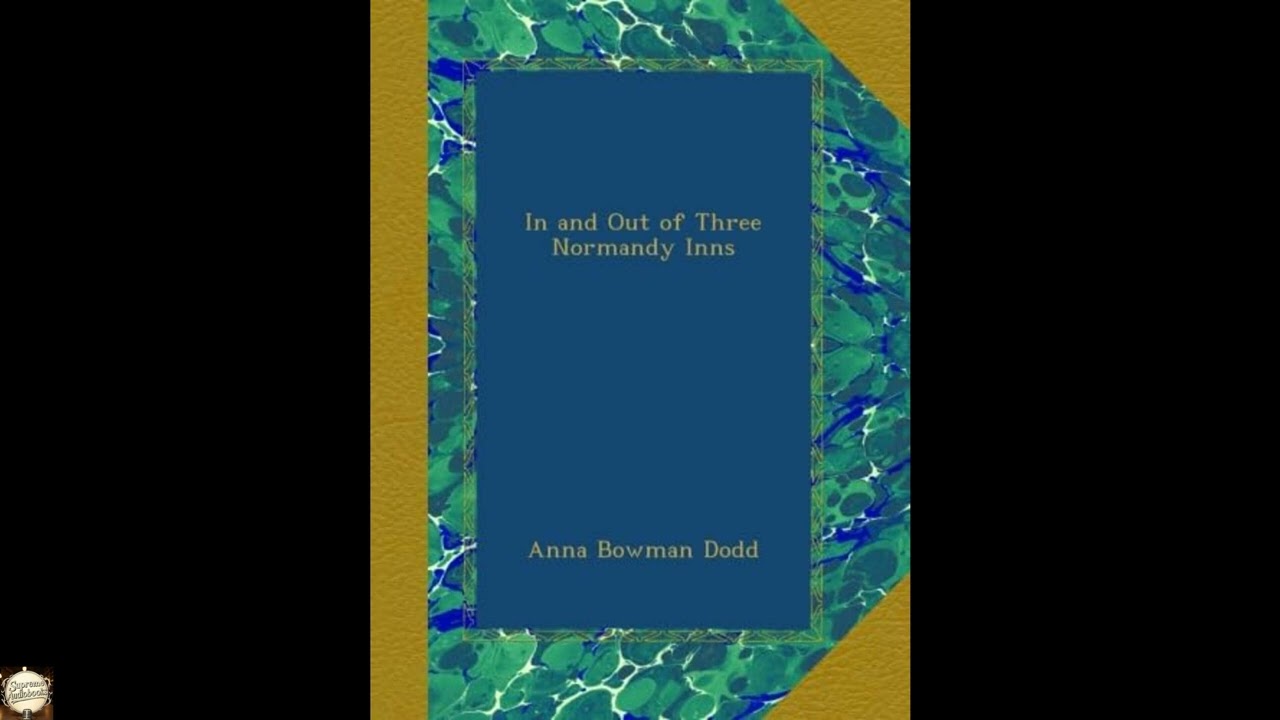
In and Out of Three Normandy Inns
Step back in time to an era when travel was an art form, not just a means to an end, with Anna Bowman Dodd's "In and Out of Three Normandy Inns." This isn't merely a travelogue; it's an invitation to experience the exquisite charm and everyday life of late nineteenth-century France through the eyes of a keen observer. Dodd, with her sharp wit and evocative prose, transports listeners to a Normandy that, even then, felt like a precious relic. Her reflections on culture, character, and the simple beauty of provincial life offer a delightful escape and a fascinating historical window, proving that true understanding often comes not from grand tours, but from settling in and truly seeing the world around you, one inn at a time. It’s a work that speaks to anyone who appreciates the quiet beauty of observation and the enduring allure of a place defined by its history and its people. The book unfurls as a series of intimate encounters and vivid descriptions, chronicling Dodd's sojourns through three distinct, yet quintessentially Norman, inns. Picture quaint, centuries-old establishments nestled in the heart of charming villages—perhaps a stone hostelry with geraniums spilling from its window boxes in Honfleur, another boasting a walled garden near Bayeux, and a third, perhaps, overlooking the serene waters of the Seine. Dodd becomes our guide, introducing us to the various inhabitants she encounters: the redoubtable innkeepers, each with their own peculiar charm and rigid customs; the local villagers going about their daily routines, seemingly untouched by the march of progress; and fellow travelers, often a source of amusement or contemplation. Her days are filled with strolls through cobbled streets, visits to ancient churches, and lingering over simple, yet perfectly prepared, meals. What emerges is not a linear plot in the conventional sense, but rather a rich collage of sensory details and insightful character sketches. Dodd meticulously observes the architecture, the local dialects, the culinary traditions, and the subtle nuances of social interaction. We join her in savoring freshly baked bread, watching fishermen mend their nets, and listening to the rhythms of rural life. Her "conflict," if one can call it that, lies in the gentle clash between her sophisticated American sensibilities and the unwavering traditions of provincial France. She grapples with the slowness of life, the simplicity of fare, and the occasional stubbornness of local customs, all while embracing the profound beauty and authenticity she discovers in each corner of Normandy. The story’s arc is one of deepening immersion, as Dodd gradually sheds her outsider status to truly appreciate the soul of this corner of France, revealing its enduring character layer by captivating layer. Anna Bowman Dodd, born Anna Bowman Blake in Brooklyn, New York, in 1855, was a distinguished American author and socialite whose literary career blossomed in the late nineteenth and early twentieth centuries. Her intellectual curiosity and independent spirit were evident from an early age, nurtured by a privileged upbringing and a keen interest in European culture. She married Edward W. Dodd, a prominent lawyer, and together they spent considerable time abroad, primarily in France. This extensive travel and her immersion in European society profoundly shaped her writing, establishing her as a keen observer of both American and European life. Dodd was not merely a passive tourist; she was an active participant and insightful commentator on the social dynamics, artistic movements, and political undercurrents of her time. Beyond her travelogues, Dodd's literary output included several novels, such as "Glorinda" (1888), which often satirized American social mores, and "The American Husband in Paris" (1900), which continued her exploration of cultural differences. She also published significant works of social commentary and criticism, including "The Republic of the Future" (1887), an early dystopian novel that offered a critique of socialist utopian ideals. Dodd carved out a unique place in the literary landscape, not quite aligned with the stark realism of some of her contemporaries, nor fully embracing the romanticism of earlier eras. Instead, she offered a blend of acute observation, sophisticated wit, and a distinctly American perspective on the Old World, making her a notable voice among women writers of the Gilded Age who sought to bridge cultural divides through their prose. She passed away in 1929, leaving behind a body of work that continues to provide rich insights into her era. "In and Out of Three Normandy Inns" enacts several compelling themes. One central idea is the beauty of cultural comparison and observation. Dodd consistently highlights the differences between American efficiency and French tradition, between the hurried pace of modern life and the enduring rhythms of the Norman countryside. For instance, she contrasts the simple, hearty meals served in a rustic inn—each course prepared with local ingredients and time-honored methods—with the increasingly standardized dining experiences found elsewhere, underscoring a preference for authenticity. Another significant theme is nostalgia for a vanishing way of life. Dodd writes with a palpable sense that the world she is experiencing is on the cusp of change. She lingers on descriptions of ancient stone farmhouses, traditional costumes, and age-old festivals, capturing their essence before they are swept away by industrialization and progress. Her depiction of a particular innkeeper, steadfast in their ancestral customs despite outside influences, serves as a poignant example of this resistance to modernity. Furthermore, the book champions the theme of solitary reflection and personal discovery through travel. Dodd often wanders alone, allowing herself the freedom to engage with her surroundings on her own terms, to observe without interruption, and to formulate her unvarnished opinions. Her introspective moments, perhaps while sketching a detail of a cathedral or simply sitting by a window, are crucial to her understanding of Normandy and, by extension, herself. A scene where she spends an entire afternoon simply watching the ebb and flow of village life from her window, drawing meaning from the smallest gestures, exemplifies this dedication to quiet, personal observation. Finally, the work also subtly addresses the empowerment of the female traveler and observer during a period when women's independence was still evolving. Dodd navigates these foreign landscapes with confidence and authority, her voice clear and opinionated, presenting a powerful example of a woman engaging intellectually and independently with the world. "In and Out of Three Normandy Inns" emerged during a fascinating period in history, specifically the late nineteenth century. In America, the post-Civil War era saw growing prosperity and an increasing appetite for European travel among the burgeoning middle and upper classes. Steamer travel had become more accessible, transforming the Grand Tour from an elite privilege into a more widespread aspiration. Americans were eager to experience the "Old World," often seeking a sense of history and cultural depth they felt was lacking in their younger nation. Concurrently, in France, the Belle Époque was a time of relative peace and prosperity, a golden age of arts, innovation, and leisure, though traditional provincial life still largely persisted, making it an ideal subject for cultural contrast. Literarily, the era saw the rise of realism and naturalism, yet also a continued interest in travel writing as a genre that blended personal narrative with ethnographic observation. Writers like Dodd capitalized on this thirst for authentic experiences and well-crafted descriptions of foreign lands, offering their readers not just information, but a vicarious immersion into other cultures. Her book, therefore, spoke directly to an audience keen to understand Europe from an informed, discerning American perspective. Listening to "In and Out of Three Normandy Inns" as an audiobook offers a particularly rich and immersive experience. The several hours of narration provide ample opportunity to truly settle into Dodd's world, allowing her intricate descriptions and thoughtful observations to unfold at a natural pace. A skilled narrator can bring Dodd's distinct voice to life—her wit, her occasional skepticism, and her underlying affection for the Norman people and their landscape. Listeners can savor the descriptive passages, hearing the rustle of leaves in an ancient courtyard, the clatter of a horse-drawn cart on cobblestones, or the specific lilt of a French phrase as Dodd recounts her interactions. It's an ideal companion for a leisurely walk, a quiet afternoon tea, or a long drive, inviting contemplation and a gentle sense of being transported. The audiobook format allows the listener to absorb the atmosphere of each inn, each village, and each encounter, making Dodd's keen perceptions feel immediate and personal, transforming a historical travelogue into a vibrant, audible postcard from the past.
Enjoyed In and Out of Three Normandy Inns? A few ways to support us
Audible & Amazon links are affiliate; we may earn a small commission at no extra cost.
About this production
Human narration by a volunteer reader from LibriVox.org, the public-domain audiobook project. LibriVox volunteers record literary works whose copyright has expired in the United States, releasing the resulting recordings into the public domain.
In and Out of Three Normandy Inns by Anna Bowman Dodd. The underlying text is in the U.S. public domain. We do not republish any modern copyrighted edition, translation, or commentary.
The 4K cinematic visuals accompanying this audiobook are generated by an AI image model from prompts derived from the source text. No copyrighted photos, paintings, or stock footage are used. AI generation is disclosed on every video on our YouTube channel as required by YouTube's altered/synthetic content policy.
English subtitles are transcribed from the LibriVox recording with OpenAI Whisper. Translations into the 11 other supported languages are produced by Meta's NLLB-200 neural translation model. No human translator's copyrighted translation is used.
Questions about sourcing or rights? See our DMCA & Sourcing policy or contact us.
View 10 famous quotes from this book →
Enjoyed this audiobook?
If you'd like to own a copy of In and Out of Three Normandy Inns or hear a professionally produced edition, the links below help support free audiobook production at no extra cost to you.
As an Amazon Associate we earn from qualifying purchases. Audible / print links are affiliate.