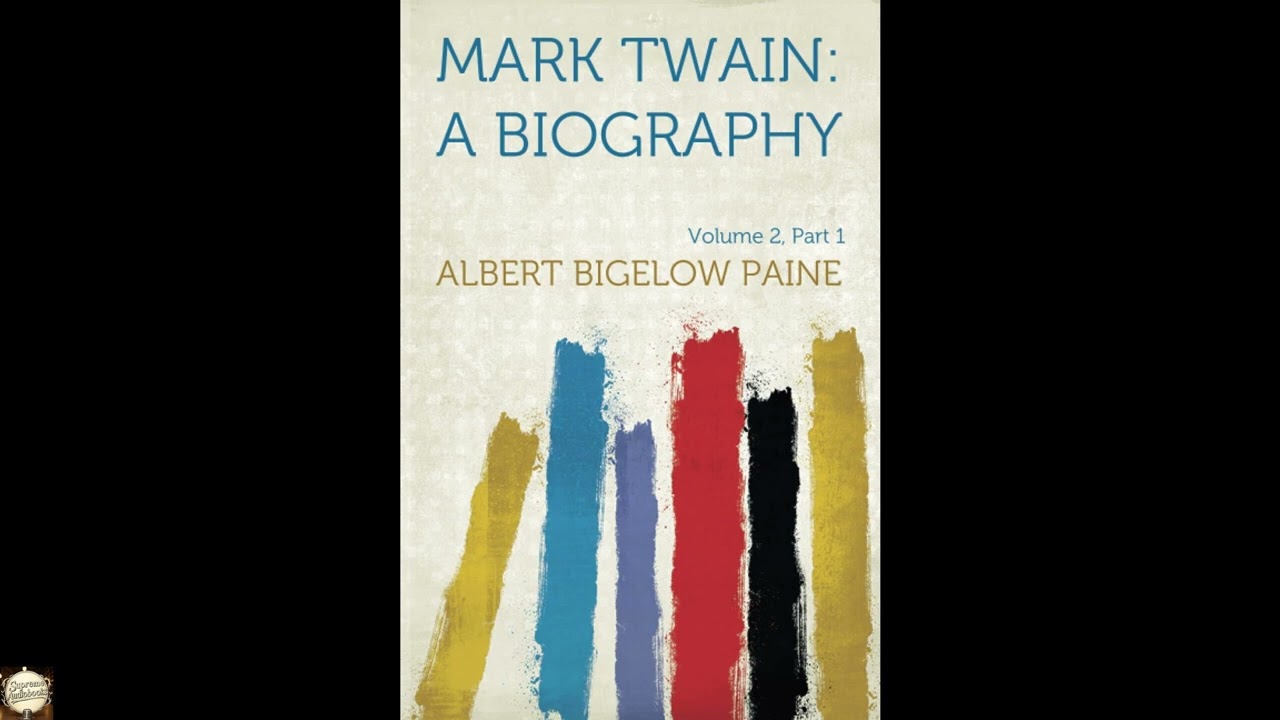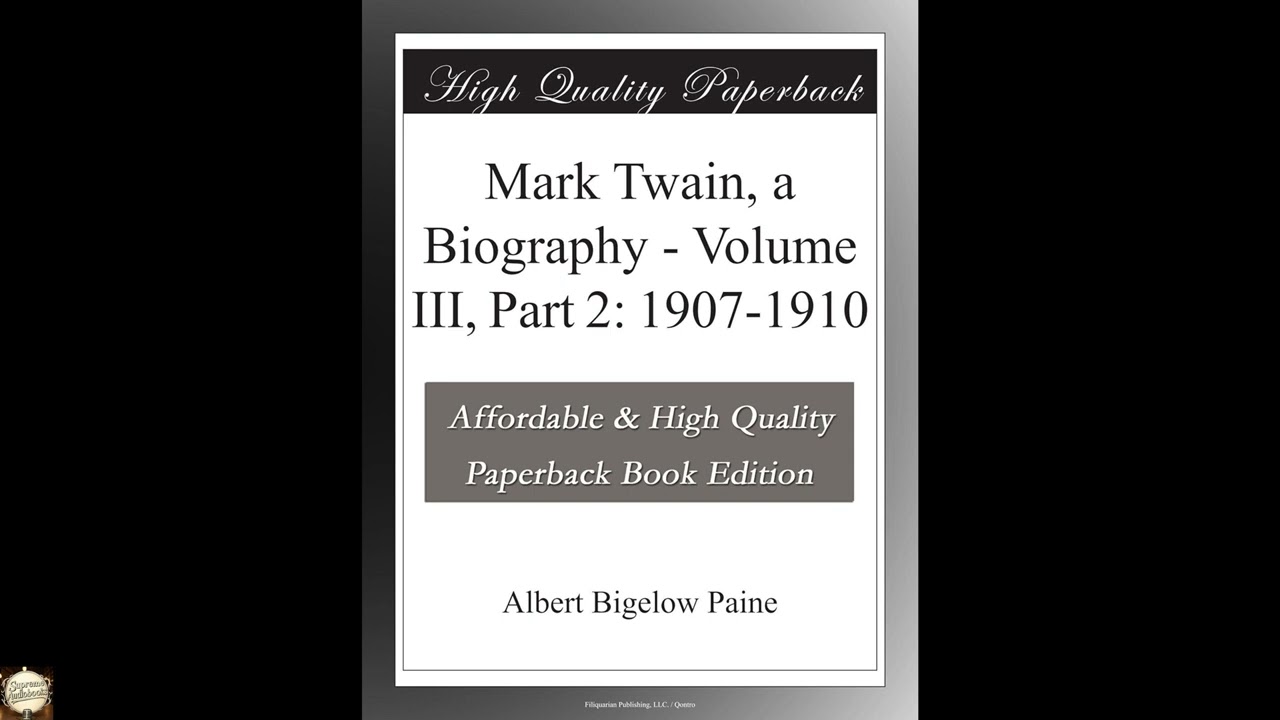
Mark Twain, a Biography - Volume III, Part 2: 1907-1910
Step into the twilight of a literary giant's life with Albert Bigelow Paine's Mark Twain, a Biography - Volume III, Part 2: 1907-1910. This isn't just a recounting of facts; it's an intimate chronicle penned by the man who served as Twain's official biographer, friend, and confidant during these crucial final years. For anyone who has laughed at Tom Sawyer's antics, pondered Huck Finn's moral dilemmas, or simply admired the sharp wit of America's beloved humorist, this volume offers an unparalleled, deeply personal glimpse into the profound introspection, enduring humor, and quiet sorrow that marked the close of Samuel L. Clemens's extraordinary existence. It is a testament to the enduring human spirit, even when facing life's ultimate goodbyes, and it invites modern listeners to connect with the man behind the legend in a way few other works can. This specific segment of Paine's monumental biography picks up in 1907, painting a vivid portrait of Mark Twain as he navigated the final, complex phase of his public and private life. We find Clemens residing primarily at "Stormfield," his grand Italianate villa in Redding, Connecticut, a home he dearly loved and where he sought both solace and continued inspiration. The story unfolds as a sequence of poignant moments and significant events: his public appearances, often clad in his iconic white suit; his interactions with "The Aquarium" or "Angel Fish" club, a circle of young girls he informally adopted and cherished; and his ongoing, often melancholic, literary endeavors. Paine, present for much of this period, observes Twain's relentless creative drive even as his physical health began its slow, inevitable decline. The narrative captures the daily routines, the philosophical conversations, and the sometimes-irascible, always-brilliant pronouncements of a man acutely aware of his place in history and increasingly preoccupied with the nature of humanity, memory, and the universe. The arc of this particular volume is less about external conflict and more about the internal landscape of a man confronting the sum of his years. Twain's relationship with his surviving daughter, Clara, and his trusted secretary, Isabel V. Lyon, forms a significant part of the personal narrative, highlighting both his need for companionship and his occasional irascibility. We witness his continued struggles with grief following the deaths of his wife, Olivia, and daughters Susy and Jean. Despite these profound losses, Twain maintained a public persona of the witty, cynical, yet ultimately endearing sage, often using his platform to comment on contemporary issues with characteristic frankness. The narrative carefully balances the public figure with the private individual, showing how the lines between them often blurred for Samuel Clemens in his final years, culminating in the close of his earthly existence in 1910. Albert Bigelow Paine (1861-1937) was an American author, journalist, and literary editor whose life became inextricably linked with that of Mark Twain. Born in Gainesville, Illinois, Paine's early career saw him contribute humorous verses and stories to magazines like St. Nicholas and Harper's Weekly, establishing him as a writer with a light touch and a keen eye for character. His early work included "The Hollow Tree" series of children's stories, which garnered him considerable popularity. The pivotal moment in Paine's career came in 1906 when he was hired by Clemens to organize his literary papers, a collaboration that quickly blossomed into a deep friendship and led to Paine becoming Twain's official biographer and literary executor. Paine's commitment to documenting Twain's life was profound. He lived with Clemens for extended periods, traveling with him, listening to his stories, and meticulously recording his observations and conversations. The result was the monumental four-volume Mark Twain, A Biography, first published in 1912, a work that immediately became the definitive account of Twain's life and cemented Paine's place as a premier literary biographer. Beyond this magnum opus, Paine also wrote biographies of Thomas Nast, the political cartoonist, and Joan of Arc, demonstrating his broad interests and his skill in bringing historical figures to life. His approach to biography, characterized by deep immersion and personal connection, offered a foundational model for literary scholarship in the early 20th century, placing him as a key figure in the preservation and interpretation of America's literary heritage. Within the pages of this particular volume, several themes resonate deeply, illustrating the profound wisdom and enduring struggles of its subject. One prominent theme is the weight of grief and loss, vividly portrayed through Twain's continued mourning for his loved ones. Paine shows us how the successive deaths of his wife and two daughters left an indelible mark, leading Twain to often retreat into a contemplative solitude at Stormfield, or to reflect on the transience of life in his writings. His sardonic humor often served as a coping mechanism, but underneath lay a profound sadness for what he had lost. For instance, Paine often recounts Twain’s quiet moments gazing out at the Connecticut landscape, sometimes sharing a cynical observation about human folly that, upon closer inspection, reveals a deeper yearning for connection and an acknowledgment of his own mortality. Another central theme is the duality of public persona versus private reality. Mark Twain, the public figure, remained America’s beloved humorist, always ready with a quip or a biting social commentary, dressed in his distinctive white suits. Yet, Paine reveals the private Samuel Clemens, a man riddled with anxieties, prone to melancholia, and grappling with philosophical questions about God, humanity, and the universe. The contrast between his playful "Angel Fish" club, where he delighted in the innocence of young girls, and his later, more cynical philosophical essays, like "The Mysterious Stranger" (written in part during this period), showcases this tension. His public lectures, where he charmed audiences with his stories, stood in stark contrast to the quiet hours spent with Paine, sharing his more somber and often disillusioned worldview. This juxtaposition forms a core aspect of Twain's complex character during his final years, underscoring the burden of a legendary reputation. The period during which Paine collected material for and wrote this biography, roughly spanning the late 1900s and early 1910s, was a transformative time in American history. The Progressive Era was in full swing, marked by calls for social and political reform to combat the excesses of industrialization and the Gilded Age, a period that Mark Twain himself had so memorably satirized. Culturally, America was transitioning from the Victorian age into the dawn of modernism. While Twain remained a towering figure from a previous generation, his biting realism and skepticism often aligned with the emerging intellectual currents that questioned established norms. In the literary world, biographies of prominent figures were popular, reflecting a cultural interest in understanding the lives of those who shaped the nation's identity. Paine's project was particularly significant as it sought to capture the essence of a living legend, offering an almost contemporaneous account before memory faded or details became mythologized. This work emerged then as both a tribute to a national treasure and as a valuable primary source, capturing the raw, unfiltered observations of a man who was not only Twain's chronicler but also his trusted companion, thereby offering an unparalleled, immediate perspective on one of America's most important literary voices during his final, reflective years. Listening to Mark Twain, a Biography - Volume III, Part 2: 1907-1910 as an audiobook offers a unique and immersive experience, perfectly suited to the intimate nature of Paine's narrative. The measured pace of a skilled narrator allows listeners to truly absorb the nuances of Twain's personality and the melancholic atmosphere of his final years, preventing the details from rushing past. You can settle in for several hours, letting the narrator's voice guide you through Paine's carefully chosen words, bringing to life the specific scenes at Stormfield, the philosophical musings shared between biographer and subject, and the quieter moments of a man grappling with his legacy. A good narrator will subtly differentiate between Paine's descriptive prose and Twain's own quoted remarks, allowing the listener to almost hear the great humorist's distinctive cadence and wit, even as recounted through another's pen. The audio format deepens the connection to this deeply human story, making Twain's meditations on life, loss, and the nature of existence feel immediate and personal.
Enjoyed Mark Twain, a Biography - Volume III, Part 2: 1907-1910? A few ways to support us
Audible & Amazon links are affiliate; we may earn a small commission at no extra cost.
About this production
Human narration by a volunteer reader from LibriVox.org, the public-domain audiobook project. LibriVox volunteers record literary works whose copyright has expired in the United States, releasing the resulting recordings into the public domain.
Mark Twain, a Biography - Volume III, Part 2: 1907-1910 by Albert Bigelow Paine. The underlying text is in the U.S. public domain. We do not republish any modern copyrighted edition, translation, or commentary.
The 4K cinematic visuals accompanying this audiobook are generated by an AI image model from prompts derived from the source text. No copyrighted photos, paintings, or stock footage are used. AI generation is disclosed on every video on our YouTube channel as required by YouTube's altered/synthetic content policy.
English subtitles are transcribed from the LibriVox recording with OpenAI Whisper. Translations into the 11 other supported languages are produced by Meta's NLLB-200 neural translation model. No human translator's copyrighted translation is used.
Questions about sourcing or rights? See our DMCA & Sourcing policy or contact us.
Enjoyed this audiobook?
If you'd like to own a copy of Mark Twain, a Biography - Volume III, Part 2: 1907-1910 or hear a professionally produced edition, the links below help support free audiobook production at no extra cost to you.
As an Amazon Associate we earn from qualifying purchases. Audible / print links are affiliate.