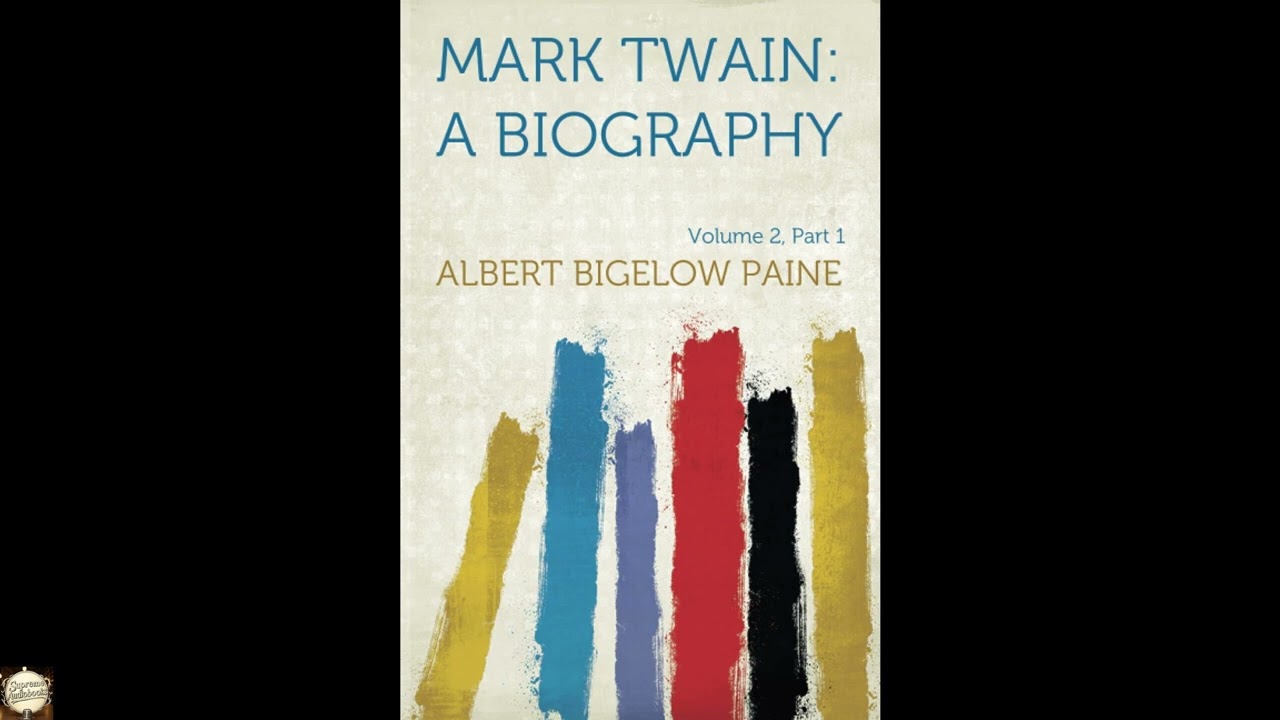
Mark Twain: A Biography. Volume II, Part 1
Stepping beyond the familiar caricatures of the white-suited humorist, Albert Bigelow Paine’s Mark Twain: A Biography. Volume II, Part 1 offers a deep, human portrayal of one of America’s most beloved and complex literary figures. This particular segment of Paine’s monumental work invites listeners to truly know Samuel L. Clemens, the man behind the pseudonym. It's an opportunity to discover the struggles, triumphs, and profound personal experiences that shaped the voice of a nation, revealing not just the celebrated author, but the husband, father, and businessman grappling with the currents of a rapidly changing America. For anyone who has laughed at his wit or pondered his wisdom, this volume provides an essential window into the living, breathing reality of a literary titan whose insights remain as relevant and resonant today as they were a century ago. As this portion of Paine's extensive biography unfolds, listeners find themselves immersed in the bustling, often turbulent, latter half of the nineteenth century, a period of immense growth and transformation for both America and Mark Twain himself. We primarily follow Clemens during his middle years, likely situated comfortably in his Hartford, Connecticut home, a hub of intellectual activity and domestic warmth. This is a time when the demands of his burgeoning celebrity intersected with his fervent personal ambition, driving him not only to write but to engage in ambitious (and sometimes ill-fated) business ventures, from publishing houses to new technological investments. The narrative gracefully balances the public persona of the celebrated author with the intimate details of his life, sketching a nuanced portrait of a man ceaselessly driven by creation and invention, both literary and otherwise. The central narrative arc here traces Clemens’s continuous oscillation between literary genius and entrepreneurial ambition, often portraying the inherent tensions these paths created. The main characters, beyond Clemens himself, include his steadfast and beloved wife, Olivia Langdon Clemens, whose influence on his life and work is undeniable, serving as both a grounding force and a discerning editor. His daughters, too, emerge as significant figures, their upbringing and personalities shaping his worldview and providing him with both joy and concern. The story chronicles his ongoing literary output, perhaps touching upon the genesis of some of his most significant works, while also detailing the financial gambles that both promised immense wealth and threatened his security. This segment of his life reveals Clemens grappling with the responsibilities of fame and family, navigating the treacherous waters of the publishing world, and continually striving to secure his legacy, all while maintaining his unique, critical gaze upon American society. Albert Bigelow Paine was an American author and literary critic, best known for his definitive biography of Mark Twain. Born in 1861 in Newark, New York, Paine began his career in journalism and later achieved recognition for his children’s books, including the popular "Hollow Tree" series. However, his life's most significant undertaking began when he met Samuel L. Clemens in 1906. Their acquaintance blossomed into a deep friendship, leading Paine to become Twain’s personal secretary, literary executor, and, ultimately, his official biographer. For the remaining years of Twain’s life, Paine lived closely with him, meticulously documenting his conversations, observations, and reminiscences. This intimate access allowed Paine to compile an unparalleled three-volume biography, Mark Twain: A Biography, which was originally published posthumously in 1912. Paine dedicated years to this monumental task, traveling to the places Twain had lived and gathering stories from those who knew him. His work not only established the standard for Twain scholarship for generations but also largely shaped the public perception of the author. Paine's careful preservation of Twain's voice and personality, coupled with his diligent research, ensured that his biography remains a cornerstone of American literary history, providing an essential, firsthand account of a pivotal figure in the American literary canon. This biography enacts several profound themes that resonate well beyond its pages. One prominent theme is the duality of public and private life, particularly for a figure of Twain’s immense celebrity. Paine consistently illustrates the tension between the boisterous, witty public speaker who charmed audiences worldwide, and the often melancholic, financially anxious, and deeply sensitive family man he was in private. For instance, the text often shifts from descriptions of his triumphant lecture tours to the quieter scenes within his Hartford home, showing Clemens wrestling with writer’s block or fretting over the future of his business ventures, revealing the intense pressure beneath the genial facade. Another significant theme is the nature of creative genius and its costs. Paine portrays Clemens’s relentless drive to create, not only in his fiction and essays but also in his entrepreneurial pursuits. The relentless cycle of inspiration, the grueling work of writing, and the often-disappointing outcomes of his commercial investments highlight the immense personal sacrifice inherent in a life dedicated to artistic and intellectual endeavor. Furthermore, the biography subtly explores the theme of American progress and disillusionment during the Gilded Age. Through Twain’s own evolving perspectives, Paine reveals the rapid industrialization and social changes of the late 19th century, often contrasted with the simpler, idealized past Twain frequently evoked in his writing. Clemens, as depicted, was both a product of this era and one of its most astute critics, constantly observing and satirizing the follies and hypocrisies he witnessed, particularly in the realm of wealth and social status. Finally, the biography itself serves as an example of the construction of literary legacy. Paine, as the chosen chronicler, carefully curates Twain’s story, emphasizing certain aspects of his personality and career, thereby shaping how future generations would understand and interpret this complex man. This act of biographical crafting underscores how historical figures are remembered, and how their public image is solidified through the lens of those who write their stories. This expansive biography emerged at a critical juncture in American literary history and cultural interest. Published in the early 20th century, shortly after Twain’s passing, it satisfied a profound public hunger for a comprehensive account of a figure who had become nothing less than a national treasure. The period was marked by an increasing reverence for American authors who had come of age after the Civil War—writers like Twain, Henry James, and William Dean Howells—who had defined a new, distinctly American voice. There was a burgeoning interest in personal histories and detailed accounts of famous lives, often driven by the rise of modern publishing and widespread literacy. Culturally, America was still grappling with its identity as a powerful, industrialized nation, yet one deeply connected to its frontier past. Twain, with his roots in the Mississippi River, his sharp wit, and his unflinching social commentary, personified this dichotomy. Paine’s biography, therefore, was not merely a recounting of facts but a foundational document in the process of canonizing Mark Twain, solidifying his place as a quintessential American author. It offered readers a chance to understand the man behind the myths, at a time when the nation itself was reflecting on its recent past and charting its future course. Listening to Mark Twain: A Biography. Volume II, Part 1 as an audiobook transforms the experience of encountering this historical account. The narration brings a distinct intimacy to Paine’s detailed prose, allowing listeners to absorb the nuances of Twain’s life story in a way that reading silently cannot replicate. A skilled narrator can modulate pacing to emphasize dramatic personal moments or to allow listeners to reflect on Twain’s acerbic wit as recounted by Paine. The careful rendering of dialogue, whether a reported quote from Clemens himself or a description of his interactions, adds a layer of authenticity, transporting the listener back to the late 19th century. With several hours of content, this audiobook encourages a sustained, contemplative engagement, allowing the atmosphere of Clemens’s world—his bustling Hartford home, the lecture halls, the quiet intensity of his writing desk—to settle over the listener, providing a true companion through the remarkable life of Mark Twain.
Enjoyed Mark Twain: A Biography. Volume II, Part 1? A few ways to support us
Audible & Amazon links are affiliate; we may earn a small commission at no extra cost.
About this production
Human narration by a volunteer reader from LibriVox.org, the public-domain audiobook project. LibriVox volunteers record literary works whose copyright has expired in the United States, releasing the resulting recordings into the public domain.
Mark Twain: A Biography. Volume II, Part 1 by Albert Bigelow Paine. The underlying text is in the U.S. public domain. We do not republish any modern copyrighted edition, translation, or commentary.
The 4K cinematic visuals accompanying this audiobook are generated by an AI image model from prompts derived from the source text. No copyrighted photos, paintings, or stock footage are used. AI generation is disclosed on every video on our YouTube channel as required by YouTube's altered/synthetic content policy.
English subtitles are transcribed from the LibriVox recording with OpenAI Whisper. Translations into the 11 other supported languages are produced by Meta's NLLB-200 neural translation model. No human translator's copyrighted translation is used.
Questions about sourcing or rights? See our DMCA & Sourcing policy or contact us.
Enjoyed this audiobook?
If you'd like to own a copy of Mark Twain: A Biography. Volume II, Part 1 or hear a professionally produced edition, the links below help support free audiobook production at no extra cost to you.
As an Amazon Associate we earn from qualifying purchases. Audible / print links are affiliate.