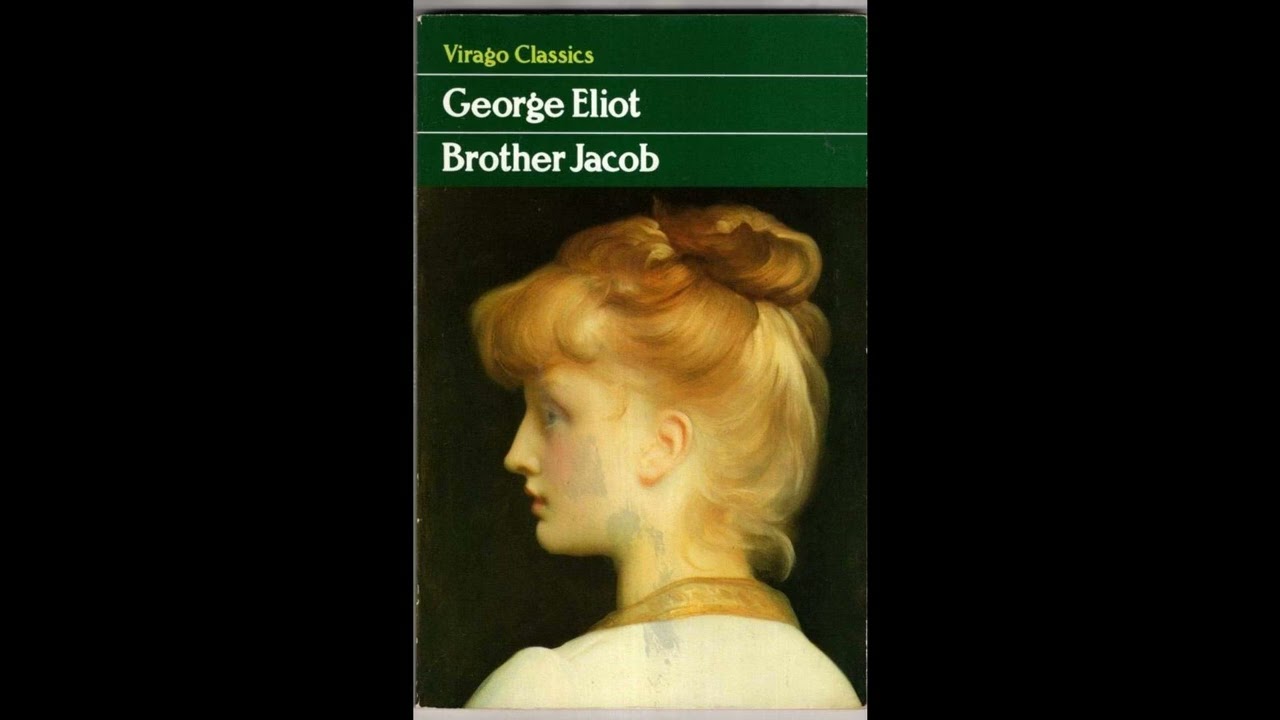
Brother Jacob
Hidden within the vast and beloved body of work by George Eliot lies a gem often overlooked: the compelling novella, Brother Jacob. Published in 1864, it presents a concentrated dose of the profound psychological insight and moral scrutiny for which its author is celebrated. This is not a sprawling epic of provincial life, but a keenly observed, darkly humorous, and ultimately sobering tale about ambition, deception, and the lingering shadow of one’s past. Its narrative dissects the making of a fraud, examining how a seemingly minor moral lapse can escalate into a lifetime of elaborate pretense. For anyone fascinated by the human capacity for self-delusion, the corrosive effects of greed, or the intricate dance between appearance and reality, Brother Jacob offers a striking and enduring reflection on what it means to truly build a life of substance versus merely constructing a façade. It’s a story that continues to resonate today, reminding us that the foundations of character are laid early, and the sweet rewards of dishonesty often come with a bitter aftertaste. The story opens in a picturesque English village, introducing young David Faux, a boy whose defining characteristic is an insatiable appetite for sweets, a craving that borders on obsession. He is a child driven by sensory gratification, exhibiting an early, almost instinctual selfishness. This singular trait quickly blossoms into a more generalized greed and a desire to elevate himself beyond his humble origins. Frustrated by the limitations of his rural existence and perhaps harboring a secret resentment towards his family, David commits a rash act. He runs away from home, vanishing from his village and leaving his past behind him, seemingly forever. David resurfaces years later in a thriving urban center, no longer the simple country boy. He has reinvented himself entirely, adopting a new name—Jacob—and meticulously crafting a new identity. Through cunning and a shrewd understanding of human desires, he establishes himself as a confectioner, creating an immensely popular business built on exquisite candies and cakes. His shop becomes a symbol of his supposed success and his new, respectable status. Yet, beneath this sugary exterior, Jacob lives in constant fear of exposure. His carefully constructed world rests precariously on a foundation of lies, a secret that gnaws at him even amidst his prosperity. The narrative follows his ascent, charting the meticulous effort he expends to maintain his elaborate charade, and hinting at the inevitable fragility of a life built on such deceit. The brilliant mind behind Brother Jacob was Mary Ann Evans, born on November 22, 1819, in Nuneaton, Warwickshire. She was a woman of formidable intellect, largely self-educated, who devoured books and engaged with the most advanced philosophical and theological ideas of her time. Her early life was spent managing her father’s household and engaging in intense personal study, which equipped her with a profound understanding of rural English life and an exceptional critical faculty. Evans moved to London in her early thirties, where she became a prominent intellectual and assistant editor of the influential Westminster Review, a journal at the forefront of liberal thought. It was in London that she formed a deeply unconventional — and for Victorian society, scandalous — partnership with the writer and philosopher George Henry Lewes. To protect her privacy and ensure her serious literary work would be judged on its own merits rather than through the lens of societal prejudice against her personal life, she adopted the male pseudonym George Eliot in 1857. Under this name, she would author some of the most enduring novels in the English language, including Adam Bede, The Mill on the Floss, Silas Marner, and the monumental Middlemarch. Eliot is considered a pioneering figure of Victorian realism and psychological realism, distinguishing herself through her deep dives into character motivation, her meticulous attention to social detail, and her unwavering moral seriousness. She died on December 22, 1880, leaving behind a legacy as one of the most significant and influential English novelists. Brother Jacob keenly illustrates several enduring themes, foremost among them the nature of deception and the construction of identity. David Faux’s decision to abandon his past and become "Jacob" is a profound act of self-invention, driven by a desire to escape societal constraints and personal inadequacies. Eliot meticulously details the psychological toll of this deceit, showing how Jacob’s success is overshadowed by the constant anxiety of discovery. For instance, his elaborate efforts to avoid anyone from his past, his careful control over his narrative, and the subtle ways he modifies his demeanor to fit his assumed persona reveal the immense energy required to maintain a lie. Another central theme is the insidious power of unchecked greed and ambition. David’s initial childish gluttony for sweets metastasizes into a broader hunger for social status and wealth, a hunger that overrides moral considerations. His willingness to sever ties with his past and operate under false pretenses showcases how a single-minded pursuit of self-interest can corrupt the soul. The novella also expertly examines the perennial tension between appearance and reality. Jacob’s confectionery shop, with its tantalizing aromas and beautiful creations, represents the sweet, appealing surface he presents to the world. Yet, the foundations of his success are built on bitterness and falsehood, illustrating how outwardly impressive achievements can mask an inner hollowness and a deeply compromised character. When Brother Jacob was published in 1864, Victorian England was a society undergoing immense change. The Industrial Revolution had created new opportunities for social mobility, fostering an era where individuals could, ostensibly, rise above their birthright through hard work and ingenuity—or, as in David Faux’s case, through less savory means. This period saw a heightened focus on reputation, respectability, and the public face one presented to the world, making the themes of identity and deception particularly pertinent. Eliot, ever the keen observer of human nature and societal structures, used this novella to satirize the anxieties and moral compromises inherent in this quest for self-made success. The story emerged during a time when realism in literature was flourishing, a movement Eliot herself championed by dissecting human motivations and social dynamics with an unflinching, analytical gaze, offering a counterpoint to more romanticized narratives. Listening to Brother Jacob as an audiobook offers a unique and intimate way to experience George Eliot's distinctive prose. The novella’s relatively contained length, a matter of several hours, makes it perfect for a sustained listening session or for savoring over a few commutes or quiet evenings. A skilled narrator can truly bring out the subtle ironies and psychological depth embedded within Eliot's language, allowing the listener to appreciate the author’s precise word choices and the undercurrents of satire. The pacing of the narration often mirrors the deliberate, thoughtful rhythm of Eliot’s writing, giving ample time to absorb the character studies and the unfolding moral dilemma. You will find yourself acutely aware of the shifting atmosphere—from the quaint innocence of the village to the calculating ambition of the city—and how dialogue often reveals more about a character’s hidden motives than their stated intentions, making the experience both intellectually stimulating and deeply engaging.
Enjoyed Brother Jacob? A few ways to support us
Audible & Amazon links are affiliate; we may earn a small commission at no extra cost.
About this production
Human narration by a volunteer reader from LibriVox.org, the public-domain audiobook project. LibriVox volunteers record literary works whose copyright has expired in the United States, releasing the resulting recordings into the public domain.
Brother Jacob by George Eliot. The underlying text is in the U.S. public domain. We do not republish any modern copyrighted edition, translation, or commentary.
The 4K cinematic visuals accompanying this audiobook are generated by an AI image model from prompts derived from the source text. No copyrighted photos, paintings, or stock footage are used. AI generation is disclosed on every video on our YouTube channel as required by YouTube's altered/synthetic content policy.
English subtitles are transcribed from the LibriVox recording with OpenAI Whisper. Translations into the 11 other supported languages are produced by Meta's NLLB-200 neural translation model. No human translator's copyrighted translation is used.
Questions about sourcing or rights? See our DMCA & Sourcing policy or contact us.
Enjoyed this audiobook?
If you'd like to own a copy of Brother Jacob or hear a professionally produced edition, the links below help support free audiobook production at no extra cost to you.
As an Amazon Associate we earn from qualifying purchases. Audible / print links are affiliate.