Hedda Gabler
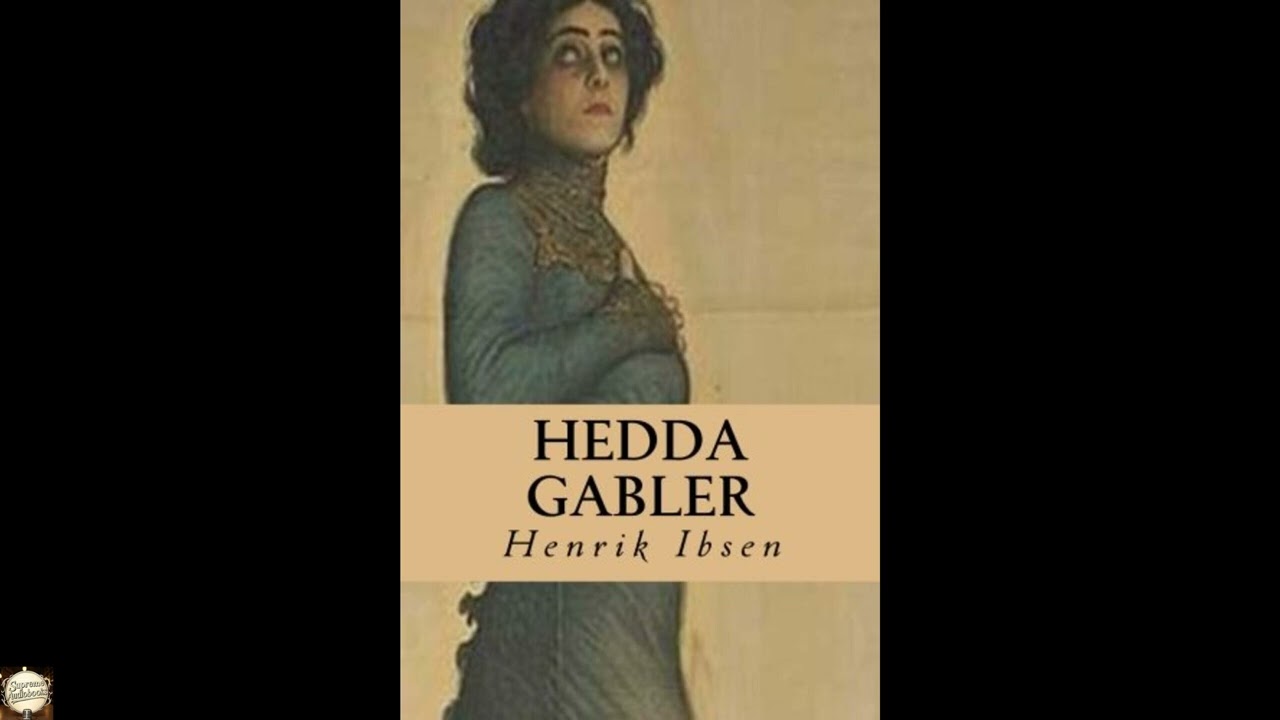
Imagine a woman armed with intellect, beauty, and a searing dissatisfaction, trapped within the confines of a suffocating society. Henrik Ibsen’s Hedda Gabler introduces us to just such a figure, an anti-heroine whose psychological drama remains as sharp and discomfiting today as it was at its premiere. This is not a story of grand adventures or romantic triumphs, but a chillingly precise vivisection of a soul struggling against the cage of convention, where the most devastating battles occur in the drawing-room and the human mind. The play poses uncomfortable questions about autonomy, gender roles, and the often-destructive pursuit of an unattainable ideal, making Hedda’s plight – and her dangerous choices – resonate deeply with contemporary discussions about personal freedom and the price of societal expectation. The curtain rises on the lavish, yet ultimately constricting, home of Hedda Gabler, newly married to the amiable, if somewhat plodding, academic Jorgen Tesman. They have just returned from an extended honeymoon that Hedda found utterly tedious, and she finds her new domestic existence equally uninspiring. Her husband, focused on his academic career and the prospect of a professorship, is kind but often oblivious to the depths of his wife’s ennui and her suppressed desires. Observing them with a mixture of doting affection and quiet concern is Tesman’s Aunt Juliane, whose conventionality only highlights Hedda’s restless spirit. This fragile new life is quickly disrupted by the arrival of two figures from Hedda’s past. First, Mrs. Elvsted, a timid but earnest woman who has left her husband to support Eilert Løvborg, a brilliant but dissolute writer and academic, and a former rival of Tesman and — more significantly — a former lover of Hedda. Løvborg, under Mrs. Elvsted's gentle influence, has seemingly reformed, producing a groundbreaking manuscript that eclipses Tesman’s own work. Hedda, a woman who thrives on power and manipulation, recognizes in Løvborg and Mrs. Elvsted an opportunity to reassert control and exert her will, leading her to orchestrate events with a cunning and often cruel hand, setting a tragic course for everyone involved. Henrik Ibsen, born in 1828 in Skien, Norway, developed his dramatic genius through a life marked by early adversity and a profound understanding of human nature. The son of a prosperous merchant who suffered sudden financial ruin, Ibsen experienced firsthand the stark contrasts of social standing and the pressures of reputation. This early exposure to the fragility of social status undeniably shaped his later plays, which frequently stripped away the facade of bourgeois respectability to reveal the often-ugly truths beneath. He began his career in theater, directing and writing for stages in Bergen and Oslo, but it was during a long, self-imposed exile in Italy and Germany, lasting nearly three decades, that he composed the works that would redefine modern drama. His move away from romantic verse dramas towards a more realistic, prose-based style, focusing on contemporary social issues and psychological depth, earned him the moniker "the father of modern drama." Plays like A Doll's House, which tackled a woman's struggle for independence, and Ghosts, which exposed the hypocrisy of Victorian morality, cemented his reputation as a controversial but undeniably influential voice. Ibsen, who passed away in 1906, challenged his audiences to confront uncomfortable truths, refusing easy answers or sentimental resolutions. His work laid foundational groundwork for generations of playwrights, influencing figures from Anton Chekhov to George Bernard Shaw and beyond, and forever altering the landscape of theatrical storytelling. Hedda Gabler examines several compelling themes that speak to universal human experiences, even through its specific late 19th-century lens. A central idea is the crushing weight of societal expectations versus an individual’s yearning for self-actualization. Hedda, a woman of aristocratic background and refined tastes, finds herself utterly confined by the domestic roles available to her. She despises the thought of pregnancy, the drudgery of household management, and the expectations of a conventional wife, illustrating the stifling effect of gender norms on a spirited, if destructive, personality. Her boredom and dissatisfaction become a destructive force, driving her to interfere in others' lives purely for the thrill of exerting control. The play also presents a searing critique of beauty and idealism, particularly when warped by a manipulative hand. Hedda holds a strange, almost perverse, aesthetic sense, desiring to shape lives into something she perceives as beautiful or meaningful, even if it means orchestrating their downfall. She yearns for Løvborg to meet a glorious, poetic end, envisioning him with "vine leaves in his hair," rather than the squalid reality he actually faces. This desire to sculpt others' fates, and her destructive act of burning Løvborg’s manuscript – which she describes as burning his "child" – reveals a twisted pursuit of an ideal that she herself cannot achieve, turning her aesthetic appreciation into a tool of ruin. When Ibsen wrote Hedda Gabler in 1890, Europe was experiencing significant social and intellectual ferment. The late 19th century was a time of burgeoning industrialization, rapid urbanization, and a growing questioning of traditional values, particularly regarding the roles of women. While the feminist movement was gaining momentum, the expectations for women, especially those in the bourgeois classes, remained rigidly defined by domesticity and subservience to men. Marriage was often a woman's primary, if not sole, path to social standing and financial security, offering little scope for personal ambition or intellectual fulfillment. Ibsen's plays, with their unflinching portrayal of women trapped by these very constraints, sparked considerable debate, even though he often claimed he was more concerned with human individuality than with specifically women's rights. The play emerged as a stark reflection of the hidden tensions and hypocrisies simmering beneath the polite surface of polite society, challenging audiences to confront the psychological toll of repression. Listening to Hedda Gabler as an audiobook transforms the experience of this intense psychological drama. The nuanced performances of skilled narrators bring Ibsen’s sharp dialogue and the characters' internal worlds to vivid life. A good narration can perfectly capture Hedda’s sardonic wit, Tesman’s well-meaning naiveté, and Judge Brack’s sinister charm, allowing the listener to perceive the subtle power dynamics shifting with every carefully chosen word and pregnant pause. The several-hour run length is ideal for immersing oneself in the mounting tension and the claustrophobic atmosphere of Hedda’s drawing-room, which slowly becomes a crucible for her destructive impulses. Pay close attention to the vocal inflections, the pacing that builds suspense, and the unspoken emotions conveyed through tone – these elements illuminate the play's psychological depth, making the unfolding tragedy feel immediate and undeniably real.
Enjoyed Hedda Gabler? A few ways to support us
Audible & Amazon links are affiliate; we may earn a small commission at no extra cost.
About this production
Human narration by a volunteer reader from LibriVox.org, the public-domain audiobook project. LibriVox volunteers record literary works whose copyright has expired in the United States, releasing the resulting recordings into the public domain.
Hedda Gabler by Henrik Ibsen. The underlying text is in the U.S. public domain. We do not republish any modern copyrighted edition, translation, or commentary.
The 4K cinematic visuals accompanying this audiobook are generated by an AI image model from prompts derived from the source text. No copyrighted photos, paintings, or stock footage are used. AI generation is disclosed on every video on our YouTube channel as required by YouTube's altered/synthetic content policy.
English subtitles are transcribed from the LibriVox recording with OpenAI Whisper. Translations into the 11 other supported languages are produced by Meta's NLLB-200 neural translation model. No human translator's copyrighted translation is used.
Questions about sourcing or rights? See our DMCA & Sourcing policy or contact us.
Enjoyed this audiobook?
If you'd like to own a copy of Hedda Gabler or hear a professionally produced edition, the links below help support free audiobook production at no extra cost to you.
As an Amazon Associate we earn from qualifying purchases. Audible / print links are affiliate.