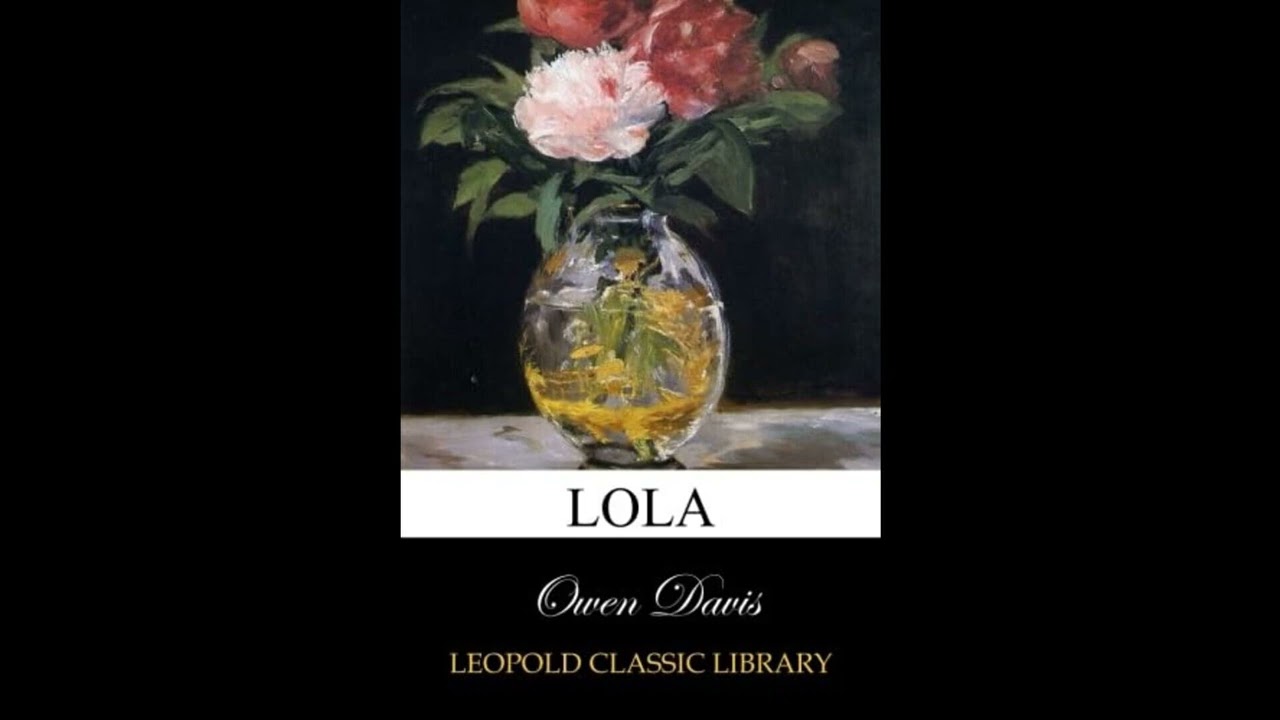
Lola
Owen Davis's Lola stands as a compelling and often unsettling portrait of a young woman's struggle for autonomy and identity within the rigid confines of late 19th-century society. More than a simple period drama, this novel resonates with a contemporary audience by dissecting the enduring conflicts between personal desire and societal expectation, individual ambition and the forces of class and gender. It is a story that refuses easy answers, forcing its readers to confront uncomfortable truths about the paths available to those who dared to defy convention, making it as relevant today as it was upon its original publication. Its sharp psychological insights and keen observation of social mechanics offer a powerful lens through which to view both a bygone era and the persistent challenges of self-determination. The narrative unfurls in the bustling, stratified cityscape of a turn-of-the-century metropolis – a place where gas lamps cast long shadows over cobbled streets, and towering new buildings symbolized progress even as poverty festered in their shadows. Here, we meet Lola, a young woman of humble origins whose striking beauty and sharp intellect are both her greatest assets and her most profound liabilities. Having escaped a suffocating rural existence, Lola arrives in the city with a burning desire to forge a life of independence, far removed from the drudgery and limited prospects she left behind. Her initial attempts to establish herself in respectable, yet poorly paid, work quickly disabuse her of any naive illusions about meritocracy. As Lola navigates the treacherous social landscape, she finds herself drawn into the orbit of the city's glittering, yet often corrupt, upper crust. She forms a complex relationship with Arthur Finch, a charming but enigmatic journalist who seems to understand her ambitions even as he remains tethered to his own societal obligations. Their connection, marked by both intellectual companionship and simmering romantic tension, becomes a central thread in Lola's quest for belonging and acceptance. However, the expectations placed upon women of her station—and the harsh judgments of those above her—threaten to undermine her fragile hold on respectability. She must constantly weigh the cost of her choices, understanding that each step forward could also be a precipitous fall. The novel meticulously documents her internal and external battles, portraying her not as a passive victim but as an active agent, making difficult decisions in a world that offers few truly liberating options. Owen Davis, though perhaps not a household name in the way some of his contemporaries have become, occupies a distinctive position in the canon of American realism. Born in the latter half of the 19th century in a small New England town, Davis was known for his meticulous observations of social stratification and his unflinching portrayal of human psychology. His early life, marked by periods of both academic pursuit and practical labor, provided him with a unique vantage point from which to critique the burgeoning industrial society. He spent significant time in New York and Boston, absorbing the cultural ferment and stark economic disparities of these urban centers, experiences that undeniably shaped his literary output. Davis’s reputation grew steadily through a series of novels and short stories that consistently probed the hidden anxieties beneath the era’s veneer of progress. Works such as The Gilded Cage, a searing indictment of superficial wealth, and Echoes from the Alley, a collection of stories examining the lives of the working poor, cemented his status as a writer deeply concerned with social justice and individual agency. While often categorized alongside the naturalists for his attention to environmental determinism, Davis’s singular voice often transcended such labels, imbuing his characters with an inner resilience and complexity that set them apart. He was a quiet force, preferring to let his prose speak for itself, and his contributions remain vital for understanding the literary landscape of his time. One of Lola's most compelling themes is the relentless pursuit of social mobility and the often-deceptive nature of aspiration. Lola's arrival in the city isn't merely a change of scenery; it's a desperate bid to transcend her birthright. We see this acutely in a scene where she attends a lavish ball, observing the ease and confidence of the wealthy women, feeling both an intense longing to join their ranks and a deep, gnawing sense of alienation. Her careful study of their manners, their speech, their very posture, illustrates the profound effort required to perform a new identity. Another central theme is the suffocating impact of gender expectations. Lola constantly grapples with the limited choices available to women in an era defined by patriarchal structures. Her professional ambitions are often dismissed or trivialized, and her personal relationships are frequently conditioned by the expectations of marriage and domesticity, rather than intellectual or emotional partnership. This is powerfully rendered through her interactions with a condescending suitor who views her intelligence as an amusing novelty rather than a formidable quality, highlighting the societal pressure to conform to roles that diminish her spirit. The period in which Lola was conceived and published was one of profound upheaval and rapid transformation across Western society. The United States, in particular, was experiencing an unprecedented wave of industrialization and urbanization. This era saw the rise of massive fortunes alongside widespread poverty, an expanding middle class, and increasingly vocal movements for social and political reform, including the nascent women's suffrage movement. Culturally, there was a growing fascination with realism and naturalism in literature, a desire to portray life as it truly was, often exposing the harsh realities beneath the Gilded Age's glittering surface. Lola emerged from this crucible, a direct response to the era's anxieties about class divisions, the changing role of women, and the moral compromises often demanded by the pursuit of success. It captured the zeitgeist of a society grappling with its own contradictions, questioning the very fabric of its foundational beliefs. To experience Lola as an audiobook is to gain an intimate connection to its powerful narrative and the nuanced internal world of its protagonist. The story, unfolding over several hours, is perfectly suited for extended listening sessions, allowing the listener to become fully immersed in the period atmosphere and Lola's unfolding drama. A skilled narrator brings Owen Davis's finely crafted prose to life, giving distinct voice to the diverse array of characters, from the earnest Lola to the cynical city dwellers and the charming yet conflicted Arthur. The subtle inflections in dialogue, the careful pacing of descriptive passages, and the emotional weight conveyed through the narrator's tone all serve to deepen the understanding of Lola's struggles and triumphs. Listening allows the listener to absorb the novel's subtle critiques of societal norms and its poignant observations about human resilience, making for a truly memorable and thought-provoking experience.
Enjoyed Lola? A few ways to support us
Audible & Amazon links are affiliate; we may earn a small commission at no extra cost.
About this production
Human narration by a volunteer reader from LibriVox.org, the public-domain audiobook project. LibriVox volunteers record literary works whose copyright has expired in the United States, releasing the resulting recordings into the public domain.
Lola by Owen Davis. The underlying text is in the U.S. public domain. We do not republish any modern copyrighted edition, translation, or commentary.
The 4K cinematic visuals accompanying this audiobook are generated by an AI image model from prompts derived from the source text. No copyrighted photos, paintings, or stock footage are used. AI generation is disclosed on every video on our YouTube channel as required by YouTube's altered/synthetic content policy.
English subtitles are transcribed from the LibriVox recording with OpenAI Whisper. Translations into the 11 other supported languages are produced by Meta's NLLB-200 neural translation model. No human translator's copyrighted translation is used.
Questions about sourcing or rights? See our DMCA & Sourcing policy or contact us.
Enjoyed this audiobook?
If you'd like to own a copy of Lola or hear a professionally produced edition, the links below help support free audiobook production at no extra cost to you.
As an Amazon Associate we earn from qualifying purchases. Audible / print links are affiliate.