Plays
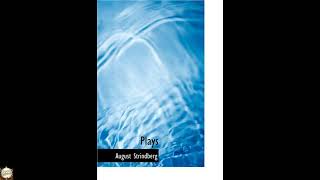
Step into the crucible of human relationships, where the thin veneer of civility is stripped away to reveal the raw, often brutal, forces of psychology, class, and gender at play. August Strindberg’s collected Plays offer more than mere theatrical scripts; they are relentless dissections of the human condition, stark and unflinching examinations of power dynamics, desire, and the terrifying fragility of the mind. Even a century after their controversial premieres, these dramas continue to rattle audiences, challenging our assumptions about love, marriage, and the very foundations of society. They demand a response, forcing us to confront the uncomfortable truths that lie beneath the surface of everyday life, making them profoundly relevant to anyone seeking to understand the enduring complexities of human interaction. Within this collection, the listener will encounter the electrifying tension of Miss Julie, set over a single, fateful Midsummer's Eve at a count’s country estate in late 19th-century Sweden. Here, the aristocratic Miss Julie, restless and tormented by her station and desires, descends into a dangerous dance of seduction and manipulation with Jean, her father’s ambitious and cynical valet. Their encounter is a volatile clash of class, sex, and will, as they alternately dominate and submit, their dialogue sparking with a brutal honesty that exposes the hypocrisies of their respective social roles. The confined space of the kitchen becomes an arena for psychological warfare, where societal expectations crumble under the weight of primal urges and the desperate yearning for escape—both from oneself and from the suffocating strictures of the era. The narrative builds with an almost claustrophobic intensity, revealing how a single night can unravel a lifetime of pretense and expose the vulnerability beneath even the most guarded facades. Another cornerstone of this dramatic output, The Father, plunges listeners into the harrowing domestic sphere of Captain Adolph, a military officer and scientist, and his seemingly devoted wife, Laura. The central conflict ignites over their daughter Bertha's future education, but quickly metastasizes into a terrifying psychological battle for control of the child, and ultimately, the Captain’s sanity. Laura, through insidious suggestion and calculated manipulation, plants the seed of doubt regarding Bertha's paternity in Adolph's mind, skillfully exploiting his scientific need for certainty and his inherent distrust of feminine power. The play meticulously charts Adolph’s descent into paranoia and madness, as his world, built on reason and patriarchal authority, crumbles around him, leaving him isolated and vulnerable in a world where truth itself becomes a weapon. This chilling portrayal of marital discord lays bare the destructive potential of suspicion and the devastating consequences when trust is eroded by unseen forces. Johan August Strindberg, born in Stockholm, Sweden, in 1849, lived a life as turbulent and dramatic as the plays he penned. His early years were marked by financial hardship, a difficult relationship with his stepmother, and a restless intellect that saw him try his hand at various professions—from teacher to journalist to librarian—before dedicating himself fully to writing. His personal life, particularly his three famously tumultuous marriages to Siri von Essen, Frida Uhl, and Harriet Bosse, profoundly shaped his dramatic output, often serving as direct inspiration for his searing portrayals of marital conflict and the so-called "battle of the sexes." He was a man of intense passions, prone to periods of mental instability, most notably his "Inferno Crisis" in the mid-1890s, during which he experimented with alchemy and occultism, profoundly influencing his later, more symbolic works. Strindberg’s prolific career saw him establish himself as a leading figure in modern literature. His early novels, such as The Red Room, satirized Swedish society with sharp wit, but it was his plays that secured his place in the theatrical canon. Initially a key exponent of naturalism—a movement dedicated to depicting life with scientific precision and unflinching realism, evident in Miss Julie and The Father—he later pioneered expressionism and symbolism with works like A Dream Play and The Ghost Sonata. These later plays moved beyond realistic settings, externalizing inner psychological states and creating dreamlike, fragmented narratives. Strindberg’s relentless pursuit of new forms and his psychological depth made him a precursor to many 20th-century movements, influencing playwrights from Eugene O'Neill to Samuel Beckett, solidifying his status as one of the true titans of modern drama alongside Henrik Ibsen and Anton Chekhov. Several compelling themes resonate throughout Strindberg's dramatic works. A central preoccupation is the ferocious conflict between men and women, often depicting marriage not as a haven, but as a battlefield. In Miss Julie, the shifting power dynamic between Julie and Jean is overtly sexual and predatory, each character attempting to gain the upper hand through seduction, insult, or social maneuvering. Similarly, in The Father, Laura's systematic undermining of Captain Adolph's authority and sanity serves as a devastating illustration of how an intimate relationship can become a site of psychological torment and utter destruction, rather than partnership. Strindberg often portrays these relationships as a zero-sum game, where one party must inevitably dominate and crush the other. Another powerful theme is the brutal impact of class distinctions and social hypocrisy. Miss Julie starkly illustrates the fragility of inherited status; Julie's aristocratic blood offers her no protection from her own self-destructive impulses or from Jean's cynical social climbing. The play dissects the inherent power imbalances and resentments festering beneath the polite surface of society, where servants secretly scorn their masters even as they aspire to their position. Strindberg also keenly observes the subjective nature of reality and the descent into psychological distress. Captain Adolph’s breakdown in The Father is a chilling study of how external suggestions can erode internal certainties, revealing how easily the mind can be manipulated and driven to madness when its foundational beliefs are challenged. These plays emerged during the turbulent fin de siècle, a period spanning the late 19th and early 20th centuries marked by profound social and intellectual upheaval. Traditional religious beliefs were being challenged by scientific advancements—Darwin’s theories of evolution and Freud’s burgeoning ideas on the subconscious mind were reshaping understanding of human nature. Industrialization was rapidly altering class structures, leading to anxieties about social mobility and the disintegration of old orders. In the literary world, there was a strong reaction against the perceived sentimentality of Romanticism, giving rise to Realism and Naturalism, which sought to depict life with unvarnished truth, often focusing on the struggles of ordinary people and the deterministic forces of heredity and environment. Strindberg, deeply influenced by these currents, pushed the boundaries of theatrical representation, injecting his plays with an unprecedented psychological intensity and a willingness to expose the darkest corners of human desire and conflict, reflecting the anxieties and intellectual ferment of his age. Listening to Strindberg's Plays as an audiobook offers a uniquely intimate and powerful experience. The raw power of his dialogue, often terse and charged with unspoken meaning, truly comes alive through the skill of a seasoned narrator. Listen for the subtle shifts in tone and pacing as characters engage in their verbal duels—the venom beneath a polite word, the desperate plea masked as a command. A masterful performance can heighten the almost suffocating atmosphere Strindberg so expertly crafts, particularly in his one-act plays where tension builds inexorably. The spoken word allows the listener to fully appreciate the rhythm and musicality of his prose, even in translation, and to inhabit the psychological landscapes of his tormented characters with an immediacy that reading on the page might not always provide. It is a chance to hear the very soul of modern drama unfolding.
Enjoyed Plays? A few ways to support us
Audible & Amazon links are affiliate; we may earn a small commission at no extra cost.
About this production
Human narration by a volunteer reader from LibriVox.org, the public-domain audiobook project. LibriVox volunteers record literary works whose copyright has expired in the United States, releasing the resulting recordings into the public domain.
Plays by August Strindberg. The underlying text is in the U.S. public domain. We do not republish any modern copyrighted edition, translation, or commentary.
The 4K cinematic visuals accompanying this audiobook are generated by an AI image model from prompts derived from the source text. No copyrighted photos, paintings, or stock footage are used. AI generation is disclosed on every video on our YouTube channel as required by YouTube's altered/synthetic content policy.
English subtitles are transcribed from the LibriVox recording with OpenAI Whisper. Translations into the 11 other supported languages are produced by Meta's NLLB-200 neural translation model. No human translator's copyrighted translation is used.
Questions about sourcing or rights? See our DMCA & Sourcing policy or contact us.
Enjoyed this audiobook?
If you'd like to own a copy of Plays or hear a professionally produced edition, the links below help support free audiobook production at no extra cost to you.
As an Amazon Associate we earn from qualifying purchases. Audible / print links are affiliate.