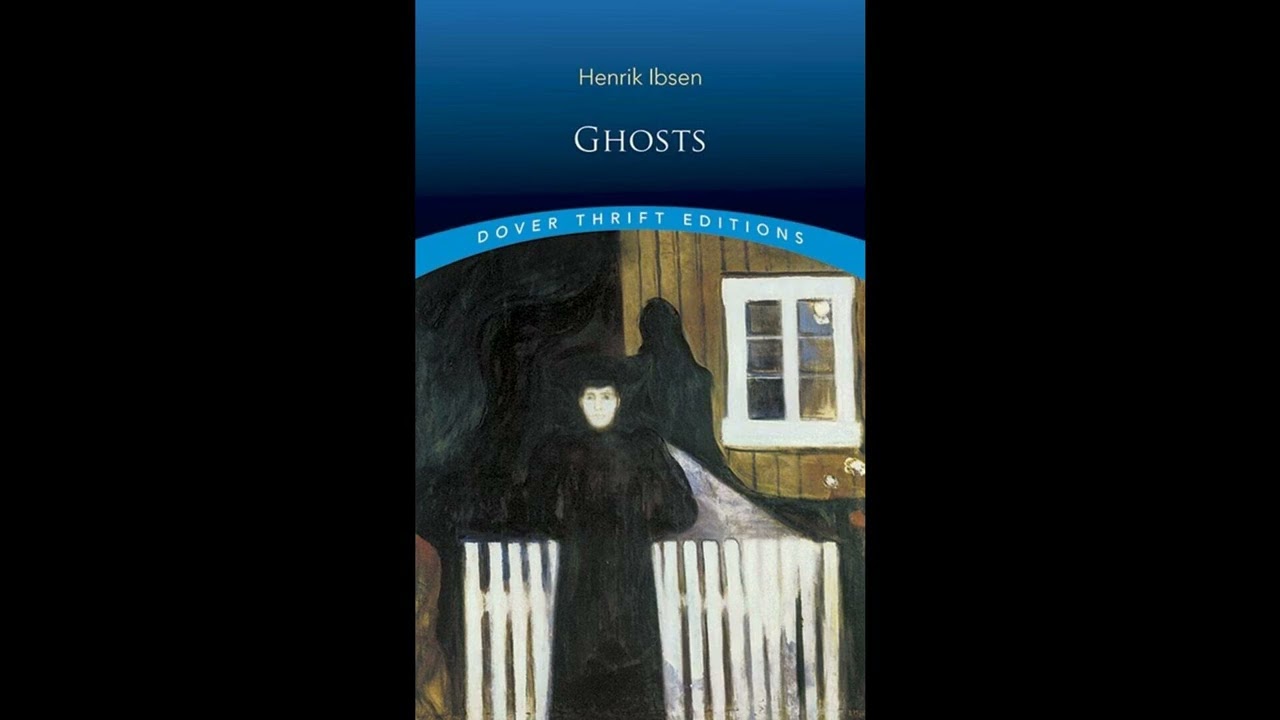
Ghosts
Imagine a meticulously constructed life, built on a foundation of lies and denial, suddenly cracking under the weight of its own suppressed truths. Henrik Ibsen’s Ghosts is exactly that—a stark, unrelenting drama that pulls back the curtain on the hidden costs of social convention and moral compromise. When it premiered, the play scandalized audiences, deemed scandalous and repulsive for its frank treatment of venereal disease, incest, and the hypocrisy lurking beneath respectable Victorian society. Today, a century and a half later, its power remains undiminished. It forces us to confront uncomfortable questions about inherited burdens, the destructive force of unexamined pasts, and the courage required to live authentically. This is a story for anyone who has ever felt trapped by expectations, or suspected that the past is never truly buried. The drama unfolds on a Norwegian estate, the home of Helene Alving, a widow of some standing. She has spent her adult life constructing a facade of respectability, meticulously whitewashing the memory of her late husband, Captain Alving, whom society regarded as a pillar of the community. In reality, he was a dissolute womanizer whose excesses Mrs. Alving endured for years in silence, even sending away their young son, Oswald, to protect him from his father's corrupting influence. Now, Oswald, a promising young painter, returns home for the dedication of an orphanage built in his father’s name—a final, grand gesture by Mrs. Alving to secure Captain Alving's posthumous reputation and quiet her own conscience. The impending dedication brings together a small cast of characters who orbit Mrs. Alving’s carefully managed world. There is Pastor Manders, a staunchly conservative man who once advised Mrs. Alving to return to her husband despite his infidelity, upholding the sanctity of marriage above all else. Regine Engstrand, the charming maid, also lives in the house, believing herself to be the daughter of the local carpenter, Jacob Engstrand, who also has his own designs on Mrs. Alving’s money and Regine’s future. As Oswald settles back into the familiar surroundings, a deep sense of unease begins to permeate the household. His return is not merely a homecoming; it is the catalyst that will force Mrs. Alving to face the long-suppressed secrets of her past and the true nature of the "ghosts" that haunt her family. The play’s tension builds through a series of uncomfortable revelations and confrontations, as the characters struggle with their interconnected fates and the crushing weight of their inherited circumstances, gradually exposing the moral decay beneath the surface of their orderly lives. Henrik Ibsen, born in Skien, Norway in 1828, grew from an impoverished apothecary’s apprentice into one of the most significant figures in theatrical history. His early life was marked by his family’s financial ruin, an experience that likely fueled his lifelong preoccupation with social class, individual struggle, and the disillusionment of dreams. After a period of writing romantic verse dramas and struggling to establish himself in Norway, Ibsen went into voluntary exile in 1864, spending much of the next 27 years in Italy and Germany. This period abroad proved incredibly fertile, transforming him from a national poet into a playwright of profound international consequence. It was during this time that Ibsen pivoted from his earlier poetic and historical plays like Brand and Peer Gynt to the realistic prose dramas for which he is most celebrated. These later works, including A Doll’s House, An Enemy of the People, Hedda Gabler, and The Wild Duck, meticulously dissected the social and psychological dilemmas of his age. Ibsen is widely regarded as the "father of modern drama" for his pioneering use of realism, his psychological depth in characterization, and his unflinching focus on contemporary social issues. He revolutionized the stage, moving away from melodramatic conventions towards a more naturalistic style of dialogue and character interaction, profoundly influencing subsequent generations of playwrights across Europe and beyond. At its core, Ghosts is a searing indictment of societal hypocrisy. Mrs. Alving's entire existence is dedicated to maintaining a public image of respectability for her late husband, despite his depraved reality. She builds an orphanage in his name, not out of genuine philanthropic spirit, but as a symbolic act of atonement and a shield against the truth. The dramatic tension often springs from the clash between what characters say and what they do, or what they feel but dare not express, highlighting the corrosive effects of living a lie. This is vividly portrayed in her interactions with Pastor Manders, who represents the rigid, unforgiving moral codes that forced Mrs. Alving into her untenable position years prior. Another crucial theme Ibsen unpacks is the concept of inherited consequences, or the "ghosts" of the past. This isn't just a metaphor for moral baggage; it takes on a devastatingly literal form with Oswald's illness, which he has unknowingly inherited from his father. This illness serves as a concrete manifestation of the past's inescapable grip, demonstrating how the sins and failures of one generation can irrevocably blight the lives of the next. Furthermore, the play reveals how characters are haunted by their own past choices—Mrs. Alving by her decision to stay with her husband, and even Manders by his adherence to conventional advice, all contributing to the tragic unfolding of events. The play forces a confrontation with the idea that individuals are not entirely free agents, but are profoundly shaped and constrained by biological, social, and moral legacies. Ghosts emerged during a tumultuous period in late 19th-century Europe, a time marked by significant social change, scientific advancement, and growing challenges to traditional Victorian morality. Ibsen wrote the play shortly after the sensational success and equally sensational controversy surrounding A Doll’s House, which dared to depict a woman leaving her husband and children. The public outcry against A Doll’s House—denounced as immoral and destructive to family values—only spurred Ibsen to push further. With Ghosts, he intensified his critique of conventional society, specifically targeting the institution of marriage, the constraints on women, and the dangers of inherited disease, which was a subject of increasing public discussion but rarely addressed so directly in art. The play's initial reception was even more hostile than its predecessor, with critics and commentators using terms like "an open sewer" and "revolting" to describe it. This visceral reaction, however, solidified Ibsen’s reputation as a radical truth-teller, a playwright unafraid to expose the uncomfortable realities beneath the veneer of polite society, making the play a pivotal work in the development of social realism. Listening to Ghosts as an audiobook offers a singular opportunity to immerse oneself in Ibsen’s tightly constructed world. A play, at its heart, is meant to be heard, and the narration brings to life the stark, potent dialogue and the undercurrents of dread that permeate every scene. The confined setting of Mrs. Alving’s drawing-room lends itself perfectly to an auditory experience, allowing the listener to feel the claustrophobia and mounting tension as secrets are unburied. A skilled narrator can differentiate the voices of Mrs. Alving, Oswald, Pastor Manders, and Regine, giving each character their distinct psychological weight and revealing the subtext woven into their exchanges. The gradual, almost agonizing pace of revelation, typical of Ibsen, is particularly effective when delivered through spoken word, allowing the listener to absorb every detail, every hint of the unfolding tragedy, over several hours of intense dramatic storytelling.
Enjoyed Ghosts? A few ways to support us
Audible & Amazon links are affiliate; we may earn a small commission at no extra cost.
About this production
Human narration by a volunteer reader from LibriVox.org, the public-domain audiobook project. LibriVox volunteers record literary works whose copyright has expired in the United States, releasing the resulting recordings into the public domain.
Ghosts by Henrik Ibsen. The underlying text is in the U.S. public domain. We do not republish any modern copyrighted edition, translation, or commentary.
The 4K cinematic visuals accompanying this audiobook are generated by an AI image model from prompts derived from the source text. No copyrighted photos, paintings, or stock footage are used. AI generation is disclosed on every video on our YouTube channel as required by YouTube's altered/synthetic content policy.
English subtitles are transcribed from the LibriVox recording with OpenAI Whisper. Translations into the 11 other supported languages are produced by Meta's NLLB-200 neural translation model. No human translator's copyrighted translation is used.
Questions about sourcing or rights? See our DMCA & Sourcing policy or contact us.
Enjoyed this audiobook?
If you'd like to own a copy of Ghosts or hear a professionally produced edition, the links below help support free audiobook production at no extra cost to you.
As an Amazon Associate we earn from qualifying purchases. Audible / print links are affiliate.