Cratylus
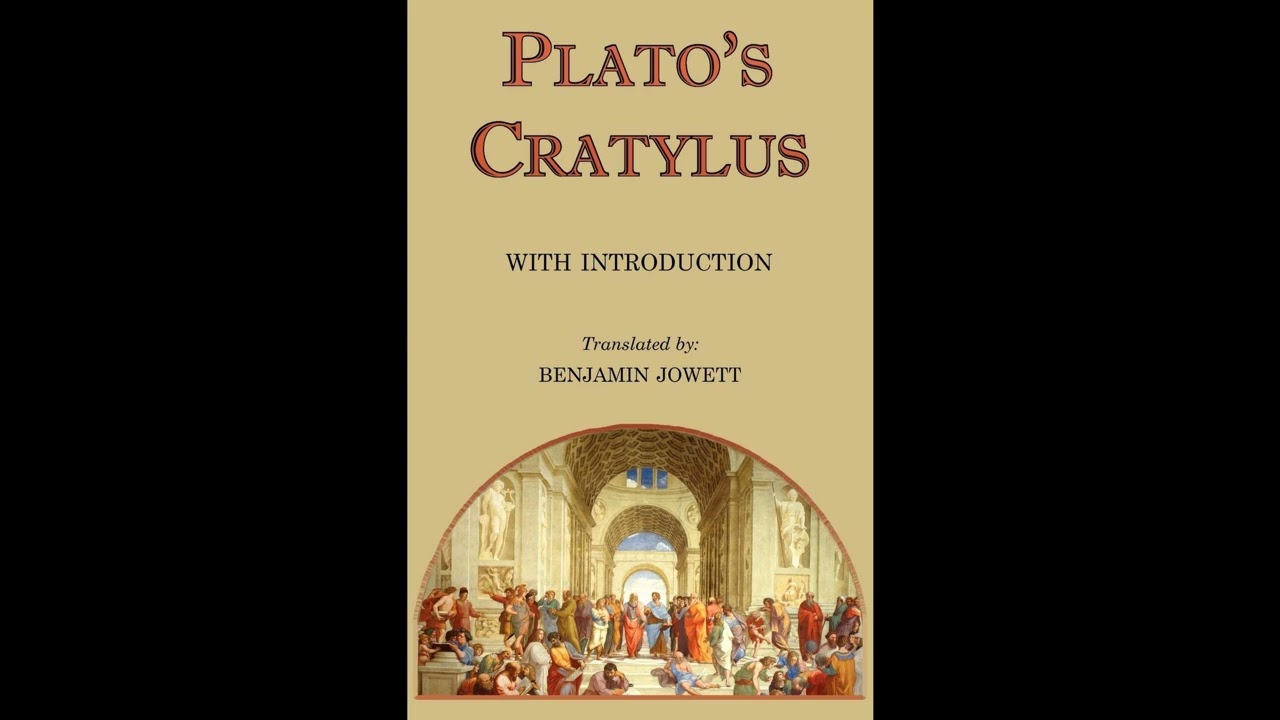
What if the very words we speak held secrets, not just about the objects they name, but about the fabric of reality itself? Plato’s Cratylus invites listeners into a foundational debate, one that continues to echo through linguistics, philosophy of mind, and even our everyday understanding of communication. This Socratic dialogue, dating from antiquity, does not merely offer ancient wisdom; it poses a fundamental question: are names purely conventional labels we assign, or do they somehow inherently reflect the true essence of the things they signify? For anyone who has ever pondered the power of a name, the nuances of meaning, or the deceptive simplicity of language, Cratylus presents a compelling, often humorous, and always thought-provoking examination that remains acutely relevant in an age saturated with information and the constant reshaping of meaning. The setting for this intellectual confrontation is ancient Athens, where Socrates finds himself mediating a lively disagreement between two men, Hermogenes and Cratylus. Hermogenes holds the view that names are entirely arbitrary, mere agreements or conventions established by humans. He argues that there is no natural connection between a word and the object it denotes; any sound could, in theory, serve as a name for anything else, provided a community agrees to it. His position emphasizes human will and custom as the sole determinants of linguistic meaning. Cratylus, conversely, champions the idea of a natural fitness in names. He believes that each thing has a uniquely appropriate name, and that a name is only truly correct if it perfectly corresponds to the nature of what it represents. If a name fails to capture this inherent essence, it is not a proper name at all, but merely an unmeaningful sound. Socrates, characteristically, begins by interrogating both positions, first by challenging Hermogenes’s extreme conventionalism, demonstrating the need for some stability in language for communication to occur. Then, he turns his attention to Cratylus's naturalism, embarking on a playful yet rigorous analysis of countless Greek words, attempting to find their "natural" origins and decode the supposed truths hidden within their etymology. The dialogue unfolds as Socrates meticulously unpacks proposed derivations, often revealing how slippery and ambiguous such connections can be, leading the participants deeper into the labyrinthine complexities of language. Plato, born approximately 428/427 BC in Athens, lived through a tumultuous period in Greek history, witnessing the Peloponnesian War and its aftermath. As a scion of a prominent Athenian family, he was initially destined for a political career, but his path dramatically shifted after encountering Socrates. Becoming Socrates’s most famous student, Plato meticulously recorded and expanded upon his mentor's philosophical methods, especially after Socrates's execution in 399 BC. This traumatic event profoundly shaped Plato's philosophical outlook, leading him to found the Academy in Athens around 387 BC, often considered the first institution of higher learning in the Western world. His prolific output of dialogues, featuring Socrates as the main protagonist, laid the groundwork for Western philosophy. Among his many influential works are The Republic, which articulates his theory of ideal forms and a vision of a just society; Symposium, a celebration of love and beauty; Phaedo, an exploration of the soul’s immortality; and Apology, a defense of Socrates's life and philosophy. Plato's profound contributions established him as a cornerstone of the philosophical canon, influencing thinkers for millennia after his death around 348/347 BC. His writings represent a pivotal transition from pre-Socratic thought to a systematic and comprehensive philosophical tradition, forever cementing his place as a titanic figure in intellectual history. Cratylus engages directly with several fundamental themes that resonate far beyond the confines of ancient Greece. Foremost among them is the nature of language itself. The dialogue's central conflict – whether names are conventional or natural – probes the very foundation of linguistic meaning. Socrates humorously yet critically examines numerous Greek words, dissecting their proposed etymologies, as when he analyzes the word for "hero" (ἥρως), suggesting a possible connection to "love" (ἔρως), implying a deeper, perhaps mythical, origin to the naming process. This playful yet serious investigation into word origins highlights the limitations of etymology as a sole guide to truth, demonstrating how easily such deductions can become strained or even contradictory, revealing the inherent ambiguity and mutability of language. Beyond the mechanics of naming, the dialogue deeply concerns itself with epistemology, or the theory of knowledge. If names are flawed or misleading, how can we truly come to know things through language? Socrates questions whether we can truly arrive at knowledge of reality by merely studying words, suggesting that there must be another, more direct path to understanding the "essence" of things, perhaps through direct apprehension of their forms or ideas. This leads to the theme of Socratic method and dialectic, as the entire work is a demonstration of Socrates’s persistent questioning, breaking down assumptions, and guiding participants through a process of reasoning to uncover deeper truths, or at least to expose the limits of their understanding. He does not offer simple answers but demonstrates the rigorous intellectual process required to even approach such profound questions. The period in which Cratylus was composed, likely in the early to mid-fourth century BC, was a time of immense intellectual and political change in Athens. Following its defeat in the Peloponnesian War, the city experienced significant social upheaval and a crisis of traditional values. This era saw the rise of the Sophists, rhetoricians who taught the art of persuasive speech and often questioned the existence of objective truth, emphasizing instead the relative nature of knowledge and morality. Plato, through Socrates, can be seen as reacting against this intellectual relativism, seeking to re-establish a firmer foundation for knowledge and ethical conduct. The Sophists' focus on language as a tool for persuasion, sometimes detached from truth, directly informed the debates within Cratylus. Plato’s careful dissection of etymology and linguistic theory can be understood as an attempt to understand how language could either mislead or guide one toward genuine understanding. This dialogue emerged not in a vacuum, but as part of a larger philosophical conversation in Athens about the nature of reality, truth, and the very tools humans use to comprehend and articulate it. It was a time when the power of words was both celebrated and feared, and Cratylus stands as an enduring monument to that pivotal intellectual moment. Listening to Cratylus as an audiobook offers a unique opportunity to engage with Plato’s thought in a manner that closely mirrors its original intent. The dialogue format, with its interplay of voices and perspectives, truly comes alive through skilled narration. Listen for the distinct personalities of Socrates, Cratylus, and Hermogenes as their arguments unfold, feeling the pacing of Socrates’s careful inquiries and his often-playful dismantling of assumptions. The run length provides ample time to immerse oneself in the intricate linguistic analysis and philosophical reasoning, making it ideal for contemplative listening during commutes, while performing household tasks, or simply relaxing. It allows the listener to become an active participant in an ancient, vital intellectual exchange, experiencing the drama of ideas as they are forged and refined in real-time, just as Plato intended for his readers to imagine themselves.
Enjoyed Cratylus? A few ways to support us
Audible & Amazon links are affiliate; we may earn a small commission at no extra cost.
About this production
Human narration by a volunteer reader from LibriVox.org, the public-domain audiobook project. LibriVox volunteers record literary works whose copyright has expired in the United States, releasing the resulting recordings into the public domain.
Cratylus by Plato. The underlying text is in the U.S. public domain. We do not republish any modern copyrighted edition, translation, or commentary.
The 4K cinematic visuals accompanying this audiobook are generated by an AI image model from prompts derived from the source text. No copyrighted photos, paintings, or stock footage are used. AI generation is disclosed on every video on our YouTube channel as required by YouTube's altered/synthetic content policy.
English subtitles are transcribed from the LibriVox recording with OpenAI Whisper. Translations into the 11 other supported languages are produced by Meta's NLLB-200 neural translation model. No human translator's copyrighted translation is used.
Questions about sourcing or rights? See our DMCA & Sourcing policy or contact us.
Enjoyed this audiobook?
If you'd like to own a copy of Cratylus or hear a professionally produced edition, the links below help support free audiobook production at no extra cost to you.
As an Amazon Associate we earn from qualifying purchases. Audible / print links are affiliate.