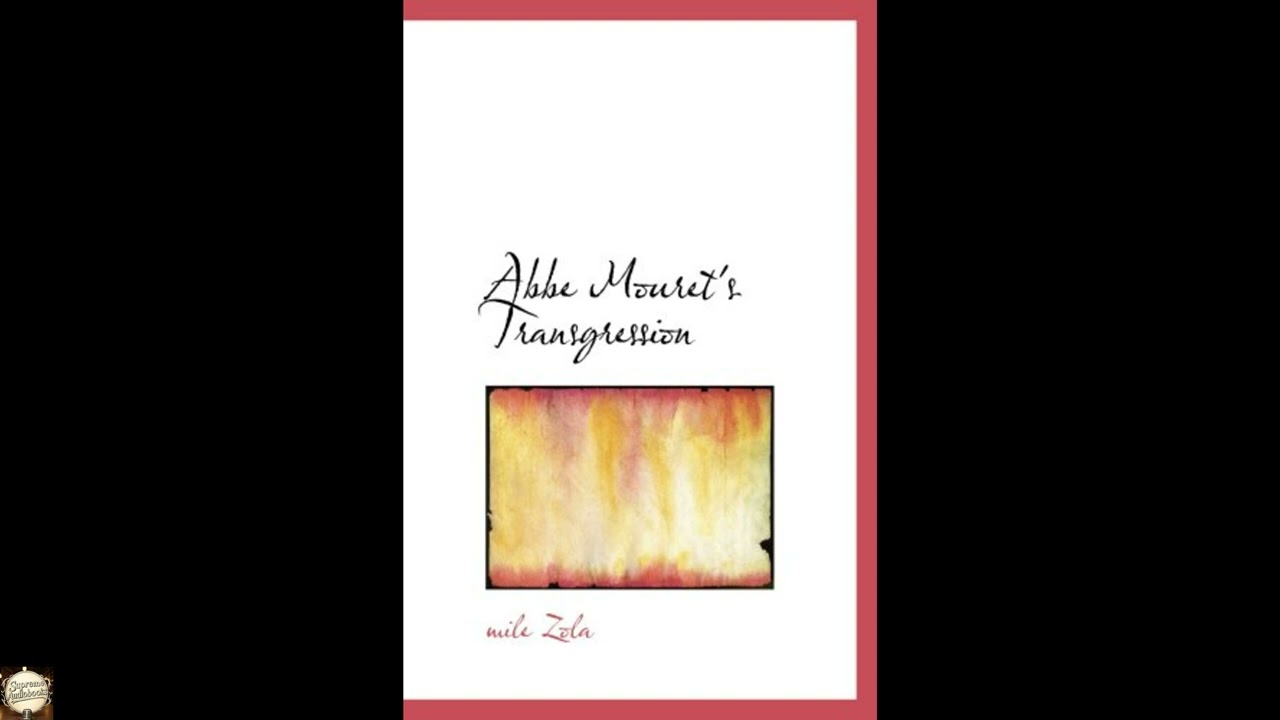
Abbe Mouret's Transgression: La faute de l'Abbe Mouret
Émile Zola's Abbe Mouret's Transgression, or La faute de l'Abbé Mouret, stands as a mesmerizing and often startling departure within his epic Rougon-Macquart cycle, yet remains profoundly illustrative of his genius. This isn't merely the story of a priest’s forbidden affection, but a powerful, lyrical meditation on the primal forces of nature, the stifling weight of dogma, and the tragic beauty of human innocence lost. At its heart, the novel probes the eternal tension between spiritual aspiration and earthly desire, between the constructed world of human morality and the amoral, irresistible call of the natural world. It invites us to consider what happens when a soul, rigorously disciplined by faith, encounters an Edenic freedom, and why the "transgression" might, in its own way, be an inevitable and even necessary part of discovering one's authentic self. For contemporary listeners, the book’s poetic descriptions of a forgotten garden and its unflinching look at societal constraints still resonate deeply, offering a profound reflection on what it means to be human in a world often at odds with our most fundamental instincts. The narrative unfolds in a remote, almost forgotten corner of Provence, where the young and fervently pious priest, Serge Mouret, serves a dilapidated parish. His devotion is extreme, bordering on asceticism, driven by a deep-seated fear of the world's impurities. He has renounced all earthly pleasures, including the love of his extended, unconventional family, in favor of an intense, almost mystical relationship with the Virgin Mary. However, Serge's rigorous spirituality eventually breaks his fragile health, leading to a severe, near-fatal illness. During his convalescence, stripped of his memory by fever and cared for by his eccentric, nature-loving uncle, Serge finds himself drawn into a remarkable, overgrown wilderness known as the Paradou. This ancient, walled garden, a place of incredible fecundity and wild abandon, becomes his temporary refuge, a verdant sanctuary where time seems to stand still. Within the Paradou, Serge encounters Albine, a young, unspoiled woman who has grown up entirely within its confines, a child of nature untouched by civilization or societal norms. With his past — and his vows — erased from his mind, Serge experiences a rebirth, shedding his clerical identity to become simply a man awakening to the wonders of the natural world and, inevitably, to love. Their idyllic existence in the Paradou is a profound, almost dreamlike period of innocence, where they learn from each other and from the garden itself. It's a pastoral paradise, a vision of Eden before the fall, where their love blossoms with a purity unburdened by external judgment or internal conflict. Yet, like all earthly paradises, the Paradou is vulnerable to the outside world, to the forces of memory, dogma, and societal expectation that lurk beyond its ancient walls, threatening to reclaim Serge and shatter their fragile, natural bliss. Émile Zola, born in Paris in 1840, spent his formative years in Aix-en-Provence, a period that deeply influenced his vivid descriptions of the French landscape. His early life was marked by poverty and struggle after the death of his engineer father, leading him to journalism to support himself. These challenging beginnings forged a keen observer of human suffering and social injustice. Zola would rise to become the leading figure of Naturalism, a literary movement that sought to apply scientific principles of observation, heredity, and environmental influence to fiction. He envisioned his sprawling, twenty-novel series, Les Rougon-Macquart, as a "natural and social history of a family under the Second Empire," meticulously documenting the impact of societal forces on individual lives across multiple generations. Beyond his literary accomplishments, Zola is perhaps equally remembered for his courageous moral stand during the Dreyfus Affair. In 1898, his blistering open letter, "J'accuse...!", published on the front page of a Parisian newspaper, denounced the government and military for their cover-up of an unjustly accused Jewish officer. This act of profound civic bravery led to his conviction for libel and a period of exile in England, but ultimately played a crucial role in exposing the truth and securing Dreyfus's exoneration. Zola's other notable works include Germinal, a stark depiction of coal miners' struggles, L'Assommoir, a powerful story of alcoholism and poverty in working-class Paris, and Nana, which portrays the decadent underside of Parisian society. His unwavering commitment to truth, whether through fiction or political activism, solidified his place as one of France's most significant literary and moral figures, an author whose work continues to provoke and enlighten. Abbe Mouret's Transgression is rich with compelling themes. Central among them is the potent opposition between nature and religious dogma. The Paradou itself functions as a character, an overwhelmingly vibrant force of life that utterly reclaims Serge from his spiritual rigidity. Zola uses lush, almost hallucinatory descriptions of the garden's flora and fauna to illustrate a world where life proliferates unchecked, in stark contrast to the sterile, decaying church where Serge once found solace. Albine, as a child of this wild domain, embodies a pure, intuitive connection to the earth, her innocence a direct challenge to the strictures of Serge's former faith. This dynamic highlights the novel's concern with the inherent clash between natural impulses and societal, or theological, control. Another significant theme involves innocence and experience, often framed through the lens of a new Eden. Serge and Albine's time in the Paradou evokes a prelapsarian state, a return to a primordial purity where shame and guilt are unknown. Their love story unfolds in a world free from the moral judgments of humankind, illustrating a profound peace that exists outside conventional morality. However, Zola, ever the Naturalist, also incorporates elements of determinism. Serge's spiritual fervor and his later embrace of natural passion are portrayed as almost inevitable reactions to his heredity and environment, illustrating how deeply ingrained forces guide human actions. The narrative suggests that even in a supposed paradise, certain biological and psychological drives will eventually assert themselves, leading to a form of awakening that, while beautiful, also carries the seeds of profound change and the inevitable loss of that pristine state. When Zola wrote and published Abbe Mouret's Transgression in 1875, France was navigating a period of profound national introspection and reconstruction. The devastating Franco-Prussian War (1870-1871) and the subsequent trauma of the Paris Commune had shattered the Second Empire and ushered in the fragile early years of the Third Republic. This era was marked by a deep questioning of existing institutions—the Church, the military, the government—and a search for new meaning amidst widespread disillusionment. In the literary world, the burgeoning Realist movement, spearheaded by authors like Gustave Flaubert, was evolving into Naturalism, with Zola at its vanguard. Writers were increasingly influenced by scientific developments of the mid-19th century, particularly Darwin's theories of evolution and Taine's ideas on the influence of race, milieu, and moment on human behavior. Zola’s grand project, Les Rougon-Macquart, was explicitly designed to apply these scientific observations to literature, exploring the impact of heredity and environment on a single family across different social strata. Abbe Mouret's Transgression emerged from this intellectual and cultural ferment, allowing Zola to investigate the deterministic forces at play in a rural, religious setting, challenging conventional notions of piety and morality by pitting them against the overwhelming power of the natural world and innate human drives, all within his sweeping examination of French society. To experience Abbe Mouret's Transgression as an audiobook is to immerse oneself in Zola's evocative prose in a uniquely intimate way. The narrator’s voice becomes paramount in conveying the stark contrasts inherent in the novel: the oppressive, dust-choked atmosphere of Serge’s neglected parish against the lush, almost suffocating beauty of the Paradou. Listen for the shift in pacing and tone as the story moves between these two worlds—the often-austere descriptions of Serge’s early life giving way to expansive, sensuous passages detailing the garden and his awakening within it. A skilled narrator can bring out the musicality in Zola’s long, descriptive sentences, allowing the listener to truly visualize the wild growth of the Paradou, the symbolic movements of its creatures, and the emotional landscape of its characters. The nuanced portrayal of Serge’s internal conflict, the innocent purity of Albine’s dialogue, and the pervasive, almost spiritual presence of nature itself all come alive through expert vocal performance, transforming this tale of forbidden love and natural rebirth into an unforgettable auditory experience that echoes long after the final word.
Enjoyed Abbe Mouret's Transgression: La faute de l'Abbe Mouret? A few ways to support us
Audible & Amazon links are affiliate; we may earn a small commission at no extra cost.
About this production
Human narration by a volunteer reader from LibriVox.org, the public-domain audiobook project. LibriVox volunteers record literary works whose copyright has expired in the United States, releasing the resulting recordings into the public domain.
Abbe Mouret's Transgression: La faute de l'Abbe Mouret by Émile Zola. The underlying text is in the U.S. public domain. We do not republish any modern copyrighted edition, translation, or commentary.
The 4K cinematic visuals accompanying this audiobook are generated by an AI image model from prompts derived from the source text. No copyrighted photos, paintings, or stock footage are used. AI generation is disclosed on every video on our YouTube channel as required by YouTube's altered/synthetic content policy.
English subtitles are transcribed from the LibriVox recording with OpenAI Whisper. Translations into the 11 other supported languages are produced by Meta's NLLB-200 neural translation model. No human translator's copyrighted translation is used.
Questions about sourcing or rights? See our DMCA & Sourcing policy or contact us.
View 10 famous quotes from this book →
Enjoyed this audiobook?
If you'd like to own a copy of Abbe Mouret's Transgression: La faute de l'Abbe Mouret or hear a professionally produced edition, the links below help support free audiobook production at no extra cost to you.
As an Amazon Associate we earn from qualifying purchases. Audible / print links are affiliate.