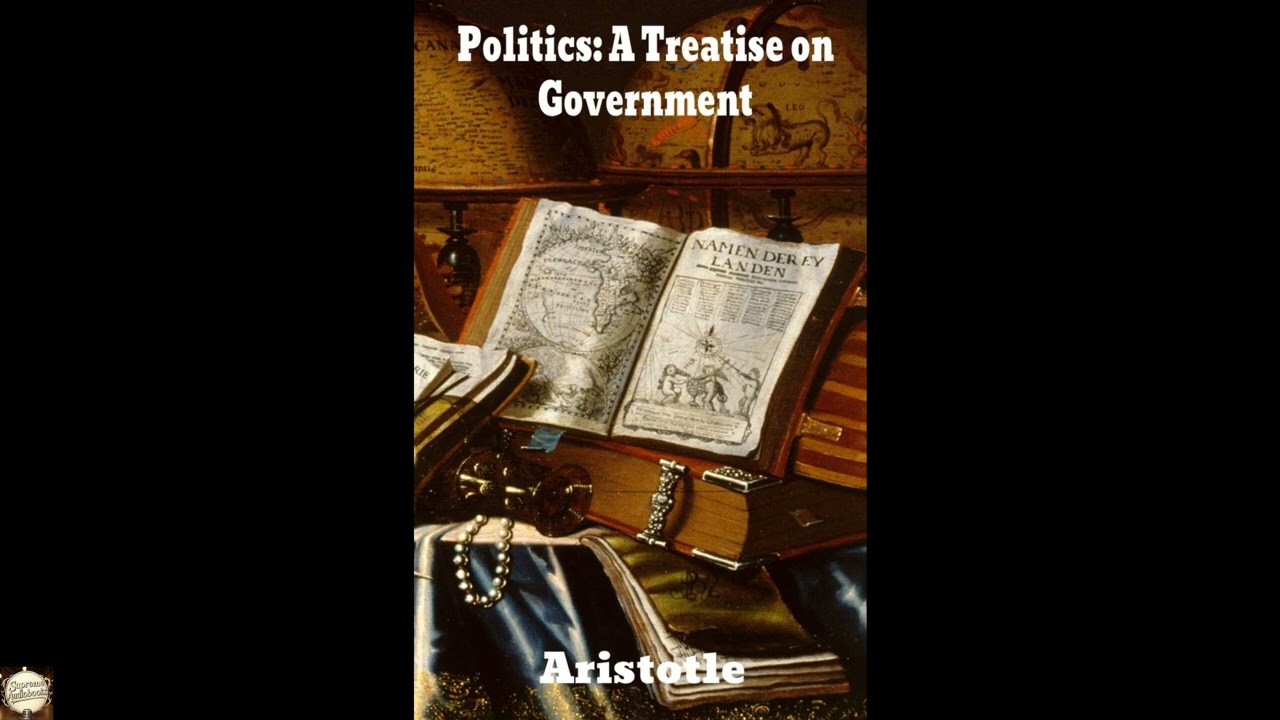
Politics: A Treatise on Government
Imagine a world where the very definition of a citizen, the purpose of government, and the ideal structure of society are not only debated but painstakingly categorized, dissected, and analyzed with a rigor that feels strikingly modern. This is the intellectual terrain you enter with Aristotle's Politics, a foundational text that stands as a monumental inquiry into the nature of the state and the pursuit of human flourishing. Far from being a dusty relic, this nearly 2,400-year-old treatise speaks with immediate clarity to our contemporary concerns about justice, the distribution of power, the role of education, and the inherent strengths and weaknesses of different political systems. It is a work that asks, fundamentally, what makes a good society, and how can we build one – questions that remain as urgent now as they were in ancient Greece. The "story" of Politics unfolds not through a conventional narrative of individuals but through an methodical investigation into the structures and purposes of human association. Our principal "character" is the city-state, or polis, which Aristotle sees as the natural culmination of human communities, beginning with the household and extending to the village. The central "conflict" lies in identifying the best possible constitution—the set of laws and customs that govern a state—to enable its citizens to live a virtuous and happy life. Aristotle examines a spectrum of governmental forms, from monarchy to aristocracy, from oligarchy to democracy, meticulously detailing their characteristic features, their strengths when rightly administered, and their inherent tendencies toward corruption and decay. He acts as a philosophical cartographer, mapping out the treacherous pathways that can lead well-intentioned states toward tyranny, exploitation, or chaos. The argument progresses with an almost scientific precision. Aristotle considers the various claims to rule – based on wealth, virtue, numbers, or birth – and weighs their merits and shortcomings. He delves into practical problems, such as how to prevent revolutions, how to structure education to foster good citizenship, and the delicate balance between liberty and order. Listeners witness him systematically breaking down complex political phenomena into their constituent parts, offering both theoretical classifications and pragmatic advice grounded in observation. It is an arc that moves from broad philosophical principles to concrete recommendations, all driven by the overarching aim of discovering how humans, as inherently political animals, can best organize their collective lives to achieve their highest potential. The treatise does not promise a single, simple answer, but rather a comprehensive framework for understanding the perennial challenges of governance. The mind behind this comprehensive political analysis belonged to Aristotle, a towering figure in Western thought, born in Stagira, a Greek colony in Macedon, in 384 BCE. His early life saw him sent to Athens to study at Plato's renowned Academy, where he remained for two decades, initially as a student and later as a teacher. This period profoundly shaped his intellectual development, though he would eventually diverge from some of his mentor's more idealistic philosophical positions. After Plato's death, Aristotle spent time in various parts of the Greek world, including tutoring Alexander the Great—a future conqueror whose empire would vastly reshape the political landscape of the Hellenistic world. Returning to Athens in 335 BCE, Aristotle founded his own school, the Lyceum, known as the Peripatetic school because of his habit of lecturing while walking. It was here that he produced many of his most influential works, covering an astonishing breadth of subjects: logic, metaphysics, ethics (Nicomachean Ethics), biology, physics, rhetoric (Rhetoric), poetics (Poetics), and, of course, politics. His methodological approach, emphasizing empirical observation and logical deduction, distinguished him and would profoundly influence subsequent scientific and philosophical inquiry for millennia. Aristotle represents a pivotal bridge between the speculative philosophy of his predecessors and a more systematic, evidence-based mode of inquiry, cementing his place as one of the most significant intellects in human history. Among the many powerful currents flowing through Politics, the concept of humans as "political animals" (zoon politikon) stands as a central theme. Aristotle posits that humans are naturally inclined to live in a community, specifically the city-state, because it is only within this social and political structure that they can achieve their full moral and intellectual potential, what he called eudaimonia, or flourishing. For instance, he argues that the purpose of law is not merely to prevent injustice, but to actively promote virtue among citizens, thereby showing how the state is an ethical enterprise aimed at cultivating the good life. The text consistently illustrates that individual well-being is intrinsically tied to the health and character of the political community. Another vital theme is his pioneering work in constitutional theory and the rigorous classification of governmental forms. Aristotle systematically categorizes six main types of government: monarchy, aristocracy, and "polity" (a moderate form of democracy), which he considers the "right" forms, serving the common interest; and their corrupt deviations: tyranny, oligarchy, and democracy (which he sees as mob rule), serving only the interest of the rulers. He provides vivid examples, such as the inherent instability of oligarchies, where the rule of the wealthy inevitably leads to resentment and revolution from the poorer majority, or how unchecked democracy can devolve into rule by passion rather than reason. His nuanced examination of each form, with its peculiar strengths and weaknesses, offers a framework that political scientists still reference today. Politics emerged during a period of significant upheaval and intellectual ferment in the Greek world. Written around the mid-4th century BCE, the work reflects the lived experiences of a world composed of numerous independent city-states, each experimenting with diverse forms of governance. Athens, where Aristotle spent much of his life, had moved through phases of monarchy, oligarchy, tyranny, and an influential, if imperfect, democracy. These varied political realities provided Aristotle with a vast laboratory of constitutional forms to observe and analyze empirically. He was not theorizing in a vacuum; his work is steeped in the practical wisdom gleaned from examining actual historical and contemporary Greek cities. This era was also marked by the decline of the classical polis system and the rising power of Macedon under Philip II and later Alexander. While Aristotle focused on the ideal of the city-state, the larger political forces at play were beginning to render the traditional polis model less dominant. His detailed analysis of constitutional stability and revolution can be seen, in part, as an attempt to diagnose and potentially remedy the internal fragilities that were contributing to the transformation of the Greek world. Philosophically, he was building upon, and often critiquing, the ideas of his teacher Plato, whose works like The Republic also grappled with ideal states, but from a more theoretical and less empirically grounded perspective. Listening to Politics as an audiobook offers a unique opportunity to engage deeply with this complex and influential text. A skilled narrator can bring clarity and intellectual weight to Aristotle's dense, methodical arguments, guiding the listener through the systematic classification of constitutions and the subtle distinctions between different forms of justice. With its run length of several hours, this format allows for sustained contemplation, making it suitable for both dedicated listening sessions and for absorbing segments of its wisdom during daily activities. Pay attention to the narrator's pacing, which can emphasize the careful, step-by-step logic of Aristotle's prose, allowing his profound insights into human nature and social organization to resonate long after the words are spoken. It is an experience that transforms a challenging text into an accessible and thought-provoking encounter with one of history's greatest minds.
Enjoyed Politics: A Treatise on Government? A few ways to support us
Audible & Amazon links are affiliate; we may earn a small commission at no extra cost.
About this production
Human narration by a volunteer reader from LibriVox.org, the public-domain audiobook project. LibriVox volunteers record literary works whose copyright has expired in the United States, releasing the resulting recordings into the public domain.
Politics: A Treatise on Government by Aristotle. The underlying text is in the U.S. public domain. We do not republish any modern copyrighted edition, translation, or commentary.
The 4K cinematic visuals accompanying this audiobook are generated by an AI image model from prompts derived from the source text. No copyrighted photos, paintings, or stock footage are used. AI generation is disclosed on every video on our YouTube channel as required by YouTube's altered/synthetic content policy.
English subtitles are transcribed from the LibriVox recording with OpenAI Whisper. Translations into the 11 other supported languages are produced by Meta's NLLB-200 neural translation model. No human translator's copyrighted translation is used.
Questions about sourcing or rights? See our DMCA & Sourcing policy or contact us.
Enjoyed this audiobook?
If you'd like to own a copy of Politics: A Treatise on Government or hear a professionally produced edition, the links below help support free audiobook production at no extra cost to you.
As an Amazon Associate we earn from qualifying purchases. Audible / print links are affiliate.