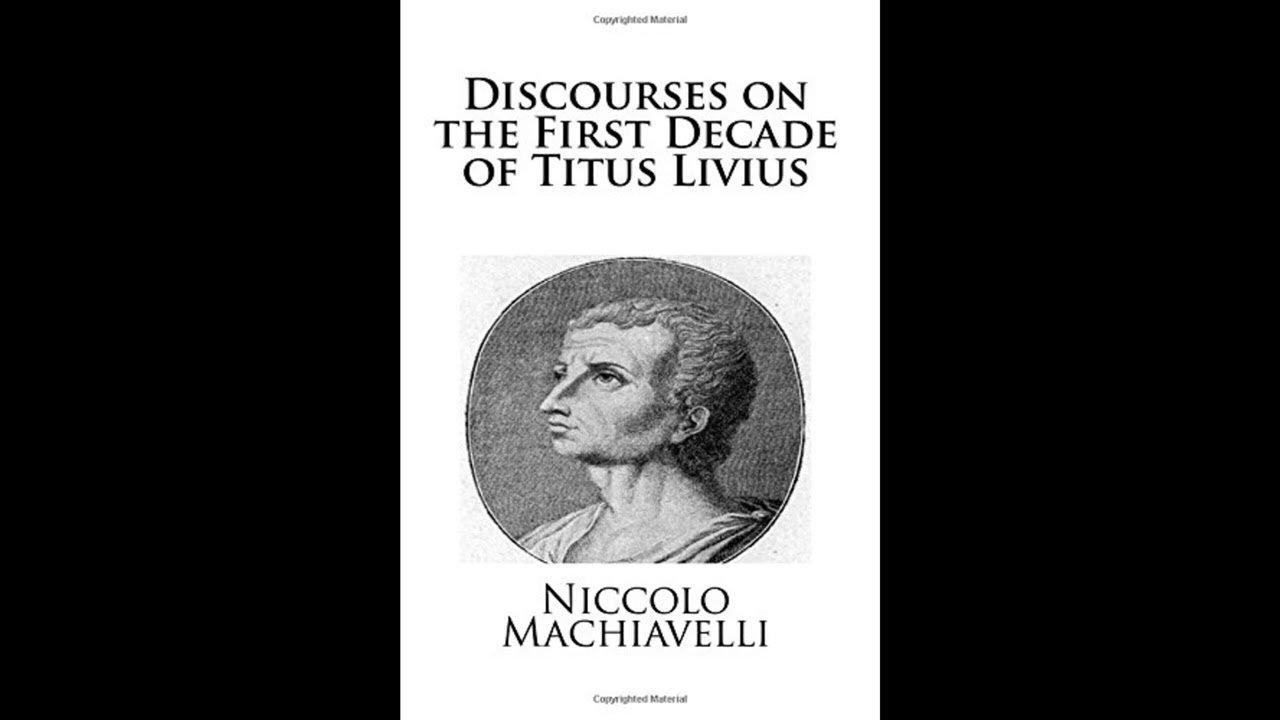
Discourses on the First Decade of Titus Livius
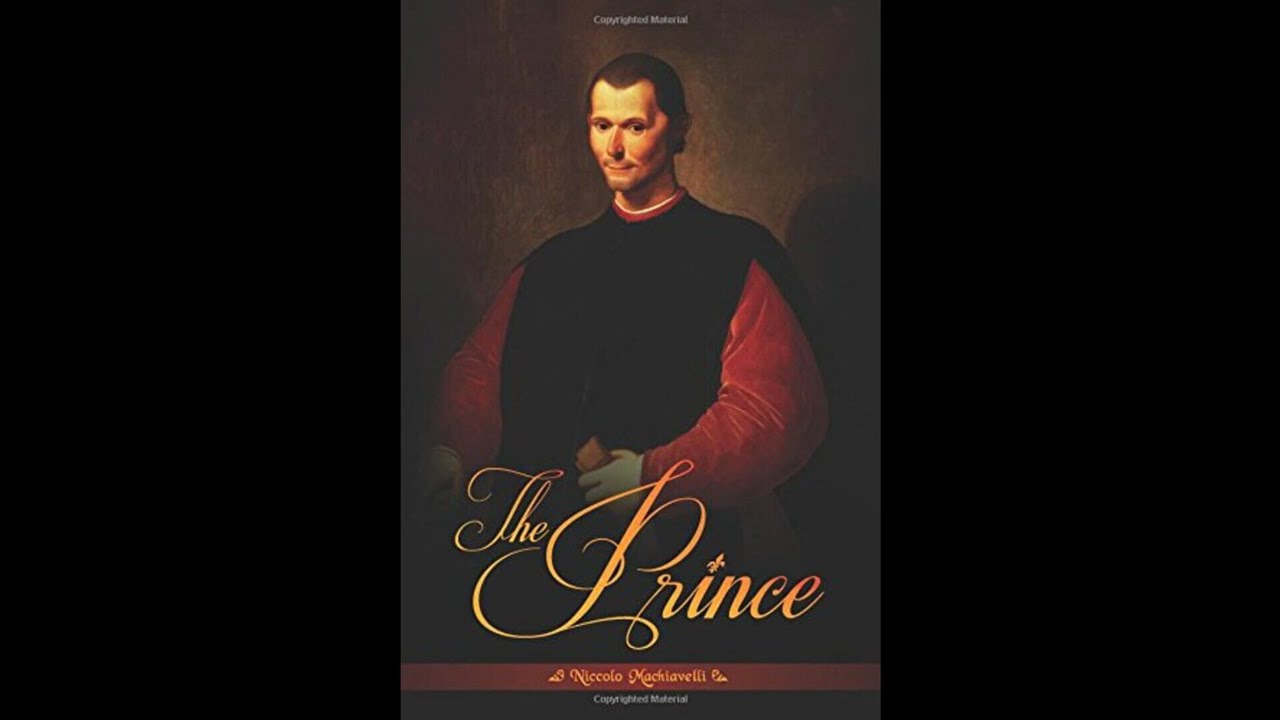
Among the foundational texts of Western political thought stands Niccolò Machiavelli's Discourses on the First Decade of Titus Livius, a rigorous examination of republican government drawn from the triumphs and failures of ancient Rome. Far from being a mere historical commentary, this work is a practical manual for rulers and citizens alike, offering a dispassionate, often startlingly candid, analysis of power, statecraft, and human nature. Why should a listener engage with a 500-year-old treatise on Roman history today? Because Machiavelli grapples with perennial questions: how do states rise and fall, how is liberty preserved, what makes a leader effective, and how can a republic endure amidst internal strife and external threats? His answers, rooted in historical precedent rather than abstract ideals, remain disturbingly relevant in our own volatile political landscape, providing a stark mirror to contemporary struggles for stable governance and civic freedom. Machiavelli’s Discourses is not a conventional narrative with a "plot" in the literary sense, but rather a methodical exegesis, a journey through the annals of Roman history as chronicled by Livy. The setting is the vast expanse of the Roman Republic, from its mythical founding by Romulus through its early expansion and the consolidation of its power, as depicted in the first ten books of Livy’s comprehensive history. The primary "characters" are the historical figures Livy presented—kings, consuls, generals, and the Roman people themselves—through whom Machiavelli extracts universal principles of governance. The central conflict Machiavelli addresses is the struggle to establish and maintain a stable, free, and powerful republic in a world inherently prone to corruption, ambition, and the unpredictable whims of fortune. He meticulously dissects Roman actions, laws, and institutions, seeking to understand the mechanisms that allowed Rome to achieve unparalleled greatness and, crucially, to maintain its republican form for centuries despite constant internal and external pressures. The arc of Discourses unfolds as Machiavelli moves systematically through Livy's chronology. He begins by considering the origins of cities and the types of government, immediately pivoting to Rome's foundational myths and the wisdom embedded in its early religious and legal structures. He then examines the constant tension between the Roman plebs and patricians, arguing that their clashes, when channeled through well-designed institutions, actually contributed to Roman liberty and strength, rather than undermining it. Throughout, he presents numerous examples of Roman leaders—both virtuous and corrupt—to illustrate his points on military strategy, foreign policy, the necessity of strong laws, and the dangers of internal factionalism. He constantly contrasts the ancient Roman model with the perceived failings of his contemporary Italian city-states, presenting Rome as a historical laboratory for political success and failure, a blueprint for any state aspiring to greatness and longevity. The text doesn't resolve in a traditional narrative climax, but rather culminates in a comprehensive framework for understanding and enacting effective political leadership and republican ideals, drawing practical lessons without offering simplistic solutions. The author, Niccolò Machiavelli, was born in Florence in 1469, into a period of intense political ferment and cultural rebirth in Italy. His life was deeply entwined with the fate of the Florentine Republic, where he served as a diplomat and high-ranking official from 1498 to 1512. During these years, he undertook numerous diplomatic missions across Europe, observing firsthand the shifting alliances, military tactics, and leadership styles of powerful figures like Cesare Borgia, and witnessing the fragility of Italian city-states amidst larger European powers. This direct engagement with political reality profoundly shaped his analytical approach. However, the return of the powerful Medici family to Florence in 1512 marked a sharp turning point in Machiavelli's life. He was dismissed from office, briefly imprisoned and tortured, and subsequently retired to his country estate outside Florence. It was during this enforced leisure, cut off from public life, that he produced his most enduring works, including The Prince (written around 1513) and the Discourses on Livy (written roughly between 1517 and 1520). Machiavelli’s writings positioned him as a towering figure of the Renaissance, often considered the father of modern political science, known for his stark realism and willingness to separate political action from conventional morality, an approach that profoundly influenced subsequent generations of thinkers. His place in the literary and philosophical canon is secured not only by his political treatises but also by plays like Mandragola and his History of Florence. Several key themes resonate throughout the Discourses. One prominent thread is the concept of virtù—not moral virtue in the traditional sense, but a blend of skill, foresight, courage, and determination essential for political success. Machiavelli shows how Roman generals like Cincinnatus, who left his plow to serve the state as dictator and then humbly returned to his farm, embodied this civic virtù. Another significant theme is the interplay between virtù and fortuna, or fortune. Machiavelli acknowledges that external circumstances and pure chance play a considerable role in human affairs, but he argues that a leader with virtù can often anticipate and adapt to, or even directly influence, the unpredictable currents of fortune. He demonstrates how the Romans consistently prepared for contingencies, minimizing the negative impacts of unexpected events. A third compelling theme is the notion that internal conflict, when properly managed, can be a source of strength and liberty in a republic. Machiavelli provocatively argues that the constant tension and demands between the plebeians and the patricians in Rome, far from being destructive, led to the creation of laws and institutions—like the tribunes of the plebs—that preserved the common liberty and prevented tyranny. He contrasts this with the suppression of dissent in other states, which he saw as breeding resentment and eventual collapse. Finally, the paramount importance of a strong, civic-minded military is a recurring emphasis. Machiavelli critiques the reliance on mercenary armies prevalent in his own time, showing through Roman examples how a citizen militia, invested in the well-being of the state, forms the most reliable and virtuous defense of a republic's freedom and power. The early 16th century in Italy, when Machiavelli conceived and wrote the Discourses, was a tumultuous period of intense political fragmentation and foreign intervention. Italy was not a unified nation but a patchwork of independent city-states, frequently at war with each other and vulnerable to the larger powers of France, Spain, and the Holy Roman Empire. Florence, Machiavelli's home, had itself experienced dramatic swings between republican rule and Medici dominance, each transition often marked by violence and instability. Culturally, the Renaissance was in full bloom, fostering a rediscovery and re-evaluation of classical antiquity. Humanist scholars meticulously studied ancient Greek and Roman texts, not just for their literary merit but for their insights into politics, philosophy, and history. Machiavelli himself was a product of this intellectual environment, turning to Livy's account of Rome as a practical guide for understanding why Italy, with all its wealth and cultural brilliance, seemed so politically weak and disunited compared to the ancient republics. He wrote Discourses as a plea to his contemporaries, a lucid and unvarnished instruction in the principles of founding, governing, and sustaining a powerful and free state, hoping to offer a path to stability and greatness for a fractured homeland. Listening to Discourses on the First Decade of Titus Livius as an audiobook offers a unique way to engage with this demanding yet profoundly rewarding text. A skilled narrator becomes an invaluable guide, lending clarity and pace to Machiavelli's intricate arguments and historical examples. The run length, measured in several hours, allows the listener to absorb the material without feeling rushed, ideal for concentrated listening sessions or for breaking down its considerable intellectual weight over multiple commutes or leisure periods. A narrator's careful modulation of voice can highlight the stark pragmatism of Machiavelli’s observations, emphasizing key distinctions between ancient Roman practices and the perceived failings of his own era. The spoken word can transform what might otherwise feel like an academic exercise into a compelling, almost conversational, exploration of political wisdom, where the gravity of Machiavelli's insights and the enduring relevance of Rome's lessons truly come to life.
Enjoyed Discourses on the First Decade of Titus Livius? A few ways to support us
Audible & Amazon links are affiliate; we may earn a small commission at no extra cost.
About this production
Human narration by a volunteer reader from LibriVox.org, the public-domain audiobook project. LibriVox volunteers record literary works whose copyright has expired in the United States, releasing the resulting recordings into the public domain.
Discourses on the First Decade of Titus Livius by Niccolo Machiavelli. The underlying text is in the U.S. public domain. We do not republish any modern copyrighted edition, translation, or commentary.
The 4K cinematic visuals accompanying this audiobook are generated by an AI image model from prompts derived from the source text. No copyrighted photos, paintings, or stock footage are used. AI generation is disclosed on every video on our YouTube channel as required by YouTube's altered/synthetic content policy.
English subtitles are transcribed from the LibriVox recording with OpenAI Whisper. Translations into the 11 other supported languages are produced by Meta's NLLB-200 neural translation model. No human translator's copyrighted translation is used.
Questions about sourcing or rights? See our DMCA & Sourcing policy or contact us.
Enjoyed this audiobook?
If you'd like to own a copy of Discourses on the First Decade of Titus Livius or hear a professionally produced edition, the links below help support free audiobook production at no extra cost to you.
As an Amazon Associate we earn from qualifying purchases. Audible / print links are affiliate.