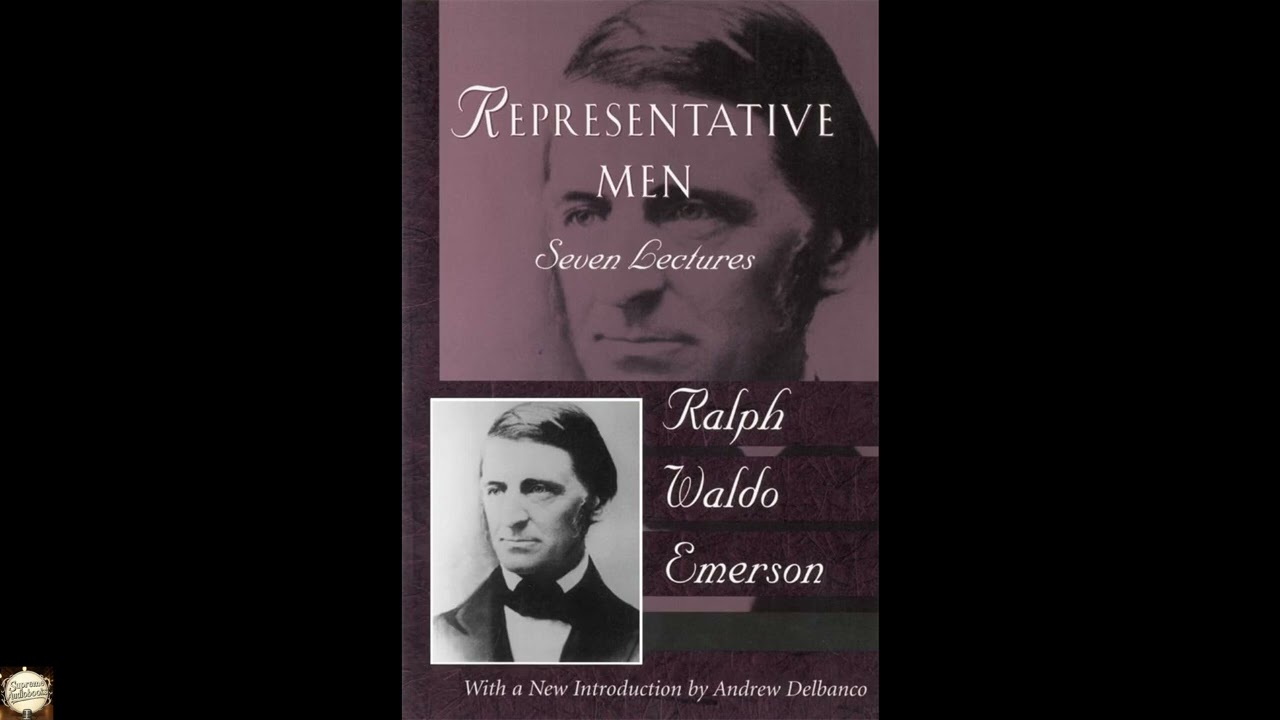
Representative Men: Seven Lectures
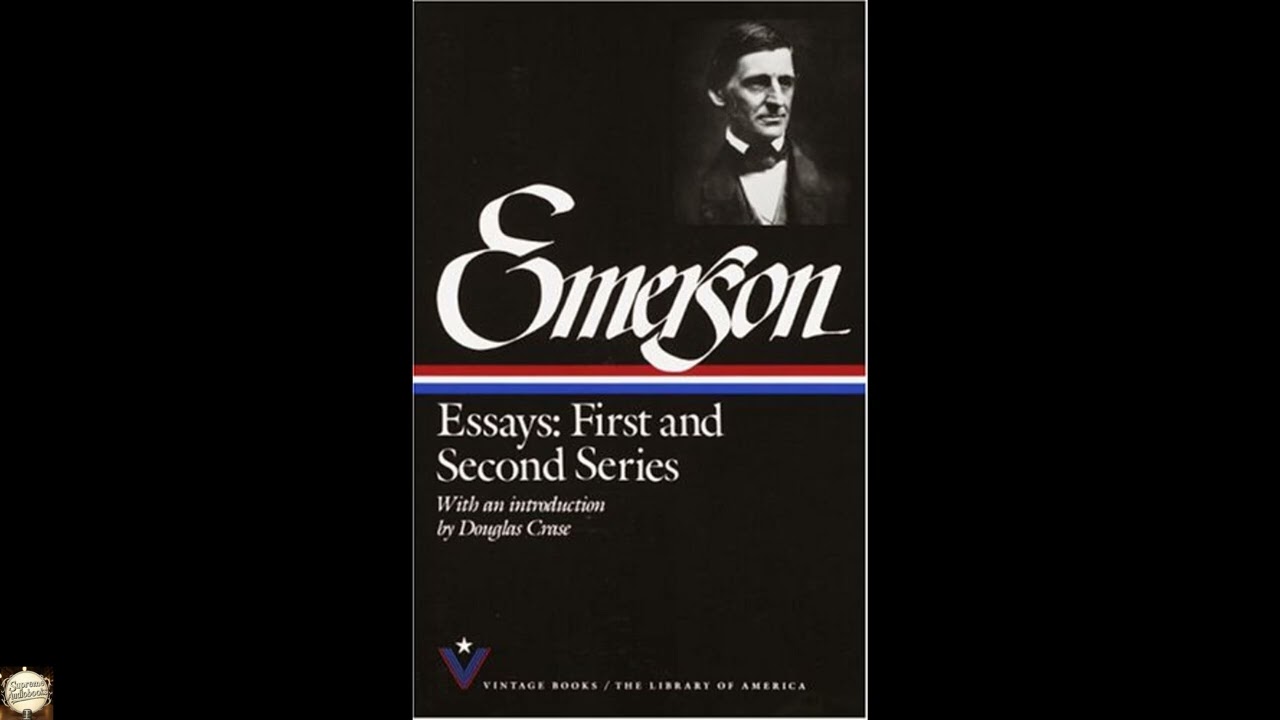
What defines a truly great human being? What qualities set apart the figures who shape generations, whose ideas echo through history, or whose actions redirect the course of civilization? Ralph Waldo Emerson's Representative Men: Seven Lectures offers not just a series of portraits, but a profound inquiry into the nature of genius itself, a philosophical lens through which to examine the peaks of human potential. More than a century and a half after its initial publication, this collection of powerful essays remains astonishingly relevant, speaking to anyone who contemplates leadership, creativity, the power of ideas, or the very essence of individual impact. Emerson's sharp intellect and soaring prose challenge us to consider the enduring legacy of brilliance and to recognize the seeds of greatness, dormant or active, within ourselves. This seminal work is structured as a sequence of seven distinct, yet interconnected, intellectual explorations. Emerson takes us on a grand tour of historical archetypes, each embodied by a specific, iconic figure. The journey begins with Plato, revered as "the Philosopher," whose universal ideas continue to shape Western thought. We then turn to Swedenborg, "the Mystic," a visionary whose spiritual insights sought to bridge the earthly and the divine. From there, we encounter Montaigne, "the Skeptic," whose radical honesty and self-reflection paved the way for modern individual inquiry. The procession continues with Shakespeare, "the Poet," a figure whose profound understanding of humanity and unparalleled literary output made him the very voice of his age and all ages since. Emerson then shifts his focus to Napoleon, "the Man of the World," a titan of action and practical genius who wielded immense power and reshaped the political landscape of Europe. Finally, the collection culminates with Goethe, "the Writer," a polymath whose vast contributions to literature, science, and philosophy made him a towering intellect of the modern era. Through these carefully chosen exemplars, Emerson does not merely recount biographies; he dissects the very qualities that made them singular. He probes their strengths and weaknesses, their unique contributions, and the universal principles their lives illuminate. The central thread weaving through these disparate figures is Emerson’s quest to understand the relationship between the individual and the collective, the particular manifestation and the underlying spirit of human achievement. He compels us to consider how these men, through their distinct talents, each expressed a facet of the "Universal Mind." Ralph Waldo Emerson, born in Boston in 1803, stands as one of the most significant and influential figures in American intellectual history. His early life was marked by a rigorous education, culminating in his studies at Harvard and subsequent ordination as a Unitarian minister. However, a growing dissatisfaction with conventional religious dogma led him to resign from the ministry in 1832, a pivotal moment that redirected his path toward a life of independent thought and public lecturing. Following a transformative journey to Europe, where he met literary luminaries like Thomas Carlyle, William Wordsworth, and Samuel Taylor Coleridge, Emerson returned to America inspired to forge a distinctly American intellectual identity. Settling in Concord, Massachusetts, he quickly became the central figure of the Transcendentalist movement, an intellectual and literary phenomenon that championed individualism, intuition, the inherent goodness of people and nature, and the pursuit of spiritual truths beyond sensory experience. His groundbreaking essay Nature, published anonymously in 1836, laid the philosophical groundwork for Transcendentalism. Throughout his career, Emerson delivered countless lectures across the United States, earning renown for his profound insights and eloquent oratorical style. His other enduring works, Essays: First Series (1841) and Essays: Second Series (1844), which include classics like "Self-Reliance" and "The American Scholar," cemented his reputation as a formidable thinker and the father of American individualism. He continued to write and lecture until his passing in 1882, leaving behind a legacy that profoundly shaped American literature, philosophy, and national character. The profound lessons of Representative Men resonate through several powerful themes. One central idea is individualism and the immense potential residing within each person. Emerson selects each figure to represent not just themselves, but an archetypal human faculty – Plato as the embodiment of pure thought, Shakespeare as the ultimate imaginative creator, Napoleon as the force of will and practical command. By examining these individuals, Emerson champions the power of self-reliance and the unique contribution each person can make when they fully realize their particular genius. He does not suggest imitation, but rather inspiration, urging listeners to cultivate their own distinct aptitudes. For instance, in his treatment of Montaigne, the French essayist becomes the symbol of fearless introspection and skepticism, demonstrating the value of independent judgment over blind adherence to tradition. Another prominent theme is the concept of genius and its manifestation. Emerson considers whether greatness is a divine spark or a product of relentless cultivation, ultimately suggesting it is a harmonious blend of both. He argues that the truly great individual acts as a conduit for universal truths, tapping into what he termed the "Over-Soul," a shared spiritual and intellectual essence. His lecture on Swedenborg, for example, illustrates how the mystic's elaborate spiritual system, while perhaps unconventional, arose from a profound, intuitive connection to a larger reality. These individuals are "representative" precisely because they give voice and form to universal aspects of the human spirit, acting as mirrors in which all of us can glimpse higher possibilities. Representative Men arrived at a fascinating juncture in American history, published in 1850. The United States was in a period of intense self-definition, grappling with its identity as a young republic distinct from its European forebears. The mid-19th century saw rapid territorial expansion, growing industrialization, and significant social reform movements, all contributing to a dynamic and sometimes tumultuous national conversation. Intellectually, the country was moving away from strict Puritanical dogma and European classicism, seeking instead to establish its own literary and philosophical traditions. Emerson himself was at the forefront of this shift, articulating a vision of American intellectual independence. The widespread popularity of the lecture circuit during this era also provides crucial context. Before mass media, public lectures were a primary source of education, entertainment, and intellectual discourse. Emerson was one of its most celebrated practitioners. His essays, including those that make up Representative Men, often began as lectures delivered to eager audiences across the nation. This work, therefore, emerged from a cultural moment where ideas were actively debated in public forums, and there was a hunger for understanding the foundations of human greatness and the path to national and individual excellence. It offered a framework for understanding not just European history, but also the potential for American achievement. Listening to Representative Men: Seven Lectures in audiobook format offers a unique and deeply rewarding experience. Emerson's prose, born from the lecture hall, possesses a natural rhythm and oratorical quality that truly comes alive when spoken aloud. The clear enunciation and thoughtful pacing of a skilled narrator allow the listener to absorb Emerson's often dense but always luminous arguments with greater ease. Each "lecture" becomes a focused intellectual engagement, perfect for thoughtful listening during a commute, a quiet evening at home, or even spread across several sessions. The several hours of content provide ample opportunity to dwell on Emerson's ideas, to appreciate the nuance of his language, and to feel the compelling force of his arguments as if he were delivering them to you directly. This format allows the profound insights of this classic to resonate with immediate power, transforming a reading experience into a powerful auditory encounter with one of America's most brilliant minds.
Enjoyed Representative Men: Seven Lectures? A few ways to support us
Audible & Amazon links are affiliate; we may earn a small commission at no extra cost.
About this production
Human narration by a volunteer reader from LibriVox.org, the public-domain audiobook project. LibriVox volunteers record literary works whose copyright has expired in the United States, releasing the resulting recordings into the public domain.
Representative Men: Seven Lectures by Ralph Waldo Emerson. The underlying text is in the U.S. public domain. We do not republish any modern copyrighted edition, translation, or commentary.
The 4K cinematic visuals accompanying this audiobook are generated by an AI image model from prompts derived from the source text. No copyrighted photos, paintings, or stock footage are used. AI generation is disclosed on every video on our YouTube channel as required by YouTube's altered/synthetic content policy.
English subtitles are transcribed from the LibriVox recording with OpenAI Whisper. Translations into the 11 other supported languages are produced by Meta's NLLB-200 neural translation model. No human translator's copyrighted translation is used.
Questions about sourcing or rights? See our DMCA & Sourcing policy or contact us.
Enjoyed this audiobook?
If you'd like to own a copy of Representative Men: Seven Lectures or hear a professionally produced edition, the links below help support free audiobook production at no extra cost to you.
As an Amazon Associate we earn from qualifying purchases. Audible / print links are affiliate.